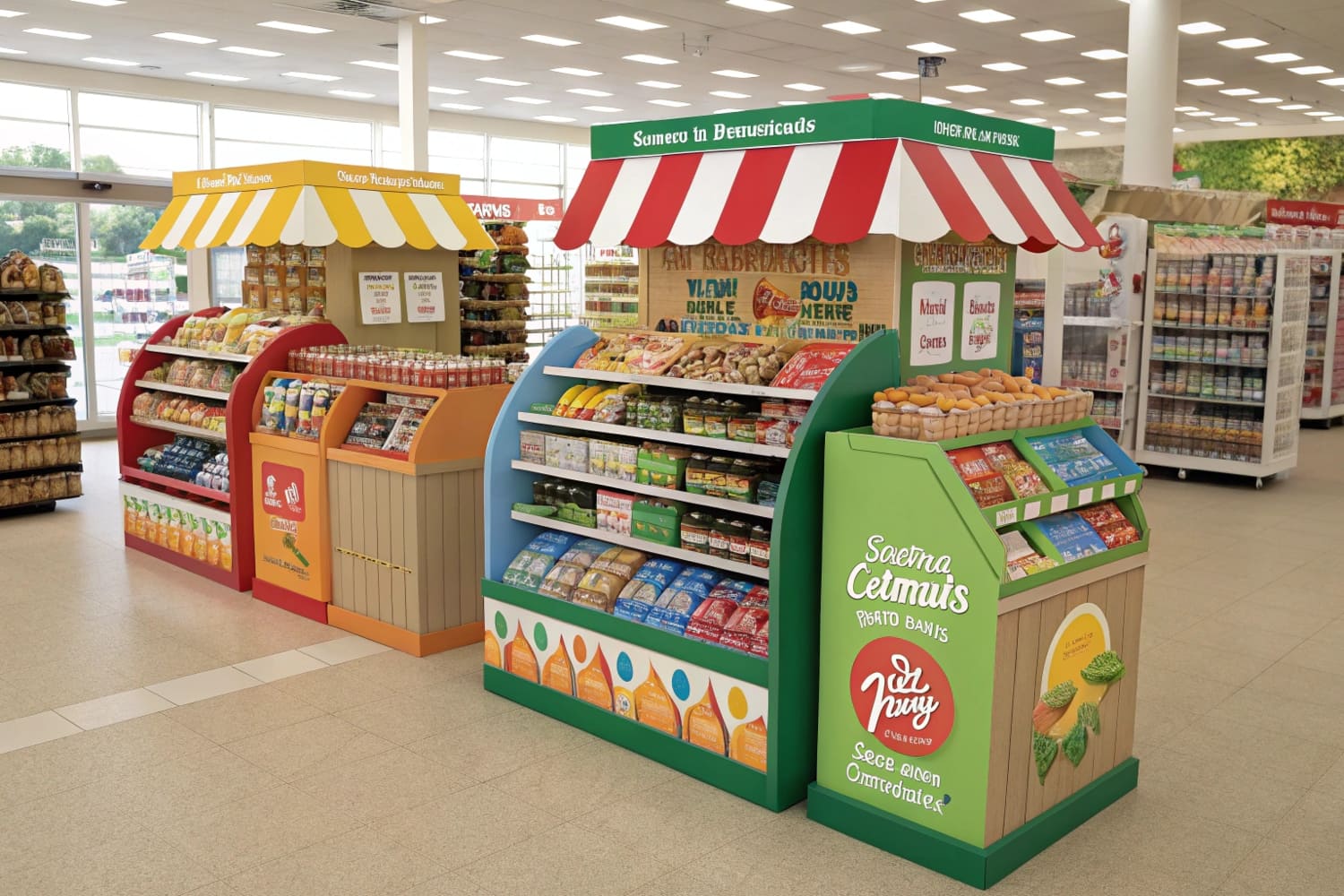
Store shelves are crowded, messy, and overwhelming. If your product is just sitting there passively, it is invisible to the hurried shopper. Visual merchandising breaks that pattern, turning a passive walker into an active buyer in seconds.
Visual merchandising is utilized by brands and retailers across physical stores, trade shows, and pop-up events to maximize product visibility. Key sectors include fashion, grocery, and electronics, where POSM (Point of Sales Material) strategies guide customer flow and influence purchasing decisions through strategic product placement.
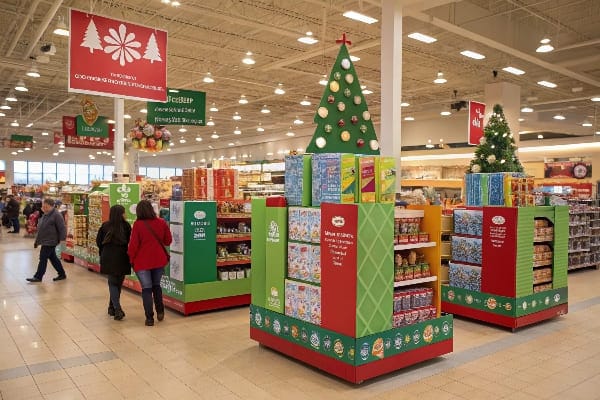
But it is not just about looking pretty. It is about engineering a structure that survives the supply chain and convinces a shopper to pick it up.
Where is visual merchandising used?
You might think it is just for window shopping, but the real battle happens inside the narrow aisles. A display in the wrong spot or at the wrong height is just expensive cardboard trash.
Visual merchandising is used in high-traffic retail environments like supermarkets, department stores, and boutique shops to optimize floor space. Beyond traditional retail, it appears in exhibitions and window displays, utilizing floor stands and counter units to capture attention within the "strike zone" of 50 to 54 inches (127–137 cm).
The Ergonomics of the "Strike Zone1" & "Soggy Bottoms"
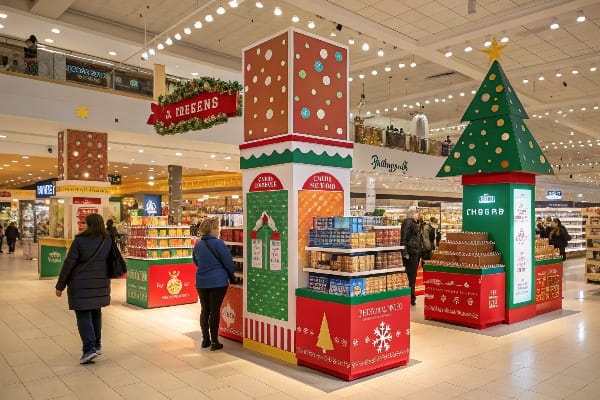
The biggest mistake I see brands make isn't the color or the logo—it is the altitude. I have watched marketing managers approve beautiful designs on a bright backlit MacBook, not realizing that in the real world, their "Hero Product" is sitting at knee height. In the US market, the average female shopper is about 5'4" (162 cm). If your high-margin item is placed 20 inches (50 cm) off the ground, she has to physically step back and crouch to read the label. She won't do that. She will keep walking. This drives me crazy because it is such an avoidable failure.
That is why we rigorously enforce the "Strike Zone" rule in my factory. We design the primary shelf—the one carrying your flagship SKU—to sit exactly between 50 and 54 inches (127–137 cm) from the floor. This is the "Eye-Level Buy Level2." It sounds simple, but I once had to scrap a prototype for a beverage client because their design placed the grab-handle of the can too low. We raised the internal structural shelf by just 4 inches (10 cm), and the ergonomic shift made the pick-up motion natural rather than forced.
But there is a messier reality we have to deal with: floor mopping. Supermarket floors get mopped aggressively every night. Water seeps into the bottom of cheap cardboard displays, causing the "Soggy Bottom3" effect. The cardboard wicks up the dirty water, turns brown, and collapses within a week. It looks disgusting. To fix this, I apply a biodegradable water-resistant "Poly-Coat4" or varnish barrier to the bottom 2 to 4 inches (5–10 cm) of the kick-plate. We also use a "Chin-Up" angle for lower shelves, tilting them upwards by 15 degrees so the product "looks up" at the consumer, increasing readability by 100% for shoppers standing 3 feet (1 meter) away.
| Zone Name | Height from Floor | Product Strategy | Structural Need |
|---|---|---|---|
| Stretch Zone | 60"+ (152 cm+) | Lightweight signage / Header cards | High-tension double-wall fold to prevent curling |
| Strike Zone | 50"–54" (127–137 cm) | High-margin / Impulse items | Reinforced B-Flute for clean print surface |
| Touch Zone | 30"–45" (76–114 cm) | Core volume sellers | Standard load-bearing capacity |
| Stoop Zone | 0"–15" (0–38 cm) | Heavy bulk / Refills | Water-resistant coating & Heavy-duty EB-Flute |
I don't just design the box; I design the interaction. Strategic structural design dictates sales velocity. By placing your best product at eye level and protecting the base from floor damage, we ensure the display works as hard as the product itself.
Who does visual merchandising?
It is easy to say "the brand does it," but the execution involves a complex chain of command. If one person in this chain messes up, the display gets rejected at the distribution center.
Visual merchandising is executed by a collaborative network of brand managers, retail store planogrammers, and visual merchandisers who define the aesthetic strategy. These professionals rely on manufacturers to translate 2D concepts into structural realities, ensuring compliance with strict retailer guidelines regarding dimensions, safety, and aesthetic standards.
The "Audit-Ready" Supply Chain & Compliance
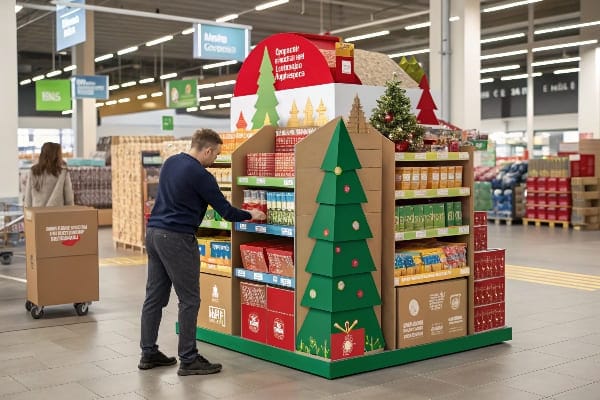
Who actually does the merchandising? In the high-standard retail market, it is a tug-of-war between the Creative Director in New York and the Compliance Officer at Walmart or Costco. The creative team wants a glossy, complex shape that looks like a spaceship. The retailer wants a box that fits on a standard 48×40 inch (122×102 cm) GMA pallet and survives a forklift hit.
I often act as the referee. A major issue is the "Retailer Spec5" gap. Every retailer has a different "Style Guide." Costco, for instance, is brutal. They demand "Shop-Through" capability where the product is accessible from three sides, and the structure must withstand a 2,500 lb (1,133 kg) dynamic load because they stack pallets in the racks. A designer from a beauty brand doesn't know this. They send me a design for a delicate, single-wall display. If I just "did as I was told," that display would be rejected at the Costco depot, costing the client thousands in fines and return freight.
We also have to manage the "Red Bag" strategy for assembly. Who builds these things? Often, it's a busy store employee who hates reading instructions. If a plastic clip is missing, they trash the whole unit. So, who does the merchandising? We do, by taping a "Red Emergency Bag" with 5% spare hardware to the instruction sheet. I also have to play the role of the logistics coordinator for the "ISF 10+26" filing. If this data isn't sent to US Customs 24 hours before loading in China, the buyer gets fined $5,000. It is not just about art; it is about legally getting the cardboard into the country without penalties.
| Retailer / Environment | Key "Who" Requirement | Technical Consequence |
|---|---|---|
| Costco / Club Stores | Industrial Strength / No Assembly | Must use EB-Flute or stronger; No overhang on 48×40" (122x102cm) pallet |
| Walmart | RFID Mandate / Price Channels | Structure must be metal-free near RFID tags; Specific 1.25" (3.17cm) channels |
| Target | Visual Aesthetics / Glare | Matte finishes preferred; strict height limits for sightlines |
| Amazon (SIOC) | E-commerce Durability | Must pass ISTA 6-Amazon Drop & Vibration tests |
I don't just ask "What size do you want?" I ask "Which retailer is this for?" My team automatically upgrades the material specs to match the destination, saving you from a compliance disaster before production even starts.
Who is involved in merchandising?
Behind every shiny display, there is a fight between art and physics. The people involved aren't just marketers; they are structural engineers battling against gravity and humidity.
Merchandising involvement includes professionals like graphic designers, structural engineers, and supply chain logistics managers working in unison. While creative teams handle the artwork, structural engineers utilize CAD (Computer-Aided Design) software to ensure the physical integrity of POP (Point of Purchase) displays during transit and in-store setup.
The Engineer vs. The Designer (The Paper Physics Gap7)
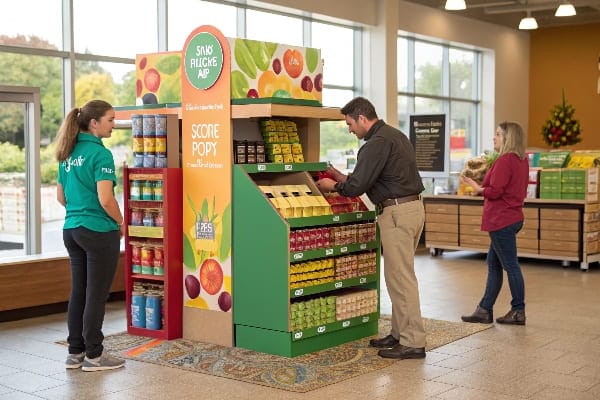
The most critical person involved in merchandising is the Structural Engineer, yet they are often ignored until it is too late. Creative agencies use Adobe Illustrator. My factory uses ArtiosCAD. Here is the messy reality: Illustrator draws lines that look perfect on a screen, but are geometrically impossible to fold in real life. I call this the "Paper Physics Gap."
For example, corrugated cardboard has thickness. If you fold a B-Flute board (which is about 1/8 inch or 3mm thick) 180 degrees, you lose material length. A designer drawing flat lines doesn't account for this "folding allowance." I have had "final" artwork files sent to me where the dust flaps would overlap and buckle if we printed them as-is. We have to take their pretty picture, convert it into a 3D ArtiosCAD model, and fix the geometry.
Then there is the issue of "Grain Direction8." This is the secret weapon of the structural engineer. Corrugated flutes have a direction, like wood grain. If a designer places the grain horizontally on a load-bearing wall, that display will collapse immediately under weight. It is basic physics, but it happens constantly. My engineers are trained to orient the grain vertically for maximum Box Compression Test (BCT)9 strength. We can often make a lightweight material hold 50 lbs (22 kg) just by optimizing the grain, saving the client money on material costs while keeping the structure rigid. Also, we handle the "Litho-Cracking10" phenomenon. If we ship from humid China to dry Las Vegas, the fold lines crack. We have to involve the material science team to specify a specific "Anti-Crack" film lamination.
| Role | Tool Used | Common Pitfall | The Factory Fix |
|---|---|---|---|
| Graphic Designer | Adobe Illustrator | Ignored material thickness | Convert to ArtiosCAD & add fold allowances |
| Structural Engineer | ArtiosCAD / Kongsberg | Over-engineering complex folds | Simplify structure to reduce assembly labor |
| Production Manager | Offset Press | RGB vs CMYK color mismatch | Use G7 Master Calibration & Physical Proofs |
| Logistics Mgr | Palletizing Software | Poor volumetric efficiency | Optimize carton size for 40HQ container fit |
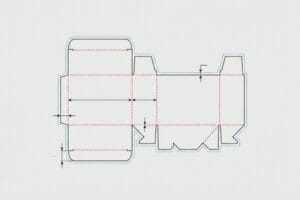
I provide the Standardized Dieline Template before you start designing. My structural designers create the "Empty Canvas" first, ensuring that when your designer drops the artwork in, it fits perfectly around the corners and folds.
Why should a retailer use visual merchandising?
Retailers don't buy displays because they like art. They buy them because they hate "dead inventory." Visual merchandising is the only way to physically disrupt a shopper's autopilot mode.
Retailers should use visual merchandising to significantly increase impulse purchases and improve inventory turnover rates. Effective displays isolate products from cluttered shelves, reducing decision fatigue for shoppers, while pre-filled options like PDQ (Pretty Darn Quick) trays reduce labor costs by speeding up the restocking process.

The ROI of Visual Disruption & Labor Savings
Why spend money on cardboard? Because of "Decision Fatigue11." Standard shelves are boring, cluttered, and paralyzing. A shopper standing in front of 50 types of shampoo often chooses none because it is too much work. A standalone floor display or a Countertop PDQ breaks this paralysis. It isolates the product.
I teach my clients the "3-Second Lift12." A well-placed floor display typically increases sell-through by 400% compared to the home shelf. But there is a catch: Labor Cost. Retailers like Walmart and Costco are cutting hours. They hate displays that take 20 minutes to build. If your display is a puzzle, the stock boy will throw it in the compactor. This is a painful reality I have seen firsthand—pallets of expensive displays wasted because they were too hard to assemble. We solve this with the "Instruction Video13" link, printing a QR code on the box so staff can watch a 30-second build guide instead of reading dense text.
Furthermore, we deal with the "Dump Bin Bulge14". Retailers hate it when a dump bin filled with heavy items creates internal pressure that pushes the walls out, making the bin look "pregnant" and blocking the aisle. We use an internal "H-Divider" or "Belly Band" reinforcement to tie the front wall to the back wall. This keeps the unit perfectly square even with 50 lbs (22 kg) of product inside. Plus, we often print a "Kill Date" code on the back. This tells the retailer exactly when to trash the unit, ensuring dead seasonal promotions don't clutter the floor.
| Feature | Retailer Pain Point | The Visual Merchandising Solution |
|---|---|---|
| Visual Isolation | Cluttered shelves / Low conversion | Standalone Display: Breaks decision fatigue, 400% sales lift |
| Pre-filled (Co-pack) | High labor costs for stocking | Ready-to-Sell: Instant setup, zero assembly time for staff |
| Curved Structure | Boring, linear aisles | Die-Cut Shapes: Visual disruption grabs attention instantly |
| Modular Trays | Inventory inflexibility | Planogram Agility: Movable dividers for changing SKUs |
Don't look at the unit price; look at the margin. If you sell 50 extra units because of this display, the structure pays for itself in Day 2. The remaining 28 days are pure profit.
Conclusion
Visual merchandising isn't just about making things look good; it is about engineering sales through structure, placement, and speed. From the "Strike Zone" ergonomics to navigating Costco's strict compliance rules, it requires a blend of art and industrial engineering.
Would you like to see how your product looks in a structural prototype? I can send you a Free Structural 3D Rendering of your concept, or we can cut a physical White Sample within 24 hours to test product fit before you commit to production.
Understanding the Strike Zone can significantly enhance product visibility and sales, making it a crucial aspect of retail strategy. ↩
The Eye-Level Buy Level is key to maximizing consumer engagement and sales, making it vital for effective merchandising. ↩
Preventing the Soggy Bottom effect is essential for maintaining product integrity and presentation, ensuring a better shopping experience. ↩
Exploring Poly-Coat can reveal innovative solutions for protecting displays, enhancing durability and aesthetics in retail environments. ↩
Understanding the Retailer Spec gap is crucial for compliance and avoiding costly mistakes in product design. ↩
Learn about ISF 10+2 to ensure compliance with customs regulations and avoid hefty fines during shipping. ↩
Understanding the Paper Physics Gap is crucial for designers and engineers to create feasible and functional designs. ↩
Exploring grain direction can help you optimize material strength and prevent structural failures in your designs. ↩
Learning about BCT can enhance your knowledge of packaging strength and improve your design processes. ↩
Discovering solutions for Litho-Cracking can save costs and improve the durability of your packaging solutions. ↩
Understanding Decision Fatigue can help retailers design better shopping experiences that boost sales. ↩
Exploring the 3-Second Lift can reveal effective strategies for increasing product sell-through in retail. ↩
Discover how Instruction Videos can streamline assembly processes and reduce labor costs in retail. ↩
Learn about Dump Bin Bulge to ensure your retail displays remain effective and visually appealing. ↩