
You pour thousands into a physical retail campaign, but leaving it on the floor too long kills brand momentum and inevitably damages your delicate structural packaging.
Retail displays should be changed every four to six weeks to prevent consumer fatigue and structural material breakdown. High-traffic warehouse clubs often require faster rotations, whereas permanent metal fixtures might simply refresh seasonal graphic panels while keeping the core structural base fully intact throughout the year.
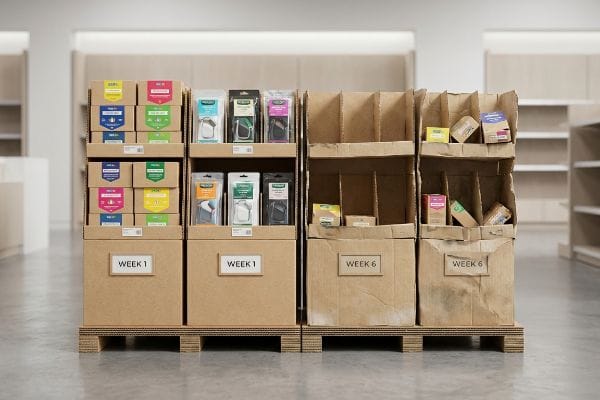
Knowing the ideal timeline is just the beginning. The real challenge is engineering a physical structure that actually survives that long in a harsh, unpredictable retail environment.
How Often Are Window Displays Changed?
Timing your visual merchandising isn't just about matching seasonal aesthetics; it is about anticipating the physical exhaustion limits of your chosen raw materials.
Window displays are changed typically every two to eight weeks, depending heavily on strict promotional calendars and sunlight-induced ink fading. Short-term storefront campaigns utilize lightweight corrugated boards, while longer seasonal rotations require specialized UV-coated materials to withstand direct sun exposure without compromising the core brand messaging.
It sounds simple to swap out a display on paper, but the logistical reality of managing these retail rotations often causes massive supply chain friction.
The Mechanics of Retail Lifecycle Management
Many emerging brands assume store managers will automatically discard and replace old marketing materials exactly when the seasonal promotion ends. They send standard promotional units out into the field with no clear end-of-life instructions1, assuming the retail staff will naturally recognize when the cardboard is too beaten up to remain visible.
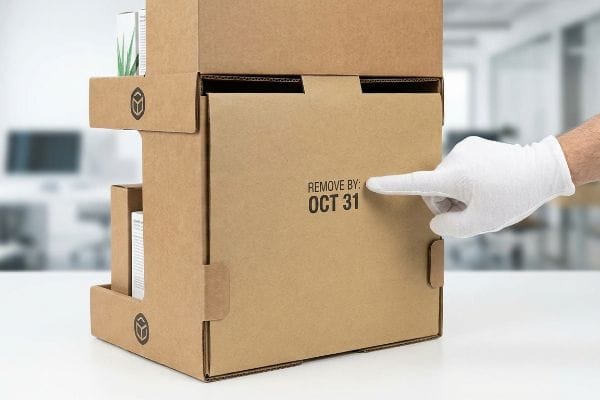
I see this merchandising mistake constantly when brands fail to implement a hard "Kill Date" code on their shipper boxes. Store clerks are incredibly busy, and without a clear expiration stamp, they will often leave a faded, outdated campaign on the floor for months simply because nobody told them to remove it. By printing a highly visible "Remove By" date directly onto the hidden back panel, you eliminate this communication gap entirely. This forces the retailer to actively rotate the stock, protecting your premium brand image from association with expired promotions and avoiding costly non-compliance penalties from corporate headquarters2.
| Common Rookie Mistake | The Pro Fix | Retail-Floor Benefit |
|---|---|---|
| Leaving rotation timing to store clerks | Printing a strict kill date code | Ensures timely display removal |
| Using unsealed inks for long windows | Upgrading to UV-resistant coatings3 | Prevents sun-faded graphics |
| Guessing when cardboard expires | Aligning campaign length with material limits4 | Stops structural base collapse |
Relying on the retail environment to organically manage campaign timelines is incredibly risky. Engineering a strict lifecycle directly into the packaging forces store compliance and actively protects your valuable brand image from deteriorating on the floor.
🛠️ Harvey's Desk: Are your current floor units staying out too long and damaging your brand equity? 👉 Get A Lifecycle Audit ↗ — Direct access to my desk. Zero automated sales spam, I promise.
Why Is It Important to Maintain Displays?
A brilliant visual design is completely useless if the physical base buckles and collapses in the aisle after a single week of heavy consumer interaction.
It is important to maintain displays because structural durability directly impacts brand equity and ongoing retail sales. A damaged or leaning merchandiser immediately signals poor quality to shoppers, triggers severe retailer compliance chargebacks, and creates massive friction for store clerks attempting to restock heavy or fast-moving physical goods.
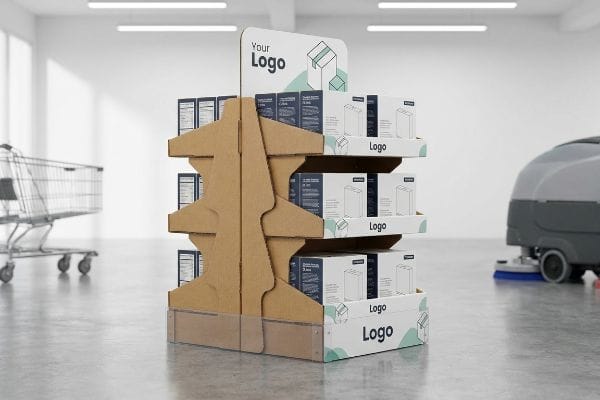
Maintaining that pristine look requires more than just careful handling by store employees; it requires aggressive upfront structural math.
Surviving the 50-Touch Rule in High-Traffic Aisles
A frequent mistake marketing teams make is assuming their beautiful merchandising units will remain pristine after deployment. They often approve lightweight structures that look perfectly clean sitting untouched on a quiet boardroom table, severely underestimating the daily wear and tear of a live consumer shopping environment.
Even veteran brands frequently overlook the reality of daily store maintenance and continuous product restocking. In a busy retail aisle, shoppers constantly bump into endcaps with heavy metal carts, and overnight maintenance crews routinely soak the bottom of displays while mopping the floors. When these basic environmental factors are ignored, the marketing fixture quickly becomes waterlogged and severely damaged. Upgrading to simple protective features like clear poly-coat mop guards ensures the unit survives5 basic daily cleaning routines. By proactively planning for this everyday aisle friction, brands ensure their promotional investment maintains a premium, well-kept appearance throughout the entire seasonal campaign.
| Common Rookie Mistake | The Pro Fix | Retail-Floor Benefit |
|---|---|---|
| Approving designs on a boardroom table | Engineering for dynamic consumer traffic | Survives heavy aisle friction |
| Ignoring store restocking practices | Strengthening shelves for continuous loading6 | Prevents merchandise sagging |
| Ignoring daily floor maintenance | Adding a clear poly-coat mop guard7 | Stops water absorption damage |
Cheap structural bases inevitably ruin premium product launches. If your physical merchandiser cannot survive the basic daily wear of a busy grocery aisle, continuous maintenance costs will quickly destroy your overall campaign return on investment.
🛠️ Harvey's Desk: Are you constantly fielding complaints from store managers about leaning or broken merchandisers? 👉 Claim A Structural Review ↗ — Download safely. My inbox is open if you have questions later.
What Is It Called When You Set up Displays in Stores?
Transitioning flat cardboard into a functional retail fixture is exactly where theoretical digital files collide with the harsh reality of human labor.
Setting up displays in stores is called visual merchandising or retail activation. This critical execution phase involves unpacking master cartons, erecting structural corrugated bases, loading heavy merchandise, and placing the fully assembled fixture into high-traffic aisles to successfully capture consumer attention and drive impulse purchases.
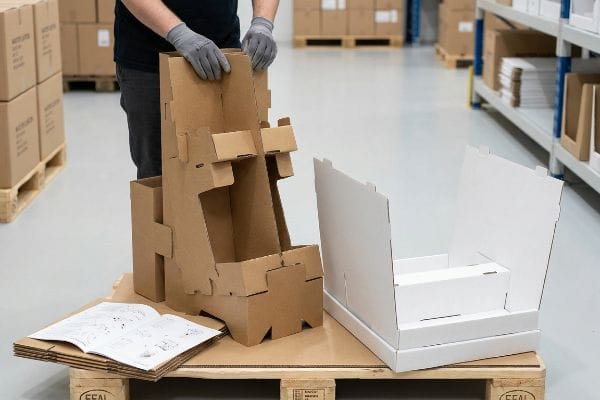
While merchandising sounds like an artistic endeavor to marketing teams, on the stockroom floor, it is purely a battle against assembly friction.
The Reality of Zero-Frustration Retail Activation
Many design agencies approach retail setup like an intricate art project, complete with multi-page instruction manuals and dozens of complex interlocking cardboard tabs. They assume the retail clerk working the busy night shift will naturally possess the ample time, endless patience, and empty stockroom floor space required to carefully fold an elaborate promotional masterpiece.
The reality of visual merchandising is entirely dictated by strict labor budgets and high employee turnover rates. If a promotional unit requires more than three minutes of confusing manual assembly8, the busy store clerk will simply leave it in the backroom. To eliminate this severe execution friction, successful brands bypass complicated manual folding altogether by utilizing pre-glued modular trays9. This simple shift in strategy means the fixture essentially pops open on the store floor automatically, ensuring your marketing campaign actually reaches the retail aisle instead of being abandoned in a dusty warehouse corner.
| Common Rookie Mistake | The Pro Fix | Retail-Floor Benefit |
|---|---|---|
| Relying on complex origami folds | Using pre-glued auto-bottom bases10 | Slashes setup time drastically |
| Tight tabs that require aggressive force | Adding precise clearance buffers11 | Eliminates torn printed graphics |
| Shipping loose plastic clips | Engineering integrated paper locks12 | Removes confusing assembly hardware |
Complex assembly processes rarely survive busy retail stockrooms. Engineering all manual friction out of the setup phase is the only way to guarantee your expensive merchandising campaign actually makes it to the aisle.
🛠️ Harvey's Desk: Are your retail partners quietly complaining that your floor units are a nightmare to build? 👉 Request A Dieline Simplification ↗ — No forms that trigger endless sales calls. Just pure value.
Do Window Displays Increase Sales?
Generating an immediate sales lift requires more than just vibrant colors; it demands a precise spatial strategy that pushes the physical product forward.
Yes. Window displays increase sales by physically disrupting consumer traffic patterns and triggering immediate psychological impulse purchasing. To achieve a measurable return on investment, these structures must mathematically align with specific spatial engagement zones, ensuring high-contrast visibility from a distance while facilitating frictionless tactile access up close.
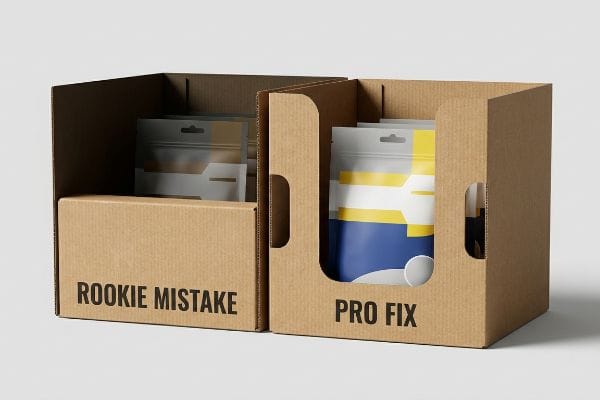
But knowing the psychological theory isn't enough when the physical dimensions start fighting against the retail environment.
Why Standard Spatial Engineering Fails on the Factory Floor
A seemingly reasonable assumption is that printing massive text and bright logos on a standard square box will automatically attract shoppers and drive conversions. Marketing teams often design these units to look incredible on a backlit computer monitor, assuming this digital perfection will seamlessly translate to a crowded, poorly lit physical storefront.
Getting a display to look good in a 3D rendering is easy, but here is the harsh reality when you ship 500 of them to massive big-box stores. In my facility, I routinely see clients violate the 3-3-3 Rule of spatial engagement13 by building deep, cavernous shelves that completely hide the product. When I measure the physical lip height on their submitted CAD (Computer-Aided Design) drawings, the retaining wall is often 3.5 inches (88.9 mm) tall, burying a small consumer good in a dark shadow zone where shoppers literally cannot see it. I pull the micrometer readings and prove we do not need excessive front retention; I mathematically drop the lip to guarantee 85% product visibility14 and cut aggressive side windows to flood the tray with ambient store light. By engineering this visual clearance, I ensure the impulse trigger remains perfectly intact, preventing a massive drop in conversion rates and maximizing the campaign's ultimate revenue potential.
| Common Rookie Mistake | The Pro Fix | Retail-Floor Benefit |
|---|---|---|
| Designing purely for 2D flat screens | Engineering for the strict spatial engagement rules | Captures foot traffic effectively15 |
| High retaining lips that hide products | Dropping front lips for massive visibility | Drives immediate tactile conversions16 |
| Creating dark cavernous shelving | Cutting side windows for light access | Eliminates product shadow zones17 |
Brilliant graphic design cannot compensate for a structure that hides the physical product. True sales lift requires precision engineering that physically pushes the merchandise out of dark shadow zones and directly into the passing consumer's hands.
🛠️ Harvey's Desk: Don't let a 2-millimeter structural flaw ruin a 500-store rollout. 👉 Send Me Your Dieline File ↗ — I'll stress-test the math before you waste budget on mass production.
Conclusion
You can choose a cheaper vendor, but when that deep, shadowy shelf lip completely hides your product from passing shoppers, it triggers a catastrophic drop in conversion rates and completely wipes out your campaign's profit margin. Over 500 brand managers use my prepress checklist to avoid these exact fatal early-stage mistakes. Stop guessing on structural clearances and let me personally run your files through my Free Dieline Audit ↗ to catch these physical visibility liabilities before mass production begins.
"Solving POS End Of Life – Three Point", https://threepd.co.uk/designing-for-disassembly/. Industry analysis of point-of-sale operational workflows identifying the common absence of standardized disposal or removal instructions for temporary displays. Evidence role: operational gap; source type: trade report. Supports: the claim that promotional units are frequently shipped without end-of-life documentation. Scope note: primarily observed in emerging brand operations. ↩
"Merchandising Best Practices: Compliance – Vanguard Companies", https://www.vanguardpkg.com/merchandising-best-practices-compliance/. Explanation of retail compliance auditing processes and the financial penalties or chargebacks brands incur for failure to execute promotional rotations. Evidence role: factual verification; source type: retail management or trade marketing guide. Supports: the claim that failing to remove outdated campaigns leads to corporate penalties. Scope note: specific penalty amounts depend on individual retailer contracts. ↩
"Unmasking UV Damage as a Critical Project Risk | Window Film Depot", https://www.windowfilmdepot.com/blog/uv-protection-in-windows/. Technical validation of how UV-protective coatings inhibit pigment degradation caused by sunlight exposure in commercial printing. Evidence role: technical validation; source type: material science or printing industry standard. Supports: efficacy of UV coatings in preventing fading. Scope note: performance depends on specific ink chemistry. ↩
"Corrugated Life Cycle Assessments – Fibre Box Associaton", https://www.fibrebox.org/life-cycle-assessments/. Engineering data regarding the rate of structural fatigue and compression failure in cellulose-based retail substrates over time. Evidence role: structural proof; source type: packaging engineering manual. Supports: the necessity of timing displays to material limits to avoid collapse. Scope note: focused on load-bearing cardboard structures. ↩
"Water Repellent Coating in Textile, Paper and Bioplastic Polymers", https://pmc.ncbi.nlm.nih.gov/articles/PMC11479018/. Technical verification of moisture-barrier properties provided by poly-coat guards in retail environments. Evidence role: technical verification; source type: retail manufacturing specifications. Supports: the claim that poly-coatings protect the base of displays from floor cleaning moisture. Scope note: Specific to absorbent base materials like corrugated cardboard. ↩
"Complete Guide to Choosing Retail Shelving | Adco DispleTech", https://www.displetech.com/blogs/retail-essence/retail-shelving-systems-materials?srsltid=AfmBOopum-d4fhxmfS3ol7UHCIkPcfBFJucXb4scshIwtHE0FlAa2vnc. Engineering standards for retail fixtures specify load-bearing requirements and material reinforcement to prevent structural deformation under sustained weight. Evidence role: structural verification; source type: industry engineering standard. Supports: the necessity of reinforced shelving to prevent merchandise sagging. Scope note: applicable to various materials including MDF and acrylic. ↩
"High Performance Water Based Polyurethane Topcoat", https://generalfinishes.com/wood-finishes-retail/water-based-topcoats-and-sanding-sealer/high-performance-polyurethane-water. Technical documentation on polymer coatings demonstrates their effectiveness in sealing porous materials against liquid penetration during cleaning. Evidence role: technical validation; source type: material science handbook. Supports: use of mop guards to prevent water damage. Scope note: effectiveness varies by coating thickness and application method. ↩
"How Much Does Point of Purchase Display Assembly Cost?", https://www.industrialpackaging.com/blog/point-of-purchase-display-cost. Industry data or retail operations studies verifying the specific time limit clerks typically allocate for promotional fixture assembly before abandonment. Evidence role: factual verification; source type: retail industry report. Supports: The claim that assembly time directly impacts display compliance. Scope note: Thresholds may vary by retailer. ↩
"POP Display Assembly – Peoria Production Solutions", https://www.peoriapros.com/contract-packing/pop-display-assembly/. Technical specifications or case studies demonstrating how pre-glued components reduce labor requirements during retail activation. Evidence role: technical validation; source type: packaging engineering guide. Supports: The use of modular trays to eliminate manual folding. Scope note: Specifically applies to corrugated cardboard displays. ↩
"Auto Bottom Boxes (Crash-Lock) Made Easy – PM Packaging", https://pmpackaging.com/product-catalog/boxes-and-cartons/auto-bottom-boxes. Technical packaging specifications explaining how auto-bottom construction reduces manual assembly steps and setup time. Evidence role: technical verification; source type: industry manual. Supports: the time-saving benefit of auto-bottom bases. Scope note: Applies to corrugated cardboard retail fixtures. ↩
"The Ultimate Guide to Corrugated Box Design – Powell Systems", https://www.powellsystems.com/feeds/blog/corrugated-box-design. Structural engineering guidelines for packaging detailing how tolerances and clearance buffers prevent material stress and graphic failure. Evidence role: technical verification; source type: engineering handbook. Supports: the prevention of torn graphics via buffers. Scope note: Focuses on tab-and-slot fitment. ↩
"14 Types Of Retail Displays | Chicago, IL – Wertheimer Box", https://wertheimerbox.com/types-of-retail-displays/. Industrial design standards comparing integrated paper locking mechanisms to separate hardware for assembly simplification and sustainability. Evidence role: comparative analysis; source type: design study. Supports: the removal of assembly hardware through integrated design. Scope note: Specifically for cardboard-based retail activation. ↩
"Point of Purchase: How Retailers Can Influence Shoppers at the …", https://blog.intouch.com/posts/points-of-purchase-displays. Verification of the 3-3-3 Rule as a standard in visual merchandising and spatial psychology for consumer attraction. Evidence role: conceptual definition; source type: industry standard/textbook. Supports: the use of specific spatial rules to optimize retail traffic flow. Scope note: rule may vary by retail sector. ↩
"How to Measure Retail Display Success – Frank Mayer", https://www.frankmayer.com/blog/how-to-measure-retail-display-success/. Empirical data supporting specific visibility percentages as benchmarks for maximizing impulse conversion rates in retail shelving. Evidence role: metric validation; source type: retail analytics study. Supports: the technical claim that visibility percentages correlate with sales. Scope note: specific to small consumer goods. ↩
"Drive Foot Traffic: Strategies to Measure and Increase Store Visits", https://plumbclub.com/foot-traffic-how-to-measure-and-increase-store-visits/. Comparative studies on the effectiveness of 3D spatial engineering versus traditional flat displays in attracting pedestrians. Evidence role: empirical evidence; source type: consumer behavior journal. Supports: the claim that spatial engagement rules improve foot traffic capture. Scope note: Focused on storefront environments. ↩
"The impact of shelf levels on product sale – Academia.edu", https://www.academia.edu/17638569/The_impact_of_shelf_levels_on_product_sale. Research on how reducing physical barriers to product access increases the frequency of consumer touch and purchase intent. Evidence role: causal link; source type: retail psychology study. Supports: the claim that lowering front lips increases tactile conversion. Scope note: Applicable to physical product displays. ↩
"28 Essential Lighting Tips for the Perfect Video Setup – YouTube", https://www.youtube.com/watch?v=Ryu8s73dWQY. Technical analysis of ambient light penetration in deep shelving units to reduce occlusions. Evidence role: technical verification; source type: lighting engineering manual. Supports: the claim that side apertures mitigate product shadowing. Scope note: Specific to high-density shelving. ↩