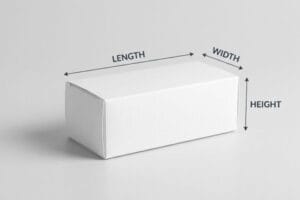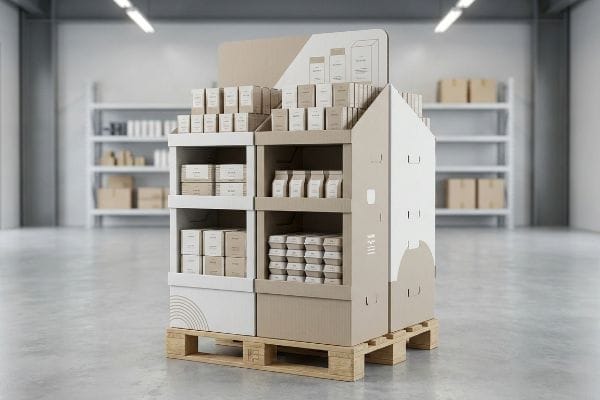
Walking a retail floor, you notice massive cardboard structures demanding attention. But building a successful display isn't just about stacking boxes; it is a strict logistical science.
A pallet display is a large retail structure built directly onto a wooden shipping base. Designed for high-traffic zones, these freestanding bulk merchandisers ship fully assembled and product-loaded directly to store floors. This strategy maximizes brand visibility and drastically reduces the setup time required by retail workers.
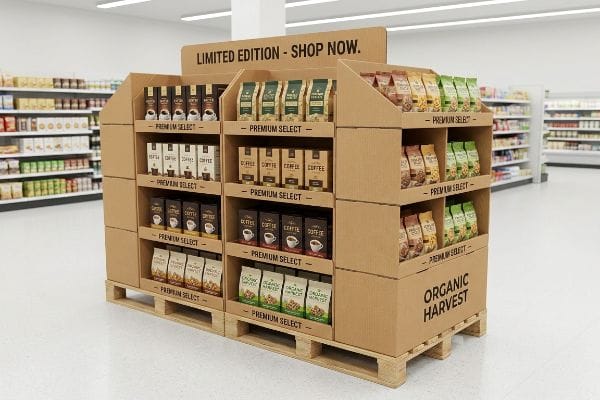
Let's explore how these massive units drive immediate retail sales and simplify logistics.
What is a PDQ pallet?
Time is the absolute enemy of retail execution. If a structure takes too long to build, a store manager will simply leave it locked in the backroom.
A PDQ pallet is a pre-loaded retail display engineered for immediate floor deployment. Unlike standard flat-packed merchandisers, these high-speed structures arrive fully assembled on the wooden base. Retail workers simply remove the protective shipping shroud, instantly exposing the consumer goods without requiring complex manual cardboard folding.

But achieving rapid setup on the retail floor requires smart structural planning from the beginning.
Why Modular Pre-Glued Trays Save Your PDQ Pallet
Brands often assume that sending complex, flat-packed displays to stores will save on initial shipping costs. They design intricate cardboard trays expecting retail workers to quickly fold them together and stock the shelves. This theoretical strategy looks efficient on a budget spreadsheet, but it completely ignores the realities of modern big-box retail labor shortages1 and fast-paced store environments.
When these flat-packed kits arrive, over-worked store clerks frequently ignore them. If a tray requires more than a few minutes to assemble, the entire promotional campaign risks being abandoned in the stockroom. The strategic fix is utilizing pre-glued, modular trays built at the manufacturing stage2. By shipping fully assembled units on a PDQ pallet3, brands guarantee immediate floor compliance, ensuring their premium merchandise reaches passing shoppers rather than gathering dust in a warehouse aisle.
| Common Rookie Mistake | The Pro Fix | Retail-Floor Benefit |
|---|---|---|
| Complex flat-pack origami folds | Pre-glued modular corrugated trays | Drops setup time by 40%4 |
| Relying on manual tab locking | Automated factory box gluing5 | Prevents torn paperboard graphics |
| Tape fixes on the packing line | Zero-friction interlocking stacking6 | Protects premium brand equity |
Every successful retail campaign relies on eliminating store-level friction. Design your units for instant deployment to guarantee your product hits the sales floor.
🛠️ Harvey's Desk: Not sure if your tray design is slowing down your co-packer? 👉 Get A Free File Review ↗ — Direct access to my desk. Zero automated sales spam, I promise.
What is pallet merchandise?
Securing premium floor space in a big-box retailer is an absolute battlefield. You cannot assume a store will grant you a massive footprint just because you asked.
Pallet merchandise is bulk retail product explicitly engineered and packed to be sold directly from a wooden shipping base. This logistical strategy eliminates individual shelf stocking, utilizing structural corrugated dividers and stacking trays to hold heavy goods securely while remaining visually appealing to passing shoppers.
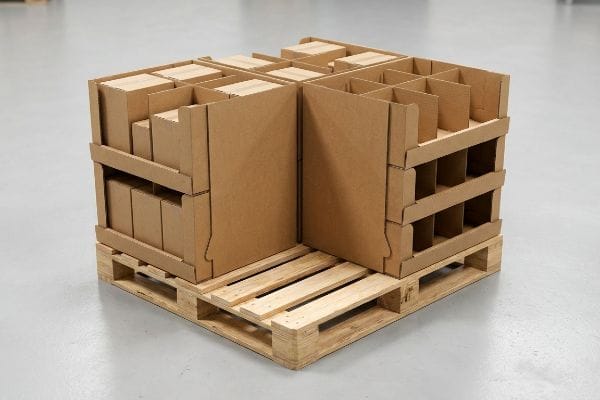
However, presenting that merchandise requires deeply understanding the strict spatial laws of the retailer.
The Fractional Geometry of Pallet Merchandise
A frequent trap for newer procurement teams is pitching a full 48×40 inch floor display7 for a brand new product launch. They naturally assume their promotional campaign must monopolize the entire wooden base to make a meaningful visual impact. These teams expect retail buyers to gladly hand over premium aisle space for an untested item, ignoring how strictly big-box stores ration their square footage.
Store managers will immediately reject this bloated footprint because they treat retail space like premium real estate. Instead of facing rejection, brands must logically divide their footprints into half-pallets or quarter-pallets8. By mathematically arranging four smaller display units onto a single master base, multiple brands can share the same high-traffic location. Pitching these smarter, fractional sizes maximizes floor density9, dramatically increasing your chances of securing buyer approval and driving a higher return on investment.
| Common Rookie Mistake | The Pro Fix | Retail-Floor Benefit |
|---|---|---|
| Pitching full 48×40 bases10 only | Engineering fractional subdivisions | Increases buyer approval odds |
| Wasting empty airspace | Designing tight quarter-pallet boxes11 | Maximizes retail floor density |
| Ignoring store foot traffic rules | Utilizing half-pallet configurations12 | Fits high-traffic intersections |
Securing floor space requires respecting the retailer's spatial limits. Presenting a compact, mathematically sound footprint is the most effective way to win buyer approval.
🛠️ Harvey's Desk: Does your current merchandiser footprint violate retailer spatial limits? 👉 Request A Layout Audit ↗ — Download safely. My inbox is open if you have questions later.
What is a display-ready pallet?
Transitioning from a transit shipper to a retail merchandiser requires structural planning. Removing parts of a protective box changes how the unit functions in stores.
A display-ready pallet is a hybrid transit and retail structure that ships fully loaded and converts instantly for shoppers. Utilizing perforated tear-aways or removable shrouds, these specialized shippers protect products during freight transit and immediately become highly visible, branded merchandisers upon reaching the retail floor.
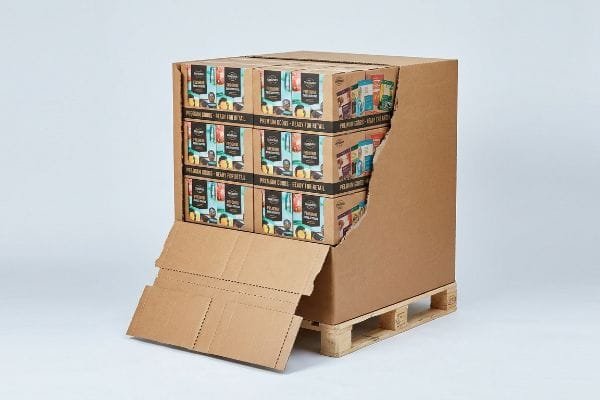
That instant conversion looks fantastic in a presentation, but it must be carefully planned to survive the journey.
Elevating the Transit Box to Retail Standards
Procurement teams frequently try to save money by using basic half-slotted containers (HSCs)13 that simply lift open to create an instant retail bin. They assume this basic open-top design is enough to transport heavy goods and transition smoothly into a clean presentation. From a distance, this theoretical setup seems like a highly efficient way to reduce raw material costs14 while keeping the merchandise easily accessible to passing shoppers.
In practice, these open-top bins often look messy and unappealing by the time they reach the retail destination. Without a proper structural strategy, standard transit boxes look cheap and fail to highlight the brand's premium value. The optimal approach is designing dedicated display-ready shrouds featuring clean perforations and vibrant graphics15. This strategic upgrade ensures that once the outer protective layer is removed by store clerks, the remaining structure serves as a dedicated marketing asset rather than just an empty brown box.
| Common Rookie Mistake | The Pro Fix | Retail-Floor Benefit |
|---|---|---|
| Using plain open-top boxes | Branded perforated shrouds | Elevates visual merchandising |
| Ignoring the unwrapping process | Clean tear-away panels | Simplifies store-level setup |
| Settling for transit aesthetics | High-contrast retail graphics | Grabs shopper attention instantly |
Never let your brand sacrifice its premium appearance for cheap shipping methods. A proper display-ready system bridges the gap between reliable transit and high-end merchandising.
🛠️ Harvey's Desk: Are your open-top bins collapsing under heavy warehouse stacking? 👉 Claim Your Structural Fix ↗ — No forms that trigger endless sales calls. Just pure value.
What is the difference between pallet and palette?
A single misused letter in procurement can derail an entire project. One refers to physical warehouse logistics, while the other dictates high-fidelity brand presentation.
The difference between pallet and palette lies in physical function versus visual design. A pallet is the heavy wooden base used for shipping retail displays, while a palette refers to the specific selection of Pantone or CMYK ink colors used to print brand graphics on corrugated cardboard.
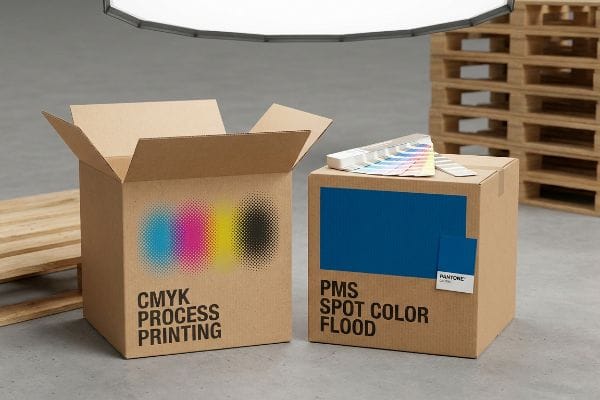
But knowing the theory isn't enough when the machines start running and wet inks hit raw paperboard.
Why Your Color Palette Fails on the Factory Floor
Marketing teams frequently convert their solid corporate color palettes into standard CMYK (Cyan, Magenta, Yellow, Key/Black) formats, assuming process printing will seamlessly match their glowing digital screens. They assume the commercial printing rules for glossy magazines will translate perfectly to thick retail packaging. This fundamentally ignores the physical reality of how liquid ink absorbs into raw, porous corrugated testliner on the factory floor. They expect absolute perfection based on a backlit monitor.
In my facility, I routinely see beautifully designed digital palettes turn into grainy, washed-out disasters. When standard four-color halftone dots hit the unsealed board, I can physically see the wet ink bleed unevenly into the paper fibers, creating a muddy logo. I fix this by enforcing a strict Spot Color Flood Protocol on the printing press. By replacing optical dot blending with a single, precisely mixed PMS (Pantone Matching System) spot color16, we guarantee a dense flood of pigment. Furthermore, compensating for the paper's pH balance17 prevents the ink from chemically shifting as it cures, ensuring maximum high-contrast visibility.
| Common Rookie Mistake | The Pro Fix | Retail-Floor Benefit |
|---|---|---|
| Relying on CMYK for solid logos | Enforcing PMS spot color flooding18 | Ensures crisp brand visibility |
| Ignoring unsealed paper porosity | Adjusting ink density for testliner19 | Stops muddy graphic absorption |
| Trusting digital monitor colors | Physical D50 lighting swatch tests20 | Elevates perceived product value |
Digital screens cannot dictate physical manufacturing. Pulling exact spectrophotometer readings and chemically adjusting for paper absorption is the only way to guarantee your brand colors survive the harsh reality of raw corrugated cardboard.
🛠️ Harvey's Desk: Are your brand colors turning muddy on raw cardboard? 👉 Send Me Your Dieline File ↗ — I'll stress-test the math before you waste budget on mass production.
Conclusion
You can choose a cheaper vendor, but when that open-top HSC board collapses under a double-stacked load in a humid warehouse, the resulting corner crush will trigger an immediate retailer rejection and completely wipe out your campaign's profit margin. Over 500 brand managers use my prepress checklist to avoid these exact fatal early-stage mistakes. Stop guessing on corrugated physics and let me personally audit your packaging files through my Free Dieline Pre-Flight Audit ↗ to catch these structural blind spots before mass production begins.
"The Retail Workforce Is Broken. Can Visual Merchandising Software …", https://onedoor.com/resource/retail-labor-shortage/. [Industry reports and economic data on retail staffing levels would verify the prevalence of labor shortages in big-box environments]. Evidence role: causal justification; source type: industry report; Supports: the necessity of pre-assembled retail displays; Scope note: applies primarily to high-volume retail sectors. ↩
"14 Types Of Retail Displays | Chicago, IL", https://wertheimerbox.com/types-of-retail-displays/. [Industry standards for point-of-purchase packaging describe how pre-glued trays reduce on-site assembly time and labor costs]. Evidence role: technical validation; source type: packaging industry guide. Supports: manufacturing strategic fix. Scope note: focuses on assembly labor reduction. ↩
"5 Benefits Of Pallet Displays in Retail Stores – Bennett Packaging", https://bpkc.com/blogs/blog/5-benefits-of-pallet-displays-in-retail-stores. [Retail logistics documentation validates that pre-assembled PDQ pallets increase the rate of promotional display execution by minimizing store clerk effort]. Evidence role: causal evidence; source type: retail management study. Supports: immediate floor compliance. Scope note: varies by retailer policy. ↩
"Is it Time to Change Your Corrugated Vendor? – Akers Packaging", https://www.akers-pkg.com/is-it-time-to-change-your-corrugated-vendor/. [Industry reports on retail logistics and point-of-purchase display assembly provide comparative data on the time saved using pre-glued trays versus manual folding]. Evidence role: Quantitative verification; source type: Industry whitepaper. Supports: The efficiency gain of modular trays. Scope note: Time savings may vary based on the complexity of the display. ↩
"Why Box Gluing Machines Are Key to Packaging Design … – Cenwan", https://www.cenwanmachine.com/blog/why-understanding-box-gluing-machines-can-help-you-appreciate-packaging.html. [Packaging engineering documentation explains how factory-applied adhesives provide more consistent bond strength than manual tabs, preventing structural failure and graphic tearing]. Evidence role: Technical explanation; source type: Packaging manufacturing guide. Supports: The reliability of automated gluing. Scope note: Specific to corrugated paperboard materials. ↩
"Reducing the occurrence of collapsing pallet loads: Part II", https://www.packworld.com/home/article/13372817/reducing-the-occurrence-of-collapsing-pallet-loads-part-ii. [Supply chain logistics manuals detail how interlocking structural designs stabilize palletized loads and minimize shifting during transit without the need for adhesives]. Evidence role: Technical specification; source type: Logistics manual. Supports: The benefit of interlocking stacking. Scope note: Focuses on physical stability during transport. ↩
"Standard Pallet Size: A Complete Guide for Buyers – Meridian", https://www.meridianpkg.com/feeds/blog/standard-pallet-size. [Industry standards for North American logistics confirm that 48×40 inches is the standard GMA pallet dimension used for bulk retail displays]. Evidence role: technical specification; source type: industry standard; Supports: pallet dimension accuracy; Scope note: specifically applies to the North American market. ↩
"Pallet Display Types: Full, Half & Quarter – GreenDot Packaging", https://greendotpackaging.com/understanding-pallet-display-types-full-half-and-quarter-pallet-displays/. [Industry merchandising standards document the use of fractional pallet dimensions to increase SKU variety and brand presence within a limited footprint]. Evidence role: technical verification; source type: retail trade publication. Supports: the logistical practice of using fractional pallet units. Scope note: Standard dimensions may vary by retailer. ↩
"How Custom Pallet Displays Drive Bulk Purchase Opportunities", https://atlaspackaginginc.com/how-custom-pallet-displays-drive-bulk-purchase-opportunities/. [Logistics research demonstrates the mathematical relationship between smaller unit footprints and increased sales per square foot in high-traffic retail zones]. Evidence role: performance metric; source type: business analytics report. Supports: the claim that fractional sizing optimizes space utilization. Scope note: Specific results depend on product category and store layout. ↩
"Heat Treated Wood GMA Pallet – 48 x 40" H-1260 – ULINE", https://www.uline.com/Product/Detail/H-1260/Pallets/Heat-Treated-Wood-GMA-Pallet-48-x-40. [Industry standards for North American logistics specify the 48×40 inch dimension as the standard GMA pallet size for retail shipping]. Evidence role: technical specification; source type: industry standard. Supports: standard pallet base dimensions. Scope note: Primarily applicable to North American markets. ↩
"Quarter-Pallet Display: The Complete Guide – Bennett Packaging", https://bpkc.com/blogs/blog/quarter-pallet-display-the-complete-guide. [Packaging specifications for retail floor displays identify quarter-pallet subdivisions as a means to maximize vertical density and reduce wasted airspace]. Evidence role: technical specification; source type: packaging industry standard. Supports: fractional subdivision benefits. Scope note: Specific to display density metrics. ↩
"Pallet Display Vs Floor Display: What is the Difference?", https://brownpackaging.com/pallet-display-vs-floor-display-what-is-the-difference/. [Logistics and retail design guides define half-pallet configurations as a strategic method to optimize footprint in high-traffic store intersections]. Evidence role: technical practice; source type: retail management guide. Supports: efficacy of fractional palleting. Scope note: Focuses on floor space optimization. ↩
"Half Slotted Container (HSC) – General Packaging Corporation", https://gpctexas.com/corrugated-packaging-boxes/half-slotted-container/. [A technical packaging manual or corrugated industry standard defines the structural design and common applications of Half-Slotted Containers.] Evidence role: technical definition; source type: industry standard. Supports: the identification of HSCs as a specific packaging format. Scope note: applies to standard fiberboard classifications. ↩
"FOL vs. RSC Boxes: Which Corrugated Box is Right for You?", https://www.bluerosepackaging.com/blog/fol-vs-rsc-boxes-comparing-the-top-contenders-in-corrugated-boxes/. [Comparative packaging data demonstrates that reduced slotting in container design decreases the total surface area of corrugated board required.] Evidence role: economic validation; source type: manufacturing analysis. Supports: the claim that HSCs lower material expenses. Scope note: cost savings vary by board grade and dimensions. ↩
"The Best Shelf-Ready Packaging Solutions for Retail", https://gouldingmedia.com/the-best-shelf-ready-packaging-solutions/. [An authoritative source on retail packaging and logistics would validate the use of perforated shrouds to transition transit packaging into point-of-purchase displays]. Evidence role: technical validation; source type: industry guide or packaging engineering standard. Supports: design optimization for retail readiness. Scope note: focuses on structural design specifications. ↩
"Spot Color vs CMYK for Packaging Design – Which One's Better?", https://stampaprints.com/blog/spot-color-vs-cmyk-for-packaging/?srsltid=AfmBOoo7SgaNVyXzkxi_7fZJ14DToDLGlE6aaL0EPZKzjNIQD4IYeuwB. [Professional printing standards detail how PMS spot colors ensure consistent color density and prevent the graininess associated with halftone dots on absorbent materials]. Evidence role: technical specification; source type: printing industry manual. Supports: the use of spot colors for high-density pigment. Scope note: focuses on porous packaging substrates. ↩
"Understanding the Role of Paper-Ink Interactions on the … – PMC – NIH", https://pmc.ncbi.nlm.nih.gov/articles/PMC10145729/. [Scientific literature on ink chemistry verifies that the pH of the paper substrate affects the curing process and the final color stability of the pigment]. Evidence role: factual claim; source type: chemical engineering or printing science journal. Supports: the correlation between pH balance and ink shift. Scope note: specific to chemically reactive inks. ↩
"PMS vs CMYK for Packaging: Which Is Better?", https://pax.solutions/corrugated-packaging/pms-vs-cmyk-for-packaging/. [An authoritative printing guide explains how the Pantone Matching System (PMS) ensures color uniformity across different substrates compared to CMYK process colors]. Evidence role: technical validation; source type: industry standard; Supports: the use of spot colors for brand visibility. Scope note: applies primarily to offset and flexographic printing. ↩
"Which Paper Properties Affect Color Variation in Printing?", https://www.goldenpapergroup.com/blog/paper-properties-that-affect-printing-color-variation.html. [Technical documentation on corrugated packaging describes how the porosity of testliner affects ink absorption and necessitates specific density adjustments]. Evidence role: technical specification; source type: manufacturing manual; Supports: preventing muddy graphic absorption. Scope note: specific to recycled fiber paper liners. ↩
"Color Chaos at the Light Booth: Why D50 Is Your …", https://www.linkedin.com/pulse/color-chaos-light-booth-why-d50-your-packaging-carmon-madison-6bb4e. [International standards for color management specify D50 (5000K) as the standard illuminant for evaluating printed materials to avoid metamerism]. Evidence role: industry standard; source type: ISO/CIE standard; Supports: the necessity of D50 lighting for color accuracy. Scope note: applicable to graphic arts and professional color proofing. ↩