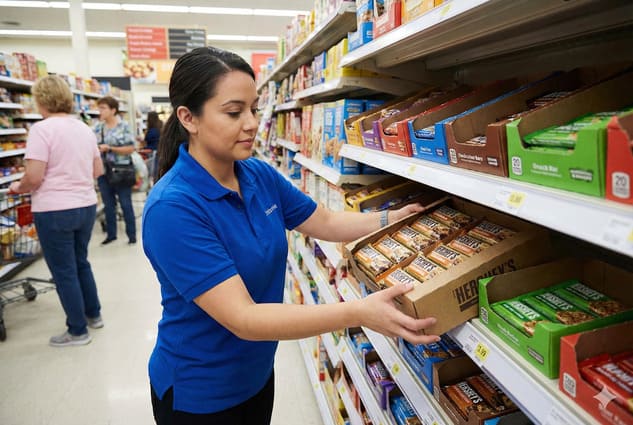
Retail confusion costs money. You want a display that sells, but you're stuck decoding acronyms. Let's clear up the difference so you can order the right box without headaches.
The difference between PDQ (Product Display Quickly) and RRP (Retail Ready Packaging) lies primarily in their structural intent and retail function. While a PDQ functions as a specialized, high-visibility merchandising tray designed to showcase impulse products on counters or shelves, RRP serves a dual purpose as a robust transport container that transitions instantly into a shelf-ready fixture, optimizing restocking efficiency.
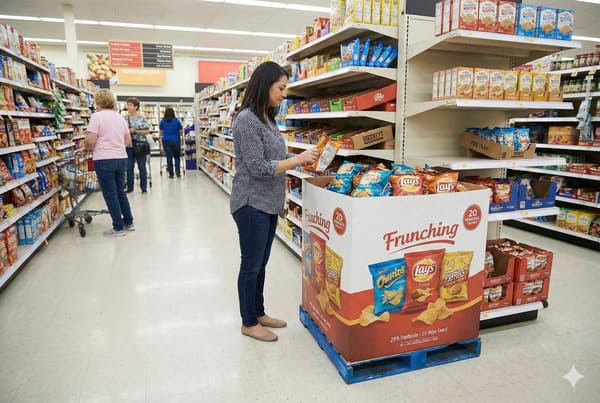
If you order the wrong one, your product might get rejected by the retailer's compliance team. Let's break down exactly what these terms mean on the factory floor.
What does PDQ mean in retail?
Walk into any high-volume store. See those small trays holding gum or batteries? That's the silent salesman we call a PDQ. It's all about speed and grab-and-go.
PDQ means in retail (Product Display Quickly) a compact, high-speed merchandising unit designed to drive immediate impulse purchases at the point of sale. These units are typically lightweight, corrugated trays measuring approximately 12 to 14 inches (30–35 cm) wide, engineered to be placed directly onto checkout counters or aisle shelves without requiring complex assembly or staff intervention.
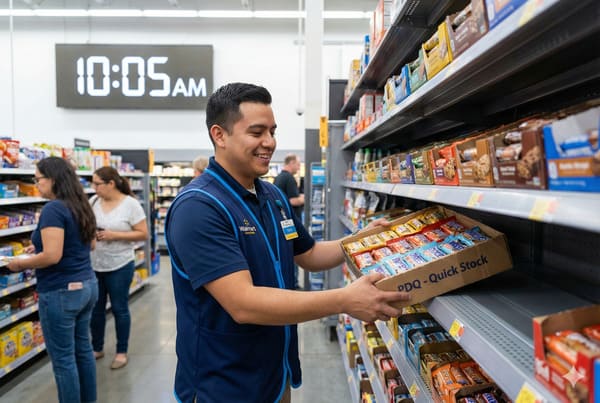
The Speed of Sales: Impulse vs. Inventory
When we talk about PDQs on the production line, we aren't just folding cardboard; we are engineering a "3-second sale1." A PDQ is designed for one thing: impulse purchases at high-traffic zones like checkouts or end-cap shelves. But getting the structure right is messy business, and I have seen many brands fail here.
I learned this the hard way a few years back. A client wanted a massive PDQ with a 5-inch (12.7 cm) front lip to print their giant logo. I told them, "Don't do it." They insisted. The result? That high wall hid 50% of the actual product. Shoppers couldn't see what was inside unless they were six feet tall. Sales tanked, and the retailer scrapped the displays after a week. Now, I strictly enforce the "Product First" rule. The front lip of a PDQ acts strictly as a fence, not a billboard. If the lip is too high, we die-cut a dip or use a clear PVC window to ensure visibility.
We also have to fight gravity and material physics. Lightweight trays have a fatal flaw: when a customer buys the first few items, the center of gravity shifts back. I've seen cheap displays tip over backwards on a glass counter because the designer didn't account for the "Empty Front Test2." That's a liability lawsuit waiting to happen. To fix this, I often extend the easel back or add a hidden "false bottom" with a double-thick corrugated pad to weight it down.
Furthermore, material selection is critical for these small units. Unlike large floor displays that use BC-flute, for a PDQ, I almost always use E-Flute3 (Micro-flute). Why? Because E-flute has a tighter wave structure, which provides a smoother printing surface for high-resolution graphics and better crush resistance for small items. If you use standard B-flute for a small lipstick tray, the "washboard effect" will make your expensive branding look cheap and pixelated. We test every PDQ to withstand at least 50 aggressive customer interactions without losing structural integrity.
| Feature | PDQ Display | Standard Shelf Stocking |
|---|---|---|
| Primary Goal | Impulse Buy / Speed | Inventory Storage |
| Placement | Checkout / Counter / Shelf | General Aisle Shelf |
| Lip Height | Low (Max 2" usually) | N/A (Shelf edge) |
| Stability Risk | High (Tipping backwards) | None |
| Material | E-Flute (High Print Quality) | Standard B-Flute |
I can produce a structural white sample of your PDQ in 24 hours using my Kongsberg digital cutter, proving the stability before we commit to mass production.
Is RRP the same as MSRP?
This acronym mix-up happens every week. You ask for RRP, I think packaging, you mean price. Let's stop the expensive emails and get on the same page immediately.
No, RRP is not the same as MSRP, though the terms are often confused due to regional terminology differences. While RRP (Recommended Retail Price) acts as a pricing guideline synonymous with MSRP (Manufacturer's Suggested Retail Price), in the manufacturing sector, RRP stands for Retail Ready Packaging, referring to shipping cartons engineered with perforations for rapid shelf display conversion.

The Acronym Minefield: Pricing vs. Packaging Engineering
This is the most annoying conversation I have with new buyers. You send me an email saying, "What is the RRP for this unit?" and I have to pause. Are you asking me how much to sell the crossbow for? Or are you asking for a "Retail Ready Packaging4" solution? In my factory, RRP (also known as SRP or Shelf Ready Packaging) is a specific structural style. It's a master shipper that transforms.
The engineering behind an RRP box is actually harder than a standard display. We have to balance two opposing forces: "Shipping Strength5" versus "Tearing Ease." The box needs to be tough enough to survive a truck ride from Shenzhen to Chicago without crushing, but the perforation (the "zipper" rule) needs to be weak enough that a busy 19-year-old stock clerk can rip the top off in two seconds without using a box cutter.
If we get the "Nicking Ratio6" wrong—say, the cuts are too shallow—the clerk will struggle. And trust me, if they struggle, they will just grab a knife and hack your box to pieces, ruining your branding. Or worse, the box pops open in the shipping container because the nicks were too deep. I usually run a vibration test on these specific perforations. It's a delicate balance. We often use a 3mm cut / 1mm tie ratio for B-flute board to hit that sweet spot. I also have to check the "Tier Sag" if the RRP is stacked. If the cardboard is too weak (like a 32 ECT recycled liner), the bottom box crushes under the weight of the top box. I specify High-Grade Virgin Kraft Liner7 for these jobs to ensure the RRP stays crisp on the shelf.
| Term | Industry Context | Definition | Function |
|---|---|---|---|
| MSRP | Sales / Pricing | Manufacturer's Suggested Retail Price | Sets the baseline consumer price. |
| RRP (Price) | Sales / Pricing | Recommended Retail Price | Same as MSRP; used more in UK/AU. |
| RRP (Pack) | Manufacturing | Retail Ready Packaging | A shipping box that tears open to become a shelf display. |
| SRP | Manufacturing | Shelf Ready Packaging | Synonym for RRP (Packaging). |
Don't let acronyms delay your launch; tell me if you need a price sticker or a tear-away box, and I will engineer the correct solution.
What is the difference between PDQ and pop?
Think of this as a family tree. One is the parent, the other is the specific child. Mixing them up leads to over-engineering and blowing your budget on features you don't need.
The difference between PDQ and POP is primarily hierarchical, as POP (Point of Purchase) represents the broad category while PDQ is a specialized subset. POP encompasses the entire ecosystem of in-store marketing fixtures, including floor stands and pallet displays, whereas PDQ (Product Display Quickly) specifically refers to compact, pre-packed counter trays or shelf units measuring roughly 10 inches (25 cm) deep.
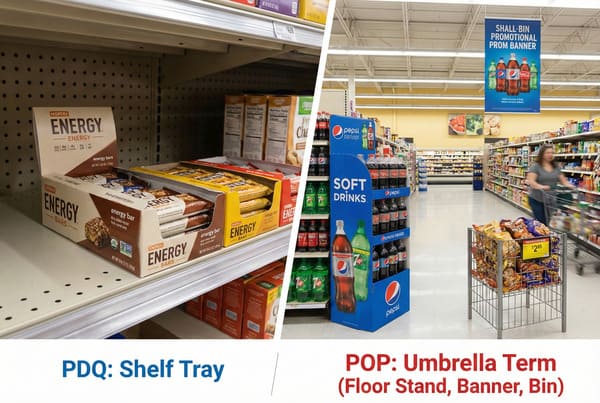
Structural Hierarchy: The Tray vs. The Ecosystem
I get inquiries all the time: "Harvey, I need a POP display." That's like walking into a car dealership and saying, "I need a vehicle." Do you need a truck or a scooter? POP (Point of Purchase8) is the entire ecosystem. It includes the giant Pallet Displays at Costco, the Sidekicks hanging on the aisle, the Floor Stands, and yes, the PDQs.
The PDQ is just the small, tray-style subset of POP. Why does this matter? Cost and engineering. A floor POP display needs internal metal bars or heavy-duty double-wall corrugated board (EB-Flute) to hold 50 lbs (22 kg) of product. A PDQ tray9 sits on a counter and might only hold 5 lbs (2.2 kg). If you ask me for a "POP" without specifying, I might quote you for a floor unit that costs $18, when all you needed was a $2 counter tray.
Also, the structural physics are totally different. With large POP floor stands, I worry about "The Soggy Bottom10"—moisture from floor mopping ruining the base. I have to apply water-resistant coatings to the bottom 2 inches (5 cm). With PDQs, I worry about "tipping angles" and "shelf depth." Retail shelves in the US are standardized. If I design your PDQ to be 16 inches (40 cm) deep, but the Target shelf is only 14 inches (35 cm) deep, your beautiful display hangs off the edge and eventually falls on the floor. I also have to check "Sidekick" compatibility. If you want a POP display to hang on a "Power Wing," I can't use a standard cardboard hook; I need to install a "Universal Metal Bracket11" to fit the gondola slots. Knowing the difference ensures we pick the right "skeleton" for your product.
| Attribute | PDQ (Counter/Shelf Tray) | General POP (Floor/Pallet) |
|---|---|---|
| Size | Small (Countertop / Shelf) | Large (Free-standing) |
| Cost Range | Low ($1.50 – $4.00) | Medium/High ($12.00 – $45.00) |
| Material | E-Flute or B-Flute (Lighter) | EB-Flute or BC-Flute (Heavy Duty) |
| Retail Goal | Impulse / Checkout Zone | Destination / Aisle Interruption |
I help you choose the right format by asking where the retailer will place it, ensuring you don't overpay for structure you don't need.
What does PDQ mean in shipping?
Shipping air is a crime against your profit margin. If your PDQ isn't designed specifically for the master carton, you are paying to ship empty space across the ocean.
PDQ means in shipping a pre-loaded merchandising unit that is packed and transported inside a master carton for immediate deployment. These "Shipper Displays" are rigorously tested to ISTA 3A standards to ensure the internal product, weighing between 5 to 15 lbs (2.2–6.8 kg), remains secure and undamaged during transit, allowing for a "lift-off" setup at the destination.

Logistics Engineering: The "Shipped in Own Container" Myth
Many designers create a beautiful PDQ shape—maybe a curved back or a weird header card—without thinking about how it fits in a shipping box. This drives me crazy. If your PDQ has a weird shape, I can't "nest" them. That means I have to use a bigger master carton, and you end up shipping a container full of air.
Here is the reality of "Pre-filled" PDQs. We call them "Shippers." The PDQ is loaded with your product here in my China factory. Then we slide it into a master carton. But here is where it gets tricky. UPS and FedEx belts are brutal. If the master carton is too tight, the corners of your PDQ get crushed. If it's too loose, the product inside rattles around and scuffs the ink. I use a "Nested Packing12" strategy where possible, often tucking the header card inside the hollow base to save space. We also design "Air-Cell" corner buffers—folded cardboard cushions built into the shipping carton corners. This creates a 1-inch (2.54 cm) crumple zone. It sacrifices the cheap outer box to save the expensive display inside.
Plus, for Amazon shipments, we have to pass the ISTA 6 test. This is the "SIOC" (Ships In Own Container) standard. If we don't, Amazon charges you a prep fee or a chargeback. I have a client who ignored this and got hit with a $5,000 fine because his box tape wasn't the right reinforced grade. So, "PDQ in shipping" isn't just a box; it's a survival capsule for your product. I also have to verify the "ISF 10+213" filing data 72 hours before the ship leaves, or US Customs will flag the container. It's not just about cardboard; it's about compliance.
| Shipping Method | Pros | Cons |
|---|---|---|
| Flat-Packed | Lowest shipping cost (volume). | Store staff must assemble (High failure rate). |
| Pre-Filled (Shipper) | 100% Compliance. Ready to sell. | Higher shipping cost. Needs robust protection. |
| Nested Component | Saves 20-30% volume. | Requires clever structural design. |
I optimize your pack out to ensure maximum container efficiency, often saving thousands in freight costs just by tweaking the dimensions by a fraction of an inch.
Conclusion
Don't let acronyms kill your campaign. Whether you need a simple PDQ tray or a complex RRP system, getting the specs right is the only way to win at retail. Would you like me to send you a Free Structural White Sample to test your product fit before you order?
Understanding the concept of a '3-second sale'can enhance your marketing strategies for impulse purchases. ↩
Discover the 'Empty Front Test'to ensure your displays remain stable and effective during customer interactions. ↩
Learn about E-Flute's benefits for packaging to improve your product presentation and durability. ↩
Explore this link to understand how Retail Ready Packaging can enhance product visibility and sales. ↩
Learn about techniques to improve Shipping Strength and protect your products during transit. ↩
Discover the significance of the Nicking Ratio in packaging to avoid damage and maintain branding. ↩
Find out why High-Grade Virgin Kraft Liner is preferred for durable and effective packaging solutions. ↩
Understanding POP can enhance your marketing strategies and improve sales at retail locations. ↩
Learn about PDQ trays to optimize your product placement and increase impulse buys. ↩
Discover how to prevent display damage and maintain product integrity with effective solutions. ↩
Explore the importance of proper display fittings to ensure your products are showcased effectively. ↩
Explore this link to understand how Nested Packing can optimize shipping efficiency and reduce costs. ↩
Understand the importance of ISF 10+2 filing to ensure smooth customs clearance and avoid delays. ↩