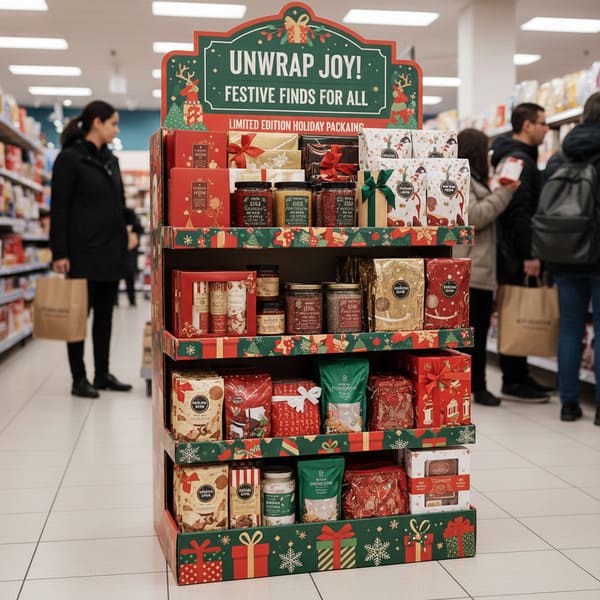
Holiday shelves are brutally competitive. A plain box vanishes in the chaos, killing your Q4 revenue potential instantly. Let's fix that.
Your business needs holiday packaging to drive up to 30% more sales during peak seasons by instantly enhancing shelf visibility. This strategy taps into emotional spending, as 80% of consumers prefer festive, gift-ready designs. It significantly boosts perceived product value, naturally allowing for higher retail price points.

You spend months perfecting the product, but the final three feet in the retail aisle dictate whether you actually get paid. Here is how seasonal display packaging changes the game.
Why packaging has become essential in business?
A wobbly display kills sales faster than bad pricing. Buyers walk right past generic boxes. You need a structural billboard that forces them to stop immediately.
Packaging is essential in business because it serves as a critical tool that protects products during transit, elevates brand identity, and communicates vital information. Effective packaging significantly reduces shipping damages, creates lasting consumer impressions, and heavily influences purchasing decisions through visual appeal across retail and e-commerce environments.
The Psychology of Visual Disruption
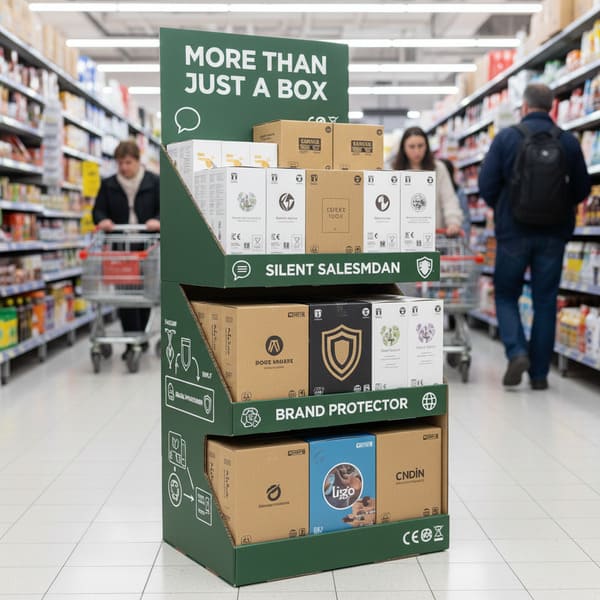
I learned this the hard way. Early on, a client insisted on shipping plain brown corrugated boxes to a major pharmacy chain, thinking the product would sell itself. Three weeks later, the store manager shoved the entire lot to the back aisle because it looked like warehouse overstock. It was a disaster for their quarterly numbers. Why is packaging essential now? Survival. The modern retail aisle is packed with visual noise. Your business needs a silent salesperson that never takes a break. Standard shelves are boring and cluttered, leading to massive shopper decision fatigue.
When you put your product in a custom standalone display1, you visually isolate it. That isolation forces the shopper to stop. Curvy, die-cut shapes grab attention instantly. I tell my clients that a standalone display isolates the product so the customer picks it up faster and with more confidence. A confident pick-up leads directly to a smoother placement on the checkout conveyor belt. It is not just about holding the product anymore; it is about actively controlling the buying environment and generating impulse sales2 before the customer even reaches the main aisle.
I have seen brands double their sell-through rate simply by moving off the metal gondola shelf and onto a branded cardboard floor unit. Retailers like it too. Walmart and Target are moving away from messy flat-pack shelves because they want displays that are instantly shoppable. We pre-fill the displays at the factory so when the pallet drop hits the retail floor, the store staff just removes the shipper shroud. You are selling within sixty seconds. That speed to market is exactly why packaging has shifted from a background operational cost to the most essential marketing asset your business owns.
| Retail Strategy | Shopper Focus Level | Setup Time In-Store | Average Sales Lift |
|---|---|---|---|
| Standard Gondola Shelf | Low (High decision fatigue3) | Manual stocking (Slow) | Baseline |
| Flat-Pack Floor Display | Medium (If assembled correctly) | 15-20 Minutes | +150% |
| Pre-Filled Co-Packed Display4 | High (Total visual isolation) | Under 60 Seconds | +400% |
Stop letting your product drown in the retail background. I engineer standalone displays that bypass the crowded shelf and put your brand directly in the strike zone. Send me your product dimensions and I will build a structure that demands attention.
What is the significance of holiday themed packaging and how does it influence consumer buying decisions?
Shoppers are overwhelmed during the holidays. Standard shelves are boring and cluttered. You have roughly three seconds to grab their attention before they move on completely.
Holiday themed packaging significance is its ability to trigger emotional impulse buying. Seasonal POP (Point of Purchase) displays isolate products, visually disrupting the shopper's journey. This focused presentation increases product visibility and conversion rates up to 400 percent within a standard 3-foot (91 cm) retail interaction zone.

Strategic Permeability and Shop-Through Architecture
Clients hate hearing this, but a generic red box with a snowflake won't save a bad holiday retail strategy. Last year, a brand launched a generic festive dump bin that looked exactly like the three other competitor bins next to it. Shoppers walked right past it. It was a complete waste of their seasonal budget. Holiday packaging influences decisions5 because shoppers are highly emotional and incredibly rushed during Q4. They are actively looking for quick gifting solutions. If your packaging tells a clear story, you win the impulse buy.
I focus heavily on structural architecture that enhances shoppability. For example, a heavy 4-sided pallet display looks great in the center of an aisle, but if the internal support walls are solid, shoppers cannot see products on the other side. It creates dead zones. My design logic uses windowed supports. This creates a see-through effect. A shopper standing on the north side can see light and the product on the south side. Visual permeability makes the display feel lighter and more inviting.
It encourages customers to walk around the entire unit, increasing their dwell time. More dwell time equals more items in the cart. We use specific die-cut windows that expose the primary product face by at least 85 percent. If they cannot see the label from 3 feet (91 cm) away, they will not stop walking. Strategic visibility is what actually triggers the buying decision when the store is packed with stressed holiday shoppers.
| Structural Design | Light Penetration | Shopper 360° Interaction | Dead Zone Risk6 |
|---|---|---|---|
| Solid Wall Pallet Display | Poor | Low (Shoppers stay on one side) | High |
| Open Dump Bin | High (Top only) | Medium | Medium (Items crush at bottom) |
| Windowed Support "See-Through" Pallet7 | Maximum | High (Encourages walk-around) | Zero |
Blind spots on a display mean dead inventory for your business. I use windowed support columns to make sure your product is visible from every angle in the aisle. Let me map out the sightlines for your next promotional run.
Why is packaging important to customers?
Shoppers judge your product by its cover. Flimsy materials scream low quality. If the display looks cheap, they assume the product inside is cheap too.
Packaging important to customers is a reflection of product quality and brand values. Consumers increasingly demand 100 percent mono-material sustainable structures under 10 lbs (4.5 kg) that easily fit recycling streams. A sturdy, plastic-free design communicates premium quality, heavily influencing brand loyalty and immediate retail purchasing decisions.

The Psychology of Interaction and Sustainability
It drove me crazy watching premium brands ruin their image with terrible hardware. A tech client once insisted on using plastic corro-clips to hold their heavy shelves together. They thought it was safer. A week into the promotion, a customer snagged their sweater on a protruding clip, and store managers demanded the whole fleet be pulled. Consumers today hate mixed materials. They do not want to tear plastic clips out of cardboard to recycle it in their blue bin. They just won't do it.
So I engineered a strictly 100% plastic-free mandate for our premium units. We use origami-style paper locks and structural folds8 that replace those ugly clips completely. It is all mono-material. We also use water-based varnish instead of plastic lamination. This means the entire display can be tossed straight into the US curbside recycling system.
Plus, we address the tactile experience. Standard freshly cut corrugated board can be as sharp as a razor. Nothing ruins a customer's shopping experience faster than a paper cut while grabbing a product. We utilize a wave-cut safety edge9 on all hand-access areas. It costs me a bit more in tooling, but it protects the end-user and elevates your brand's perceived value instantly. Customers associate physical safety and environmental responsibility directly with the quality of the product inside the box.
| Material Feature | US Recycling Compliance | Customer Safety Risk | Brand Perception |
|---|---|---|---|
| Plastic Corro-Clips | Fails (Requires manual separation10) | High (Snagging hazard) | Cheap / Outdated |
| Glossy Plastic Lamination | Fails (Contaminates pulp stream) | Low | Standard |
| Origami Paper Locks & Wave-Cut Edges | 100% Curbside Recyclable | Zero (No sharp edges) | Premium / Eco-Friendly |
Your customer feels the difference between a cheap plastic-laced stand and a heavy-duty sustainable structure. I eliminate the plastic and the sharp edges so your brand delivers a premium, guilt-free interaction every single time. Let me show you how strong paper locks really are.
Why are holidays critical for businesses?
Q4 makes or breaks the fiscal year. Miss the holiday shipping window by one week, and you are stuck holding dead inventory until next year.
Holidays critical for businesses represent the highest concentration of consumer spending and retail foot traffic annually. Brands rely on this 90-day (3-month) Q4 window to liquidate inventory and maximize margins. Executing rapid PDQ (Product Display Quarter) deployments is essential for capturing allocated retailer marketing development funds.
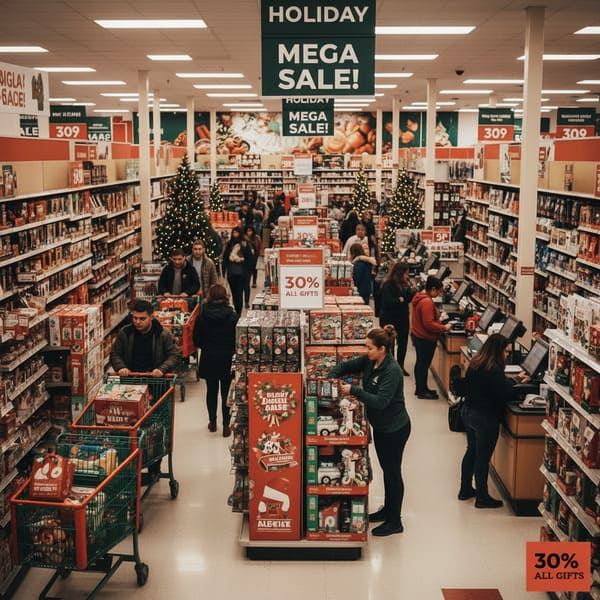
Maximizing Co-Op Funds and Logistics Windows
I have seen grown men panic over the Chinese New Year gap11. A massive US hunting brand thought they could place their holiday restocking order in late January. I had to tell them the brutal truth: the factory shuts down, and your lead time just jumped from 15 days to 60 days. They nearly missed the entire late-winter hunting season. The reality is, holidays are critical because the volume is unforgiving. You are not just fighting for shelf space; you are fighting the calendar and the US distribution grid.
If your pallet display is 1 inch (2.5 cm) too wide for a standard 48×40 inch (121×101 cm) GMA pallet, the Walmart automated DC will reject it, and you miss Black Friday. Period. I strictly engineer every footprint to fit that US logistics grid flawlessly without overhang. Also, smaller brands forget that big retailers like Target often have Q4 MDF (Market Development Funds)12 available. They will literally help pay for your displays if you execute them correctly.
To get that money, you have to hit their strict compliance guidelines. I maintain an internal database of these retailer specs. If you tell me this is for Costco, I automatically upgrade the board to EB-flute to meet their 2,500 lbs (1133 kg) dynamic load rule so you get approved without a fight. Holidays are a logistics war, and packaging is your frontline armor.
| Retailer Destination | Pallet Standard Requirement | Min. Dynamic Load Capacity13 | Consequence of Failure |
|---|---|---|---|
| Walmart / Target DC | 48×40 inch (No Overhang) | 1,500 lbs (680 kg) | Immediate DC Rejection14 |
| Costco / Club Store | Strictly 48×40 inch GMA | 2,500 lbs (1133 kg) | Contract Penalty / Delays |
| Harvey's Factory Spec | 48×40 inch (Pre-calculated) | 3,500 lbs (1587 kg) Safety Factor | Flawless Floor Execution |
Missing a holiday deadline is the most expensive mistake you can make. I map out the production calendar backward from your target floor date to ensure you never hit a bottleneck. Tell me your launch date, and I will handle the math to get it there.
Conclusion
Winning the holiday rush requires rock-solid structures, strict retail compliance, and perfect timing. Do not leave your Q4 profits to chance. Reach out today to get a Free Structural 3D Rendering.
Learn how custom standalone displays can dramatically increase product visibility and sales, helping your brand stand out in crowded retail environments. ↩
Discover proven strategies for boosting impulse sales with effective retail displays, turning casual shoppers into buyers before they reach the main aisle. ↩
Understanding decision fatigue can help retailers optimize store layouts and product displays to improve shopper satisfaction and boost sales. ↩
Learn how Pre-Filled Co-Packed Displays can dramatically increase sales and reduce setup time, making them a top choice for efficient retail execution. ↩
Learn how effective holiday packaging can drive impulse purchases and boost sales, especially during the busy Q4 shopping season. ↩
Understanding dead zone risk can help you optimize your retail displays for better shopper engagement and increased sales. ↩
Learn how this innovative pallet design maximizes light penetration and shopper interaction, eliminating dead zones and boosting product visibility. ↩
Learn how innovative origami-style paper locks and structural folds can eliminate plastic hardware, making packaging fully recyclable and eco-friendly. ↩
Discover how a wave-cut safety edge enhances user safety and brand value by preventing injuries from sharp corrugated board edges. ↩
Understanding manual separation helps you see why some materials fail recycling compliance and how it impacts sustainability efforts. ↩
Understanding the Chinese New Year gap is crucial for planning inventory and avoiding costly delays in your supply chain, especially during peak seasons. ↩
Learning how to secure Q4 MDF can help offset display costs and boost your retail presence during the critical holiday season. ↩
Understanding Min. Dynamic Load Capacity helps ensure your shipments meet retailer requirements and avoid costly rejections or penalties. ↩
Learning about Immediate DC Rejection can help you avoid shipment failures and maintain strong relationships with major retailers. ↩