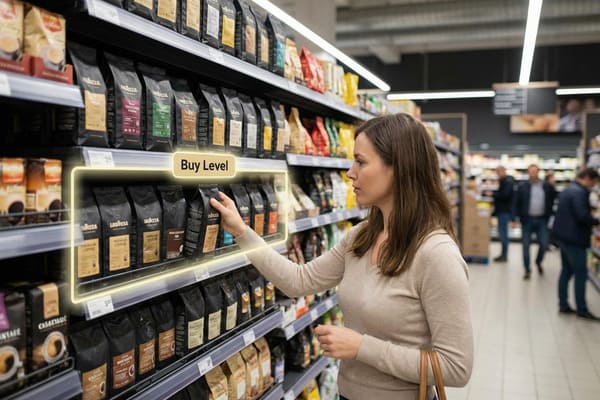
You walk into a store, and boom—you grab that chocolate bar without thinking. That's not an accident. It's calculated geometry. Retailers know that if you have to work to find a product, you probably won't buy it.
Retailers place products at eye level because this prime vertical zone, located 48 to 60 inches (122–152 cm) from the floor, aligns with the natural gaze of adult shoppers. This strategic placement maximizes visual attention, minimizes physical effort, and significantly increases the sales velocity of high-margin merchandise.

What is the eye level in retail?
Most brands think design is about pretty colors. It's not. It's about fighting for that split-second of attention before the shopper walks away.
The eye level in retail is the optimal merchandising area situated 48 to 54 inches (122–137 cm) off the ground, corresponding to the direct line of sight for an average consumer. Products positioned in this "Golden Zone" typically generate the highest sell-through rates by facilitating immediate brand recognition and impulsive selection.
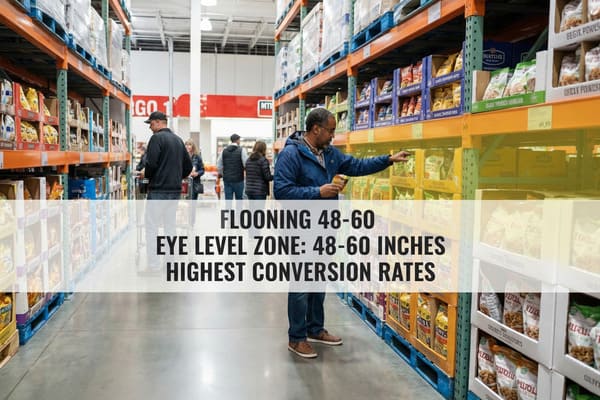
The Structural Anatomy of the "Strike Zone"
We need to talk about the "Strike Zone," or as I call it on the factory floor, the "Make or Break" line. I argue with designers about this daily. They love putting logos on the very top header of a 72-inch (183 cm) display. But here is the messy reality: the average female shopper in North America is roughly 5'4" (163 cm). If your key message is floating up at 6 feet (1.8 m), she never sees it. She's looking straight ahead, not up at the ceiling.
I learned this the hard way a few years back. We built these beautiful, towering floor displays for a snack brand. They looked majestic in the CAD rendering. But when we put them in a Walmart test store, sales were flat. Why? Because the "Call to Action1" was printed at 65 inches (165 cm). The shoppers were walking right past it because their eyes were focused on the area between their chest and eyes. That was a painful meeting with the client, and we had to reprint the headers at my cost.
Now, we follow the "Human Height Heat Map2" rule. The "Hero Product" or the primary flavor must sit exactly at 50 to 54 inches (127–137 cm) from the floor. This is the "Eye-Level Buy Level3." Anything below 30 inches (76 cm) is the "Stoop Zone4"—that's where you put the heavy refill bags or bulk items that people will dig for. But high-margin impulse items? If they aren't in that 48-54 inch window, they are invisible. It's not just about height; it's about simple ergonomics. A shopper shouldn't have to crane their neck or bend their knees to give you their money. If they have to squat to see your label, you've already lost the sale.
| Vertical Zone | Height Range (Inches) | Height Range (cm) | Shopper Engagement | Ideal Product Type |
|---|---|---|---|---|
| Stretch Zone | > 72" | > 183 cm | Very Low | Overstock / Signage |
| Eye Level | 48" – 60" | 122 – 152 cm | Highest (The "Golden Zone") | High-Margin / Impulse |
| Touch Level | 30" – 48" | 76 – 122 cm | High | Best Sellers / Staples |
| Stoop Zone | < 30" | < 76 cm | Low | Bulk / Heavy Items |
When we design your structure, I act like a dictator about that 50-inch mark. I will physically measure the distance from the floor to the primary shelf lip on the prototype. If it's 46 inches, we raise it. If it's 58 inches, we lower it.
What does eye level mean in business?
It's simple math. Eye level equals "Buy Level." If you aren't there, you are paying rent for space that doesn't pay you back.
Eye level in business means the financial prioritization of high-value SKUs (Stock Keeping Units) to drive maximum profitability per square foot. Retailers leverage this premium shelf estate to capture impulse revenue, often charging brands substantial slotting fees for these high-visibility locations compared to bottom-shelf placement.
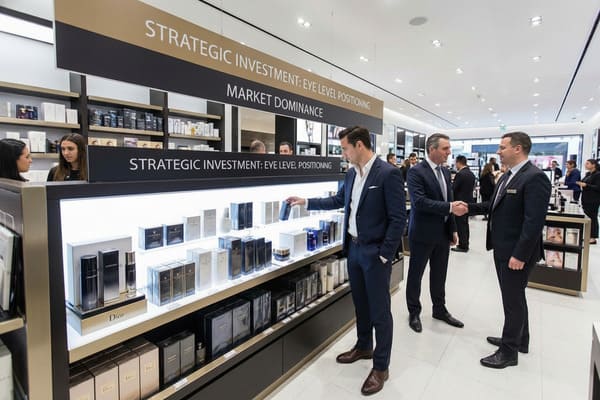
Strategic Cost Analysis of Shelf Placement
In the retail game, "Eye Level" isn't just geometry; it's currency. There is a reason why brands pay massive "Slotting Fees5" to get their cereal box on the middle shelf. But here is the secret that my cardboard display clients use to cheat the system: A Floor Display creates artificial eye level. When you are stuck on the bottom shelf in the aisle, your sales suffer. But a cardboard floor display (FSDU) parked in the aisle or near the checkout creates a new "Eye Level" moment completely separate from the shelf war.
We calculate the "Sales Lift6" (ROI) based on this mechanism. A standalone display typically increases sell-through by 400% compared to the home shelf simply because we control the vertical height. But I see brands waste this opportunity constantly. I had a client from New York who wanted to fill the eye-level shelf of his display with his cheapest, low-margin accessory. He thought, "It's cheap, so people will buy it easily." Wrong. I told him: "You are wasting the most expensive real estate in the store on a $2 item." It drove me crazy because he was practically burning money.
Eye level is for your "Cash Cow7"—the product with the best margin or the newest innovation you need to launch. We use the "3-Second Lift" rule. You have three seconds to disrupt the shopper's autopilot. If that prime spot is occupied by a boring, low-value item, you failed. Also, don't forget about "Retailer Funding8" or MDF (Market Development Funds). Often, big retailers like Target have budgets to help pay for these displays if you can prove you are bringing a high-value product to that eye-level zone. I help clients draft the specs to apply for that money, proving that our structural design guarantees visibility.
| Placement Strategy | Cost to Brand | Visibility | Conversion Rate | Notes |
|---|---|---|---|---|
| Bottom Shelf | Low / None | Poor | 20-30% | "Destination" shoppers only. |
| Eye-Level Shelf | High (Slotting Fees) | Excellent | 80-90% | Expensive to maintain. |
| Cardboard Display | Medium (Manufacturing) | Superior (Disruptive) | 100%+ (Impulse) | Bypasses shelf fees; creates new eye level. |
I always tell my buyers to look at the margin, not the unit cost of the box. If placing your premium product at exactly 52 inches drives 50 extra sales a week, the cardboard structure pays for itself by Day 2. The remaining 28 days are pure profit.
What is supermarket eye level?
Supermarkets are a battlefield. The shelves are standardized, but the shoppers aren't. You have to design for the average, or you lose the majority.
Supermarket eye level is the specific merchandising height usually set between 50 and 54 inches (127–137 cm) to accommodate the shopping posture of grocery consumers. This vertical standard ensures that product labels remain legible and scannable without requiring the shopper to tilt their head or alter their stance.
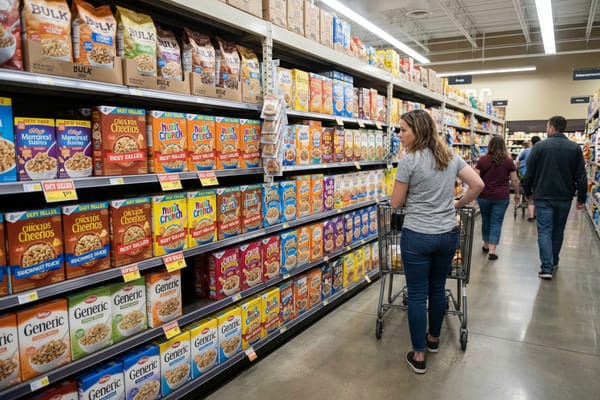
Anthropometrics and Visual Ergonomics
Let's get into the weeds of "Planogram Agility9." Supermarket shelves usually follow a standard gondola grid, with notches every 1 inch (2.54 cm). But just because you can put a shelf anywhere doesn't mean you should. I mentioned the 50-54 inch rule, but here is a messy detail most people miss: The "Chin-Up" angle. On the lower shelves of a cardboard display (below 30 inches or 76 cm), the product is basically staring at the customer's knees. To see the label, the customer has to step back three feet and crouch. They won't do that. They are lazy.
So, for supermarkets, we engineer the "Chin-Up" Angled Shelf. We physically tilt the bottom two shelves upwards by about 15 degrees. It sounds minor, but it forces the product to "look up" at the customer's eyes. I had to scrap a production run of 500 units once because we didn't account for the bottle weight sliding forward on this angle—it was a disaster, bottles everywhere. Now, we use a high-friction "Mop Guard" coating or a specific lip height to catch them before we mass produce.
Also, consider the ADA (Americans with Disabilities Act)10 "Reach Range." If you are selling into major chains like CVS or Walgreens, or government buildings, you have legal constraints. The max high forward reach is 48 inches (122 cm) and the low is 15 inches (38 cm). If you put your product too high, you aren't just losing sales; you might be failing compliance for accessibility. If a wheelchair user cannot reach your product, the retailer might reject the entire display program. I check these specs before we even cut the white sample.
| Feature | Standard Spec | Purpose |
|---|---|---|
| Target Height | 50" – 54" (127 – 137 cm) | Primary Eye Level for Adults. |
| Chin-Up Angle11 | 15 degrees (Bottom shelves) | Redirects gaze from knees to eyes. |
| ADA Max Reach | 48" (122 cm) | Accessibility compliance. |
| Child Eye Level | 30" – 36" (76 – 91 cm) | Target zone for toys/candy. |
We don't just guess these angles. I test them. I'll stick a prototype in my showroom and walk past it at different distances to see if the logo pops or disappears. If I can't read it from 10 feet away, we change the angle.
What is the height of a retail store?
You'd think the sky is the limit, but it's actually the truck that limits us. And inside the store, lighting kills visibility.
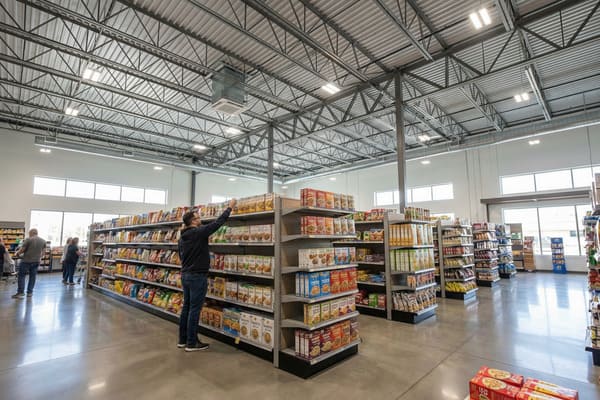
The height of a retail store is the vertical clearance from floor to ceiling, typically ranging from 12 to 22 feet (3.6–6.7 m) in standard outlets, though shelving is capped at 60 to 72 inches (152–183 cm). This restriction maintains clear sightlines for security cameras and allows overhead lighting to illuminate products effectively.
The "Shadow Zone12" and Logistic Ceiling
Here is the friction point between "Store Height" and "Display Height." A Walmart Supercenter has massive ceilings, but the lighting is Top-Down. If I build you a display with deep shelves and solid side walls, the top shelf blocks the light for the shelf below it. The products in the middle sit in the "Shadow Zone"—total darkness. Dark products don't sell. I fix this by cutting "Side Windows" or using "White Inner Liners" (bright white paper on the inside walls) to reflect that ceiling light downwards. It increases visibility by 40% without using expensive LEDs.
But the real "height" you need to worry about isn't the store ceiling; it's the truck. A standard US semi-trailer door is roughly 100-110 inches (254-279 cm) high. But LTL (Less Than Truckload) carriers want to double-stack pallets to make money. If your display on a pallet is 60 inches (152 cm) tall, they can't double-stack it. You just doubled your freight cost.
I advise clients to keep the "Shippable Pallet Height13" under 48-50 inches (122-127 cm) if possible. This fits perfectly into the US logistics infrastructure. If you absolutely need a 70-inch display, we design it as a "modular stack" or with a fold-over header so it ships short and stands tall. I've seen buyers get hit with massive "Non-Stackable" freight surcharges because their designer made the box 55 inches tall. Don't be that guy. Additionally, for club stores like Costco, we have to respect the "No-Overhang" rule and their specific height limits to ensure stability in the steel racking.
| Constraint Source | Max Height Limit | Reason |
|---|---|---|
| US Semi-Truck (LTL) | ~50" (127 cm) (for stacking) | Freight efficiency / Double-stacking. |
| Club Store (Costco) | ~58" (147 cm) (w/ pallet) | Racking safety / Sightlines. |
| Standard Gondola | 54" – 72" (137 – 183 cm) | Store visibility / Security cameras. |
| Shadow Effect | N/A | Deep shelves block overhead lights. |
I keep a database of these Retailer Specs. If you tell me this is for Costco, I know the height limit is different than for a 7-Eleven counter. We design for the environment, not just the product.
Conclusion
Placing products at eye level isn't magic; it's just reducing friction. Whether it's angling a bottom shelf or hitting that 50-inch sweet spot, the goal is to make buying effortless.
Would you like me to create a Free Structural 3D Rendering to test your product's eye-level placement before you commit to production?
Learn how to craft compelling Calls to Action that drive sales and improve customer interaction. ↩
Understanding the Human Height Heat Map can significantly enhance product visibility and sales in retail environments. ↩
Exploring the Eye-Level Buy Level can help you optimize product placement for maximum shopper engagement. ↩
Discover the importance of the Stoop Zone and how to strategically place products for better visibility. ↩
Understanding Slotting Fees can help you navigate retail negotiations and maximize product visibility. ↩
Exploring Sales Lift will provide insights into optimizing your product's performance and ROI in retail. ↩
Learning about Cash Cow products can enhance your strategy for maximizing profits in retail environments. ↩
Discovering Retailer Funding opportunities can significantly reduce costs and improve your display effectiveness. ↩
Learn how Planogram Agility can optimize shelf space and improve sales performance in supermarkets. ↩
Exploring ADA guidelines ensures compliance and accessibility, crucial for reaching all customers effectively. ↩
Understanding the Chin-Up Angle can enhance product visibility and customer engagement in retail environments. ↩
Understanding the Shadow Zone can help optimize product visibility and sales in retail environments. ↩
Learn about optimal pallet heights to avoid unnecessary freight costs and improve shipping efficiency. ↩