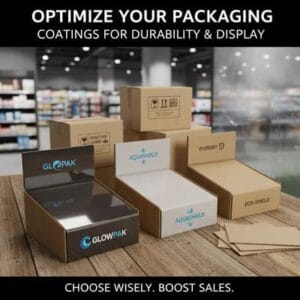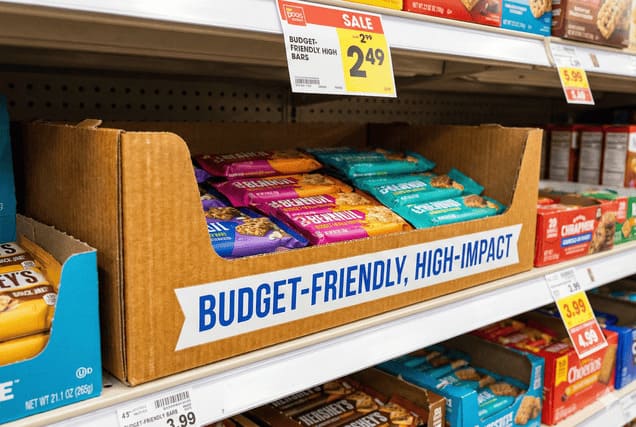
Retail shelves are crowded and competitive. If your product is difficult to see or hard to restock, you lose sales immediately. You need a solution that grabs attention fast.
PDQ trays are pre-loaded, retail-ready packaging solutions designed to speed up stocking and increase product visibility. They act as mini-billboards on shelves or counters, boosting impulse buys while reducing labor costs for retailers like Walmart or Costco.
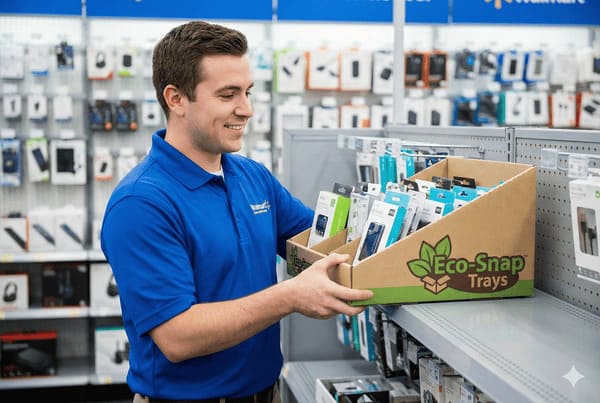
Let's look at how these smart displays drive sales and why they are essential for your retail strategy.
What are the benefits of using PDQ?
Retailers hate messy shelves and slow restocking processes. If your product is hard to handle, store clerks might leave it in the back, costing you valuable sales opportunities.
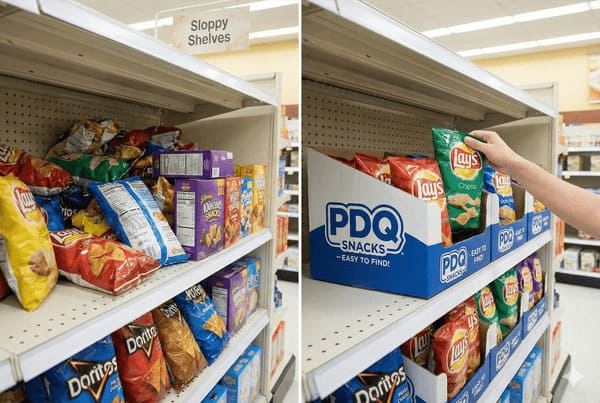
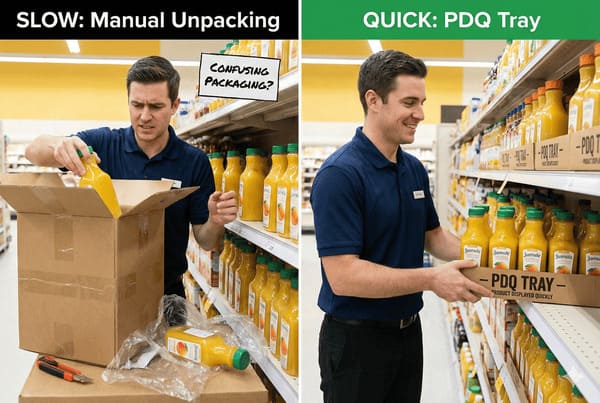
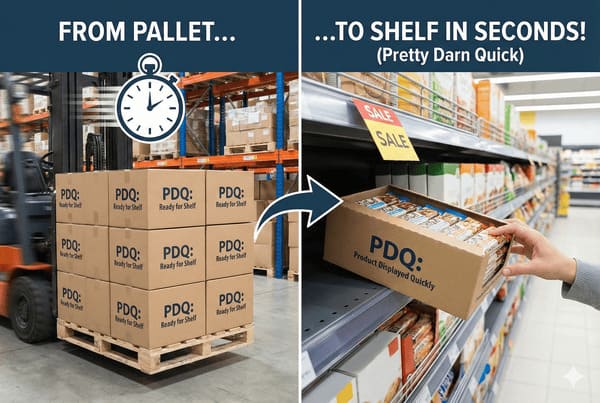
PDQ displays offer speed, visibility, and cost savings. They allow products to go from shipping case to shelf in seconds, ensuring neat presentation. This efficiency pleases retailers, while the custom branding on the tray grabs consumer attention and drives immediate sales.
Maximizing Retail Efficiency and Sales
When we talk about the benefits of PDQ trays1, we have to look at two sides: the retailer and the brand owner. For a brand like yours, visibility is everything. A standard product sitting loose on a shelf often gets pushed back or hidden behind competitors. A PDQ tray claims a specific territory on the shelf. It creates a dedicated frame for your product that prevents other items from encroaching on your space.
From the retailer's perspective, labor cost is a massive issue. They prefer products that follow the "five-second rule." If a stock clerk cannot open the box and put it on the shelf within five seconds, they might skip it. PDQ trays solve this by being "retail-ready2." The clerk simply tears off the perforated header and places the entire tray on the shelf. This ensures your product is always stocked and looking neat.
Furthermore, these displays are highly versatile. We can design them for check-out counters to drive impulse purchases of smaller items, or for main aisles to showcase premium goods. The structural design can be adapted to support heavy items or lightweight snacks.
Here is a comparison of how PDQ trays perform versus standard loose stocking:
| Feature | Loose Product Stocking | PDQ Tray Stocking3 |
|---|---|---|
| Shelf Visibility | Low. Products get mixed up or pushed back. | High. Dedicated branding area always visible. |
| Restocking Speed | Slow. Requires handling each unit individually. | Fast. One motion places multiple units. |
| Brand Control | Minimal. Relies only on primary packaging. | Strong. The tray acts as a secondary billboard. |
| Protection | Low. Items can tip over or get crushed. | High. The tray structure adds stability. |
| Retailer Preference | Low. High labor cost for staff. | High. Reduces labor and improves shelf tidiness. |
My team and I understand that you cannot afford for your display to collapse. At PopDisplay, I run specific load-bearing tests on every prototype we make. I ensure that the cardboard grade we select matches the weight of your product exactly, so when your goods arrive at a US retailer, they look as professional as the day they left my factory.
What does PDQ tray stand for?
You hear the term thrown around in logistics and sales meetings constantly. But knowing the exact definition helps you navigate retailer requirements and communicate better with suppliers.
A PDQ tray specifically stands for "Pretty Damn Quick" or "Product Display Quick" tray. It is a specific style of secondary packaging that holds multiple product units, designed for rapid placement on shelves or counters without requiring store staff to unpack individual items.
The Structural Integrity of Quick Displays
The term "Pretty Damn Quick" is not just a funny industry nickname; it is a functional description. The engineering behind a PDQ tray4 is focused on speed and stability. Structurally, these trays are different from standard shipping boxes. They usually feature a high back wall for support and a lower front lip to show off the product.
We often use corrugated cardboard5 for these trays because it is strong yet lightweight. The design must be precise. If the front lip is too high, it hides your product label. If it is too low, your products might tumble out when a customer bumps the shelf. We have to find the perfect balance.
Additionally, the "tray" aspect implies it has a footprint. This footprint must match standard retail shelf depths. A tray that overhangs the shelf is a safety hazard, and a tray that is too shallow wastes valuable space. We also have to consider the "facing" or how many products face the customer. More facings usually mean more sales, but it also requires a wider tray.
Below is a breakdown of common material grades we use for different PDQ needs:
| Material Grade | Best Use Case | Strength Level |
|---|---|---|
| E-Flute6 | Cosmetics, small electronics, lightweight items. | Moderate. Excellent for high-quality printing. |
| B-Flute | Canned goods, beverages, heavier retail items. | Strong. Good puncture resistance. |
| EB-Flute (Double Wall) | Heavy automotive parts, tools, bulk items. | Very Strong. heavy-duty load bearing. |
| Recycled Corrugated7 | Eco-friendly brands, general merchandise. | Variable. Meets sustainability goals. |
I know that color consistency is a major pain point for you. When we produce these trays, I oversee the printing process personally to ensure the red on your tray matches the red on your product box. My factory offers free modifications on samples because I want to prove to you that the structure and the design are perfect before we start mass production.
What does a PDQ stand for?
Confusion often arises between the tray itself and the broader concept. Understanding the general term helps when negotiating shelf space with big-box stores.
In a broader business context, PDQ stands for "Prompt Discount Quick" or "Product Display Quantity," though "Pretty Damn Quick" remains the industry standard. It refers to the entire category of retail-ready packaging that prioritizes speed of merchandising and supply chain efficiency.
Versatility Across Retail Environments
When a buyer from a major chain asks for a PDQ, they are talking about a philosophy of merchandising. They want a unit that sells itself. This concept applies to more than just small trays; it covers pallet displays, sidekicks, and floor stands. The goal is always the same: reduce the friction between the warehouse and the customer's cart8.
In the context of "Product Display Quantity9," the focus shifts to inventory management. The PDQ unit becomes the unit of measure. Instead of ordering 100 individual items, the retailer orders 10 PDQs. This simplifies their inventory counting and reordering. It is much easier to count 10 trays on a shelf than 100 loose bottles.
This concept also influences how we design the shipping carton. The "master case" that holds the PDQ must be easy to identify in a dark warehouse. We often print big, bold text on the outside indicating "PDQ INSIDE" so the stockers know to handle it differently than regular stock.
Here is how the PDQ concept applies to different retail locations:
| Display Type | Typical Location | Primary Goal |
|---|---|---|
| Counter PDQ10 | Cash registers, service desks. | Impulse buys, small ticket items. |
| Shelf PDQ | Main aisles, inline shelving. | Category organization, brand blocking. |
| Pallet PDQ11 | Main drive aisles, end caps. | High volume sales, bulk items. |
| Clip Strip | Hanging on shelf edges. | Cross-merchandising (e.g., batteries near toys). |
I have helped many clients who were frustrated by poor communication with suppliers regarding these specs. Since I focus on wholesale B2B, I understand the strict guidelines of US retailers. We design our PDQs to fit these "Prompt" and "Quick" standards so your logistics run smoothly and you never miss a delivery window for a new product launch.
What does PDQ stand for in packaging?
Packaging engineering is complex. When your logistics manager asks for PDQ specs, they are talking about very specific material standards and lifecycle requirements.
In packaging engineering, PDQ represents "Pre-Defined Quality" or the standard for Retail Ready Packaging (RRP). It signifies a package that protects the product during transit, is easy to open without a knife, and presents the merchandise attractively with minimal waste.
Balancing Durability and Sustainability
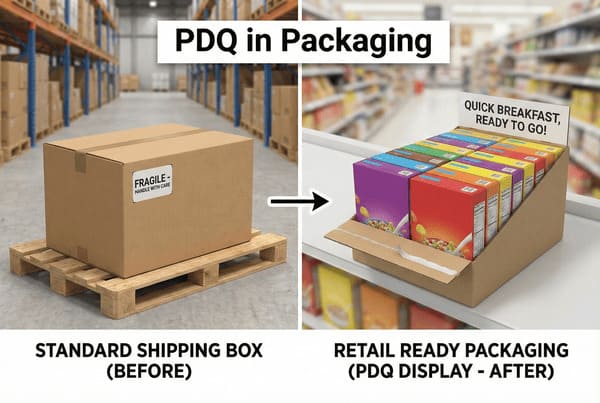
In the technical world of packaging, PDQ implies a dual function: it is a shipping container and a display unit combined. This creates an engineering challenge. The package must be tough enough to survive a journey across the ocean from China to the US, bouncing in a truck, and being handled by forklifts. Yet, once it arrives, it must look pristine and inviting to the customer.
We often use "perforations12" or tear-away sections to achieve this. The engineering of these perforations is critical. If they are too weak, the box bursts open during shipping. If they are too strong, the store clerk tears the box while trying to open it, ruining your brand image.
Sustainability is also a huge factor now. PDQ packaging is moving toward "Pre-Defined Quality13" in terms of eco-friendliness. Major retailers are demanding less waste. Traditional packaging involved a brown shipping box, plastic wrap, and then the display. Modern PDQ design integrates these layers to reduce material usage.
We can look at the lifecycle requirements for a high-quality PDQ package:
| Lifecycle Stage | Requirement | Engineering Solution |
|---|---|---|
| Manufacturing | Precision cutting and folding. | Die-cut molds with tight tolerances. |
| Transport | Stackability and crush resistance. | Vertical internal supports and B-flute walls. |
| Store Arrival | Easy identification and opening. | High-contrast outer print and zipper perforations. |
| Disposal | Easy recycling. | 100% recyclable cardboard, water-based inks14. |
I know that you care about certifications and quality control. My factory uses certified recyclable materials15 that meet global standards. We combine this with water-based inks that are vibrant but eco-friendly. I treat your packaging engineering seriously because I know that a damaged display means lost revenue for your business.
Conclusion
Choosing the right PDQ tray transforms your product from just another item on the shelf to a top-seller. With speed, visibility, and smart engineering, we help you win at retail.
Explore this link to understand how PDQ trays enhance product visibility and streamline stocking processes. ↩
Discover the concept of retail-ready packaging and how it can reduce labor costs and improve shelf efficiency. ↩
Explore this link to understand how PDQ trays enhance visibility and efficiency in retail displays. ↩
Explore this link to understand the significance of PDQ trays in retail and how they enhance product visibility. ↩
Discover the benefits of corrugated cardboard in packaging, including its strength and lightweight properties. ↩
Explore the benefits of E-Flute for packaging, especially for cosmetics and electronics, ensuring quality and strength. ↩
Learn how Recycled Corrugated supports eco-friendly practices and meets sustainability goals in packaging. ↩
Exploring this topic can provide insights into optimizing logistics and improving customer experience. ↩
Understanding PDQ can enhance your merchandising strategy and improve inventory management. ↩
Explore this link to understand how Counter PDQ can boost impulse buys at cash registers. ↩
Learn about Pallet PDQ to discover how it can enhance high volume sales and optimize bulk item displays. ↩
Understanding perforation design can enhance packaging durability and customer experience, making it a crucial aspect of modern packaging. ↩
Exploring Pre-Defined Quality will provide insights into eco-friendly packaging trends and how they benefit both brands and the environment. ↩
Discover the advantages of water-based inks in packaging, including their environmental benefits and vibrant quality. ↩
Explore this link to understand how certified recyclable materials enhance sustainability and compliance in packaging. ↩