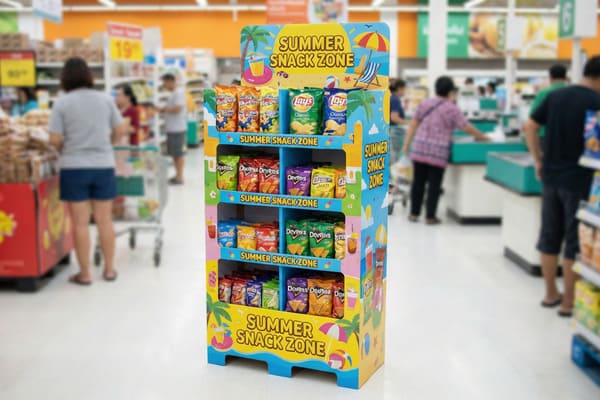
Finding the right manufacturing partner for your retail displays can be the difference between a successful product launch and a logistical nightmare. You need a supplier who delivers quality, meets strict deadlines, and understands your brand's specific needs.
You can find point of purchase displays through specialized manufacturers like PopDisplay, trade shows such as GlobalShop, online B2B marketplaces like Alibaba, and local packaging distributors. Ideally, source directly from factories in manufacturing hubs like Shenzhen to ensure customization capabilities, competitive pricing, and strict quality control for your retail rollout.
Once you have identified a potential source, the next critical step is understanding where to position these displays within a retail environment to maximize their impact.
Where are point of sale displays located?
Placing your product in the wrong spot means invisible inventory and wasted marketing budget. Location is the single most important factor for sales velocity in any physical retail store.
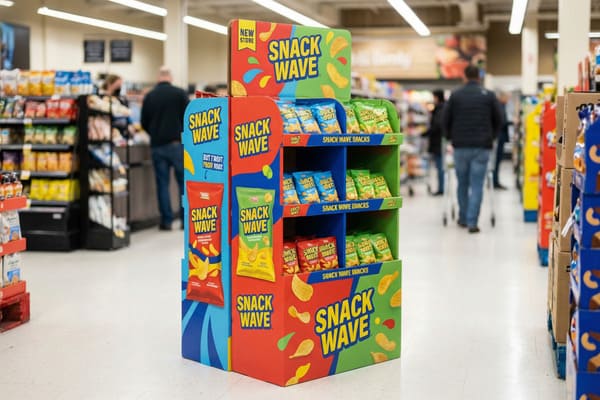
Point of sale displays are strategically located in high-traffic areas such as checkout counters, end caps at the end of aisles, and freestanding floor zones near store entrances. They are also found in "impulse zones" near registers or alongside complementary products to disrupt the shopper's journey and trigger unplanned purchases.
Strategic Placement and Traffic Flow Analysis
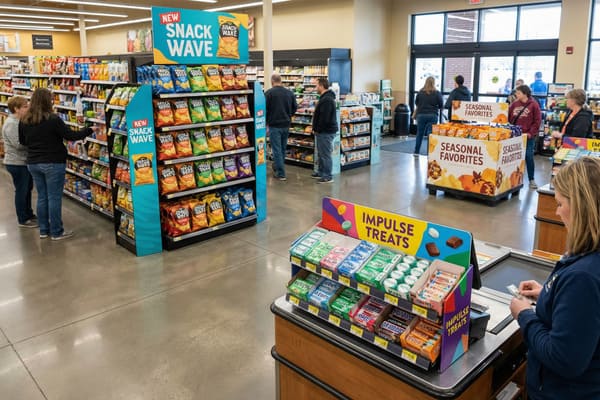
Placement is not just about finding an empty spot on the floor; it is about interrupting the shopper's autopilot mode. In large retail environments like Walmart, Costco, or sporting goods stores, the "Action Alley1"—the main drive aisle—is prime real estate. Floor displays placed here see the highest foot traffic but also face the most physical abuse from shopping carts and cleaning machines. This is why I always advise my clients to use reinforced corrugated board for these zones.
For checkout areas2, the dynamic changes completely. Here, space is limited, and the customer is already in a buying mindset. Countertop displays (PDQs) work best here because they are compact and encourage last-minute additions to the basket. However, you must consider the specific retailer's compliance guide. For example, major US retailers have strict height restrictions (often 55 to 60 inches) for aisle displays to ensure visibility across the store is not blocked. If you ignore these placement rules during the design phase, your expensive shipment might be rejected at the distribution center. Furthermore, placing a display near complementary products—like putting hunting accessories near the camping gear aisle—can increase the "basket size" significantly compared to placing them in an unrelated section.
| Display Zone | Traffic Volume | Interaction Type | Ideal Display Structure |
|---|---|---|---|
| Action Alley3 | Very High | Browsing / Discovery | Heavy-duty Pallet or Floor Display |
| Checkout Counter4 | High | Impulse / Rapid | Small PDQ Tray or Countertop Unit |
| Aisle End Cap | High | Intentional Search | Standard Floor Stand (FSDU) |
| Shelf Aisle | Medium | Comparison Shopping | Clip Strips or Shelf Talkers |
I understand that navigating retailer compliance guides for placement can be a headache. My design team uses updated spec sheets for major US retailers to ensure your displays fit perfectly in their designated spots, preventing rejection and maximizing your product's visibility in high-traffic zones.
What is an example of a point of purchase display?
Visualizing the right structure for your product can be difficult without concrete examples. Seeing what works for other brands helps you choose the best format for your specific merchandise.
Common examples of point of purchase displays include freestanding floor units (FSDUs) for bulk items, countertop PDQ trays for small impulse buys, and pallet displays for warehouse clubs like Costco. Other examples are clip strips for hanging lightweight items and dump bins for loose, discounted merchandise.

Structural Diversity and Material Specifications
When we talk about examples, we need to look beyond just the shape and consider the engineering behind the cardboard. Take the Floor Display5, which holds a massive 43.7% market share in the industry. A classic example is a four-shelf unit used for seasonal promotions. However, if you are selling heavy items, like crossbows or hunting gear, a standard display will collapse. In these cases, we design what is called a "quarter pallet" display. These are built directly onto a wooden or plastic pallet, allowing forklifts to move them without manual lifting, which is a requirement for stores like Costco.
Another specific example is the PDQ tray found at checkout. These are not just boxes; they are engineered with a higher front lip to prevent products from tipping over while maintaining visibility. In the APAC and US markets, I see a massive shift toward "hybrid" displays. These combine corrugated cardboard with plastic clips or metal support bars to handle heavier loads while keeping the cost low. For instance, a dump bin for sale items might look simple, but it requires an internal cross-structure6 (often an X-divider) to prevent the walls from bowing out under the weight of the product. Understanding these structural differences is vital for protecting your inventory.
| Display Example | Best Used For | Weight Capacity | Retail Environment |
|---|---|---|---|
| Floor Display (FSDU)7 | New product launches, seasonal items | Medium (5-10kg per shelf) | Supermarkets, Department Stores |
| Pallet Display8 | Bulk items, heavy goods, club packs | High (100kg+ total) | Warehouse Clubs (Costco/Sam's) |
| Countertop PDQ | Small accessories, cosmetics, snacks | Low (Lightweight items) | Convenience Stores, Checkout |
| Dump Bin | Discounted, loose, irregular items | Medium (varies by volume) | Clearance Sections, Aisles |
I know that choosing the right type of display for heavy or odd-shaped products is risky. We solve this by running rigorous load-bearing tests in my factory, ensuring that whether you choose a floor unit or a pallet display, your products remain safe and upright throughout the retail cycle.
Is POSM still effective?
You might wonder if physical displays still matter in an increasingly digital world. The data shows they are more crucial than ever for capturing attention in the real world.
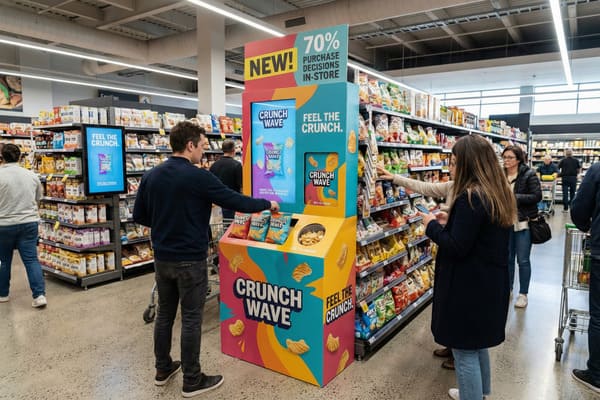
Yes, POSM (Point of Sale Materials) remains highly effective, especially as 70% of purchase decisions are made in-store. Physical displays disrupt the shopping journey, trigger impulse buys, and provide a tangible brand experience that digital ads cannot replicate. They are essential for launching new products and increasing brand visibility.
ROI Analysis and Consumer Behavior
Despite the boom in e-commerce, physical retail is far from dead. In fact, the interaction at the shelf is the "moment of truth." POSM9 is effective because it capitalizes on impulse behavior. Studies suggest that a significant portion of retail revenue comes from unplanned purchases triggered by visual cues. Unlike digital ads, which a user can scroll past in a split second, a physical display in a store aisle commands physical space and attention. We are seeing a resurgence in effectiveness due to better printing technology. Digital printing allows for vibrant, high-resolution graphics that make the brand pop, which is critical for grabbing the attention of younger demographics like Gen Z who value aesthetics.
Furthermore, the effectiveness is tied to speed. Cardboard displays allow brands to react quickly to market trends. If a competitor launches a product, you can have a counter-strategy in stores within weeks. The cost-per-impression of a floor display in a high-traffic supermarket is often significantly lower than the cost per click in a competitive online keyword campaign. It is a tangible asset that works for you every minute the store is open. Additionally, displays made from sustainable materials resonate with eco-conscious shoppers, adding another layer of value to the brand image.
| Marketing Channel | Customer Engagement10 | Cost Model | Longevity |
|---|---|---|---|
| Cardboard POSM | Physical, High Impact | One-time Production Cost | Weeks to Months in-store |
| Digital Ads | Visual, Fleeting | Cost Per Click / Impression | Ends when budget stops |
| TV / Radio | Broad, Passive | High Media Buy Cost | Short duration spots |
| Email Marketing11 | Direct, Low Impact | Low Cost | One-time read |
I see many brands worry about the return on investment for physical marketing. We maximize your effectiveness by offering 3D renderings and rapid prototyping, allowing you to visualize exactly how your graphics will look and catch the customer's eye before we ever start mass production.
What is a POS display?
Understanding the technical definition helps you communicate better with suppliers. It is more than just a cardboard box with a logo; it is an engineered sales tool.
A POS (Point of Sale) display is a specialized fixture used in retail environments to showcase products and encourage purchases. It is usually made from temporary materials like corrugated cardboard and is distinct from permanent store shelving. It serves as a standalone marketing tool to highlight promotions, new items, or seasonal offers.

Technical Composition and Manufacturing Logic
At its core, a POS display is a marriage of structural engineering and graphic design. It is not just a holder for goods; it is a sales machine. Most POS displays12 are constructed from corrugated fiberboard. This material consists of a fluted sheet glued to one or two flat linerboards. The choice of "flute" (B-flute, E-flute, or BC-flute) determines the display's print surface smoothness and crushing strength. For example, E-flute is thin and offers a great printing surface for detailed graphics, often used for countertop units. Double-wall BC-flute is thick and strong, used for the structural columns of heavy-duty floor displays.
Modern POS displays are also evolving into "Smart Displays13." We are seeing the integration of QR codes and NFC tags directly printed onto the board. This bridges the gap between the physical item and digital content, allowing customers to scan for more info. From a manufacturing perspective, a POS display must be "flat-packed." This means the design must allow the unit to fold down completely flat to save on shipping costs from China to the US, yet be intuitive enough for a store clerk to assemble in under five minutes. If the assembly is too hard, the retailer might just throw it away.
| Component | Material Option | Primary Function | Common Application |
|---|---|---|---|
| Structure/Body | BC-Flute (Double Wall) | Load Bearing Strength14 | Floor Displays, Pallets |
| Print Surface | CCNB (Clay Coated) | High-Quality Graphics15 | All Display Types |
| Trays/Shelves | B-Flute (Single Wall) | Product Support | Shelves, Tiered Pockets |
| Header Card | E-Flute or Cardstock | Branding / Call to Action | Top of Display |
I have noticed that poor material selection is the number one reason displays fail in stores. I personally oversee the material sourcing in my factory to ensure we use the correct flute and liner combination, guaranteeing your displays look professional and stay strong throughout your entire promotion.
Conclusion
Finding the right Point of Purchase display involves balancing location strategy, structural design, and manufacturing quality. Whether you need heavy-duty pallets or countertop trays, choosing a partner like PopDisplay ensures success.
Understanding Action Alley can help optimize product placement for maximum visibility and sales in retail environments. ↩
Exploring the dynamics of checkout areas can reveal strategies to enhance last-minute purchases and improve sales. ↩
Explore this link to understand how to maximize sales in Action Alley with effective display strategies. ↩
Discover insights on enhancing impulse purchases at checkout counters through strategic display techniques. ↩
Explore how Floor Displays can enhance visibility and sales in retail environments. ↩
Learn about internal cross-structures to ensure your displays are sturdy and protect your inventory from damage. ↩
Explore how FSDUs can enhance product visibility and drive sales in retail environments. ↩
Learn about the advantages of Pallet Displays for showcasing bulk items and maximizing sales. ↩
Explore how POSM strategies can enhance retail sales and engage consumers effectively. ↩
Explore this link to discover innovative methods to enhance customer interaction and loyalty. ↩
This resource provides insights on leveraging email marketing to increase conversions and customer retention. ↩
Explore how POS displays can enhance customer engagement and boost sales in retail environments. ↩
Discover the innovative features of Smart Displays and how they connect physical products to digital content. ↩
Understanding load bearing strength is crucial for selecting the right materials for your packaging needs. ↩
Explore techniques for high-quality graphics to enhance your packaging's visual appeal and effectiveness. ↩