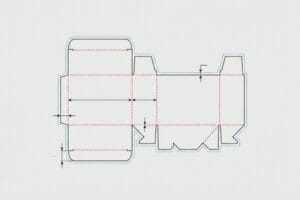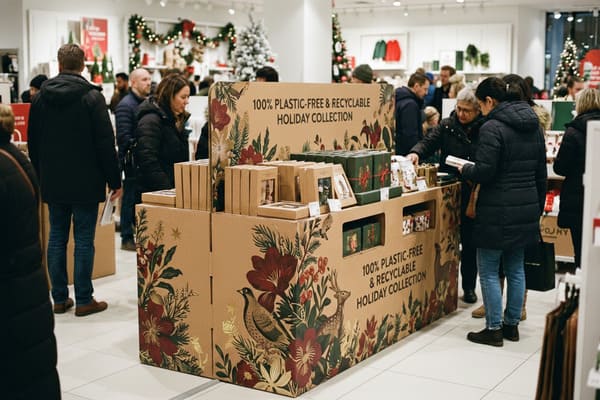
Holiday sales can make or break your year. A weak display kills momentum fast. Let's cut the fluff and look at what's actually driving retail packaging trends this season.
The holiday package design trend prioritizes sustainable mono-materials and interactive structural elements. This necessary shift is driven by strict environmental regulations and consumer demand for zero-waste solutions. Brands increasingly utilize fully recyclable components to minimize carbon footprints while maintaining structural integrity for seasonal retail promotions.
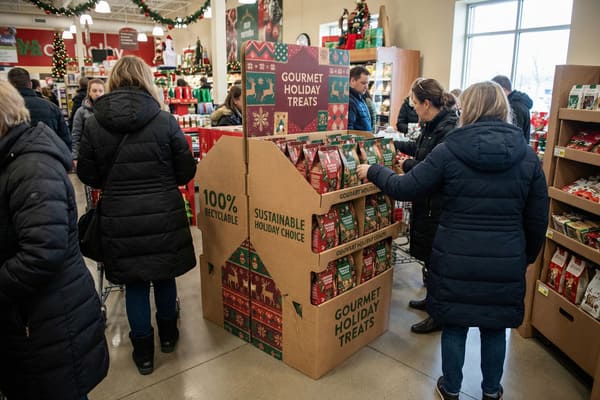
I see brands panic every October. They want flashy structures, but retail giants demand strict compliance. Here is what is working right now on the shop floor to keep your promotions standing tall.
Which is the most recent new trend in packaging and labeling?
You spend thousands on artwork, but the label peels off before it hits the shelf. It's a common nightmare. The solution isn't more glue; it's smarter material integration.
The most recent new trend in packaging and labeling is the integration of PFAS-free water-based coatings. This adoption stems from global legislative bans on toxic chemicals. Manufacturers now apply eco-friendly varnishes that provide high moisture resistance while ensuring the entire structure remains fully recyclable without separating materials.
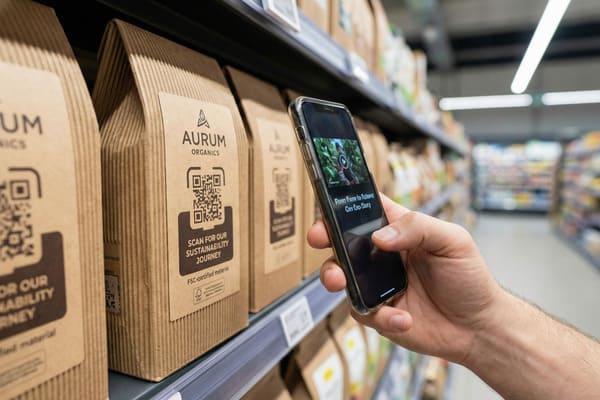
The Shift to Mono-Material and PFAS-Free Compliance
I learned this the hard way. Last year, a client from New York insisted on using traditional UV gloss lamination for their Q4 endcaps. I told them California's SB 54 regulations were tightening, but they thought they could save $0.50 per unit. Fast forward to November: the displays got flagged because the plastic film made them non-recyclable in local municipal bins. We had to scrap 500 units. It drove me crazy. Now, I refuse to print it that way. We strictly use PFAS-free water-based coatings1.
Why this structure? Compliance. Pure and simple. Major retailers like Walmart and Target are aggressively pushing for "Curbside Recyclable" mono-materials. If your display requires a busy store clerk to peel off a plastic laminate or remove metal clips, they just throw the whole thing in the trash compactor. We engineered origami-style paper locks to replace standard plastic corro-clips. It keeps the display 100% paper.
Plus, for heavy grocery runs, we apply a clear poly-coat barrier just to the bottom 4 inches (10.16 cm) of the kick-plate. Supermarket floors get wet-mopped every night. Without this guard, the corrugated board wicks up the dirty water, and a 60-inch (152.4 cm) display turns to mush at the base and collapses. Our water-based varnish gives you the moisture resistance of plastic without the environmental tax penalty.
| Feature | Traditional Display | 2026 Trend Standard | Retailer Impact |
|---|---|---|---|
| Coating | Plastic UV Lamination | Water-Based PFAS-Free2 | Passes strict state eco-audits |
| Moisture Guard | None (Soggy Bottom) | 4-inch (10.16 cm) Varnish Barrier | Survives nightly floor mopping |
| Fasteners | Plastic Clips | Origami Paper Locks3 | 100% Curbside Recyclable |
| Recycling Status | Contaminates stream | Direct to Blue Bin | Eliminates disposal fees |
I don't compromise your brand image with outdated materials. I will look at your complex design and suggest smart simplifications using our origami folds. Ask me for the footage of our water-resistance tests. I treat your trial order like a massive rollout so you never fail a retail audit.
What is the trend in packaging in 2026?
Brands are terrified of high shipping costs eating their margins. Bulky displays are killing your profits. The future belongs to structural efficiency and logistical perfection.
The trend in packaging in 2026 focuses heavily on flat-pack modularity and right-sizing structures. This logistical optimization is mandated by rising ocean freight costs and automated distribution centers. Packaging now utilizes nested designs to eliminate wasted container space, significantly reducing volumetric weight and overall carbon emissions.
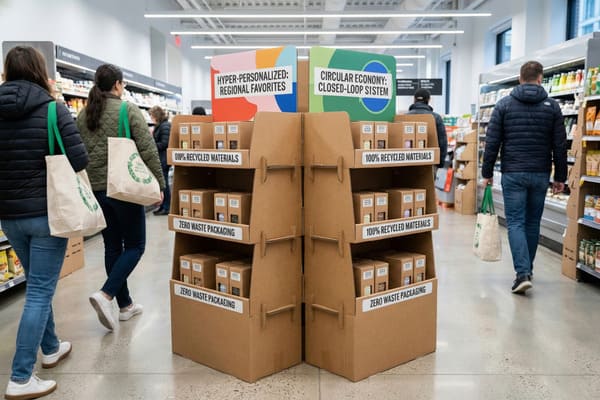
Container Optimization and the "Nested" Reality
Buyers often look at the $15 unit price and completely ignore the invisible cost: shipping air. I had a client shipping to a distribution center in Texas. They designed a gorgeous dump bin with a massive hollow base. It looked cool, but it packed terribly. They were basically paying to ship empty space across the Pacific. I had to step in. I told them we needed to redesign the internal trays to fit inside the hollow base during transit—like a Russian Matryoshka doll. Clients hate hearing this because it means altering their original "perfect" vision, but the math doesn't lie. By nesting the components, we increased the 40HQ container4 capacity by 40%. That dropped their landed cost drastically.
For 2026, if your display footprint doesn't perfectly align with the standard 48×40 inch (121.9×101.6 cm) GMA pallet grid, US distribution centers will reject it for overhang. Conveyor belts jam if a quarter-pallet is even half an inch (1.27 cm) too wide. So we engineer everything strictly to 24×20 inches (60.9×50.8 cm) or similar fractions. We also calculate the exact ISTA 3A drop test tolerances. If a master carton is too tight, the display corners crush on the FedEx belt. We build in a 1-inch (2.54 cm) air-cell crumple zone to sacrifice the shipper box and save the display inside.
| Logistics Metric | Poor Design Penalty | Nested & Optimized | Freight Savings |
|---|---|---|---|
| Container Load | Ships 60% Air | 100% Volume Utilization5 | Cuts ocean freight by 30% |
| Pallet Footprint | Overhangs by 1 inch | Exact 48×40 inch Fit | Prevents DC rejection fines |
| Drop Survival | Crushed Corners | 1-inch Air-Cell Buffer | Zero Amazon prep fees |
| Pallet Height | 60 inches (152.4 cm) | 48 inches (121.9 cm) | Allows LTL double-stacking6 |
I design with container optimization in mind from day one. I guarantee your displays fit perfectly into the logistics infrastructure without costly repacking at the port. I can show you a video of our drop tests. We ensure your shipment rolls off the ship and straight onto the floor.
What is the trend color packaging in 2026?
You approve a vibrant red on your MacBook, but the final box looks like muddy rust. Color disappointment ruins campaigns. Let's fix this pre-press nightmare.
The trend color packaging in 2026 highlights high-contrast minimalism using precise G7 calibrated printing. This aesthetic preference stems from the need for immediate visual disruption in cluttered retail aisles. Brands utilize unbleached Kraft substrates combined with stark typography to communicate authenticity and sustainable premium quality.

Escaping the Washboard Effect and Muddy Colors
Nothing exposes a cheap factory faster than bad color management. A few years ago, a cosmetics brand wanted a solid matte black display. We ran it on standard B-flute corrugated. It was a disaster. The wavy structure of the flutes showed right through the ink, creating this ugly washboard effect that made their luxury product look like it belonged in a dollar store. I had to scrap the whole run and start over. It was a painful lesson in material science.
Now, for any dark or highly detailed color trend, I automatically switch to E-flute or a Litho-Lam on SBS process. The flutes are so tight they are invisible. You get a surface as smooth as a magazine cover, but with the structural strength of a shipping box. In 2026, brands want bold, dark colors, but standard matte laminate is a nightmare on the shop floor. It shows every fingerprint and scratch from store employees stocking the shelves. By day two, a 60-inch (152.4 cm) floor display looks trashed. We upgrade those designs to an anti-scuff matte PP lamination. You can drag a coin across it, and it won't leave a mark. Also, US designers love sending GRACoL profiles, but if the factory isn't G7 calibrated7, the ink turns to mud. We use a Spectrophotometer to match Pantone colors within a strict Delta-E tolerance.
| Print Challenge | Factory Flaw | Our 2026 Solution | Visual Result |
|---|---|---|---|
| Corrugated Waves | B-Flute Washboarding | E-Flute Litho-Lam | Perfectly smooth magazine finish |
| Matte Scratching | Standard Matte Film | Anti-Scuff PP Lam8 | Resists store staff fingerprints |
| Color Drifting | Visual Guessing | G7 Master Calibration | Exact Pantone (PMS) matching |
| Metallic Ink | Prints directly on Kraft | White Base Primer | True silver, no muddy absorption |
I treat your trial order like a masterpiece. Before mass production I send a physical proof on the actual paper stock for approval. Our exact calibration ensures your brand colors remain consistent globally. You get the exact shade you approved keeping that premium luxury feel completely intact.
What is new in packaging?
Store staff hate complex assembly instructions. If your display takes twenty minutes to build, it goes straight to the dumpster. Speed is the new standard.
What is new in packaging is the rapid adoption of pre-glued modular trays and scannable video assembly guides. This operational shift directly addresses high retail labor costs and rapid turnover. By replacing complex instruction manuals with intuitive structural engineering, brands guarantee higher in-store execution rates and faster product merchandising.
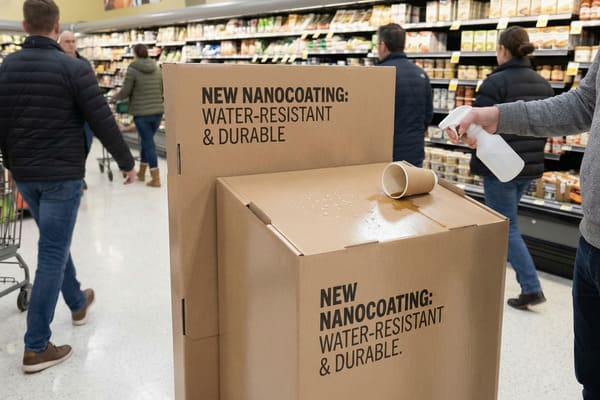
The Zero-Frustration Assembly Mandate
Let me tell you about the instruction manual reality check. Retail workers at big box stores are rushed. If your assembly instruction is a page of dense text, they will throw it away and guess. I visited a retail store in Ohio and saw one of my early sidekick designs hanging crooked because the staff used the wrong tab. It was embarrassing. That's why we killed the text manual.
What's new in packaging is the zero-frustration standard9. We use IKEA-style no-text visual guides. More importantly, we print a giant 3-inch (7.62 cm) QR code directly on the master carton. The stock boy scans it and watches a 30-second YouTube video showing exactly how to unfold the base. No reading required. We also realized that small plastic clips get lost instantly on a busy floor. If a display is missing one joint, the manager throws the $50 unit in the trash. So, we developed the red bag strategy. We tape a bright red bag containing 5% extra hardware right to the front flap. It costs me pennies but saves the entire campaign. Retailers like Costco and Sam's Club absolutely demand this kind of efficiency. They want shop-through capabilities with 2,500 lbs (1134 kg) of dynamic load strength, and they want it assembled in under 5 minutes. We use pre-glued stacking systems10 instead of complex origami folds to make that happen.
| Assembly Problem | Traditional Method | The New Standard | Store Execution Rate |
|---|---|---|---|
| Lost Hardware | Loose clips in box | Red Bag taped to front | Increases survival to 99% |
| Confusing Steps | Dense text manual | 3-inch (7.62 cm) Video QR Code | Built correctly in under 2 mins |
| Complex Folding | 20-minute origami | Pre-Glued Modular Trays11 | Instant pop-up floor readiness |
| Shelf Sagging | Pure cardboard tiers | Hidden Metal Support Bar | Holds heavy liquids without bowing |
I practice smart simplification to save you money and headaches. By utilizing pre-glued modular trays and our red bag strategy we ensure your product actually gets onto the floor. I provide rapid white samples so you can test the assembly yourself before committing to a full production run.
Conclusion
Holiday packaging requires durability and flawless execution. Stop risking your Q4 sales on weak structures. Contact me today to Get a Free Quote and a Free Structural 3D Rendering.
Learn how PFAS-free water-based coatings can help your products meet environmental regulations and avoid costly compliance issues. ↩
Learn how Water-Based PFAS-Free coatings can help your business meet eco-standards and pass strict state environmental audits. ↩
Discover how Origami Paper Locks enable 100% curbside recyclability, reducing plastic waste and simplifying disposal for retailers. ↩
Understanding how a 40HQ container works and how nesting boosts its capacity can help you drastically reduce shipping costs and optimize logistics. ↩
Learn how maximizing container space with 100% Volume Utilization can significantly reduce shipping costs and improve supply chain efficiency. ↩
Discover how LTL double-stacking enables more efficient pallet shipping, leading to lower freight costs and better use of truck space. ↩
Learning about G7 calibration will help you achieve consistent, accurate colors in your print projects, avoiding muddy or off-brand results. ↩
Discover how Anti-Scuff PP Lam protects packaging from scratches and fingerprints, ensuring your products look pristine on store shelves. ↩
Learn how the zero-frustration standard is transforming product assembly, making it faster and easier for both retailers and customers. ↩
Discover why pre-glued stacking systems are preferred for quick, sturdy retail displays and how they outperform traditional assembly methods. ↩
Discover why Pre-Glued Modular Trays make setup faster and easier, saving time and reducing frustration during assembly. ↩