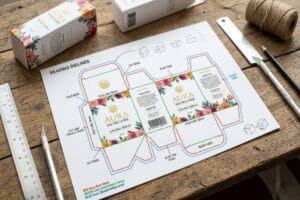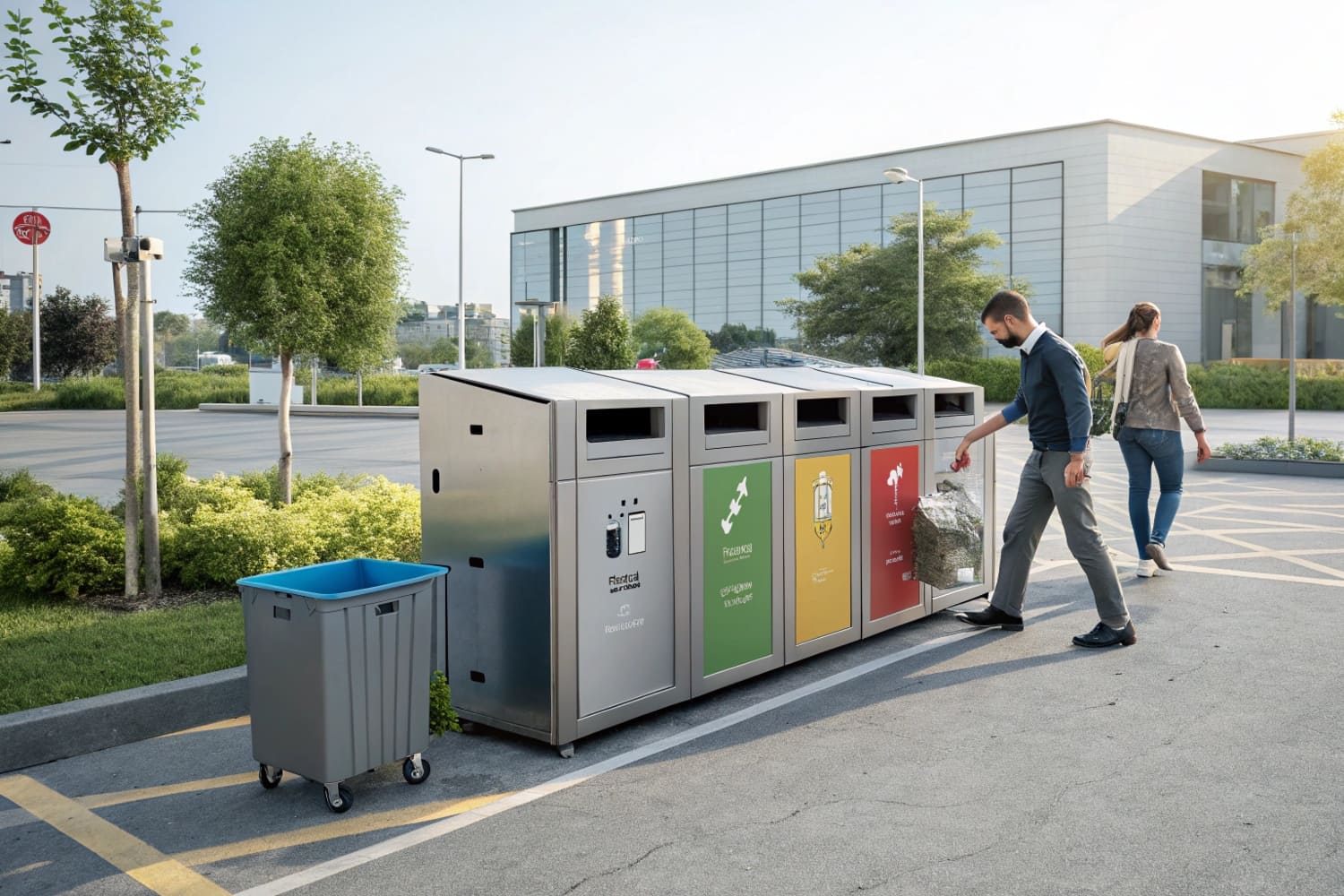
I see teams stall because bin choices feel messy. People guess, then contamination rises. I keep it simple and show options that work today and scale tomorrow.
Facilities can buy general-waste bins, mixed-recycling bins, source-separated bins (paper, plastic, metal, glass), organics/food-waste bins, e-waste bins, hazardous/sanitary bins, and event-ready Cardboard Dump Bins. Options include indoor/outdoor, single/dual/triple stations, lids, casters, and clear labels.
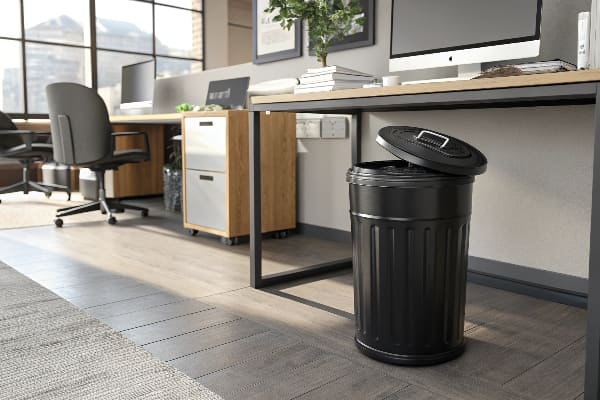
I design and ship flat-pack Cardboard Dump Bins for launches, events, and seasonal peaks. I match labels to your local rules, then lock the structure with strength-tested folds. Read on for clear answers to the most common questions.
What are the different types of recycle bins?
Confusion happens when streams overlap. Staff throw plastic into paper. I split streams by clear use, color, and opening shapes. Then people stop guessing and start sorting right.
Common recycle bins include mixed recycling, paper/cardboard only, containers (plastic/metal), glass, organics, and specialty streams like batteries or e-waste; I select labels, colors, and lid openings that match each stream and reduce contamination.
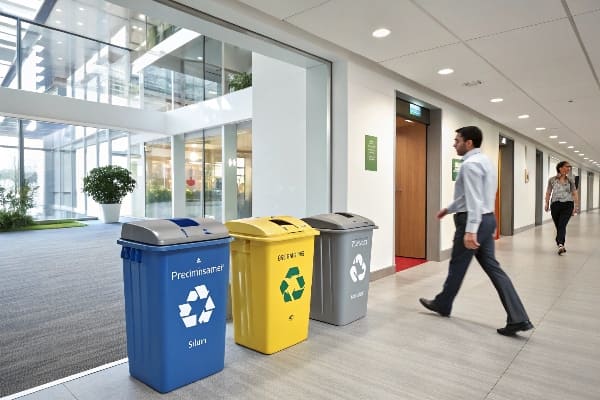
Core streams I deploy
I group streams by how people see material in the moment. Paper and cardboard are flat, so I use a slot lid. Bottles and cans are round, so I use a circle lid. Mixed recycling is a bridge for offices that want fewer decisions. Glass works as a separate stream when weight, safety, or deposit rules apply. Organics take food, napkins, and compostable ware. For events, I often add a clean cardboard stream with a wide slot using my Cardboard Dump Bins1. The bin tells the story. The label and the opening are the map. I print both large and high contrast. I keep the color simple and aligned to local practice.
Quick reference table
| Bin type | Typical color | Opening shape | Good for | Cardboard Dump Bin fit |
|---|---|---|---|---|
| Mixed recycling2 | Blue | Mixed | Paper, bottles, cans | Yes |
| Paper/Cardboard | Blue | Slot | Office paper, boxes | Yes (slot insert) |
| Containers (PM) | Yellow | Circle | Plastic bottles, metal cans | Yes (circle insert) |
| Glass | Green | Circle/wide | Glass bottles and jars | Yes (reinforced liner) |
| Organics/Compost3 | Green/Brown | Wide flap | Food scraps, certified items | Yes (compostable liner) |
| Batteries/E-waste | Red/Orange | Small chute | Batteries, phones, small devices | Yes (secure chute) |
Can you buy recycling bins?
Teams ask this weekly. They think bins are only for city programs. That is not true. You can buy them like any other tool.
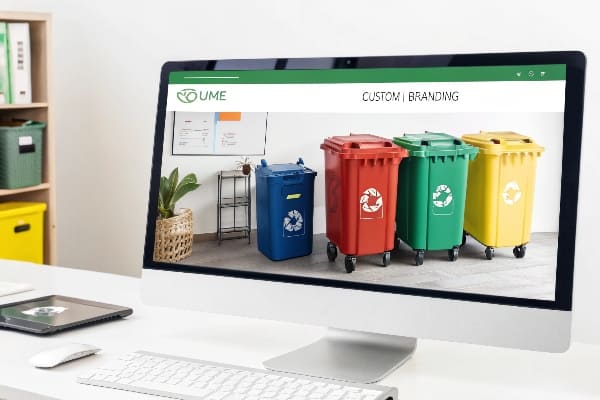
Yes. You can buy recycling bins from industrial suppliers, janitorial distributors, office channels, or direct from manufacturers; I supply custom Cardboard Dump Bins that ship flat, print fast, and scale for events or rollouts.
Where I buy and why
I source from two paths. For permanent stations, I use rigid plastic or metal frames4 from established vendors. They handle weather, impact, and daily cleaning. For launches, pop-ups, and seasonal surges, I spec Cardboard Dump Bins5 that I make. They are light, fast to print, and easy to place in bulk. They arrive flat, so freight cost stays low. They assemble in minutes with clear guides. When a campaign ends, they collapse for recycling. I helped a buyer named David run a new-product demo in warehouse clubs. He needed 300 stations in three weeks. My team printed branded wraps, added slot and circle lid inserts, and stacked pallets by region. He hit the date and kept the budget.
Buying checklist
| Item | Why it matters | My note |
|---|---|---|
| Stream plan6 | Sets labels and lid shapes | Decide streams before you shop |
| Local color rules | Aids staff recognition | Match city or enterprise standard |
| Volume and footprint | Prevents overflow and clutter | Size to traffic and cleaning schedule |
| Print and branding | Drives correct use | Use large icons and simple words |
| Lead time | Avoids rush fees | Cardboard prints fast; frames need longer |
| End-of-life plan7 | Lowers total impact | Recycle bins and wraps where allowed |
How many types of waste bins are there?
People want one number. The real answer depends on your site. I group by need and risk, then size the set to your floor plan.
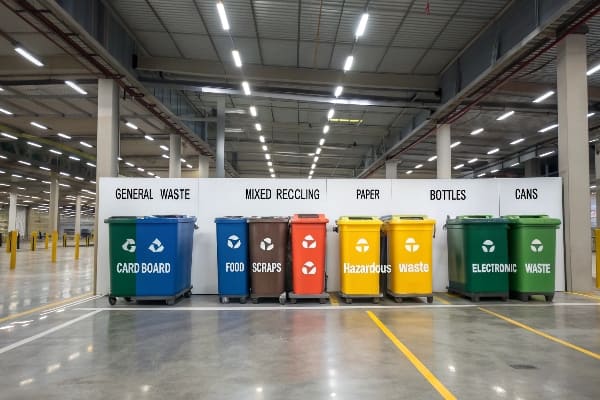
Most facilities use 6–8 bin types: general waste, mixed recycling, paper/cardboard, containers, organics, glass, e-waste/batteries, and sanitary/hazardous; small sites may combine streams to four.
A practical taxonomy
I plan streams by what shows up where. Offices see paper and lunch waste, so I build a paper stream near printers and a mixed stream8 near break rooms. Shops and warehouses see cardboard, so I deploy large slot-lid bins and bale big boxes in back. Kitchens see organics, so I use compost bins with liners and smooth interiors. I add specialty bins only where needed, like a drop tube for batteries near IT. This keeps stations simple but complete. I use icons, short words, and the same color band in every room. Staff learn once and apply everywhere. For temporary peaks, I bring in Cardboard Dump Bins9 to add volume fast.
Category table
| Category | Examples | Notes |
|---|---|---|
| General waste | Snack wrappers, non-recyclables | Use with recycling to reduce contamination |
| Mixed recycling10 | Paper, bottles, cans | Good starter stream |
| Paper/Cardboard | Documents, boxes | Slot lid prevents wrong items |
| Containers (PM) | Bottles, cans | Round opening guides behavior |
| Glass | Bottles, jars | Add liner and caution labels |
| Organics | Food scraps | Needs training on accepted items |
| E-waste/Batteries11 | Phones, batteries | Secure chute; follow safety rules |
| Sanitary/Hazardous | PPE, chemicals | Follow site policy |
What are the 4 different bins?
Many programs want a simple set. Four streams cover most daily waste without overload. I set clear icons and keep the colors consistent.
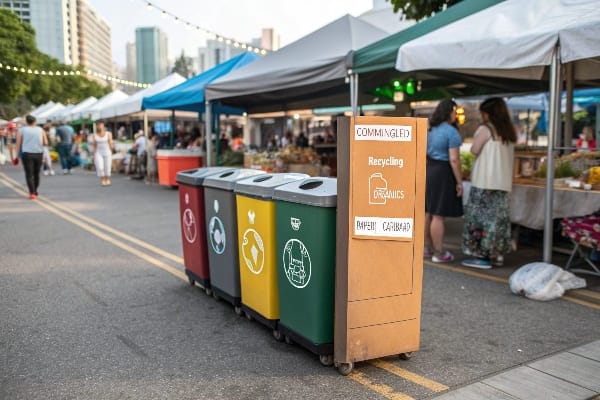
A common four-bin model is: general waste (black/gray), paper/cardboard (blue), containers—plastic/metal (yellow), and organics/food (green/brown); verify local colors before printing labels.
Why four works
Four bins balance clarity and throughput. Paper stays clean for mills. Containers move to material recovery facilities12 with less residue. Organics avoid landfill fees and odor in trash. The remaining bin captures the rest. I use restrictor lids to coach choices. A slot for paper. A circle for bottles and cans. A wide flap for organics. A closed top for waste. When I deploy Cardboard Dump Bins13, I print each stream color band on the sleeve. I add short words like "Paper Only" and big icons. During a campus pilot, contamination dropped by a third in two weeks. Staff said the lid shapes helped more than the posters. The bins taught the habit at the point of toss.
Four-stream map
| Stream | Icon cue | Examples | Works with Cardboard Dump Bins |
|---|---|---|---|
| General Waste14 | X or trash icon | Snack bags, contaminated | Yes (closed lid) |
| Paper/Cardboard | Slot | Office paper, small boxes | Yes (slot insert) |
| Containers (PM) | Circle | Bottles, cans | Yes (circle insert) |
| Organics15 | Leaf/fork | Food scraps, napkins | Yes (wide flap + liner) |
Where will I find my recycle bin?
A good bin in the wrong spot fails. People throw waste where they stand. I place stations where waste happens, not where walls look empty.
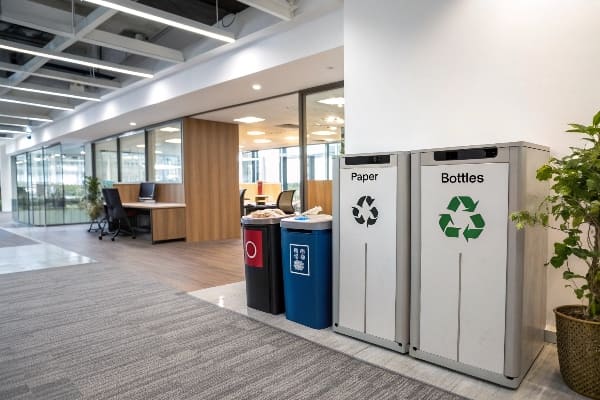
Place recycling next to trash at points of use: break rooms, printers, copy areas, docks, entrances, cafeterias, and event aisles; pair streams, add clear labels, and size to traffic.
Placement rules that work
I shadow tasks. I watch where cups, boxes, and wrappers appear. I put paired stations there. I never isolate a single recycling bin16. That invites trash into it. I keep stations visible from entry paths and near exits so people can check pockets. At printers, I use paper-only bins with slot lids. In cafeterias, I use four-stream pods with trays on top. On loading docks, I add oversized Cardboard Dump Bins with slot lids for flattened boxes during surge weeks. I test one area for a week, then scale the map. In a warehouse trial, we moved stations five meters closer to the vending machines. The mixed-recycling capture17 rose 22%. The change was placement, not training.
Area planning guide
| Area | Streams to pair | Suggested size |
|---|---|---|
| Break room | Mixed recycling + waste18 | 23–32 gal |
| Printer zone | Paper/cardboard only | 23 gal slim + slot |
| Cafeteria | Four-stream pod19 | 32–50 gal each |
| Loading dock | Cardboard + waste | 40–96 gal or dump bin |
| Event aisle | Mixed recycling + waste | Cardboard Dump Bin |
| Entrances/exits | Mixed recycling + waste | 23–32 gal |
Which bin is used for recyclable waste?
Staff ask this on day one. I keep the answer simple and visible. The right look and label do most of the work.
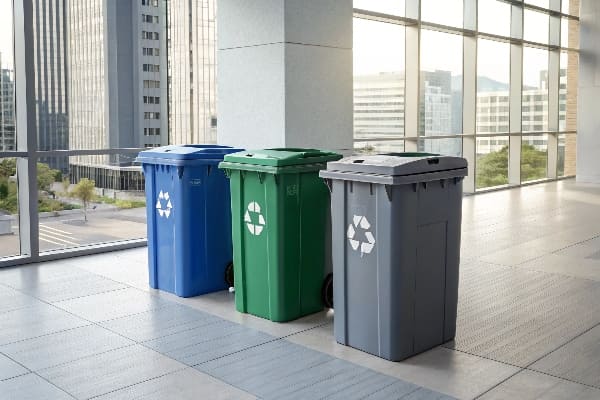
Use the bin labeled "Recycling." Many sites use blue for mixed recycling; confirm local colors. For events, I use blue-band Cardboard Dump Bins with slot or circle lids to guide correct items.
Labeling that people actually follow
I choose one word per stream. I add a big icon and two or three photo examples on the label. I repeat the color band on the lid, body, and front. I place the recycling bin20 directly next to the trash bin so the decision is a left-right choice. If your city uses different colors, I copy them. If your company has brand colors, I keep brand on a small panel and keep stream colors dominant. For Cardboard Dump Bins, I print full-wrap graphics with high-contrast text. I use coated board when moisture is a risk. I keep liners clear so staff can spot contamination during rounds.
Color cheat sheet (confirm locally)
| Region/Sector | Common mixed-recycling color21 | Paper/Cardboard cue22 |
|---|---|---|
| Many US workplaces | Blue | Blue with slot |
| Many EU programs | Blue | Blue or gray slot |
| Retail and events | Blue | Blue with bold icon |
Conclusion
I start with a clear stream plan, add simple labels and lids, place paired stations, then scale with Cardboard Dump Bins for peaks and launches.
Explore this link to understand the functionality and benefits of Cardboard Dump Bins in recycling efforts. ↩
Explore this link to understand the benefits and processes of mixed recycling, enhancing your waste management knowledge. ↩
Discover the advantages of composting organic waste, which can significantly reduce landfill waste and enrich soil. ↩
Discover the advantages of using rigid plastic or metal frames for durability and weather resistance in outdoor marketing. ↩
Explore this link to understand how Cardboard Dump Bins can enhance your marketing strategy with cost-effective and eco-friendly solutions. ↩
Understanding Stream plans can enhance your packaging strategy and ensure compliance with industry standards. ↩
Exploring End-of-life plans can help you minimize waste and improve your environmental impact. ↩
Understanding mixed streams can enhance your waste management strategy, ensuring efficient recycling and disposal. ↩
Exploring the use of Cardboard Dump Bins can help you manage waste effectively during peak times. ↩
Understanding mixed recycling can help you improve your waste management practices and contribute to a more sustainable environment. ↩
Proper disposal of e-waste and batteries is crucial for environmental safety; explore this link to learn best practices. ↩
Learn about the role of material recovery facilities in recycling and how they improve waste processing. ↩
Explore how Cardboard Dump Bins can enhance waste management efficiency and reduce contamination in recycling. ↩
Understanding General Waste management can help you reduce landfill impact and improve recycling efforts. ↩
Exploring Organics in waste management can enhance your knowledge on composting and sustainable practices. ↩
Explore this link to learn how to optimize recycling bin usage and improve waste management in your area. ↩
Discover strategies to enhance mixed-recycling capture rates and contribute to a more sustainable environment. ↩
Explore this link to understand the importance of mixed recycling and waste management in effective area planning. ↩
Learn about the four-stream pod system to enhance your waste management strategies and improve sustainability. ↩
Explore this link to learn effective recycling bin practices that enhance waste management and promote sustainability. ↩
Understanding mixed-recycling colors can enhance your recycling efforts and promote sustainability. ↩
Exploring the Paper/Cardboard cue can help you optimize recycling processes and reduce waste effectively. ↩