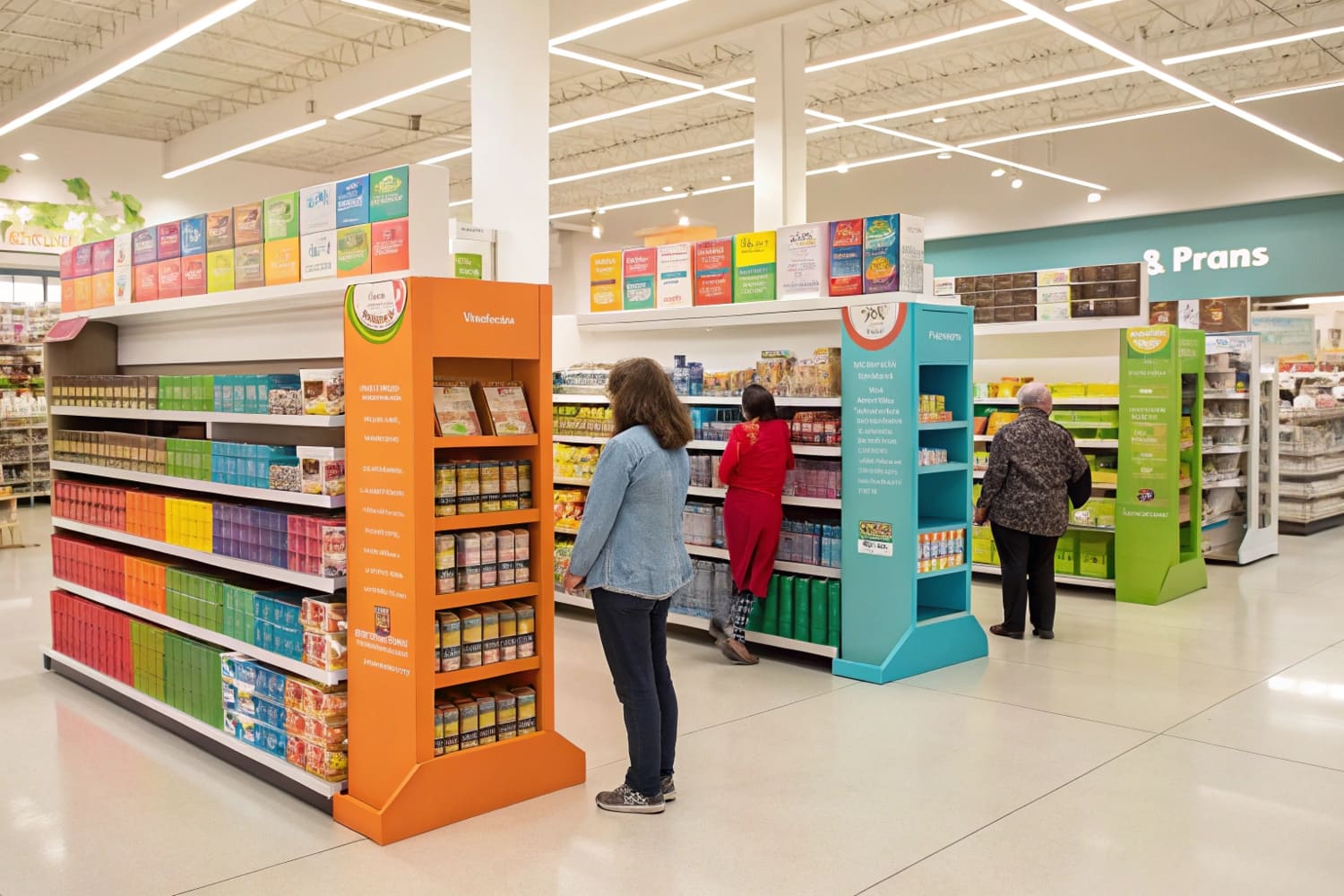
A product placed at the wrong vertical elevation is effectively invisible to shoppers, killing your sales potential instantly. If you want your merchandise to move, you need to understand the precise dimensions that drive customer engagement.
The average retail shelf height ranges from 54 to 66 inches (137–168 cm), aligned with the average shopper's eye level. This dimension is derived from standard anthropometric data to maximize product visibility and accessibility within the primary strike zone.
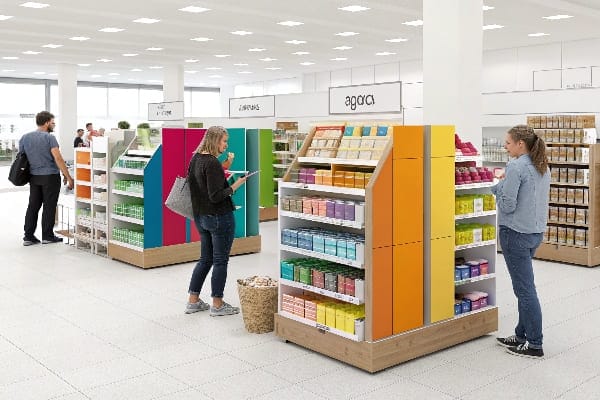
Understanding these vertical dimensions is not just about compliance; it is about leveraging the psychology of the "Strike Zone." Let's break down the specific height standards for shelves, stores, and counters to optimize your retail strategy.
What is the average height of a shelf?
Generic shelving units are sales killers if you don't understand the specific "Buy Level" zones. You must position your hero products exactly where the eye naturally falls.
The average height of a shelf typically falls between 48 and 72 inches (122–183 cm), depending on the specific store format. Supermarkets generally utilize taller gondola units, while boutique retailers prefer lower profiles to maintain open sightlines across the sales floor.

The "Strike Zone" and Structural Planograms
I see brands make the same mistake constantly. They fight for the top slot, thinking "higher is better," but they ignore the biology of the American shopper. The average American female is about 5'4" (162 cm). This creates a very specific "Human Height Heat Map1" that determines whether your product gets picked up or ignored. We call the area between 50 and 54 inches (127–137 cm) from the floor the "Eye-Level Buy Level2." This is the prime real estate.
But here is the messy reality of cardboard manufacturing: getting a display to hold products perfectly at this height without sagging is tricky. I've had clients from New York push for wide, open shelves to display more stock. But when we loaded them with heavy liquid products (like detergent) during the "Tier Sag3" test, the middle of the shelf bowed downward. This is a disaster. It looks cheap, and worse, products slide into the middle and tip over. To fix this, standard B-flute isn't enough. We have to use a hidden metal support bar—steel tubing—running beneath the front lip of the shelf. This acts like a steel beam. It gives you the low cost of cardboard but the rigidity of a permanent fixture.
Also, we have to treat the lower shelves differently. For products sitting in the "Stoop Zone4" (below 30 inches / 76 cm), we angle the shelves upwards by 15 degrees. This "Chin-Up" orientation makes the label look up at the customer, increasing readability by 100%. If you don't engineer for these specific heights and viewing angles, you are just building a fancy trash bin.
| Height Zone | Elevation (Inches) | Elevation (cm) | Shopper Behavior | Structural Requirement |
|---|---|---|---|---|
| Stretch Zone | 60" – 72" | 152 – 183 | Low interaction; hard to reach. | Reinforced Double-Wall Header to prevent curling. |
| Strike Zone | 50" – 54" | 127 – 137 | Highest Sales Velocity; eye level. | Anti-Scuff Matte Finish; Metal support bars for weight. |
| Touch Zone | 30" – 50" | 76 – 127 | High interaction; comfortable reach. | Safety Edge (Wave Cut) to prevent paper cuts. |
| Stoop Zone | 0" – 30" | 0 – 76 | Low visibility; bulk items only. | Mop Guard (Poly-Coat) to prevent water damage. |
I learned this the hard way on a liquid soap project. I had to scrap 500 units because the shelves buckled under the weight at the 54-inch mark. Now, I always simulate the load test in my factory before I let you sign off on the design.
What is the height of a retail store?
Store ceilings vary, but the real limit isn't the roof—it's the logistical nightmare of the truck that gets it there.
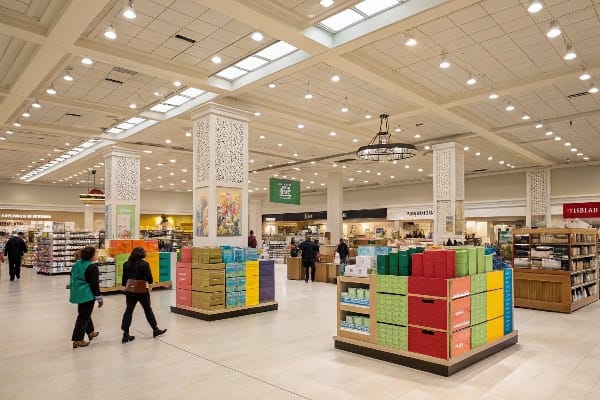
The height of a retail store generally ranges from 12 to 24 feet (3.6–7.3 meters), but display height is governed by logistics. Warehouse clubs accommodate taller pallets, whereas standard retailers enforce strict height caps for safety and aesthetics.
Logistics and The "Invisible" Ceiling
You might think you can design a 7-foot (2.1-meter) display because the Walmart ceiling is 20 feet (6 meters) high. You can't. The real bottleneck is the LTL (Less Than Truckload) shipping network5 in the US. A standard semi-trailer door is roughly 100 to 110 inches (254–279 cm) high. But here is the catch that burns inexperienced buyers: carriers want to double-stack pallets to maximize profit.
If your display pallet is 60 inches (152 cm) tall, it cannot be double-stacked inside a 100-inch (254 cm) trailer. You instantly double your freight cost because you are paying for "air" above your pallet. This is the "Trucking Height Limit." I always advise my clients to aim for a "Shippable Pallet Height6" (Display + Pallet) of under 48 to 50 inches (122–127 cm). This allows the carrier to stack another pallet on top.
And then there is the "End-Cap" width issue. A standard US End-Cap is roughly 36 inches (91 cm) wide. But if you design it exactly to 36 inches (91 cm), it won't fit. The uprights on the gondola shelving steal about an inch of space. I once saw a client insist on a full 36-inch width. The displays arrived at the Distribution Center and were rejected because they jammed the fixtures. I had to pay to trim them down. Now, I enforce a strict 34.5-inch (87.6 cm) max width "Float Tolerance7." This ensures your unit slides into any Lozier or Madix fixture without the store manager throwing it in the trash.
| Constraint Type | Max Height (Inches) | Max Height (cm) | The "Why" (Pain Point) | My Workaround |
|---|---|---|---|---|
| LTL Double Stack | 48" – 50" | 122 – 127 | Keeps freight costs low by allowing stacking. | Design modular headers that fold down for shipping. |
| Standard End-Cap | 54" – 60" | 137 – 152 | Maintains sightlines across the store. | Use "Telescopic" poles to adjust height in-store. |
| Club Store (Costco) | 52" – 58" | 132 – 147 | strict "No-Overhang" pallet rules. | Use EB-Flute for industrial stacking strength. |
| Gondola Shelving | Variable (1" slots) | Variable (2.5 cm) | Must align with shelf notches. | Use Universal Metal Brackets for Sidekicks. |
I can't tell you how many times I've saved a client from a "Repacking Fee" disaster just by checking their height against my internal database of truck door dimensions. If you want to ship a 70-inch unit, I will do it, but I will make you sign a waiver acknowledging the freight premium.
What is the average height of a retail counter?
Counter space is prime real estate, but a tipsy display here is a safety hazard and a lawsuit waiting to happen.
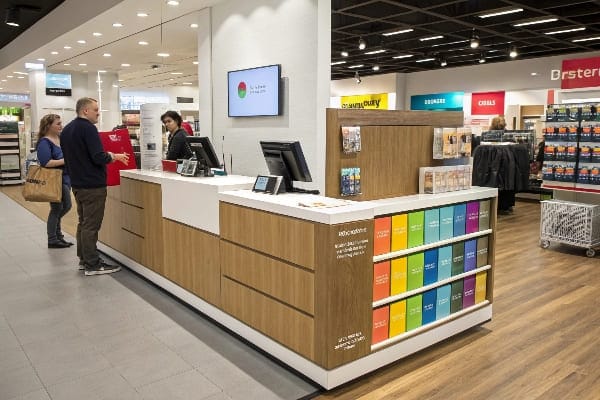
The average height of a retail counter stands at 36 inches (91 cm) to comply with ergonomic standards. Displays placed here, known as PDQ (Product Display Quick) trays, must maintain a low center of gravity to prevent tipping during customer interaction.
Counter Stability and The "Tipping Point8" Physics
When we design for the checkout counter, we are fighting gravity. The standard US counter is 36 inches (91 cm) high. Retailers love tall PDQ (Product Display Quick) units because they act like mini-billboards. But there is a fatal flaw: the "Tipping Point."
Imagine a tall, narrow display filled with heavy energy bars. As customers buy the product, they usually take from the front first. This shifts the center of gravity backwards. If the display is too tall—say, over 18 inches (46 cm)—and the base is too shallow, the whole unit topples over backwards. I call this the "2:3 Ratio" failure (Depth vs. Height). I see this happen with "skinny" designs all the time.
To prevent this, I don't just guess. I use the "Empty Front Test" in the factory. I remove 80% of the product from the front rows. If it wobbles, we have to fix it. My go-to solution is adding a "False Bottom" with a hidden, double-thick corrugated pad. This adds weight to the base without changing the look. Or, we use an "Extended Easel Back" wing that sticks out behind the unit. It's ugly from the back, but rock-solid. Also, we have to respect the ADA (Americans with Disabilities Act) Reach Range. The high forward reach limit is 48 inches (122 cm). Since the counter is already 36 inches (91 cm), your product cannot sit higher than 12 inches (30 cm) above the counter if you want to be fully compliant and accessible to wheelchair users.
| Feature | Spec / Dimension | Metric Equiv | Risk Avoided |
|---|---|---|---|
| Counter Height | 36" | 91 cm | Standard ergonomic baseline. |
| Max PDQ Height | 12" – 15" | 30 – 38 cm | Prevents blocking cashier visibility/security. |
| Stability Ratio | Depth > 60% of Height | N/A | Prevents backward tipping as stock depletes. |
| Lip Height | Max 2" | 5 cm | Ensures 85% of product face is visible. |
A client once ignored my advice on the "False Bottom" weight because they wanted to save $0.15 per unit. Two weeks after launch, a display fell on a customer's hand at a pharmacy checkout. We had to rush-ship weighted inserts to every store. It was a mess.
What is the standard height of a top shelf?
The top shelf is often a "dead zone" because of poor lighting and reach issues. Don't let your products disappear in the shadows.
The standard height of a top shelf is typically positioned at 60 to 72 inches (152–183 cm) to remain within the reach of an average adult. However, merchandise placed above 60 inches (152 cm) often suffers from reduced lighting and visibility unless angled appropriately.
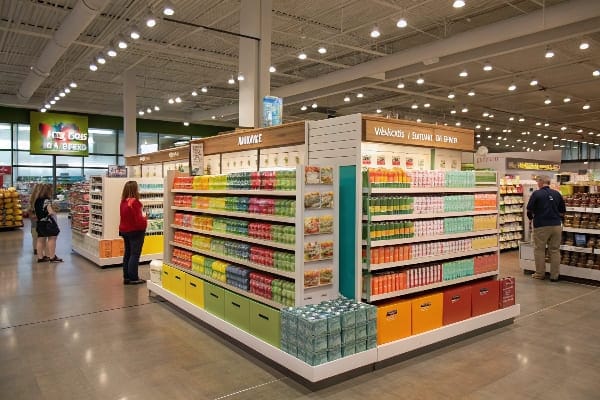
Maximizing Visibility in the "Shadow Zone"
The top shelf has a unique problem: lighting. In big-box stores like Target or Walmart, the lighting comes from the ceiling (Top-Down). If you have a display with a header card or a top shelf that is too deep, it casts a shadow on the products below it. I call this the "Shadow Zone." Dark products don't sell.
When we design displays that reach up to that 60-inch (152 cm) mark, we have to act like lighting engineers. I often use "White Inner Liners9"—we use a bright white paper stock on the inside walls of the display, even if the outside is printed with a dark color. This reflects the ambient store light onto the product face, increasing visibility by about 40% without using expensive LEDs.
Another issue at this height is the header card itself. Humidity is the enemy here. A single-sheet cardboard header sitting at 65 inches (165 cm) high will absorb moisture and curl forward like a dying leaf within 3 days. It looks terrible. That's why I enforce the "Double-Wall Header10" protocol. We fold the cardboard over on itself to create tension. This structure stays perfectly straight and rigid, keeping your brand message standing tall even in humid Florida stores. And don't forget the "Kill Date." Seasonal displays left up too long look sad. We print a small code on the back: "Remove By: [Date]." It helps store staff keep the top shelf fresh.
| Issue | Cause | Technical Solution | Result |
|---|---|---|---|
| Shadows | Overhead lighting blocked by shelves. | White Inner Liners (Clay Coated News Back). | Reflects light; product pops. |
| Curling | Humidity absorption in single sheets. | Folded Double-Wall Header structure. | Stays rigid 24/7. |
| Dead Stock | Out of reach for short shoppers. | Angled Shelves (Chin-Up) at high levels. | Improve label readability from floor. |
| Warping | Climate changes (China -> US). | Anti-Crack film lamination. | Prevents surface cracking. |
I can show you a video of our "Humidity Chamber" test where we blast a Double-Wall Header with mist for 48 hours. It stays straight while the single-wall version curls up. It's a small detail, but it protects your brand image.
Conclusion
Getting the height right ensures your product lands in the shopper's "Strike Zone" rather than the "Dead Zone." It requires balancing biology, logistics, and structural engineering.
Would you like to see how your product fits into a compliant display? I can send you a Free Structural 3D Rendering or a Physical White Sample to test the fit before you commit to production.
Discover how the Human Height Heat Map influences shopper behavior and product placement strategies. ↩
Understanding the Eye-Level Buy Level can significantly enhance product visibility and sales. ↩
Learn about Tier Sag to ensure your displays maintain their integrity and appeal under weight. ↩
Explore the Stoop Zone to optimize product placement for better visibility and customer interaction. ↩
Understanding LTL shipping is crucial for optimizing freight costs and logistics efficiency. ↩
Learn about optimal pallet heights to avoid extra freight costs and ensure efficient shipping. ↩
Discover how Float Tolerance can help ensure your displays fit perfectly in retail spaces. ↩
Understanding the Tipping Point is crucial for effective design, ensuring stability and safety in product displays. ↩
Explore how White Inner Liners can enhance product visibility and sales in retail displays. ↩
Learn about the benefits of Double-Wall Headers for maintaining brand message integrity in humid environments. ↩