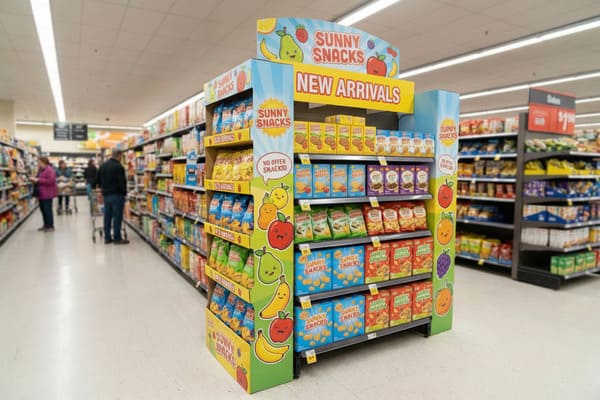
The retail environment is crowded, and getting your product noticed among thousands of others is a constant battle. You need a strategy that pulls shoppers out of their routine and directs their eyes to your brand. Do you know the most effective spot in the store to make this happen?
An endcap display is a retail fixture placed at the end of a shelving aisle. It provides high visibility for featured products, promotions, or seasonal items. These displays are designed to capture shopper attention as they navigate between aisles, significantly increasing impulse purchases and brand awareness.

It is more than just a shelf; it is prime real estate that can define the success of a campaign. Let us look at how these displays work and why they are crucial for your sales strategy.
What is the purpose of the end cap?
Brands fight fiercely for visibility because if you stay hidden in the aisle, sales volume drops. Why do major retailers charge a premium for this specific location, and how does it actually function to boost your bottom line?
The primary purpose of an end cap is to maximize product visibility and drive impulse sales. By positioning items at high-traffic aisle ends, retailers highlight new products, seasonal offers, or clearance items. This strategic placement disrupts the shopper's journey, forcing them to notice the merchandise before entering the aisle.
Strategic Visibility and Sales Conversion
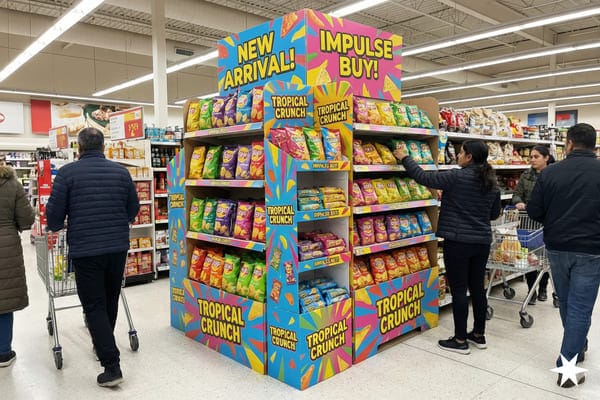
The end cap1 serves as a silent but aggressive salesperson in the retail ecosystem. It sits at the intersection of main walkways, often referred to as the "racetrack" in large stores like Target or the "Action Alley" in Walmart. Shoppers might skip a specific aisle if they do not need a product from that category, but they rarely miss the end of one as they navigate the store. This location is vital for launching new SKUs or clearing out seasonal inventory. When we manufacture cardboard displays2 for this spot, we focus intensely on structural integrity because high traffic means a high risk of bumps from shopping carts. A standard endcap must support heavy inventory while remaining visually loud.
Retailers use this space to interrupt the "autopilot" mode of shoppers. It is not just about holding product; it is about storytelling. A corrugated display here allows for full-color printing on headers and side panels, unlike the metal shelving found inside the aisle. This turns a storage space into a billboard. For FMCG brands or seasonal goods like hunting gear, this is where you move volume quickly. The turnover rate here is significantly higher than inline shelving. Furthermore, the purpose extends to brand dominance; claiming an end cap blocks competitors from that prime visual space, effectively silencing them in that specific section of the store.
| Feature | End Cap Display3 | Inline Shelf4 |
|---|---|---|
| Visibility | High (Seen from main walkways) | Low (Must enter aisle to see) |
| Traffic Exposure | 100% of aisle traffic + racetrack traffic | Only aisle traffic |
| Shopper Mindset | Impulse / Discovery | Planned / Search |
| Cost to Brand | Premium pricing | Standard pricing |
| Design Flexibility | High (Custom shapes, full graphics) | Low (Standard metal shelving) |
I know that securing this space is expensive, so your display must perform without failure. We engineer our end caps with reinforced corrugated cores to withstand the heavy foot traffic of "Action Alley" while ensuring your branding pops, guaranteeing you get the best return on that retail investment.
Are end of aisle displays worth it?
Marketing budgets are tight, and you might wonder if the extra manufacturing and placement cost of a dedicated display brings enough return. Is the investment actually justified by the sales numbers, or is it just an expensive vanity project?
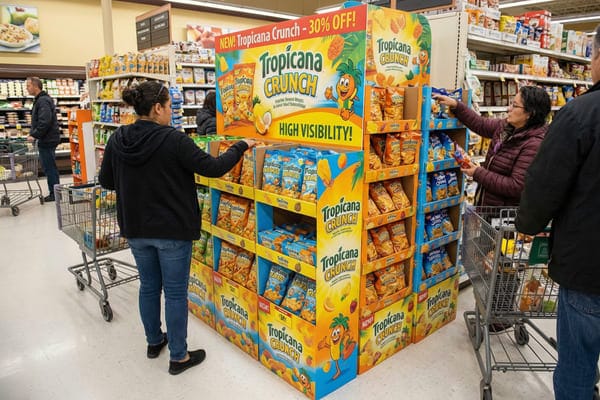
Yes, end of aisle displays are worth it because they generate the highest sales per square foot in retail stores. Studies show they can increase product sales by over 30% compared to inline placement. For brands seeking rapid inventory turnover or brand recognition, the return on investment is substantial.
Analyzing Return on Investment and Performance
When you look at the data, the answer is clear. The display packaging market5 is growing, expected to reach over $41 billion by 2035, and this growth is driven by tangible results. End of aisle displays offer a massive lift in sales velocity. For a product launch, inline shelf placement often leads to a product getting lost in the "sea of sameness." An endcap screams for attention. From a manufacturing perspective, using corrugated cardboard makes this "worth it" factor even higher. Permanent metal fixtures are expensive to build and hard to move. Cardboard is cost-effective and allows for rapid changeovers. If you run a seasonal campaign, such as a hunting season promotion for crossbows, you do not want a permanent fixture that requires storage later. You need a temporary, high-impact structure.
The cost of a corrugated unit is a fraction of the potential sales lift. Furthermore, modern digital printing means we can produce high-quality graphics without massive setup fees, even for shorter runs. This lowers the barrier to entry for medium-sized businesses. If your product sits on a standard shelf, it competes with ten others side-by-side. On an endcap, it stands alone. The ROI calculation involves not just immediate sales, but the brand equity built by that dominance. Additionally, for demographic groups like Gen Z, who appreciate sustainability, using recyclable cardboard adds value to the brand image, further justifying the investment.
| Metric | Cardboard End Cap | Permanent Metal Fixture |
|---|---|---|
| Initial Cost | Low | High |
| Setup Time | Fast (Minutes) | Slow (Hours/Days) |
| Sales Lift Potential6 | Very High (Novelty factor) | Moderate (Static presence) |
| Sustainability7 | High (Recyclable) | Low (Hard to recycle) |
| Flexibility | Excellent (Easy to update graphics) | Poor (Fixed design) |
I see many clients worry about upfront costs, but the math works in your favor. We offer free prototyping and 3D rendering to ensure the design is perfect before you spend a dime on production, minimizing your risk while maximizing the visual impact that drives those high sales numbers.
What does an end cap look like?
Visualizing the final product is hard if you are only looking at blueprints or contracts. You know the location, but the actual structure can vary significantly based on the product. What are the standard components and design features you should expect to see?
An end cap looks like a shelving unit placed against the side of a gondola fixture facing the main aisle. It typically features a colorful header, multiple product shelves, and side panels for branding. Designs range from simple stacked trays to elaborate thematic structures made of corrugated board.

Structural Components and Design Varieties
Visually, an end cap is the chameleon of the retail world, adapting to fit the brand it holds. However, most share a common anatomy tailored for retail compliance. At the base, you usually have a kick plate or a pallet skirt, often sized to fit standard 48×40 inch pallets if it is a bulk display. Above that, the shelving structure rises. For cardboard displays, we typically use high-strength corrugated board8, often B-flute or C-flute for the body, and double-wall (BC-flute) for structural load-bearing parts. This ensures the display looks like a premium fixture, not a flimsy box. The header is the "crown" of the display. It sits at eye level and carries the main marketing message or call to action.
The shelves can be flat or angled, depending on whether you are selling boxed goods or loose items. Some end caps are actually "dressed" permanent fixtures, where we provide cardboard cladding to cover existing metal shelves, but the most effective ones are full temporary units (FSDUs)9. These allow for custom shapes—like a giant bottle, a hunting cabin theme, or a tech-inspired geometric shape—that permanent shelving cannot achieve. Retailers like Costco or Sam's Club have strict height and footprint rules, usually capping height around 58 to 60 inches to maintain sightlines across the store. A proper end cap looks integrated into the store layout yet distinct enough to separate itself from the aisle it bookends.
| Component | Function | Material Requirement |
|---|---|---|
| Header | Branding & Call to Action | High-quality print (Clay coated) |
| Shelves/Trays | Product Support | High-strength corrugated (Double-wall)10 |
| Side Panels | Graphics & Structural Support | Sturdy flute (C or B flute) |
| Base/Plinth | Elevation & Protection | Moisture resistant, reinforced11 |
| Price Rail | Pricing & Info | Plastic or folded board |
I understand that structural integrity is just as important as aesthetics. My factory uses precision cutting and rigorous load-testing protocols to ensure that your end cap not only looks professional but stands tall and stable, even when fully stocked with heavy products in a busy store environment.
What does endcap mean?
Jargon can be confusing, and you likely hear the term used in retail contracts and marketing plans constantly. It is important to understand the full scope of the word. Let us define exactly what this term signifies in the industry.
The term "endcap" refers to the display area at the end of a gondola or shelving run in a retail store. It is derived from "capping" the end of the aisle. In marketing terms, it represents a premium promotional space used to highlight specific merchandise separate from the general inventory.

Retail Terminology and Operational Significance
The word "endcap12" is standard retail vernacular, but its implications go deep into store operations and supply chain logistics. Structurally, it literally caps the raw end of a shelving gondola, hiding the metal brackets and unfinished edges of the aisle. But operationally, "endcap" means "opportunity." In the hierarchy of store zones, the endcap is second only to the checkout counter (POS) in terms of value. When a buyer says they want an endcap program, they are asking for a specific volume of space. In the corrugated industry, this translates to specific engineering challenges. We often design these as "floor displays13" that fit these precise dimensions.
It implies a standalone unit that must be self-sufficient. Sometimes, the term overlaps with "power wings" or "sidekicks," which are attached to the side of the endcap, but the endcap itself is the anchor. In the US market, gaining endcap approval often involves slotting fees or trade allowances. Therefore, the "endcap" is not just a physical location; it is a financial agreement. As a manufacturer, when I hear "endcap," I immediately think of shipping logistics. These units often need to arrive flat-packed to save on shipping, yet assemble in minutes by store staff. If the meaning of endcap is "premium space," the execution must be "effortless setup" to ensure store personnel actually deploy it.
| Term | Definition | Relationship to Endcap |
|---|---|---|
| Gondola | The main freestanding shelving unit. | The endcap attaches to the end of this. |
| Action Alley14 | Main aisle in a store. | Endcaps face this high-traffic zone. |
| Sidekick | Small display hanging on the side. | Often attached to the frame of an endcap. |
| PDQ | Pretty Darn Quick display. | Small trays often placed ON endcap shelves. |
| FSDU15 | Free Standing Display Unit. | The physical structure often used as an endcap. |
I treat every endcap project as a critical mission because I know the financial stakes attached to that definition. We provide clear assembly videos and optimized flat-packing to ensure that when your display arrives at the retailer, it fulfills its meaning as a premium, hassle-free profit generator.
Conclusion
Endcap displays are essential tools for any brand looking to dominate the retail space. They combine high visibility with the power of impulse buying. By leveraging robust corrugated designs, you can turn this prime real estate into a significant revenue driver.
Explore how end cap displays can enhance product visibility and boost sales in retail environments. ↩
Learn about the effectiveness of cardboard displays in capturing shopper attention and driving sales. ↩
Explore this link to understand how End Cap Displays can enhance visibility and drive impulse purchases. ↩
Discover insights on Inline Shelves and their role in planned shopping experiences. ↩
Explore this link to understand the growth and trends in the display packaging market, crucial for strategic business decisions. ↩
Understanding these factors can help you maximize your retail display's effectiveness and boost sales. ↩
Exploring this topic can guide you in making eco-friendly decisions that resonate with consumers. ↩
Explore this link to understand how high-strength corrugated board enhances durability and aesthetics in retail displays. ↩
Discover the advantages of FSDUs for creating eye-catching, customizable retail displays that stand out. ↩
Explore this link to understand why double-wall corrugated materials are essential for product support and durability. ↩
Discover the significance of moisture-resistant materials in protecting products and enhancing longevity. ↩
Understanding the role of endcaps can enhance your retail strategy and improve product visibility. ↩
Exploring the effectiveness of floor displays can help optimize your store layout and boost sales. ↩
Understanding Action Alley can help you optimize product placement and increase sales in high-traffic areas. ↩
Exploring FSDUs can provide insights into effective display strategies that enhance product visibility and customer engagement. ↩