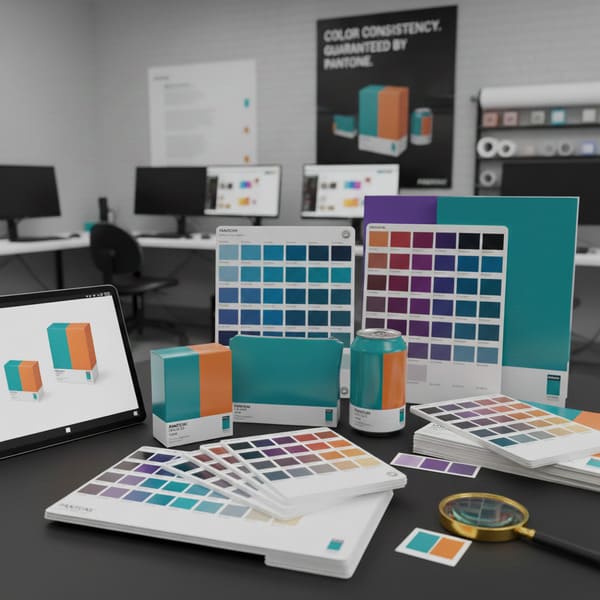
You design a perfect logo, but on cardboard, it looks muddy. This color disaster destroys brand equity instantly and usually happens because designers misunderstand ink chemistry.
Pantone is a standardized color reproduction system (PMS – Pantone Matching System) that utilizes a specific numbering methodology to identify ink colors with absolute precision. This system allows designers to specify a proprietary spot color recipe that manufacturers must physically mix, ensuring that a brand's signature shade remains identical across different substrates, from glossy paper to corrugated cardboard sheets (0.12 inches / 3mm thick).
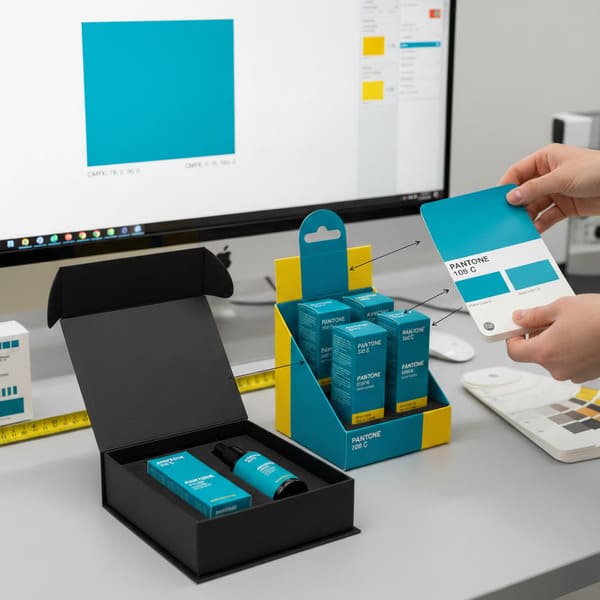
Let's stop the guessing game and look at how this system actually works on the factory floor.
What is the purpose of Pantone color?
If your "Coke Red" looks like "Tomato Soup," shoppers perceive your product as a cheap knockoff.
The purpose of Pantone color is to function as a global communication standard that eliminates color variance caused by different monitors and printers. By specifying a PMS (Pantone Matching System) code, designers force the printer to physically mix a specific spot ink formula rather than relying on a digital approximation, ensuring precise replication of corporate identities.

The Physics of Brand Consistency
You would not believe how many marketing managers approve a design on a backlit MacBook Pro and assume the ink on cardboard will look the same. It won't. Screens use RGB (Red, Green, Blue) light to project color directly into your eyes, while printing uses CMYK (Cyan, Magenta, Yellow, Black) ink to absorb light. This physical difference often leads to the "Muddy Color" disappointment where vibrant screen colors look dull in production. I learned this the hard way years ago with a cosmetics client. They sent a neon pink file that looked amazing on their retina screen. When we printed it using standard CMYK, it looked like a dirty salmon color. I had to scrap the test batch of 500 units. It was painful, but it taught me a valuable lesson about expectations.
That is why the purpose of Pantone is not just "making it pretty"—it is about chemical precision. When you specify a Pantone (PMS) color1, we don't mix dots of Cyan and Magenta to trick your eye. We physically mix a bucket of ink to that exact shade before it hits the press. To ensure this actually works, we don't trust our eyes, because human eyes are easily fooled by "Metamerism"—where colors look matching under factory fluorescent lights but completely different under retail store lighting. To combat this, we utilize X-Rite Spectrophotometers2 to measure your Pantone color within a strict Delta-E tolerance3. Delta-E is a metric that defines how the human eye perceives color difference. If the Delta-E is above 2.0, the human eye can spot the error. My team aims for a Delta-E of under 1.5. This ensures that your brand color is consistent globally, whether the display is sitting in a distribution center in Texas or a retail store in London. My process involves using GMG Color Proofing4 systems before mass production. I send a physical proof on the actual paper stock for approval so you see the reality, not the screen simulation.
| Feature | RGB (Screen) | CMYK (Process) | Pantone (Spot) |
|---|---|---|---|
| Source | Light | Pigment Mixture | Pre-Mixed Ink |
| Vibrancy | High (Backlit) | Medium/Low | High (Solid) |
| Consistency | Low (Monitor dependent) | Variable (Machine dependent) | Exact (Formula dependent) |
| Best For | Web Design | Photos/Images | Logos/Brand Colors |
My process involves using GMG Color Proofing systems before mass production. I send a physical proof on the actual paper stock for approval so you see the reality, not the screen simulation.
Does Pantone actually own colors?
Clients fear lawsuits for using "Barbie Pink," but the legal reality of color ownership is misunderstood.
Pantone does not actually own colors as wavelengths of light, but they do hold intellectual property rights regarding the specific ink formulas and numbering system. Companies purchase the PMS (Pantone Matching System) guides and software licenses to access these standardized recipes, ensuring that their manufacturers can replicate the exact proprietary color blend without legal ambiguity.

The Science of Standardization
Think of Pantone like a recipe book. They don't own "chocolate cake," but they own the specific written recipe that guarantees the cake tastes exactly the same every time. In the printing world, this "ownership" is really about owning the Standard. This becomes critical when we talk about audits and compliance. In the US market, brands often use the G7 Master5 calibration method for color consistency. This is a set of specifications for how a printing press should be calibrated. However, many factories in Asia default to Japanese standards, which can result in darker, heavier prints. I have had to fight with my own press operators to switch our calibration to G7 standards to match GRACoL profiles sent by US designers.
The "ownership" aspect also ties into Quality Control and the degradation of physical standards. A major issue is that the physical Pantone Fan Decks that designers use actually fade over time. If a designer in New York is using a 5-year-old faded book, and my factory in Shenzhen is using a brand new book, we will have a conflict. That is why we use a "Golden Sample6" protocol. Before mass production starts, I sign and seal one perfect unit that matches the Pantone standard. This sits on the production line in a light-proof black bag to prevent fading. My QC manager compares every 100th unit off the line against this Golden Sample. If the proprietary Pantone color drifts—meaning the ink density changes—we stop the machine. We are not paying Pantone for the color itself; we are paying for the ability to tell a client, "This matches the global standard you asked for." It is about liability protection as much as it is about aesthetics.
| Concept | What is Owned | What is Not Owned |
|---|---|---|
| Physics | The Ink Formula (Recipe) | The Wavelength (Light) |
| Naming | The Code (e.g., PMS 186C) | The Description ("Red") |
| Usage | The Printed Guides/Software | The Visual Perception |
We use a Spectrophotometer to match your PMS colors within that strict Delta-E tolerance I mentioned earlier. If it doesn't match the standard, we don't ship it.
Is Pantone used anymore?
Digital printing is cheap, but for major retail launches, relying on it is a dangerous gamble.
Yes, Pantone is used anymore because the PMS (Pantone Matching System) remains the absolute global standard for corporate identity in physical manufacturing. While digital printing is popular for small batches (under 500 units), major retail rollouts rely on the consistency and cost-efficiency of Pantone spot colors for packaging, ensuring brand recognition remains intact across thousands of retail locations.
Lithography vs. The Digital Trap
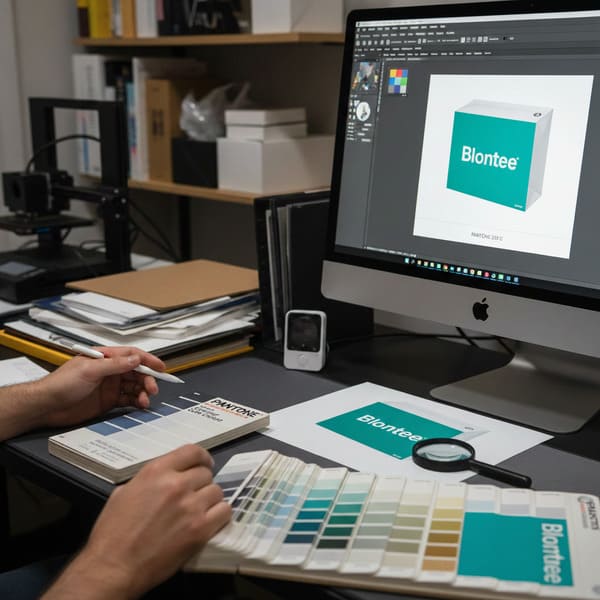
There is a trend right now where suppliers push Digital Printing7 for orders under 500 units to save money on setup. They tell you "Digital is just as good." Don't believe it. Digital printing uses toner or inkjet heads that simulate color using a mix of CMYK. It often results in grainy images and, more importantly, it struggles to hit vibrant Pantone colors accurately—especially bright oranges and greens which fall outside the digital gamut. I see this "Small Run Quality" issue all the time. A client orders 200 displays for a trial at a trade show. The factory uses a digital flatbed. The logo comes out fuzzy, and the red looks dull. Why? Because cardboard is porous. If you don't use high-pressure plates, the ink sinks into the fiber.
That is why I stick to High-Fidelity Litho (Offset) Printing8, even for small trial orders of 100 units. Lithography uses physical plates and pre-mixed Pantone inks. It is the only way to get that glossy, magazine-quality look on rough cardboard. Yes, there is a setup cost—typically around $300-$500 for the plates and mixing. But I educate clients on Amortization. Using Litho for 100 units means high setup costs per box. But if that trial succeeds and you order 5,000 units next time, the setup cost vanishes, and your unit price drops by 60%. If you start with digital, you have to re-do all your artwork, re-sample, and re-approve color matching when you switch to Litho for the big order. It creates a mess. I would rather lose money on the sample to guarantee the mass production is perfect.
| Comparison | Digital Printing | Litho (Offset) Printing |
|---|---|---|
| Setup Cost | Low (No Plates) | High (Plates + Ink Mix) |
| Unit Cost (High Vol) | High (Slow speed) | Low (High speed) |
| Pantone Accuracy | 85-90% Simulation | 100% Exact Match |
| Surface Finish | Matte/Flat | High Gloss/Premium |
I treat your 100-unit trial like a 10,000-unit rollout. We utilize offset printing from day one so the color you see in the trial is the exact color you get in the mass production.
When should I use Pantone?
Misusing Pantone for photos wastes money. You must know the difference between "Spot" and "Process" print.
You should use Pantone when designing logos, solid background headers, and metallic elements that require the PMS (Pantone Matching System) for accuracy. However, for photographic images or complex gradients, standard CMYK (Cyan, Magenta, Yellow, Key/Black) is required, as mixing distinct spot inks cannot reproduce the continuous tonal range needed for realistic picture quality.
Strategic Cost vs. Impact Analysis
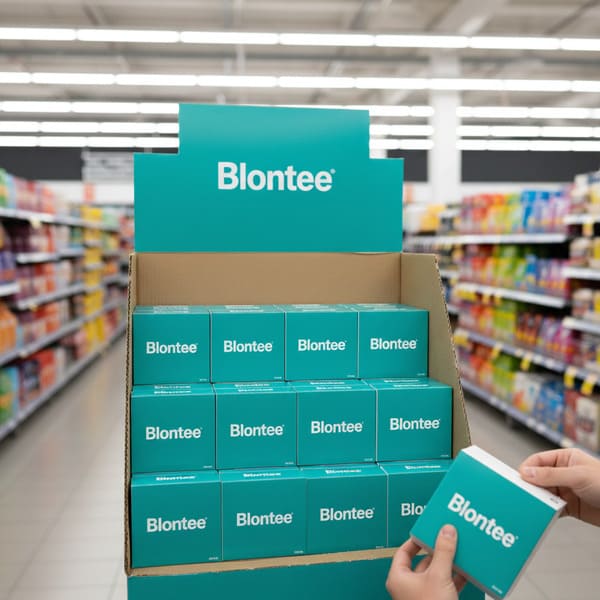
You should use Pantone when you have large areas of solid color or specific brand elements. But there are physical traps here. Let's talk about the "PMS 8779" Silver Problem. Clients love metallic silver text. They specify Pantone 877C. But here is the reality of cardboard: it is like a sponge. If we print metallic silver ink directly onto raw Kraft (brown) cardboard, the paper absorbs the metallic flakes. The result isn't shiny silver; it's a dirty, flat grey. It looks terrible. To fix this, we have to print a White Base Ink (Primer)10 first, and then print the Silver on top. Or, for a true premium look, we switch to Foil Stamping or Cold Foil, though that affects recyclability.
Another critical time to use Pantone (or specific spot plates) is to avoid the "Spot UV Registration Drift11." Designers love putting shiny Spot UV varnish over a logo. But corrugated board stretches slightly during production. If you are just using a standard clear coat plate, and the paper shifts by 0.02 inches (0.5mm), the shiny part drifts off the logo. It looks like a blurry misprint. To solve this, I use a high-viscosity screen print method with a specific "trapping" allowance. We make the varnish slightly larger than the logo (usually by 0.5mm) to account for the movement. Also, consider the "Washboard Effect." If you print high-res photos on standard B-Flute, the waves of the cardboard show through the ink, distorting the image. Using a Pantone block color can sometimes mask this better than a photo, but the real fix is switching to E-Flute (Micro-Flute)12. The E-Flute has 90 flutes per foot compared to B-Flute's 47, creating a tighter, smoother surface for the ink to sit on.
| Element | Recommended Mode | Why? |
|---|---|---|
| Brand Logo | Pantone (Spot) | Exact brand consistency. |
| Product Photo | CMYK (Process) | Needs blending for realism. |
| Metallic Text | PMS + White Base | Prevents absorption into board. |
| Black Text | Key (Black) only | Keeps text sharp (no registration blur). |
I warn designers: Don't print metallic ink directly on Kraft without a white base. It will look like a mistake.
Conclusion
Color isn't just decoration; it's the first thing your customer notices. If you are worried about your brand colors turning muddy on cardboard, or if you need to see exactly how a design will look before committing to 5,000 units, let me help. I can send you a Free Structural 3D Rendering or even a Physical White Sample to prove the quality. Get a Free Quote today and let's make sure your display stands out for the right reasons.
Find out why Pantone colors are crucial for maintaining brand consistency and visual identity. ↩
Explore this link to understand how X-Rite Spectrophotometers ensure color accuracy in branding. ↩
Learn about Delta-E tolerance to grasp its importance in achieving color consistency across different mediums. ↩
Discover how GMG Color Proofing systems enhance print quality and ensure brand color accuracy. ↩
Understanding the G7 Master calibration method is essential for achieving color consistency in printing, ensuring high-quality results. ↩
Exploring the Golden Sample protocol can provide insights into effective quality control practices, crucial for maintaining product standards. ↩
Explore this link to understand the limitations of Digital Printing and why it may not be suitable for high-quality projects. ↩
Discover the advantages of High-Fidelity Litho Printing, especially for achieving vibrant colors and quality in small orders. ↩
Explore the significance of PMS 877 in achieving metallic effects in printing, ensuring your designs stand out. ↩
Learn how White Base Ink enhances print quality, especially for metallic colors on absorbent surfaces. ↩
Understand the challenges of Spot UV varnish and how to prevent misalignment in your designs. ↩
Discover how E-Flute improves print quality and surface smoothness for better visual results. ↩