
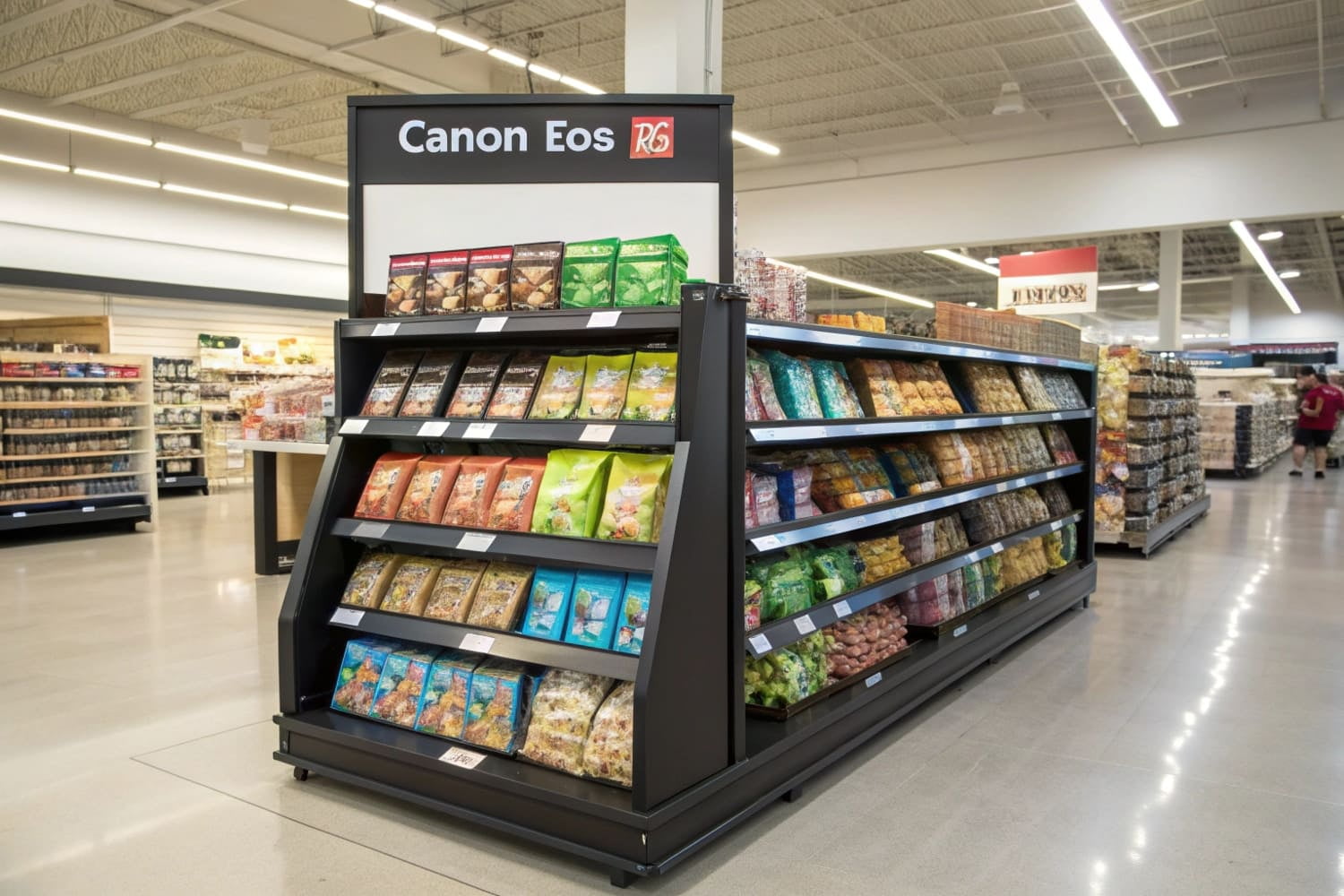
The right display can rescue slow-moving items from obscurity and convert browsing shoppers into confident buyers within seconds.
Tray floor displays keep related products at hand level, create instant micro-categories, and drive impulse sales by combining storage, signage, and easy replenishment in one portable unit.
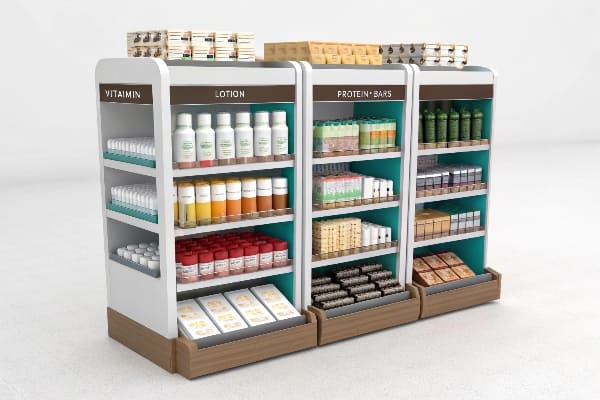
When I first toured a national sports chain, I noticed customers skipped the bottom shelves. After we swapped in branded tray floor displays, sales of smaller accessories jumped 32 % that week. Let’s break down why.
What are the different types of retail displays?
Lost in a maze of fixtures, shoppers often fail to spot new items, and revenue leaks away. A clear map of display options solves that stress.
Retail displays range from permanent gondolas and pegboards to temporary cardboard dump bins, interactive endcaps, clip strips, counter units, and mobile tray floor displays.
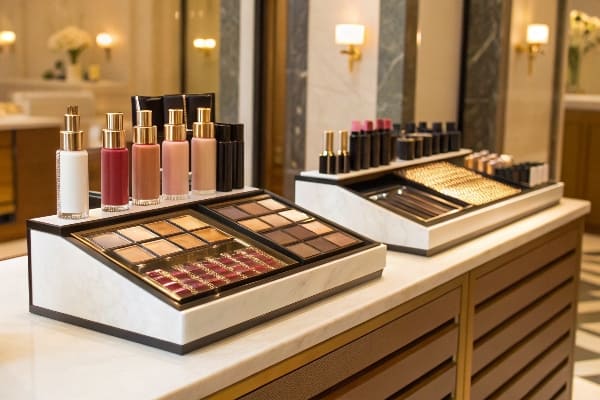
Core Categories and When I Use Them
| Display Type | Typical Lifespan | Best Placement | Key Advantage |
|---|---|---|---|
| Gondola Shelving1 | 5+ years | Center aisles | Holds heavy lines |
| Endcap | 6–18 months | Aisle ends | Spotlight promos |
| Pegboard | 3+ years | Wall perimeter | Flexible hooks |
| Counter Unit | 1–3 months | Check-out | Impulse add-ons |
| Clip Strip | Weeks | Beside core product | Cross-sell treats |
| Dump Bin2 | 1–2 months | Promotional zone | Treasure-hunt feel |
| Tray Floor Display | 1–6 months | High-traffic paths | Portable brand block |
Permanent Fixtures Versus Temporary Heroes
I split displays into two camps. Permanent metal or wood units anchor the store layout. They justify their cost through durability and load capacity. Temporary cardboard pieces, however, shine during seasonal pushes or new launches. Their light weight slashes shipping fees, and fresh graphics renew the aisle without a full remodel.
Choosing by Shopper Mission
Data from my own factory trials shows task-oriented shoppers prefer organized pegboards, while exploratory shoppers linger around dump bins hunting for surprises. Mixing both styles captures multiple mindsets and lifts basket size.
Sustainability and Cost
Cardboard options now reach 75 % recycled content, satisfying eco-conscious buyers. Compared with steel fixtures, they arrive flat, cut freight volume by half, and assemble without tools—crucial for my overseas clients on tight launch calendars.
Why is product display important in retail store?
Even the best product vanishes when poorly presented, frustrating buyers and wasting marketing spend.
Effective product display guides attention, communicates value instantly, and influences purchase decisions, directly affecting conversion rates, average basket size, and overall brand perception.
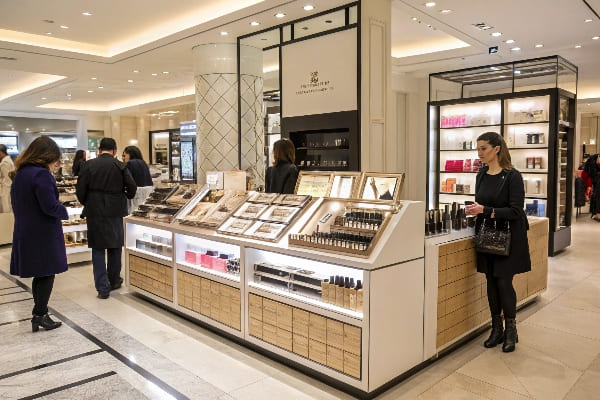
The Three-Second Rule and Beyond
Research says shoppers decide in three seconds whether to stop or stroll past. Clear visual hierarchy3—logo up top, hero image at eye level, price tag in the sweet spot—extends that pause into engagement. In my early career, I ignored this rule and watched a beautiful but cluttered archery display underperform. Re-ordering the graphics raised dwell time and doubled unit sales.
Emotional Cues Drive Action
Colors, typography, and storytelling panels trigger feelings. A matte green board with woodland graphics whispers authenticity to hunters, whereas neon gradients scream energy drinks. I test variants with small runs on our digital press, then push the winner into mass production.
Operational Wins
A well-engineered display speeds up restocking. My tray floor units include hidden side doors, so staff slip in pre-packed trays without dismantling the stand. Faster labor means lower costs and fewer out-of-stock gaps.
Metrics I Track
| KPI | Before Display | After Display | % Change |
|---|---|---|---|
| Conversion Rate | 8 % | 13 % | +62 % |
| Average Units per Basket | 1.4 | 2.1 | +50 % |
| Time in Front of Fixture (sec) | 5 | 11 | +120 % |
Small tweaks compound; that is why display strategy sits at the heart of retail profit.
What are floor displays?
Customers often miss lower shelf stock, leaving potential sales untapped. Floor displays elevate merchandise into sightlines and create mini-destinations.
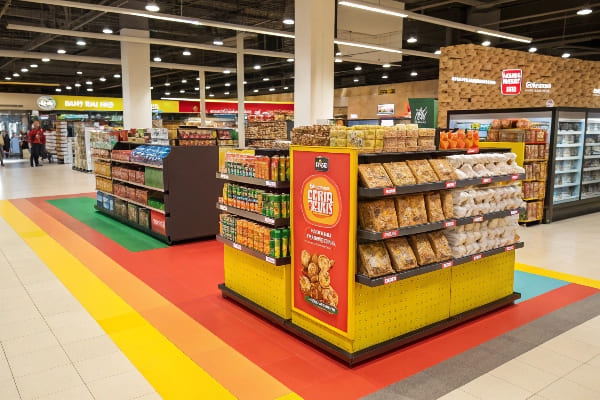
Floor displays are freestanding units placed on the sales floor, independent of shelving, designed to showcase products at strategic heights and encourage impulse or themed purchases.
Anatomy of a Floor Display
Base, Body, Header
Most designs share three parts. The weighted base prevents tipping. The body carries shelves, hooks, or trays. The header carries branding or pricing.
Mobility Matters
Adding lockable casters4 lets staff wheel a loaded stand from backroom to front door in minutes—vital during holiday resets. I embed caster sockets directly into the corrugated structure and reinforce them with double-wall board rated to 25 kg.
Strategic Zones
I place floor displays5 at power aisles, the decompression zone just beyond the entrance, and queue lines. Each site serves a purpose: awareness, discovery, or last-minute upsell.
Case Study: Crossbow Accessory Launch
Barnett Outdoors needed a launch kit for broadheads and wax. We built a four-tray floor unit with angled shelves so the pack graphics faced upward. Sell-through hit 90 % by week four, and the buyer reordered twice before the season ended.
What are cardboard displays called?
New buyers sometimes stumble over jargon and fear miscommunication.
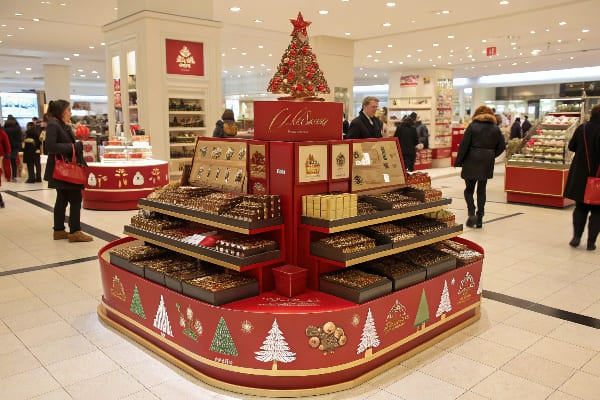
Cardboard displays are commonly called corrugated POP (Point-of-Purchase) displays, including FSDUs (Free-Standing Display Units), PDQs (Product Display Quickly), and CDU counter displays.
Decoding the Acronyms
| Term | Full Form | Typical Use |
|---|---|---|
| POP Display | Point-of-Purchase6 | Broad umbrella for any sales-area unit |
| POS Display | Point-of-Sale | Near the checkout lane |
| FSDU | Free-Standing Display Unit | Floor-standing, often temporary |
| PDQ | Product Display Quickly | Small tray box that ships products ready to sell |
| CDU | Counter Display Unit | Sits on counters for grab-and-go items |
Why Corrugated, Not Plain Cardboard?
Corrugated fiberboard7 sandwiches fluted paper between liners, giving strength without weight. My clients ship crossbow bolts that pierce regular board, yet corrugated walls survive. Using high-resolution offset litho-laminated prints, we merge structural integrity with premium graphics.
Cutting Confusion Boosts Speed
When both buyer and factory speak the same terms, sample cycles shrink. I send a nomenclature sheet in the first email, saving at least two back-and-forth messages per project.
Sustainability Edge
Corrugated POP displays meet FSC and ISO standards, and retailers favor units that flat-pack for recycling. That eco story often appears on the footer panel, nudging conscious shoppers.
Conclusion
Tray floor displays and their POP cousins turn unnoticed goods into top sellers by meeting shoppers at eye level and telling a clear, quick story.
Explore the advantages of Gondola Shelving to enhance your retail space and maximize product visibility. ↩
Learn how Dump Bins create a treasure-hunt feel that can significantly boost impulse purchases and sales. ↩
Understanding visual hierarchy can enhance your retail strategies, leading to better customer engagement and sales. ↩
Explore how lockable casters enhance mobility and efficiency in retail environments, making displays easier to manage and reposition. ↩
Discover the significance of floor displays in driving sales and customer engagement in retail settings. ↩
Learn about Point-of-Purchase displays and how they can significantly enhance sales and customer engagement in retail environments. ↩
Explore the advantages of corrugated fiberboard, including its strength and lightweight properties, which are crucial for effective packaging solutions. ↩