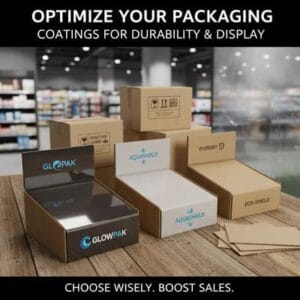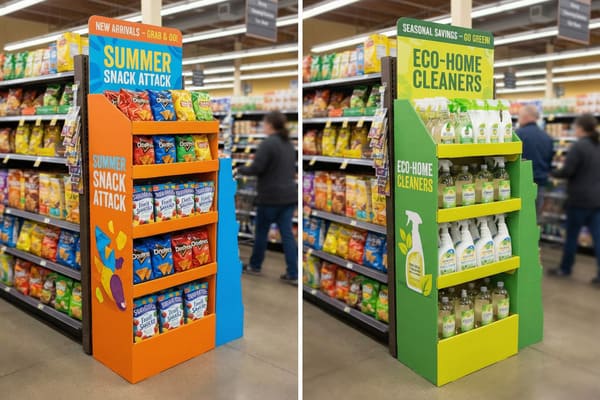
Retail space is expensive, and you need products to move fast. Are your best items getting lost in the aisle shuffle instead of grabbing attention?
Endcap displays maximize product visibility by positioning items at high-traffic aisle ends. They trigger impulse buys, increase brand awareness, and allow for creative merchandising without cluttering standard shelves. Retailers use them to highlight promotions, new arrivals, or seasonal goods, resulting in significantly higher sell-through rates.
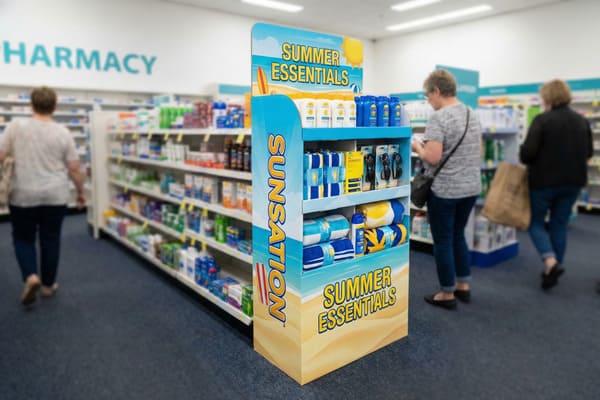
Let's look at how these displays actually function and why they are a staple in successful retail strategies.
What are end cap displays used for?
You have a new product launch coming up. Placing it next to competitors on a standard shelf might not get the sales numbers you need.
End cap displays are primarily used to showcase featured products, seasonal items, or clearance stock at the end of store aisles. They separate specific merchandise from the general inventory, creating a focal point that disrupts the shopper's journey and forces them to notice the promotion.
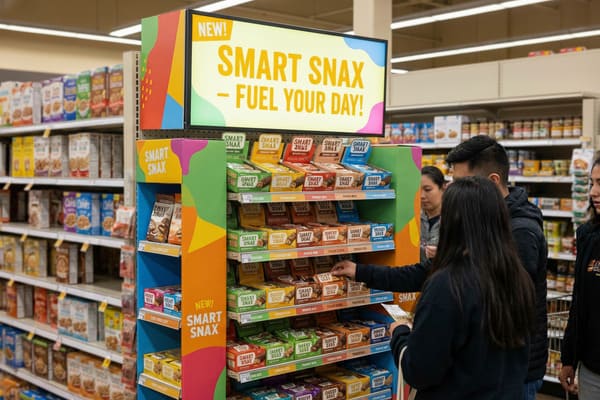
Strategic Merchandising and Placement
When we talk about end caps1, we are referring to the prime real estate of the retail world. In the competitive cardboard display industry, brands fight aggressively for this space because it breaks the visual monotony of the store. A shopper walking down the main thoroughfare of a supermarket or a large hardware store is typically in "transit mode," moving from one section to another. An end cap is used specifically to interrupt this pattern. It is used for high-margin items or high-volume movers that need to stand out. For example, a beverage company will use a reinforced corrugated end cap to hold heavy bottles, while a cosmetic brand might use a lighter structure for new eyeliner.
Technically, these displays are used to bypass the limitations of standard shelving. Retailers like Costco or Walmart have strict compliance manuals regarding dimensions and structural integrity. An end cap is often used to hold "PDQ2" (Pretty Darn Quick) trays, which allows for rapid restocking. If you are launching a new hunting accessory, you do not want it hidden in Aisle 12 among fifty other brands. You want it on the end cap where every customer walking toward the sporting goods section sees it first. It acts as a silent salesperson. Furthermore, end caps are used to test new markets. If a retailer is unsure about stocking a product permanently, they will use a temporary cardboard end cap to test sales velocity. If the product moves well from the display, it earns a spot on the permanent shelf. This makes the end cap a crucial tool for data gathering and market validation.
| Feature | Standard Aisle Shelf | End Cap Display3 |
|---|---|---|
| Visibility | Low (Must walk down aisle) | High (Visible from main walkways) |
| Competition | High (Directly next to rivals) | Low (Brand ownership of space) |
| Shopper Mindset4 | Search Mode | Discovery / Impulse Mode |
| Space Type | Permanent, Fixed | Temporary, Flexible |
| Stocking Speed | Slow (Individual units) | Fast (Often tray/case loaded) |
I know that a collapsing display ruins a promotion instantly, so my team tests every end cap design with weighted sandbags to ensure it holds your specific inventory securely while looking professional on the retail floor.
Are end of aisle displays worth it?
Budgeting for marketing materials is always a tightrope walk. You might wonder if the extra cost of a standalone display really pays off in the end.
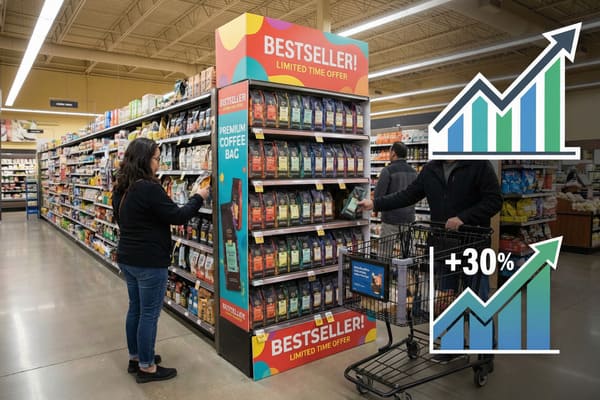
Yes, end of aisle displays are highly effective and offer a strong return on investment. Data suggests they can increase product sales by over 30% compared to standard shelf placement. The increased visibility and prime location justify the manufacturing cost by driving higher volume and faster inventory turnover.
ROI and Cost-Benefit Analysis
The short answer is yes, but we need to look at the specific mathematics behind the manufacturing and retail performance. A corrugated cardboard display is significantly cheaper than a permanent metal, wood, or acrylic fixture. When you manufacture in China, as we do, the unit cost drops even further, especially for orders that optimize material usage on the printing press. However, the value is not just in the low production cost; it is in the substantial sales lift. Studies in retail environments consistently show that products placed on end caps sell significantly faster than those inline. This is largely due to the "impulse buy5" factor. For a product like a specialized tool or a seasonal snack, the visual trigger is the key to the sale.
If you spend $15 on a high-quality cardboard display that generates an extra $500 or $1000 in sales over a weekend promotion, the math works in your favor. There is also the "billboard effect6." Even if a customer does not buy the product that day, they have seen your logo, your brand colors, and your key messaging big and bold. That is free advertising space that you do not get on a crowded shelf. We often see clients worry about the lifespan of cardboard, asking if it is worth the investment if it only lasts a few months. But that is exactly the point. Cardboard is temporary, flexible, and recyclable. It keeps the store looking fresh. Permanent fixtures get ignored after a while because they blend into the background. A fresh, bright cardboard display grabs attention every time it is deployed. Additionally, the cost of shipping flat-packed cardboard is a fraction of shipping pre-assembled permanent fixtures, further improving the ROI.
| Cost Factor | Permanent Fixture | Cardboard End Cap |
|---|---|---|
| Material Cost7 | High (Metal/Wood/Plastic) | Low (Corrugated Paper) |
| Tooling Cost | Expensive Molds | Low (Cutting Dies/Plates) |
| Shipping Cost | High (Heavy, Bulky) | Low (Light, Flat-packed) |
| Update Cost | Expensive to replace | Cheap to replace/refresh |
| Recyclability8 | Difficult | Easy (100% Recyclable) |
We focus on value engineering, meaning my designers adjust material thickness and structure to give you the best price without sacrificing the structural integrity needed for high-traffic retail environments.
What is the goal of a good end cap?
Throwing products on a shelf is easy, but it is lazy. To really succeed, your display needs to have a clear mission and execute it perfectly.
The primary goal of a good end cap is to stop traffic and convert browsers into buyers immediately. It must communicate the product's value proposition within seconds through clear graphics and accessible stock. Ultimately, it aims to maximize sales per square foot in the store's most valuable areas.
Visual Hierarchy and Structural Stability
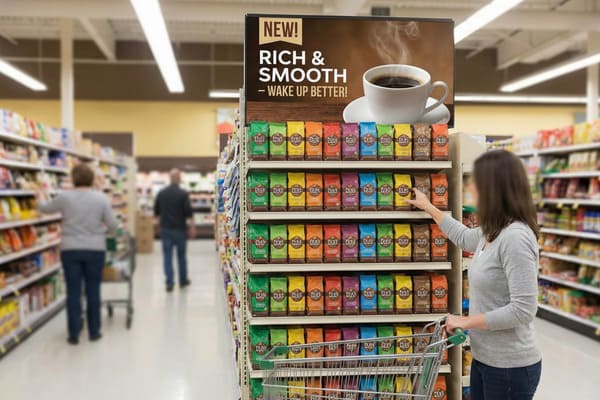
A good end cap is not just a box; it is a machine designed for selling. The primary goal is immediate communication. In the chaotic, sensory-overload environment of a retail store, you have about three seconds to catch a shopper's eye. If the text is too small, the colors are dull, or the message is confusing, you fail. The goal is to create a clear visual hierarchy9. The header card (the top part of the display) is the most critical real estate. It acts like a headline in a newspaper. It needs to shout "New," "Sale," "Limited Time," or "Best Seller."
Below the header, the goal is accessibility. The shelves must be fully stocked and easy to reach. An empty-looking display kills consumer confidence. From a structural standpoint, the goal is safety and durability. If a customer is afraid to touch the product because the display looks wobbly or weak, they will walk away. We use specific flute types, such as B-flute for printing surfaces and BC-flute or double-wall EB-flute for heavy structural support, to ensure the walls are rigid. Another often overlooked goal is ease of assembly for the retailer. If the display is too complex to build, store clerks will likely throw it in the trash rather than waste time assembling it. A good end cap achieves the goal of being "retailer-friendly10," popping up in minutes. This respects the store's labor constraints while maximizing your brand's impact. The printing quality also plays a huge role here; we typically use litho-lamination for high-resolution graphics that make the product pop.
| Element | Goal | Implementation Strategy |
|---|---|---|
| Header Card | Grab Attention | Bold fonts, high contrast, key benefit |
| Shelving | Product Accessibility11 | Angled for visibility, lip for retention |
| Base | Structural Support | Waterproof coating, reinforced internal cross-bars |
| Graphics | Brand Recognition12 | High-gloss finish, consistent PMS colors |
| Assembly | Speed to Floor | Pre-glued parts, clear instruction sheets |
I provide free 3D renderings and detailed assembly videos because I know that if your display is confusing to build, it will never make it to the sales floor to do its job.
What is the purpose of the end cap?
You might think an end cap is just another shelf, but it serves a much deeper psychological function in the shopping experience.
The purpose of the end cap is to highlight merchandise that might otherwise be overlooked in the main aisles. It serves as a navigational landmark for shoppers and a strategic tool for inventory management. Retailers rely on them to move high-volume stock quickly and to create a dynamic, changing shopping atmosphere.
Psychological Impact and Inventory Flow
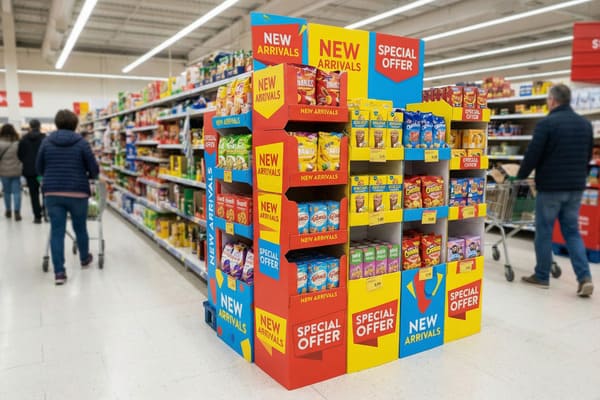
The purpose of an end cap goes beyond just "selling more stuff." It is about inventory management13 and flow. Retailers use end caps to clear out inventory that is highly seasonal or nearing a packaging update. For the brand owner, the purpose is market dominance. In the main aisle, your product sits right next to your direct competitor. You are fighting for attention inch by inch. On the end cap, you own the entire visual field. It creates a "brand block" where the consumer is immersed only in your messaging. Another key purpose is cross-merchandising14. You might see chips and salsa together, or in the outdoor industry, crossbow bolts next to targets. The end cap tells a story that a single product on a shelf cannot. It suggests a usage occasion, prompting the customer to buy the bundle.
Technically, the purpose is also to maximize vertical space efficiency. Retail floor space is calculated by the square foot, but end caps utilize vertical air space. We design displays that are tall but stable, often utilizing a backward slant or a wide base to prevent tipping. This allows you to hold a massive volume of SKUs in a very small footprint. This efficiency is crucial for supply chain logistics, ensuring the store does not need to restock the display every hour. Furthermore, the purpose is to introduce newness. Shoppers get bored with the same layout. End caps are changed frequently, keeping the store environment dynamic and interesting. It signals to the shopper that there is always something new to discover, which encourages them to visit the store more often.
| Purpose | Benefit to Brand | Benefit to Retailer |
|---|---|---|
| Inventory Clearance15 | Move old stock fast | Frees up warehouse space |
| Brand Blocking | Eliminates competition | Creates attractive visual focal points |
| New Product Launch16 | Educates consumer | generated excitement/foot traffic |
| Cross-Selling | Increases basket size | Increases average transaction value |
| Seasonal Events | Timely relevance | Captures holiday spending |
I understand the need for speed and stability, which is why my factory runs mock-up tests to ensure your display serves its purpose of holding heavy inventory without buckling under pressure.
Conclusion
End cap displays are powerful tools to boost visibility and sales. They turn passive shoppers into active buyers. If you need robust, custom designs, I am here to help.
Understanding end caps can enhance your retail strategy, helping you maximize product visibility and sales. ↩
Exploring PDQ trays can provide insights into efficient restocking methods and improve your merchandising tactics. ↩
Explore this link to understand how End Cap Displays can boost visibility and sales in your retail space. ↩
Discover insights on shopper mindset to enhance your marketing strategies and improve customer engagement. ↩
Understanding the impulse buy phenomenon can help you enhance your marketing strategies and boost sales effectively. ↩
Exploring the billboard effect can provide insights into brand visibility and customer engagement, crucial for effective advertising. ↩
Understanding material costs can help you make informed decisions about production and budgeting. ↩
Exploring recyclability can enhance your knowledge of sustainable practices and their impact on the environment. ↩
Understanding visual hierarchy is crucial for effective design, helping you create impactful displays that attract customers. ↩
Exploring retailer-friendly concepts can enhance your display strategies, ensuring ease of use and maximizing sales potential. ↩
Explore this link to learn effective strategies for enhancing product visibility and accessibility in retail environments. ↩
Discover how visual elements like finishes and colors can significantly boost your brand's visibility and recognition. ↩
Understanding inventory management can help retailers optimize stock levels and improve sales efficiency. ↩
Exploring cross-merchandising strategies can reveal innovative ways to boost sales and enhance customer experience. ↩
Explore effective strategies for inventory clearance to enhance your brand's sales and optimize stock management. ↩
Learn about successful new product launch strategies that can generate excitement and increase consumer engagement. ↩