Shoppers often miss small items at checkout. Sales slip away. I use counter display packaging boxes to turn quiet counters into steady sales with clear branding and quick setup.
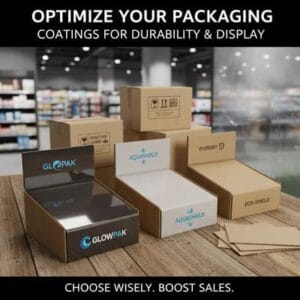
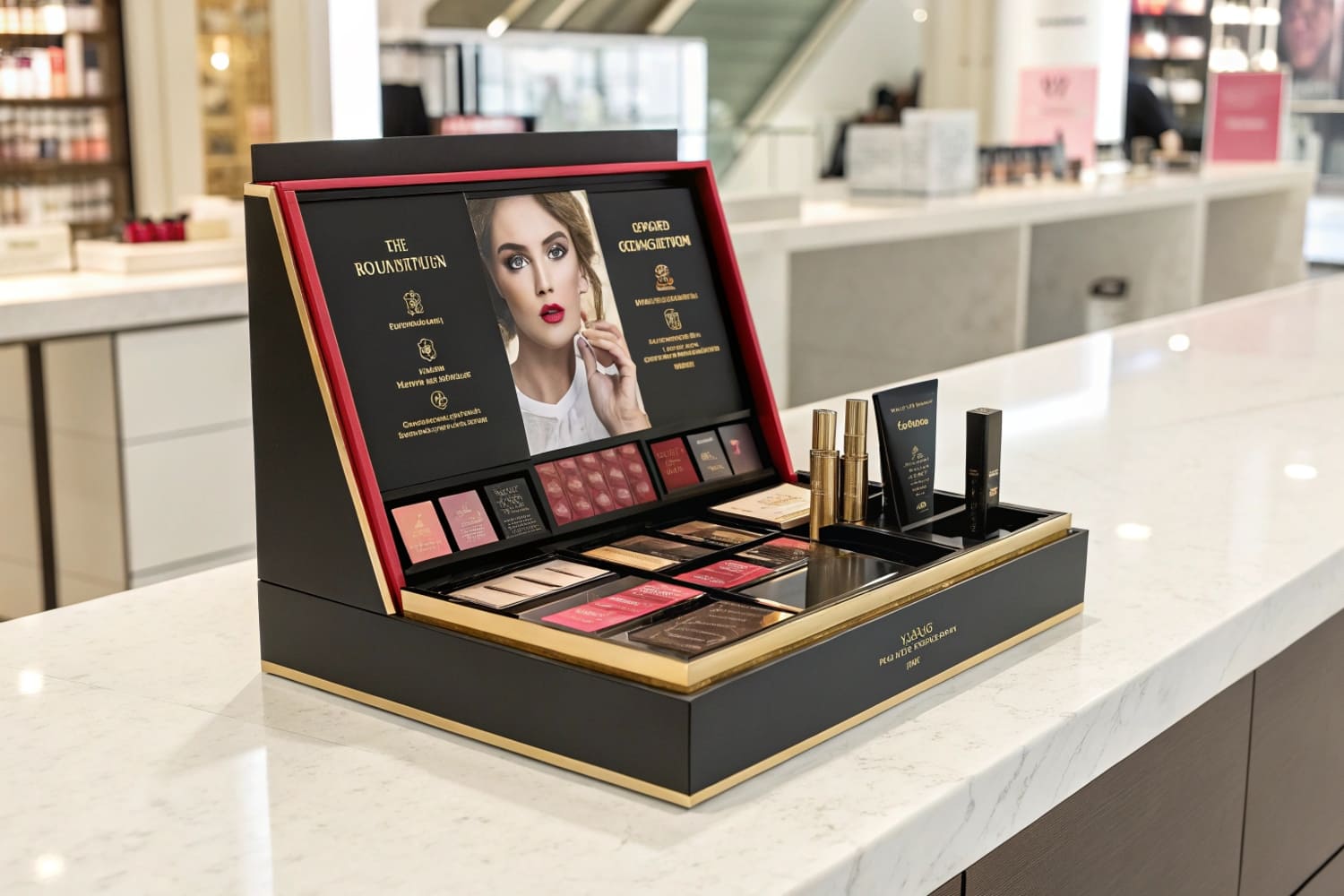
Counter display packaging boxes are small corrugated or paperboard units placed on store counters to hold products, show branding, and spark impulse buys with fast assembly, low cost, and recyclable materials.
I will keep this simple and useful. I define each term. I share setups, tables, and a short story from my factory work. You can copy these steps today.
What are countertop displays?
Customers pause at the register. Their eyes scan. A small display can tip a choice. I design countertop displays to convert those seconds into paid orders.
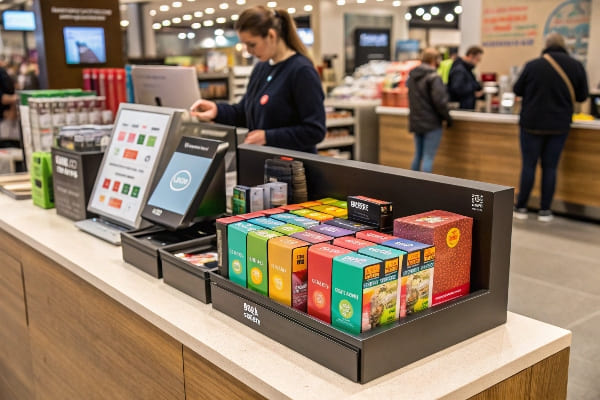
Countertop displays are compact freestanding units that sit on counters to present add-on items, raise visibility, and convert wait time into sales through simple assembly, smart tiers, and clear price labels.
How I plan effective countertop displays
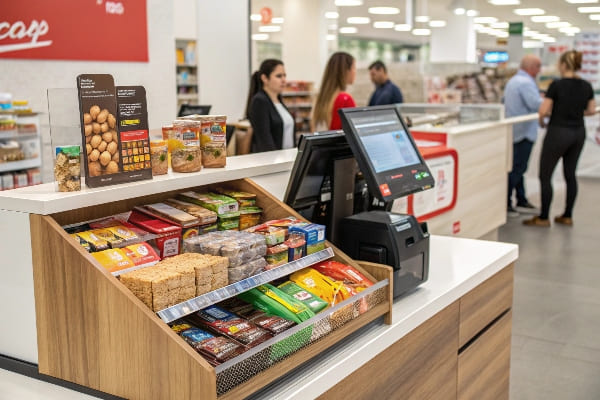
I start with the shopper path1. I check height, reach, and sightline. I keep the footprint small, so staff still works fast. I use bold headers and simple price tags. I avoid clutter. I test one hero SKU2 and one support SKU. I add QR codes only if they help, not to show off tech. Last fall, I helped a U.S. hunting brand launch crossbow wax and rail lube. We used a 2-tier PDQ with a clear "Try Me" sample on top. We shipped flat. Store staff set each unit in under one minute. Sell-through rose because the kit sat next to the checkout scale where hunters asked questions. We chose water-based inks, FSC paper, and a matte varnish to cut glare. The box passed a quick drop test and a simple tilt test. The team reordered in six weeks. That is the goal: fast setup, clean message, strong reorders.
| Element | Practical setup | Why it helps |
|---|---|---|
| Header card3 | 5–7 words, large font | Fast read at 1–2 meters |
| Footprint | ≤ A4 base | Fits crowded counters |
| Tiers | 2–3 steps | Shows labels without overlap |
| Price label4 | One clear tag | Cuts choice friction |
| Sample | 1 demo unit | Triggers questions |
What are counters in visual merchandising?
A counter is more than a payment point. It is a decision point. I treat it like paid media that you already own and must measure.
In visual merchandising, counters are prime touchpoints where shoppers decide fast; smart zoning, tidy sightlines, and small displays turn this owned space into a repeatable sales channel.
How I zone a counter
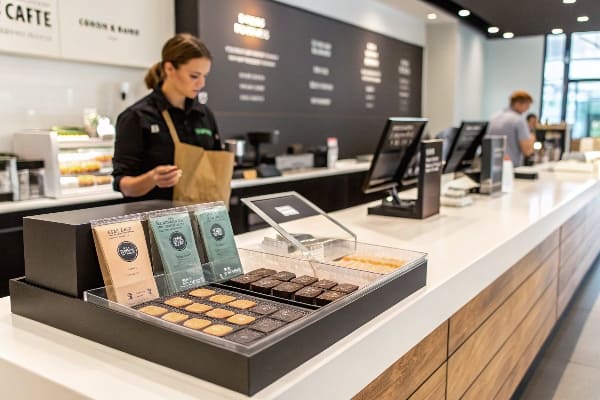
I break the counter into zones: transact, engage, and grab-and-go. I keep the transact zone5 clear for POS devices and hands. I place one small display in the engage zone on the shopper's dominant-hand side. I keep grab-and-go at the exit edge with low-price items. I test messages by daypart. Morning favors coffee add-ons. Evening favors quick gifts. I also watch basics: ADA clearance, staff elbow room, cable paths, and glare from overhead lights. I track three numbers each week: units per thousand transactions, restock time, and returns. I write them on the pick ticket, so store teams see progress. This simple loop beats guesswork. It also scales across regions. In North America, demand is steady and stores are mature. In APAC, growth is fast, so I push flat-pack designs that move fast through retail expansion. In Europe, I feature recycled content and water-based inks first, because sustainability6 often drives the brief.
| Counter zone | Primary goal | Best items | Notes |
|---|---|---|---|
| Transact | Speed and trust7 | None or small signage | Keep clutter near zero |
| Engage | Upsell | New, seasonal, add-ons | Place on dominant-hand side |
| Exit edge | Last-second pick8 | Low-price treats, refills | Use bold price label |
What are custom display boxes?
Many teams need more than a stock box. They need structure, print, and strength tuned to the product. I build custom display boxes to fit that need.
Custom display boxes are tailored corrugated or paperboard units built to exact size, graphics, and load so brands control fit, print quality, speed, and sustainability without paying for unused material.
How I scope and de-risk custom work9
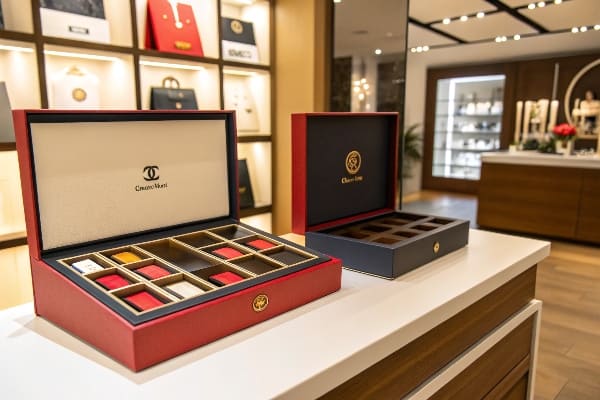
I write a short spec before design: product sizes, total weight, target footprint, shelf life, and ship test level. I mark must-haves: brand colors, finish, and certifications like FSC. I choose board grade by weight and moisture risk. Single-wall E-flute works for most counters. I switch to B-flute or stronger if the product is dense. I use digital print for short runs and seasonal art. I move to offset for long runs. I do one strength test10 early: simple load, edge crush cues, and a quick drop. I give 3D renders for fast sign-off. I send one pre-production sample with exact paper and inks. I lock color with a drawdown so there is no surprise. On a cosmetics project, I stopped a delay by moving to a modular header with two slots, so the same base served holiday and spring. That saved tooling and sped reorders. Custom is not about fancy shapes only. It is about repeatable choices that protect margin.
| Decision | Options | When to pick |
|---|---|---|
| Digital / Offset | Digital for small, offset for large11 | |
| Board | E, B, EB | Heavier SKUs need B or EB |
| Finish | Matte / Gloss / Soft-touch | Matte for glare control |
| Certs | FSC, recycled content | Retailers often require FSC12 |
| Pack | Flat-pack / Pre-glued | Flat-pack cuts freight cost |
What is a retail display box?
Teams use this term in many ways. Some mean PDQ. Some mean shelf-ready packaging. I define it clearly during the brief to avoid mistakes.
A retail display box is a ready-to-sell package that ships with product and converts into a shelf or counter tray with a tear-away hood, printed branding, and simple restock steps.
How I design retail display boxes13 that sell and ship well
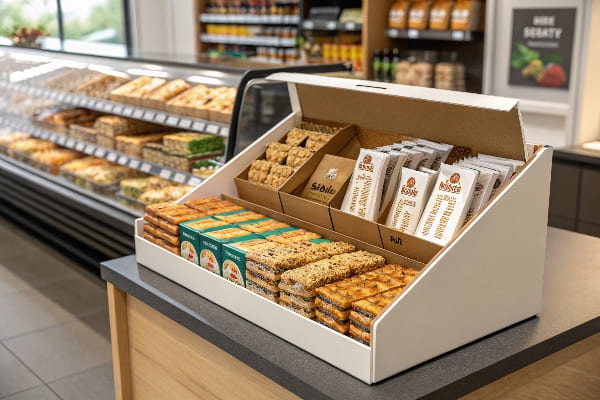
I start with the retailer rules. Many big chains ask for shelf-ready packaging14 with a clean tear-line and a scannable UPC. I pick a tray-and-hood style when speed matters. I place a finger hole so staff can open without tools. I add a front lip to stop roll-outs. I print one brand panel on each side. I mark a restock count on the inner wall. I plan pallet patterns and master cartons so units cube out the truck. I check simple ship tests like ISTA 3A level where needed. I set MOQ by print method and lead time by line load. Market facts also steer choices. Floor displays take a large share of POP (about 40%+), but countertop and PDQ boxes still drive fast wins at checkout. APAC grows fast with retail expansion. North America is steady. Europe pushes recycled content. The wider display packaging market may grow at mid-single digits over the next decade, so simple, repeatable PDQs still matter.
| SRP/PDQ type | Best for | Open method | Store benefit |
|---|---|---|---|
| Tray + hood | Fast changeovers15 | Tear strip | One-step setup |
| Perforated carton | Low cost | Pull tab | No tools |
| Sleeve + tray | Premium look16 | Slide off | Clean edges |
| Book-style | Small packs | Hinge open | Big front panel |
Conclusion
Counter space is prime. Simple boxes, clear zones, and honest tests drive sales. Start small, measure weekly, and scale the winners with fast reorders and clean prints.
Understanding the shopper path is crucial for creating effective displays that enhance customer experience and boost sales. ↩
Learning about hero SKUs can help you identify key products that drive sales and improve your merchandising strategy. ↩
Understanding the role of a Header card can enhance your display strategy, making it more effective for customer engagement. ↩
Exploring the impact of Price labels can help you optimize pricing strategies and improve customer decision-making. ↩
Understanding the transact zone can enhance your retail layout, improving customer experience and sales. ↩
Exploring sustainability in retail can provide insights into consumer preferences and innovative design strategies. ↩
Understanding how to enhance speed and trust can significantly improve customer satisfaction and loyalty. ↩
Exploring last-second pick strategies can help increase impulse purchases and boost overall sales. ↩
Exploring this resource will provide insights into effective strategies for managing custom work, ensuring quality and efficiency. ↩
This link will guide you through the process of conducting strength tests, crucial for ensuring product durability and safety. ↩
Understanding the advantages of each printing method can help you make informed decisions for your projects. ↩
Exploring the importance of FSC certification can enhance your knowledge of sustainable practices in retail. ↩
Explore design tips for retail display boxes to boost sales and optimize shipping efficiency. ↩
Understanding shelf-ready packaging can enhance your retail strategy and improve product visibility. ↩
Understanding fast changeovers can enhance your packaging efficiency and reduce downtime. ↩
Exploring the impact of a premium look in packaging can elevate your brand's image and attract more customers. ↩