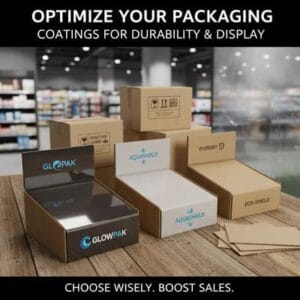
I see shoppers miss great products at the shelf. I feel that pain. I design displays that stop them fast, explain fast, and move them to buy now.
A point-of-sale display is a branded unit placed near checkout or high-traffic spots to spark quick decisions, usually made from cost-effective cardboard, sized to fit the space, and printed for the current promotion.
I keep this guide simple and useful. I answer common questions first. I then go deeper with tables and short checklists you can copy. I add real factory lessons from my work in Shenzhen so you avoid delays and waste.
What is an example of a point of sales display?
Shoppers pause for seconds, not minutes. They need a clear offer. A simple cardboard unit with the right message can win that moment and lift sales without heavy cost.
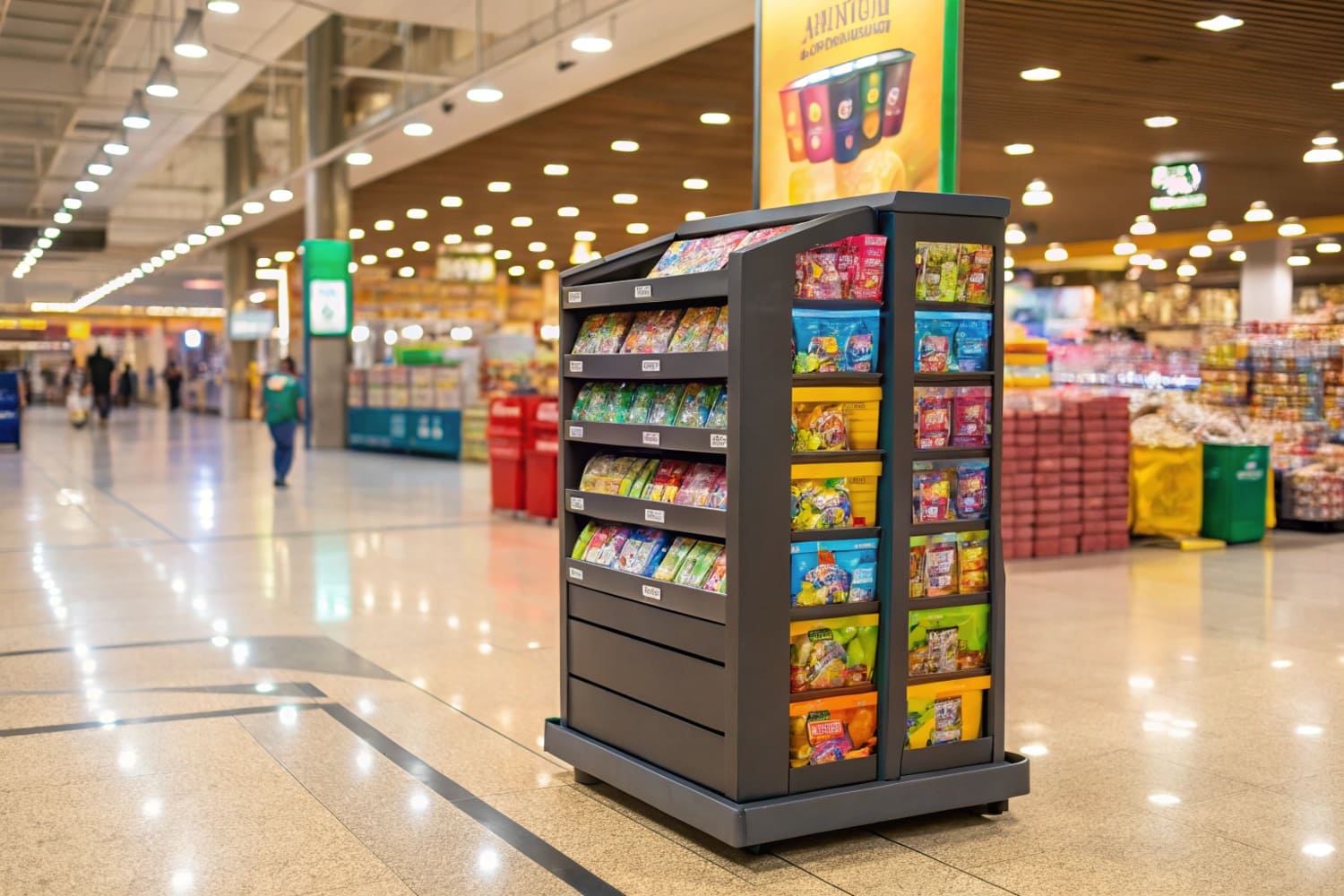
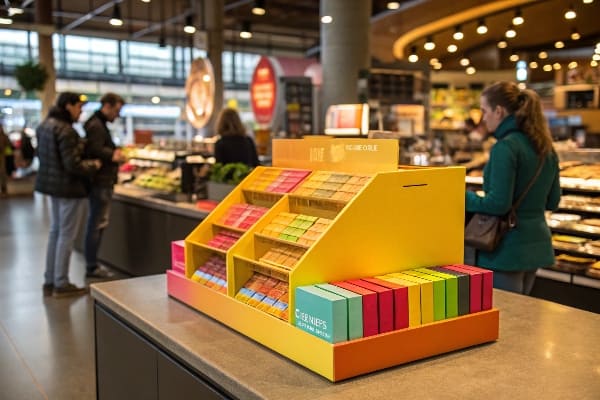
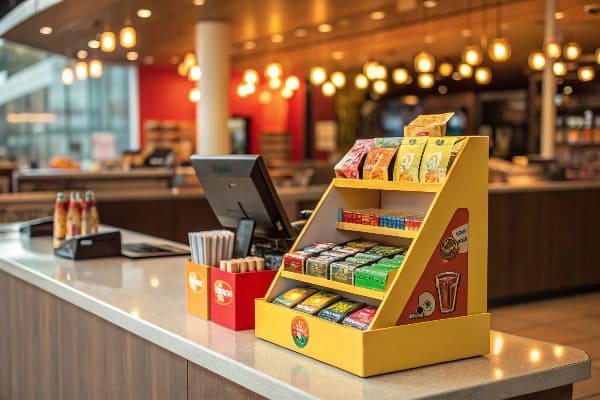
A classic example is a cardboard countertop display by the register holding travel-size items or new SKUs; another is a free-standing floor display on an aisle endcap that stacks product, carries a big header, and drives impulse buys.
How the best examples work
I build examples around three variables: location, product weight, and dwell time. Countertops handle light goods and fast reads. Floor displays handle volume and bold visuals. Pallet displays fit club stores and speed set-up. Digital-ready headers add QR codes for trials or sign-ups. In my factory, we prototype in days because digital printing1 allows short runs and fast changes. This keeps seasonal promotions2 on schedule and reduces obsolete stock.
Formats at a glance
| Format | Best Spot | Typical Goal | Setup Time | Product Weight |
|---|---|---|---|---|
| Countertop3 | Checkout | Upsell small items | Minutes | Light |
| Floor (FSDU) | Endcap/Aisle | New launch + volume | <1 hour | Medium |
| Pallet | Club store | Bulk move | Minutes with pallet jack | Heavy |
| Shelf/Tray | Inline shelf | Block brand | Minutes | Light |
| Clip strip | Aisle side | Cross-sell | Minutes | Very light |
| Interactive4 | Hot zones | Demos/Data capture | 1–2 hours | Varies |
Why cardboard examples win
Cardboard is flexible, fast, and recyclable5. It costs less than plastic or metal, which helps budgets and short promotions. It ships flat and assembles with simple locks, so teams deploy fast6 across many stores.
What is the point of sale display?
Many teams mix terms and lose focus. I keep one rule: it must help the shopper decide now. If it does not do that, it is only decor.
A point of sale display is a temporary or semi-permanent unit placed at or near checkout to trigger impulse purchases, highlight promos, and improve basket size with clear, quick messages and easy reach.
Purpose, not just placement
I measure POS displays by conversion lift7, not likes. The copy must be short. The price must be visible. The SKU count must be small. In trials, fewer than five facings at checkout work best because shoppers have seconds. I design tear-away coupons or QR codes when I want data, but I avoid clutter. For durability, I use E-flute or B-flute with reinforced trays. Water-based inks meet retailer safety rules and keep recycling easy in Europe and North America.
Checklist and quick spec
| Item | Rule of Thumb | Why it Matters |
|---|---|---|
| Message | 6–8 words | Readable in 2 seconds |
| Height | Below eye line at the till | Keeps sight lines open |
| SKU count8 | ≤5 | Reduces decision friction |
| Material | Corrugated E/B-flute | Balance print and strength |
| Ink/Adhesive | Water-based, low-VOC9 | Store compliance, recyclability |
| KPI | Uplift vs. baseline | Real impact tracking |
Timeline reality
Digital printing10 cuts lead time11. I move from art to sample in 48–72 hours, then to production in days. This speed saves seasonal promos that slip.
What is an example of a point of sale?
People often mean the transaction point, not the display. I bridge both so teams align hardware, software, and messaging at the same spot.
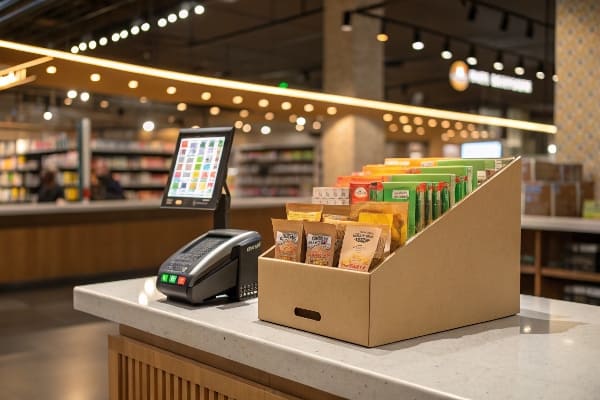
A point of sale example is the supermarket cash wrap with card terminal and scanner; a POS display there might be a small tray of batteries or gum with a bold price card facing the queue.
POS system + display working together
The POS system takes payment. The display drives the add-on. I map the queue path, then place a low-friction offer12 within arm's reach. In pharmacies this is seasonal wellness. In hardware stores this is accessories. At events I use mobile POS13 with a collapsible mini-stand. For durability in travel retail, I add nano-coating for moisture resistance while keeping recyclability in mind.
Common scenes and fits
| Scene | POS Hardware | Display Form | Product Fit |
|---|---|---|---|
| Grocery checkout14 | Fixed terminal | Counter tray | Gum, mints, batteries |
| DIY store | Fixed + handheld | Narrow floor unit | Bits, blades, tape |
| Outdoor expo | Mobile POS15 | Collapsible tabletop | Small accessories |
| Pharmacy | Fixed terminal | Tiered tray | Travel wellness |
Store team wins
I design tool-less locks16 and pre-packed trays. Teams cut setup down to minutes. This reduces labor cost17 and damage risk during peak hours.
What is a typical point of sale display?
Buyers ask for "standard." I say "typical" means proven. I point to the few patterns that keep working across regions and seasons.
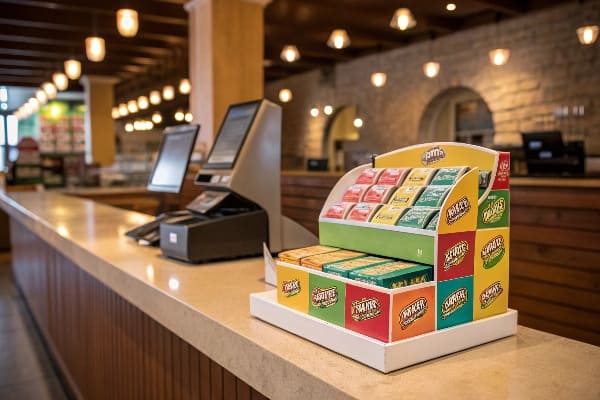
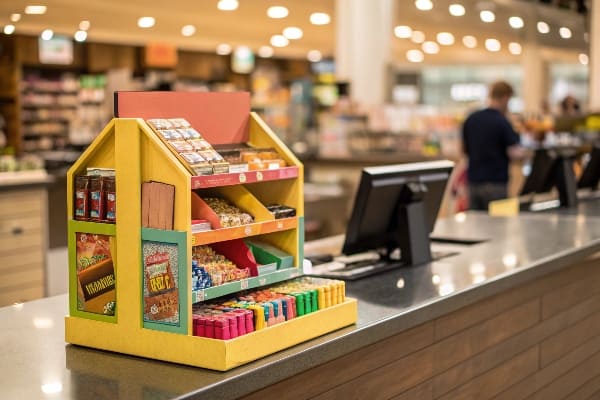
A typical POS display is a small, pre-packed cardboard countertop unit with three tiers, one header, one call-to-action, and fewer than five SKUs, optimized for quick setup and fast impulse buys.
Core pattern and reasons
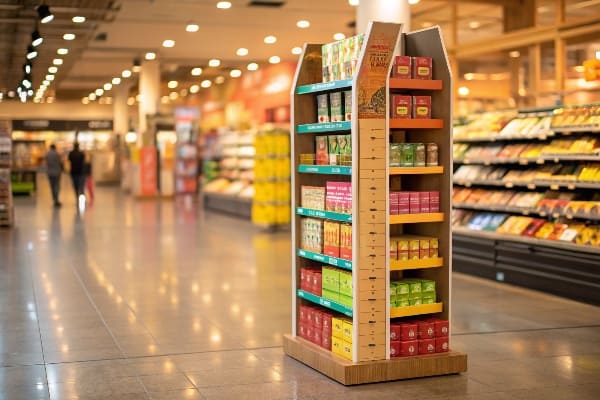
I choose this pattern because it respects the till space and shopper pace. The unit ships flat, pops up without tools, and holds enough stock for a day. The header says the offer. The side panels carry brand colors. A QR code18 supports sampling or a warranty, but it stays small. When weight grows, I move to a slim floor unit with reinforced shelves. For club stores, I convert to a quarter-pallet19 to align with forklift rules and faster floor moves.
Typical spec table
| Element | Typical Choice | Note |
|---|---|---|
| Size | 250–300 mm wide | Fits most counters |
| Tiers | 3 | Clear product steps |
| Header | 1 with 6–8 words | Fast read |
| Material | E-flute with SBS header20 | Print + rigidity |
| Finish | Water-based varnish21 | Scuff resistance |
| Pack | Pre-packed master carton | Speed to shelf |
Results I expect
This pattern delivers clean brand blocking22, quick restock, and solid uplift at low cost. It also supports recycling rules in strict markets23.
What is the difference between a POS and a pop?
Teams use both and get confused in briefs. I set shared language early to save time and rework.
POS (point of sale) is the checkout area and systems; a POS display lives near payment. POP (point of purchase) is any in-store buying location, so POP displays include aisle, endcap, floor, and pallet units beyond the register.
Clear terms, better briefs
I treat POS as the final step. I treat POP as the whole store where purchase choices happen. Many brands say POS for all displays. That slows vendors. I align on goals: basket add-on at POS24, discovery and trade-up in POP zones. Club stores prefer pallet POP for speed25. Beauty chains prefer POP gondola ends for storytelling. Compliance differs: some chains restrict POS height and copy, while POP zones allow more structure and screens.
Side-by-side view
| Term | Where | Primary Goal | Typical Formats |
|---|---|---|---|
| POS | Checkout | Add-on impulse26 | Counter trays, narrow floor units |
| POP | Whole store | Discover and convert27 | Floor stands, endcaps, pallets, shelf trays, interactive |
Why it matters to cost and timing
POS units28 are smaller and cheaper. POP programs29 move volume and need more testing. I budget extra time for transit tests, especially for heavier goods and moist or high-traffic areas.
What is a point of purchase example?
I like to show a real case. The lesson is simple: clear brief, fast sample, strict testing, and on-time roll-out win the season.
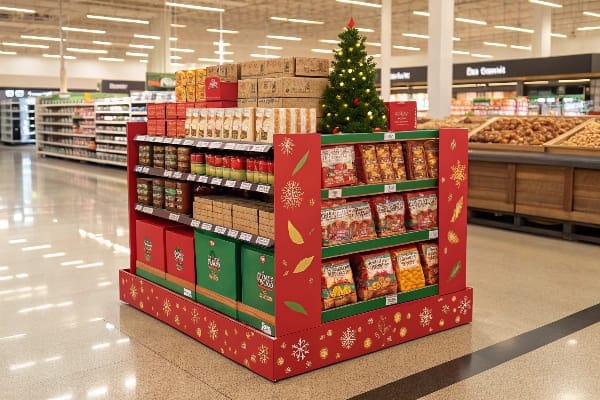
A point of purchase example is a free-standing corrugated floor display for an outdoor brand at an endcap, with a bold header, reinforced shelves, QR for warranty, and pre-packed trays for rapid store setup.
Real-world POP plan
I run a B2B display factory with three lines in Shenzhen. A North American hunting brand came with a tight launch window. We aligned on a floor unit for aisle endcaps in U.S. and Canada. We chose B-flute with internal ribs30 to carry weight. We validated loads and transport with drop, vibration, and tilt tests. Digital printing gave fast color control and easy design tweaks until the team signed off. We met strict color targets by running press profiles and drawdowns. We used water-based inks31 for retailer compliance and easier recycling. We shipped flat, with clear assembly guides. Store teams set it up in under an hour.
POP spec snapshot
| Item | Decision | Rationale |
|---|---|---|
| Structure | B-flute + ribs32 | Strength for heavy items |
| Footprint | Endcap width | High visibility |
| Graphics | Big header + short copy | Fast read |
| Data touch | QR for warranty33 | Post-purchase link |
| Testing | Load/transport | Fewer failures |
| Logistics | Flat-pack, pre-pack trays | Speed + lower damage |
Market and trend context you can use
Cardboard displays34 keep winning because they cost less, print faster, and support recycling rules. Floor displays often lead share in POP because they hit sight lines and volume. Demand grows in North America with mature retail. Asia-Pacific grows fastest as urban retail expands. Europe pushes eco standards harder. Digital print enables short runs and personalization. New options like nano-coatings improve moisture resistance. Simple IoT tags can track stock. Tariffs can change input costs, so I plan buffer options. I offer modular designs to extend lifecycles across seasons and reduce waste.
Conclusion
POS is the checkout add-on engine. POP is the full-store conversion toolkit. Use clear goals, simple copy, strong structure, and fast testing to win launches.
Explore this link to understand how digital printing enhances efficiency and flexibility in production. ↩
This resource provides insights on optimizing seasonal promotions to boost sales and reduce waste. ↩
Explore how countertop displays can effectively upsell small items and enhance customer engagement. ↩
Discover the impact of interactive displays on customer engagement and data capture in retail settings. ↩
Exploring this link will provide insights into the environmental advantages and economic benefits of using recyclable materials. ↩
This resource will offer strategies and tips for efficient deployment of marketing materials, enhancing your promotional efforts. ↩
Understanding conversion lift can enhance your marketing strategies and improve sales performance. ↩
Understanding the optimal SKU count can help reduce decision friction and improve customer experience. ↩
Exploring the advantages of eco-friendly adhesives can enhance store compliance and sustainability efforts. ↩
Explore how digital printing enhances efficiency and reduces lead times in production processes. ↩
Learn effective strategies to minimize lead time, improving overall productivity and responsiveness. ↩
Understanding low-friction offers can enhance your sales strategy by making products more accessible to customers. ↩
Exploring mobile POS solutions can help you streamline transactions and improve customer experience in your retail environment. ↩
Explore this link to discover the most effective POS solutions tailored for grocery checkout, enhancing efficiency and customer experience. ↩
Learn about the benefits of mobile POS systems, which can improve sales and customer engagement at events like outdoor expos. ↩
Explore this link to understand how tool-less locks enhance efficiency and security in various applications. ↩
This resource provides insights into strategies for minimizing labor costs, crucial for improving profitability. ↩
Explore how QR codes can enhance customer engagement and streamline processes in retail environments. ↩
Learn about the advantages of quarter-pallets for efficient space management and faster product turnover in stores. ↩
Understanding E-flute with SBS header can enhance your packaging design, ensuring durability and print quality. ↩
Exploring water-based varnish benefits can help you choose eco-friendly options that enhance product protection and appeal. ↩
Understanding clean brand blocking can enhance your marketing strategies and improve brand visibility. ↩
Exploring recycling rules can help you navigate compliance and sustainability in your business operations. ↩
Understanding basket add-on strategies can enhance your retail sales approach and improve customer experience. ↩
Exploring pallet POP can provide insights into optimizing store layouts for efficiency and customer engagement. ↩
Explore this link to discover innovative techniques that can boost your sales through effective add-on impulse strategies. ↩
This resource offers insights into enhancing customer engagement and conversion rates in retail settings. ↩
Explore this link to understand how POS units can enhance efficiency and reduce costs in retail operations. ↩
Discover the significance of POP programs in driving sales and their role in effective marketing strategies. ↩
Explore this link to understand how B-flute enhances packaging strength and efficiency, crucial for your display needs. ↩
Discover the advantages of water-based inks, including compliance and recyclability, essential for sustainable packaging solutions. ↩
Explore this link to understand how B-flute + ribs enhance packaging strength, especially for heavy items. ↩
Discover how QR codes for warranties streamline post-purchase processes and enhance customer satisfaction. ↩
Explore how cardboard displays are cost-effective and eco-friendly, making them a top choice for retailers. ↩