You want one baby product to win both Walmart and Target. The rules feel heavy. Deadlines run fast. I build cardboard displays. I share clear checklists and design moves.
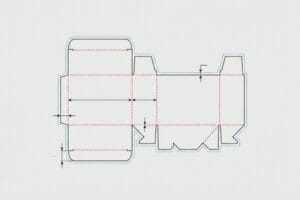
Yes. Start with one master dieline that maps to both retailers, a unified compliance checklist, and a test plan. Align CPSIA and labeling, lock a PDQ and pallet path, standardize materials, and prove strength. Then design simple, safe, and sustainable.
You may feel pulled in two directions. I keep the path straight. I show you what to prepare, how to design, where to find support, and how to make the numbers work.
What do you need for a baby checklist?
You have many moving parts. You want a short list that stops delays. You also want one set of files for two retailers.
You need a unified file vault: product specs, safety and test reports, CPSIA documents, retailer portal data, dielines, labeling artwork, packaging tests, routing, and timeline. Keep one master checklist and link Walmart and Target tasks to each item.
The master checklist I use in real launches
I build one list and tag items to each retailer. I keep wording simple. I lock version control. I start with safety because safety decides everything else1. I then match artwork to dielines. I close with logistics and resets. When I launched a teether-and-clip set, I used this order and avoided three weeks of rework. I learned to freeze Pantone and flute early2, or color and fit drift later. The same flow now guides every baby job in my factory.
| Area | What to prepare | Walmart path | Target path | Notes |
|---|---|---|---|---|
| Product Safety3 | CPSIA, EN71 as needed, phthalates, heavy metals, small parts | Item file, compliance docs upload | Partner Portal item, safety docs | Use third-party labs; keep raw reports |
| Labeling4 | Age grade, warnings, country of origin, UPC | GS1 UPC, shelf label rules | DPCI/TCIN mapping, Target ticket | Print at 100% on dieline proof |
| Dielines | Master PDQ, tray, inner, shipper | Modular to 40×48 pallet | Modular to 40×48 pallet | One master with retailer toggles |
| Materials | Corrugated spec, flute, board grade | Common grades on vendor list | Common grades on vendor list | Prefer recyclable, PCR content |
| Printing | CMYK, spot, gloss/matte zones | Ink limits, barcode quiet zones | Ink limits, barcode quiet zones | Proof on press stock, not copy paper |
| Tests | Load, drop, vibration, edge crush | ISTA per routing | ISTA per routing | Test with full weight product |
| Logistics | Carton count, pallet pattern | Routing guide, ASN | Routing guide, ASN | Add corner protection plan |
| Timeline | Artwork freeze, sample dates | Modular to modular reset | Modular to modular reset | Pad for week-of-change orders |
How to design a baby product?
You want a clean look. You also want safety, cost, and retail speed. You fear late changes.
Design from safety outward, from shelf back, and from supply forward. Lock use case, materials, and tests first. Then build brand, color, and display fit. Use quick prototypes, real-stock print proofs, and one PDQ that works for both retailers.
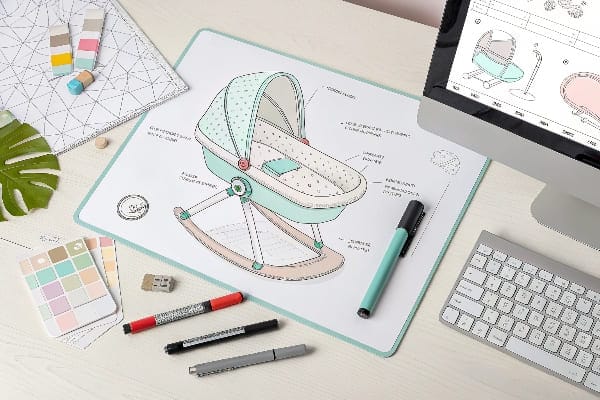
A clear design flow5 that cuts risk
I start with the baby and the caregiver. I define the use moment. I write three sentences: who uses it, where, and how often. I then set materials that pass saliva, sweat, and cleaning wipes. I pick radii big enough for easy wipe-down. I choose colors that hold under store light. I design packaging and the PDQ with the product, not after. I once rushed a monitor-stand bundle into a tight reset. My first sample looked great on screen but failed in-store because the tray lip hid the feature. I rebuilt the tray window and lifted the product by 18 mm. The sell-through6 jumped. Simple changes can save a launch.
| Design Gate | Decision | Why it matters | How I prove it |
|---|---|---|---|
| Safety First | Age grade, small parts, chemicals | Fails here stop the project | Third-party lab plan signed before styling |
| Form & Fit | Grip zones, radii, strap lengths | Comfort and safe use | 3D print on hand, caregiver trials |
| Material Choice7 | Food-grade silicone, PP, ABS, fabric | Cleaning and durability | Wipe and drop trials with real cleaners |
| Color & Print | CMYK + 1 spot, large text | Legibility on shelf | Print on corrugate stock, lightbox check |
| PDQ Integration | Tray, backer, hook, window | Fast shopping, security | Mock shelf test, eye height checks |
| Cost & Yield | COGS, scrap, make-ready | Profit and repeat orders | Panelization and setup count review |
| Transport Strength | Board grade, ECT, glue paths | Store damage risk | ISTA drop/vibration, edge crush |
| Retail Readiness8 | Barcode, tickets, planogram | Speed to shelf | Scan test and shelf-set photos |
Where can I get free baby stuff?
You want samples to test and learn. You also want to control cost. You do not want junk.
Use registries, brand trials, community programs, health clinics, and trade events. Ask for functional samples, not trinkets. Test with checklists and give feedback. Keep only items that pass safety and fit your use case.

Smart ways to get helpful freebies without clutter
I treat free items as learning tools. I request items that match my product idea and price tier. I use retail registries9 and brand starter kits to see baseline quality. I visit local clinics for safe care items. I attend shows to talk to engineers, not only sales reps. I ask for corrugated PDQ samples and dieline flats. I run small tests at home: unbox time, wipe time, smell, and noise. I keep a scorecard. I return clear feedback, which often earns better samples next time. I also request packaging offcuts10 to test print and glue. That saved me weeks in one project when I saw color shift on recycled board before the full print run.
| Source | What to expect | How I use it | Keep or discard |
|---|---|---|---|
| Retail registries11 | Trial sizes, coupons | Compare common SKUs and claims | Keep winners, log prices |
| Brand sample kits12 | Product + literature | Check materials and closures | Keep if safe and relevant |
| Clinics & community | Basic care items | Learn safe labeling language | Keep for compliance cues |
| Trade shows | Pre-pro and packaging | Study dielines and displays | Photograph, request flats |
| Suppliers | Material swatches | Color and glue testing | Keep all labeled pieces |
Is selling baby products profitable?
You see strong demand. You also see strict rules and returns. You worry about margins.
Yes, but only with tight COGS, low defect rates, and repeat orders. Profit comes from simple assortments, evergreen SKUs, strong displays, and fast reorders. Waste, rework, and chargebacks erase gains.

A simple model that shows where the money goes
I keep the model plain. I price from shelf back, not factory forward. I protect gross margin13 by locking print and board early. I choose one PDQ that fits both retailers to cut tooling. I design for ISTA so I avoid damage claims. I accept small losses in prototyping because repeat orders pay back. This mirrors my display business, where floor POP displays grow fast because they sell more with simple structure and strong impact. I also use recyclable board14 and water-based inks. I spend a little more on board grade to avoid returns. In one stroller-accessory launch, I moved from single-wall to a stronger grade with only a small cost bump. Returns fell. Reorders grew. The profit followed.
| P&L Item | Typical range | Notes |
|---|---|---|
| MSRP | $9.99–$39.99 | Keep price ladders clean |
| Wholesale | 45%–60% of MSRP | Match channel norms |
| COGS (product)15 | 20%–30% of MSRP | Tooling amortized in year one |
| Packaging & PDQ | 3%–6% of MSRP | One dieline for two retailers |
| Freight & Duty | 5%–10% of MSRP | Test pack density early |
| Returns & Damage | <2% of sales | Stronger board reduces this |
| Marketing | 3%–8% of sales | Focus on shelf-ready assets |
| Net Margin16 | 8%–18% | Driven by repeat orders |
Walmart + Target mini checklists for your master dieline
I keep two toggles inside one file: logo zones17 and ticket rules. Everything else stays the same. I prefer modular trays and a common pallet pattern. I proof barcodes with scanners, not screenshots. I run edge crush tests18 with full weight.
| Checklist | Walmart | Target | Shared practice |
|---|---|---|---|
| Barcode & Tickets19 | GS1 UPC, shelf label spacing | DPCI/TCIN mapping, ticket style | 32x quiet zone, live scan |
| PDQ Size | Modular to aisle fixtures | Modular to aisle fixtures | 40×48 pallet map |
| Print Rules | Ink limits and finish mix | Ink limits and finish mix | CMYK + one spot safe |
| Sustainability20 | Recyclable, PCR when possible | Recyclable, PCR when possible | Water-based inks |
| Proofing | Vendor sample approval | Vendor sample approval | Proof on corrugate stock |
Conclusion
Use one master checklist, one master dieline, and one clear test plan. Design safe, simple, and sustainable. Prove strength. Then scale with repeat orders and fast displays.
Understanding the critical role of safety can help you avoid costly mistakes in your product launches. ↩
Exploring this concept can enhance your knowledge of color consistency and quality in manufacturing. ↩
Understanding CPSIA and EN71 compliance is crucial for ensuring product safety and avoiding legal issues. ↩
Exploring labeling best practices helps ensure compliance and enhances product visibility and safety. ↩
Understanding design flow can significantly enhance your product development process, reducing risks and improving outcomes. ↩
Exploring strategies to improve sell-through rates can help you maximize product success and profitability in the market. ↩
Explore this link to understand how material selection impacts product longevity and maintenance. ↩
This resource will guide you on optimizing your product for quick shelf placement and visibility. ↩
Explore how retail registries can help you access quality freebies and enhance your product development process. ↩
Learn how using packaging offcuts can save time and resources in your projects by identifying issues early. ↩
Explore this link to understand how retail registries can enhance your shopping experience and save you money. ↩
Discover the advantages of brand sample kits for evaluating product quality and relevance before making a purchase. ↩
Understanding gross margin is crucial for managing profitability and making informed business decisions. ↩
Exploring the benefits of recyclable board can enhance sustainability efforts and improve brand image. ↩
Exploring COGS can help you optimize pricing strategies and improve profit margins. ↩
Understanding Net Margin is crucial for assessing a company's profitability and financial health. ↩
Understanding logo zones can enhance your design layout, ensuring brand visibility and consistency. ↩
Exploring edge crush tests will help you understand packaging durability and improve product safety. ↩
Explore this link to understand effective barcode and ticketing strategies that enhance retail operations. ↩
Discover innovative sustainability practices in retail packaging that can inspire your own initiatives. ↩