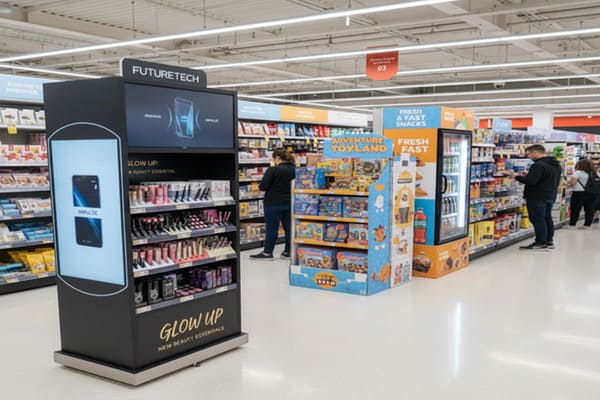
Are you struggling to get your products noticed in crowded retail stores? Point-of-purchase displays are the silent salespeople you need to boost visibility and drive sales effectively.
FMCG, cosmetics, consumer electronics, and toy industries benefit most from POP displays. These sectors rely on high-impact visual merchandising to trigger impulse buys, launch new products, and differentiate brands in competitive retail environments like supermarkets and department stores.
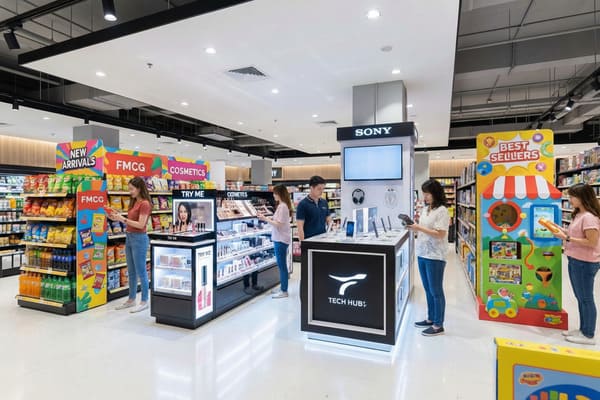
Understanding which industries leverage these tools helps you adapt their winning strategies to your own business model.
Who usually provides pop displays?
Finding the right supplier can feel like a maze when deadlines are tight. You need a partner who understands design, production, and logistics without constant delays.
POP displays are usually provided by specialized packaging manufacturers, marketing agencies, or print houses. However, direct factory suppliers in manufacturing hubs like China often offer the best balance of cost, customization, and structural engineering expertise for bulk orders.

The Supply Chain Ecosystem
The supply chain for point-of-purchase displays is divided into three main categories: creative agencies, distributors, and direct manufacturers1. Creative agencies often focus heavily on the graphic design aspect. They create stunning visuals but often lack the engineering background to ensure the structure is viable for mass production or shipping. This can lead to high costs and durability issues when the concept hits reality. Distributors act as middlemen. They buy from factories and sell to brands. While they offer convenience, this adds a layer of cost and, more critically, a layer of communication delay. In the fast-paced retail world, waiting days for a simple answer about a prototype modification can cause you to miss a product launch date.
Direct manufacturers, particularly those based in mature markets like China's Guangdong province, control the entire process. This involves sourcing the raw paper pulp and corrugated board, handling the structural design using CAD software, and managing the printing and cutting processes in-house. For a brand owner, working directly with a factory means you are speaking to the people who actually cut the cardboard. This is crucial for quality control. A factory understands the technical difference between E-flute and B-flute corrugated board2. We know that E-flute provides a smoother printing surface for high-quality graphics, while B-flute offers better stacking strength for heavier items. When you bypass the middleman, you gain access to this technical knowledge, ensuring your display doesn't just look good but actually functions in a rugged retail environment.
| Provider Type | Cost Efficiency3 | Technical Control4 | Communication Speed |
|---|---|---|---|
| Creative Agency | Low (High Markups) | Low (Outsourced) | Slow (Middleman) |
| Distributor | Medium | Medium | Medium |
| Direct Factory | High (Factory Price) | High (In-house Lab) | Fast (Direct Access) |
I know that dealing with middlemen often leads to miscommunication and higher costs. We run three dedicated production lines to handle everything from structural design to load testing in-house, ensuring your specifications are met directly without the noise.
What industry uses marketing the most?
Every sector wants attention, but some invest much more heavily in retail visibility. Understanding these trends helps you benchmark your own strategy against top performers.
The Fast-Moving Consumer Goods (FMCG) industry uses marketing the most, specifically within grocery and retail sectors. Food, beverages, and personal care brands rely heavily on floor displays and counter units to secure prime shelf space and drive high-volume turnover.

Market Dominance and Sector Analysis
The dominance of the Fast-Moving Consumer Goods (FMCG)5 sector in the POP display market is driven by necessity. Products in this category—snacks, beverages, and household items—have low profit margins and rely on high sales volume. In a supermarket environment, shelf space is limited and highly expensive. A cardboard floor display allows these brands to create their own "shelf" in high-traffic aisles, bypassing the restrictions of the standard planogram. This is why Floor Displays account for a significant portion of the market, estimated at over 43% in some reports. They offer maximum visual impact for product launches or seasonal promotions.
Beyond FMCG, the cosmetics and personal care industry is a massive user of countertop displays6. In stores like Ulta or Sephora, or even local pharmacies, small, high-value items need to be organized and elevated. Cardboard displays here are often treated with special finishes, such as foil stamping or UV coating, to reflect a premium brand image. The electronics and toy industries are also significant players. For toys, the display must be colorful and accessible to children. For electronics, the structure often needs to support heavier items and provide theft deterrence. The trend is also shifting geographically. While North America remains a mature market with stable demand, the Asia-Pacific region is growing rapidly due to urbanization and retail expansion. Brands in these growing markets are increasingly adopting Western-style POP strategies to capture the attention of a growing middle class.
| Industry | Primary Goal | Preferred Display Type | Key Feature |
|---|---|---|---|
| Food & Beverage | Volume Sales7 | Pallet Displays | High Load Bearing |
| Cosmetics | Brand Image | Countertop/PDQ | High-End Printing8 |
| Toys/Games | Accessibility | Dump Bins | Durable Structure |
| Electronics | Information | Interactive Stands | Secure & Informative |
I see many brands struggle to choose the right structure for their specific industry needs. We analyze your product weight and retail environment first, then recommend the exact flute strength needed to keep your brand standing tall among competitors.
What is the point of purchase pop display?
You have heard the term, but defining it correctly changes how you use it. It is more than just a box; it is the final handshake with your customer.
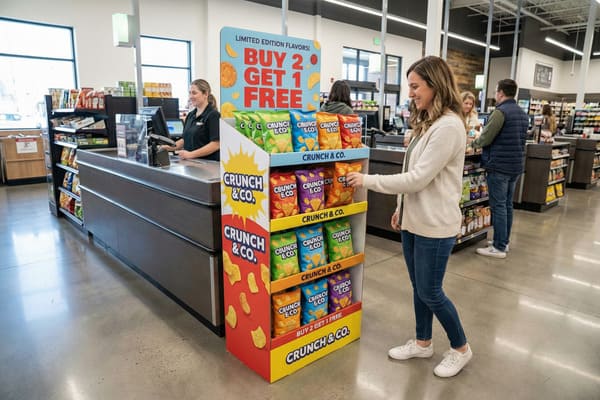
A Point of Purchase (POP) display is a marketing fixture placed where payment occurs or decisions are made. Its primary purpose is to separate products from inline shelving, highlight promotions, and interrupt the shopper's journey to trigger immediate sales.
Structural Anatomy and Functional Logic
Technically, a POP display is an engineered structure made primarily from corrugated cardboard, designed to hold products while communicating a marketing message. The "Point of Purchase9" refers to the specific area in the store where the transaction is imminent, though in modern retail, this definition has expanded to include the "Point of Sale" (POS) and general aisle interruptions. The core function is "Interruption Marketing." A shopper walking down an aisle is on "autopilot." A well-designed POP display breaks this visual monotony. To achieve this, the display must be structurally sound. It is usually constructed from varying grades of corrugated board. For example, a counter display might use 350gsm CCNB (Clay Coated News Back) mounted to E-flute for a sharp print finish, while a floor display holding heavy beverages requires a double-wall BC-flute combination for sheer strength.
Another critical aspect is the logistics of the display. Retailers like Walmart or Costco have strict requirements. Displays often need to be "flat-packed10" to save on shipping costs. This means the design must be intuitive enough for a store clerk to assemble in under five minutes. If it is too complex, it often gets thrown away, wasting your investment. Alternatively, "pre-packed" displays are filled with product at the fulfillment center and shipped ready to sell. This requires rigorous drop-testing (ISTA standards) to ensure the cardboard does not buckle under the weight of the product during transit. Digital printing technology has also revolutionized this space, allowing for shorter production runs and region-specific customization without the high setup costs of traditional lithographic printing.
| Component | Technical Specification | Purpose |
|---|---|---|
| Material | Corrugated Board (E, B, BC Flutes)11 | Structural Integrity |
| Printing | 4C CMYK Offset / Digital12 | Brand Communication |
| Assembly | Flat-Pack or Pre-Assembled | Logistics Efficiency |
| Finish | Gloss/Matte Lamination | Moisture Protection |
I emphasize structural integrity because a collapsed display ruins your brand image instantly. We use precise cutting tables and conduct weight-bearing tests on every prototype to ensure your display survives the journey from our factory to the retail floor.
What is pop in the retail industry?
Retail is changing fast, and static shelves are no longer enough. POP is the dynamic element that bridges the gap between your product and the modern shopper.
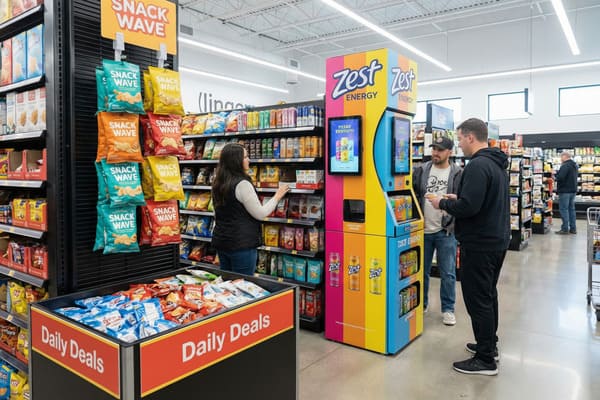
In the retail industry, POP refers to the strategic ecosystem of temporary or semi-permanent merchandising tools. It encompasses floor stands, clip strips, and dump bins designed to increase brand presence, educate consumers, and maximize revenue per square foot.
Evolution of Retail Merchandising Strategies
In the broader retail industry, POP is evolving from static cardboard stands into a sophisticated part of the omnichannel marketing strategy. Retailers are under immense pressure to maximize the profitability of every square foot of floor space. POP displays solve this by utilizing dead space (like the ends of aisles or near checkout queues) to generate additional revenue. A major driver currently is sustainability13. Retail giants and consumers, particularly Gen Z, are demanding eco-friendly solutions. This is pushing the industry away from plastic and mixed materials toward 100% recyclable cardboard designs using water-based vegetable inks. The "Green" image is no longer just a bonus; it is a requirement for entry into many major retail chains.
Furthermore, technology is merging with physical displays. We are seeing the rise of "Smart Displays14" that integrate QR codes, NFC tags, or even Augmented Reality (AR) triggers. A customer can scan a display to see a product demo or a virtual try-on experience on their phone. This bridges the physical and digital worlds, providing data back to the brand about engagement levels. However, traditional challenges remain. Durability in retail environments—where floor mopping can weaken cardboard bases—is a constant battle. Innovations like waterproof additives in the paper pulp or adding recyclable plastic clips to the base are technical solutions being implemented to extend the lifespan of these displays without compromising their recyclability. The market for display packaging is projected to grow significantly, reaching over $40 billion by 2035, proving that despite the e-commerce boom, physical retail presence remains vital.
| Trend | Description | Impact on Design |
|---|---|---|
| Sustainability15 | 100% Recyclable Materials | Removal of plastic laminates |
| Smart Retail16 | IoT & AR Integration | Adding QR/NFC print zones |
| Durability | Moisture Resistance | Waterproof bases/coatings |
| Speed | Rapid Prototyping | Digital cutting & printing |
I believe the future of retail lies in sustainable and smart designs. We are actively testing eco-friendly coatings and modular structures that allow you to adapt quickly to changing retail trends without generating unnecessary waste.
Conclusion
Cardboard displays are essential tools for industries ranging from FMCG to specialized hobbies, driving visibility and sales. Selecting the right manufacturing partner ensures your brand stands out effectively and sustainably.
Exploring this resource will reveal how direct manufacturers enhance quality control and streamline production processes. ↩
Understanding the differences between E-flute and B-flute can significantly impact your product's packaging and display effectiveness. ↩
Understanding cost efficiency can help businesses optimize expenses and improve profitability. ↩
Exploring technical control can reveal its significance in maintaining high standards and ensuring product reliability. ↩
Explore this link to understand the evolving trends in FMCG, which can help businesses adapt and thrive in a competitive market. ↩
Discover how countertop displays can elevate retail marketing strategies, making products more appealing and accessible to consumers. ↩
Explore this link to discover proven strategies that can significantly boost your volume sales in the competitive food and beverage market. ↩
Learn how high-end printing can enhance your cosmetics brand image and attract more customers. ↩
Understanding the Point of Purchase can enhance your marketing strategies and improve sales effectiveness. ↩
Exploring flat-packed displays can reveal cost-saving logistics and efficient assembly methods for retailers. ↩
Explore this link to understand how corrugated board enhances structural integrity and sustainability in packaging. ↩
Learn about 4C CMYK printing to see how it can elevate your brand communication through vibrant visuals. ↩
Explore this link to understand how sustainability is reshaping retail strategies and consumer expectations. ↩
Discover how Smart Displays are enhancing customer engagement and bridging the gap between physical and digital shopping. ↩
Exploring this link will provide insights into sustainable practices that can enhance your design projects. ↩
This resource will help you understand the innovative ways IoT and AR can transform retail experiences. ↩