Retail spaces are becoming more crowded, and your product needs to stand out immediately to capture customer attention. Are you struggling to design a display unit that is both structurally sturdy and visually engaging for your brand?
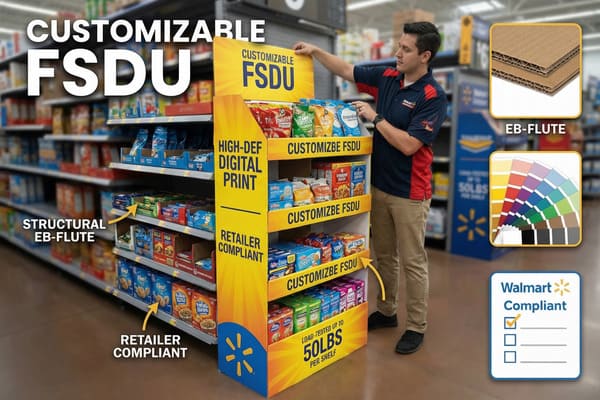
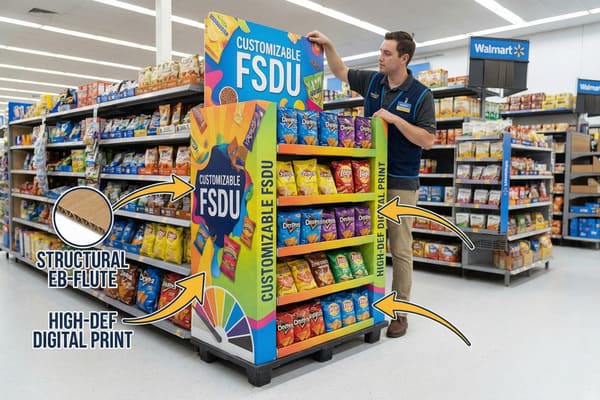
Customizing an FSDU involves selecting the right structural footprint, choosing durable corrugated materials like EB-flute, and applying high-definition digital printing. You must align the design with retailer size compliance, such as Walmart's requirements, while ensuring the unit supports your product weight through rigorous load-testing.
Let's explore exactly how you can tailor every aspect of your display to fit your specific retail needs and budget.
How to customize your iPhone display?
High-value electronics require security and a premium aesthetic that cheap cardboard options often fail to provide. You need a solution that matches the sophisticated and high-tech nature of the products inside.
To customize a display for iPhones or accessories, use high-gloss finishes and reinforced internal structures to prevent sagging. Incorporate security features like anti-theft hooks and precise cutouts for devices. Ensure the visual design mimics the sleek, minimalist aesthetic of modern tech brands to maintain perceived value.

Structural Integrity for High-Value Electronics
When we talk about displays for electronics like iPhones or their accessories, the primary challenge is bridging the gap between "temporary" materials and "premium" perception. A customer buying a high-end phone case or charger expects the retail environment to reflect that quality. If the cardboard looks flimsy or the printing is dull, the perceived value of the tech product drops instantly. This is where material selection1 becomes critical. For these items, standard C-flute cardboard is often too rough. Instead, we look at E-flute or B-flute materials laminated with a high-quality art paper. This provides a smoother surface that allows for crisp, high-resolution printing of small text, which is essential for technical specifications often found on electronics packaging.
Furthermore, security is a major concern in this category. Unlike bags of chips, phone accessories are high-theft targets. Customizing these displays often involves integrating anti-theft hooks or locking mechanisms into the cardboard structure itself. We also see a trend toward "countertop displays" (PDQ) for these items, placed near cash registers to drive impulse buys. These smaller units require precise die-cutting to hold the product firmly in place without it tipping over. The integration of digital printing2 is vital here. It allows for the production of small batches with localized marketing messages, perfect for the rapid release cycles of new iPhone models. You do not want to be stuck with 5,000 displays for last year's model. Digital printing gives you the flexibility to update graphics instantly for the newest release.
| Feature | Standard Display | Premium Electronics Display |
|---|---|---|
| Material Core | Standard Recycled C-Flute | High-Density E-Flute or B-Flute3 |
| Surface Finish | Matte or Semi-Gloss | UV High-Gloss or Soft-Touch Lamination |
| Security | Open shelving | Anti-theft hooks and locking tabs4 |
| Print Detail | Standard definition | High Definition (Small text readable) |
| Load Handling | Bulk / Heavy items | Precision / Lightweight items |
I know that displaying high-value items requires trust in the display's build quality. We use 3D rendering to visualize the security features and finish before production, and my team tests the load capacity to ensure your expensive products never fall due to structural failure.
How to create a shop display?
Getting your products onto the floor at major retailers is a massive challenge due to strict regulations. Without meeting specific store compliance rules, even the best design will be rejected at the door.
Creating a shop display requires adhering to retailer-specific guidelines regarding dimensions, pallet fit, and weight limits. You must design for high-traffic durability using water-resistant coatings and reinforced bases. Focus on easy assembly for store staff to ensure your display is actually set up on the sales floor.

Navigating Retail Compliance and Durability
Creating a shop display, particularly a Floor Display, is not just about aesthetics; it is about logistics and compliance. Major retailers like Costco, Walmart, and Target have incredibly specific "Vendor Guides5." These guides dictate the maximum height (often 60 inches to preserve sightlines in the store), the footprint (usually 48×40 inches to fit standard pallets), and even the type of pallet entry (4-way entry for forklifts). If your display exceeds these dimensions by even an inch, it might be rejected at the distribution center. This results in massive losses in shipping and fines. Therefore, the first step in customization is knowing exactly where the display will live.
Durability in a shop environment is another critical factor. Floors are mopped daily, and standard cardboard acts like a sponge. If the bottom of your display gets wet, the structural integrity fails, and the unit collapses. To combat this, we customize shop displays with a "mop guard." This is usually a water-resistant coating or a plastic base added to the bottom few inches of the display. Additionally, we have to consider the "set-up time." Retail employees are busy. If your display takes more than five minutes to assemble, it often ends up in the trash compactor rather than on the floor. We use "pop-up" designs or pre-assembled structures (shipped with product inside) to ensure compliance. The trend is moving toward "Retail Ready Packaging6" where the shipping container transforms into the display, saving labor costs for the retailer and ensuring your product gets on the shelf faster.
| Requirement | Typical Specification | Purpose |
|---|---|---|
| Max Height7 | 58 to 60 inches | Maintains store visibility and safety |
| Base Size | 48" x 40" (Full Pallet) | Fits standard US logistic systems |
| Weight Limit8 | Varies (e.g., 50 lbs per shelf) | Prevents collapse under inventory load |
| Assembly Time | Under 5 minutes | Ensures staff actually deploy the unit |
| Mop Guard | 2-inch waterproof clearance | Protects against floor cleaning moisture |
I understand the frustration of retailer rejection and complex guidebooks. We guarantee our designs meet specific store guidelines, and I provide clear video instructions to ensure store staff can assemble your display in under three minutes without damaging it.
How to create a visual display?
A dull display blends into the background and fails to stop customers in their tracks. You only have a few seconds to grab attention before the shopper walks away to a competitor.
Creating a visual display relies on high-impact graphics and color accuracy using digital printing technology. Utilize negative space and bold typography to communicate your brand message instantly. Select finishes like matte or gloss lamination to enhance color depth and protect the artwork from fading under harsh store lighting.

The Science of Color and Print Technology
The visual component of your display is what facilitates the initial connection with the consumer. In the cardboard display industry, achieving "visual impact" is a technical challenge because corrugated board is naturally brown and absorbent. If you print directly onto it without preparation, colors look muddy and dull. To create a stunning visual display, we use a process called "litho-lamination9" or advanced digital printing. Litho-lamination involves printing on a high-quality paper sheet first (where colors pop) and then gluing that sheet onto the cardboard. This gives you magazine-quality resolution.
However, color consistency10 is the biggest pain point for brand owners. You might have a specific "Coca-Cola Red" or "Barnett Outdoors Orange." If the factory uses a generic CMYK mix without calibration, your display will look wrong next to your actual product. This disconnect hurts brand recognition. We are also seeing a strong trend toward minimalism in visual design. Instead of cluttering the display with text, successful brands use bold, large typography and negative space. This is harder to execute than it looks because any print flaw is immediately visible in the empty spaces. Furthermore, the finish matters. A high-gloss finish reflects overhead store lights, which can sometimes make text hard to read. A matte finish is often more premium and makes the colors look deeper and richer. Digital printing has revolutionized this by allowing us to print sample proofs that look exactly like the final production run, eliminating the surprise of "bad color" when the shipment arrives.
| Print Method | Best Use Case | Pros | Cons |
|---|---|---|---|
| Flexography11 | Simple logos, shipping boxes | Low cost, fast for huge volume | Low resolution, costly plates |
| Litho-Lamination | High-end retail displays | Highest photo quality, gloss options | Expensive for small quantities |
| Digital Printing12 | Samples, Short runs, Customization | No plate fees, instant changes, sharp text | Slower for massive volume |
I see too many brands suffer from poor color matching that dilutes their identity. We use advanced color management systems to match your brand colors precisely, and I will send you physical proofs to confirm the look before we start mass production.
How to create a product display?
A display that collapses under the weight of your product destroys your brand reputation and endangers customers. You need a structure that physically supports your inventory while making it easy to access.
To create a product display, calculate the total weight of your stock to determine the necessary corrugation strength, such as double-wall reinforcement. Design shelves with slight backward angles to keep products secure. Engineer the layout to maximize stock density without overcrowding, ensuring customers can easily remove items.
Structural Engineering for Heavy Loads
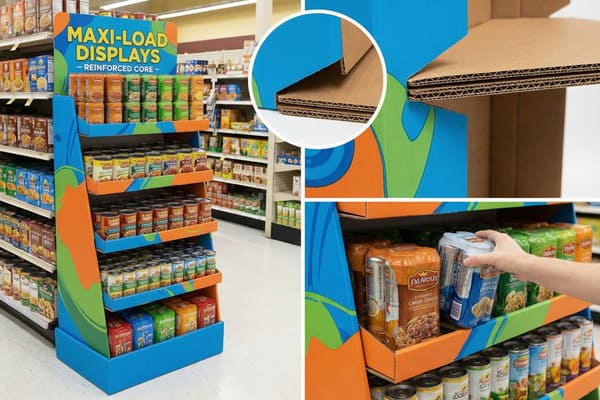
When customizing a product display, especially for heavy items like tools, beverages, or hunting gear, structural engineering takes precedence over art. Cardboard is an engineering material. Its strength comes from the "flutes"—the wavy paper between the liners. For heavy products, we cannot use standard single-wall board. We often move to "double-wall" board (like BC-flute or EB-flute), which consists of two layers of fluting stacked together. This increases the "Edge Crush Test13" (ECT) rating, meaning the display can hold significantly more vertical weight without buckling.
The geometry of the shelf is also vital. A flat shelf often sags over time due to humidity and constant pressure. To fix this, we engineer reinforced support bars made of rolled cardboard or even metal tubes hidden under the shelf lip. We also use a technique called "stacking tabs," where the weight of the product is transferred directly to the floor through the vertical walls, rather than relying on the sheer strength of the shelf glue. Another customized feature is the "gravity feed" design. This involves angling the shelves slightly downward so that when a customer takes an item, the next one slides forward. This keeps the display looking full and organized. However, this requires precise friction calculations; too steep, and the products fall out; too flat, and they don't slide.
| Material Grade14 | Flute Type | Recommended Load per Shelf15 | Application |
|---|---|---|---|
| 32 ECT | B-Flute (Single) | Up to 10 lbs | Light snacks, cosmetics |
| 44 ECT | C-Flute (Single) | Up to 20 lbs | Toys, light electronics |
| 48 ECT | EB-Flute (Double) | Up to 40 lbs | Beverages, shampoos |
| 51 ECT+ | BC-Flute (Double) | 50+ lbs | Tools, heavy hardware |
I prioritize structural safety above all else to protect your inventory. We perform rigorous weight testing on every prototype, simulating real-world conditions to ensure your display remains upright and professional, protecting both your product and your reputation.
Conclusion
Customizing your FSDU requires balancing structural engineering, visual impact, and strict retailer compliance. By focusing on material quality and precise design, you can create displays that drive sales and elevate your brand.
Understanding material selection can enhance your knowledge of packaging quality, crucial for high-value electronics. ↩
Exploring digital printing can reveal innovative solutions for flexible and efficient packaging in the tech industry. ↩
Explore this link to understand how High-Density E-Flute or B-Flute enhances durability and presentation in displays. ↩
Learn about the effectiveness of anti-theft hooks and locking tabs in securing displays and preventing theft. ↩
Understanding Vendor Guides is crucial for compliance in retail, ensuring your displays meet specific requirements and avoid costly rejections. ↩
Exploring Retail Ready Packaging can enhance your display strategy, saving time and costs while ensuring products are shelf-ready. ↩
Understanding Max Height is crucial for maintaining store visibility and ensuring safety in retail environments. ↩
Exploring Weight Limit helps in preventing inventory collapse and ensuring safe storage practices. ↩
Explore this link to understand litho-lamination, a key process that enhances color quality in printing, ensuring vibrant displays. ↩
Learn about color consistency techniques to maintain brand integrity and avoid mismatches in your printed materials. ↩
Explore this link to understand how Flexography can benefit your printing needs, especially for large volumes. ↩
Discover why Digital Printing is ideal for customization and short runs, making it a smart choice for modern businesses. ↩
Understanding the Edge Crush Test is crucial for ensuring your displays can handle heavy loads effectively. ↩
Understanding Material Grade is crucial for selecting the right packaging for your products, ensuring safety and durability. ↩
Knowing the Recommended Load per Shelf helps in optimizing storage and transportation, preventing damage to products. ↩