
I run a display factory. I ship every week. I know delays hurt launches. I wrote this guide to set clear timelines, cut stress, and keep sales on track.
Most domestic ground shipping takes 3–7 business days, faster services take 1–3 days, and true "1-day" options deliver next business day. International shipping takes 4–14+ days depending on customs, service level, and distance.
You want a simple plan you can defend to your team. You also want buffers that protect your launch date. I will keep it clear and real, with numbers you can use today.
How long does shipping take usually?
I get this question in almost every kickoff call. The short answer helps budgets. The long answer protects revenue. Both matter when the launch clock is ticking.
For most buyers, standard domestic ground takes 3–7 business days, expedited takes 2–3 days, and air or next-day services deliver in 1 business day; international adds customs, which can add 1–5 days.

The real drivers of "usual" time
I break time into steps. Pickup. Linehaul. Sort. Final mile. Customs if cross-border. Every step can help or hurt you. Weather and peak season add risk. Rural ZIPs add a day. Big freight adds a day because it needs appointments. I plan around these facts.
Here is a quick map you can share:
| Method | Typical Time | Best For | Notes |
|---|---|---|---|
| Ground (Domestic) | 3–7 business days | Refills, low risk | Add 1–2 days for rural or heavy freight |
| Expedited (2–3 Day) | 2–3 business days | Tight promos | Higher cost, good reliability |
| Next-Day / Air Saver1 | 1 business day | Hard deadlines | Cutoff times matter |
| International Express2 | 2–5 business days | Launch kits | Customs still may add a day |
| Ocean + Truck | 25–45 days door-to-door | Bulk displays | Cheapest, slowest, needs buffer |
I ship Cardboard Displays that go into retail sets. Floor displays and pallet displays are bigger and heavier. They move slower than small parcels. I pack flat to save time at hubs and to reduce damage. I also pre-book pickups by noon, so the truck scans the same day. When I plan, I assume "usual" means "not during peak." Peak is mid-October to December. During peak, I add 2–4 days on ground and 1–2 days on air. I tell buyers this early, so we protect the launch date, not react to it.
Is USPS shipping fast?
People ask this when they want to trim cost. USPS can be fast for small items. It is not always fast for bulky display kits. I use the right tool for the job.
USPS is fast for small parcels with Priority Mail (1–3 days) and Priority Mail Express (overnight to 2 days), but large or heavy display shipments move better with UPS/FedEx or LTL carriers.
When USPS makes sense, and when it does not
I ship sample packs, color swatches, and header cards with USPS Priority3. It is cost-effective and quick in metro areas. Tracking is basic but workable. For production displays, I avoid USPS because of size limits and handling paths. A flat-packed floor display carton can be 48–60 inches long. That trips surcharges or re-routes. UPS and FedEx handle dimensional weight4 better for these sizes. LTL carriers handle pallets best.
Use this rule:
| Shipment Type | Ideal Carrier | Time Window | Why |
|---|---|---|---|
| Sample kit (<5 lb) | USPS Priority | 1–3 days | Cheap and quick |
| Art proofs, dielines | USPS First-Class or Priority | 2–5 days | Budget friendly |
| 1–5 cartons, 20–80 lb each | UPS/FedEx Ground | 3–5 days | Better for DIM weight |
| Palletized 300–1,500 lb | LTL Freight | 2–6 days | Dock-to-dock efficiency |
I once tested USPS for a 4-carton countertop display run. Two cartons came fast. Two cartons lagged by three days after a missort. That one delay forced a reset in a retail set date. Since then, I use USPS for small things only. For speed and control on big kits, I book UPS/FedEx or a vetted LTL partner. I also add signature and photo proof on urgent kits, so stores can floor the displays the day they arrive.
How fast is 1 day shipping?
Many teams say "We need it tomorrow." That is possible. It is not magic. It requires cutoff discipline and the right service code.
True 1-day shipping means next business day delivery. You must ship before the carrier's cutoff, often 3–7 p.m. local. Some lanes need "First Overnight." Saturday delivery costs extra and is limited.

What "next day" really means in practice
I plan next-day shipments like a small project. I finish packing by noon. I book the label and the pickup window. I check the destination ZIP for Saturday options. I choose one of three levels:
| Service | Delivery Aim | Use Case | Notes |
|---|---|---|---|
| Standard Overnight | Next business day by end of day5 | Most urgent kits | Good price-to-speed |
| Priority Overnight6 | Next business day by 10:30 a.m. | Store set before lunch | Better AM certainty |
| First Overnight | Next business day by 8–9 a.m. | Early floor set or exec review | Highest cost, best speed |
Cutoffs matter. If we miss the truck, the "1-day" claim turns into 2 days. Weight and size also matter. A single master carton under 50 lb flies well. Multiple large cartons may be cheaper and safer on a dedicated same-day courier to an airport station. For super-critical sets, I use "counter-to-counter" with airline cargo or a hand-carry courier. That costs more, but it saves launches. I also print two labels for redundancy and include a simple floor plan in the box, so the store teams can set fast when the box lands.
How long does it take when your order has been shipped?
This line shows up in tracking emails. It sounds simple. It hides many variables. I translate it for my buyers so they can plan store sets with confidence.
Once the order ships, transit time follows the service level: ground 3–7 days, expedited 2–3 days, next-day 1 day; add 1–5 days for customs on cross-border and a day for appointments on pallets.
Reading tracking like a pro, and setting the right buffer
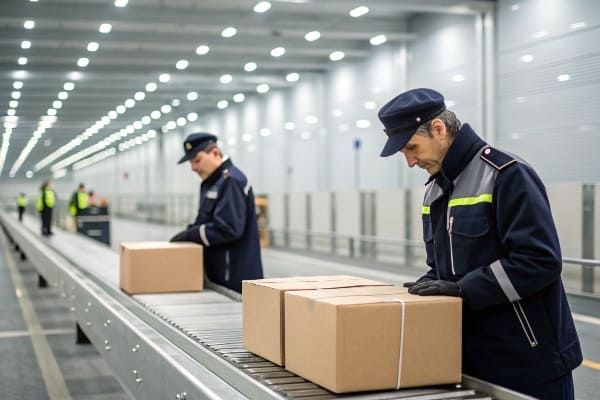
I watch three scans. "Origin Scan" confirms carrier control. "In Transit Departed" shows it cleared the first sort. "Out for Delivery" locks the final mile. If I do not see an origin scan by midnight, I assume the clock starts next day. If a scan stalls in a weather-hit hub, I act.
Here is my buffer plan:
| Scenario | Base Transit | Smart Buffer7 | Total Plan |
|---|---|---|---|
| Domestic ground to metro | 3–5 days | +2 days | 5–7 days |
| Domestic expedited | 2–3 days | +1 day | 3–4 days |
| Next-day | 1 day | +0–1 day | 1–2 days |
| International express | 2–5 days | +2 days (customs) | 4–7 days |
| LTL pallet to DC | 2–6 days | +1 day (appointment) | 3–7 days |
I ship displays for seasonal pushes. For a U.S. big-box launch, I target "in DC8" 10 days before the set date. The DC needs time to break down pallets and route to stores. For direct-to-store kits, I target store receipt 5 days before set. That gives the team time to stage, set, and shoot compliance photos. If a scan stalls, I open a trace and I ship a second kit by air to the highest revenue stores. I do not wait. I move. That is how I keep sell-through safe when tracking gets weird.
Conclusion
Shipping time is a plan, not a guess. Pick the right service, respect cutoffs, add small buffers, and your launch stays on time.
Explore this link to understand how Next-Day / Air Saver shipping can meet tight deadlines effectively. ↩
Discover the benefits of International Express shipping for timely delivery across borders. ↩
Explore the advantages of USPS Priority for shipping, including cost-effectiveness and speed, especially for small packages. ↩
Understanding dimensional weight can help you choose the right carrier and save on shipping costs, especially for larger packages. ↩
Understanding this term is crucial for effective shipping planning and ensuring timely deliveries. ↩
Exploring this will help you grasp the advantages of faster shipping options for urgent deliveries. ↩
Understanding Smart Buffer can enhance your shipping strategy, ensuring timely deliveries and better inventory management. ↩
Exploring the meaning of 'in DC'can help you optimize your supply chain and improve delivery timelines for your products. ↩