Retail looks fresh when shoppers see new ideas fast. Stale fixtures slow sales. I show when to refresh, what to change first, and how cardboard displays keep costs low.
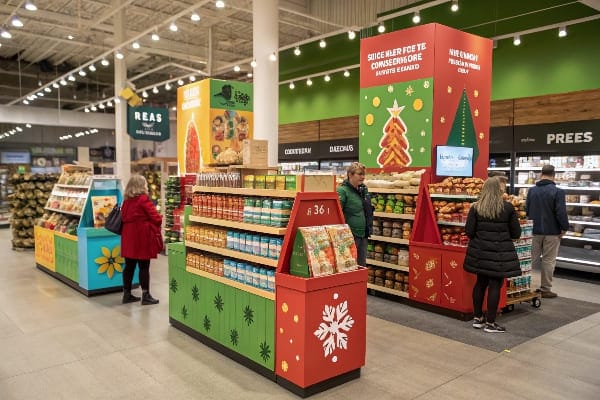
Refresh small fixtures every 4–6 weeks, windows every 2–4 weeks, seasonal zones every quarter, and major fixture sets every 12–24 months. Use sales lifts, traffic heatmaps, and stock turns to tune cadence by store.
I keep this simple and practical. I share real timelines that I run for B2B brand launches and retail resets. I add checklists and tables you can copy.
What are fixtures in retailing?
Shoppers meet your fixtures before your staff. Poor fixtures hide value. Clear fixtures show price, story, and choice. I use permanent, semi-permanent, and temporary systems together.
Retail fixtures are the structures that hold, present, or sign products, including shelving, gondolas, endcaps, floor and countertop displays, pallet shippers, signage, clip strips, and window props made from metal, wood, plastic, or cardboard.

Types and roles that drive sales
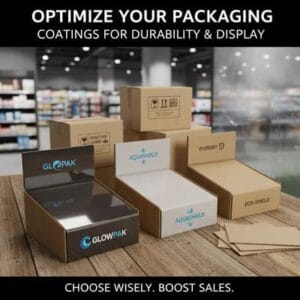
I sort fixtures by lifespan and job. Permanent units shape the aisle. Semi-permanent pieces target a category. Temporary units win a moment. Cardboard displays live in the temporary tier, but they work hard because they move fast, cost less, and print clean graphics. My factory in Shenzhen builds these at scale. We design, prototype, test load, then mass produce after approval. This flow protects timelines for launches in the United States, Canada, the United Kingdom, and Australia. In one sporting goods reset, cardboard floor units lifted unit velocity1 in two weeks because we placed them at power positions and printed clear step-by-step setup cues. I test every unit with real cartons and transit drops. I check color targets with press profiles to block reprint risk. I keep a sample library so buyers can sign off quickly and avoid late changes.
| Type | Primary purpose | Common materials | Typical lifespan | Baseline refresh cadence |
|---|---|---|---|---|
| Permanent shelving2 | Hold full assortments | Metal, wood, plastic | 3–7 years | Audit quarterly |
| Semi-permanent endcap | Promote hero SKUs | Metal + graphics, MDF | 6–18 months | Refresh graphics quarterly |
| Temporary POP (cardboard)3 | Win promo or launch | Corrugated, paperboard | 4–16 weeks | Swap 4–8 weeks |
| Signage/wayfinding | Guide traffic and prices | Board, acrylic, vinyl | 6–24 months | Update price/events weekly |
| Window props | Attract passersby | Mixed + cardboard | 2–8 weeks | Change 2–4 weeks |
How often are window displays changed?
Windows create first contact. Old windows tell shoppers to pass by. Fresh windows pull them in. I plan changeovers with the promo calendar.
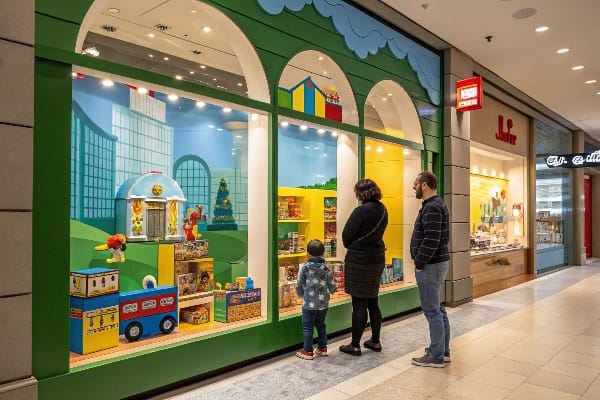
Most retailers change window displays every 2–4 weeks; high-traffic flagships may change weekly in peak season, while smaller stores should refresh at least monthly and always for key holidays and major launches.
Cadence by format and a fast plan you can copy
I match cadence to traffic and labor. Flagships move fast. Malls move often. Neighborhood stores move monthly. I use cardboard window props4 and lightweight risers to cut changeover time. These ship flat, print vivid colors, and set up in minutes. During a U.S. hunting brand launch, my team produced a family of window elements: a 3D silhouette, a countertop teaser, and a QR panel that linked to safety tips. We installed on a Monday before media on Thursday. The quick swap was possible because the kit used tool-free tabs5 and pre-applied tape. Color matched the brand orange within ΔE targets, so the product photos popped against matte black. The store repeated the theme across doors and endcaps, which kept the story tight and drove walk-ins.
| Retailer type | Baseline cadence | Peak season cadence6 | Triggers for mid-cycle swap7 |
|---|---|---|---|
| Flagship/high street | Every 1–2 weeks | Weekly | Sell-through spike, PR event |
| Mall inline | Every 2–4 weeks | Every 2 weeks | Competitor change nearby |
| Neighborhood | Monthly | Every 2–3 weeks | Weather shift, local event |
| Outlet | Monthly | Every 2–3 weeks | Clearance wave, new signage |
Why is retail store layout important?
Layout decides where eyes go first. Good flow helps baskets grow. Poor flow hides profit. I design routes that guide, not block.
Layout matters because it directs traffic, increases conversion and basket size, reduces congestion and labor waste, improves safety, and makes promotions visible at the right time in the trip.
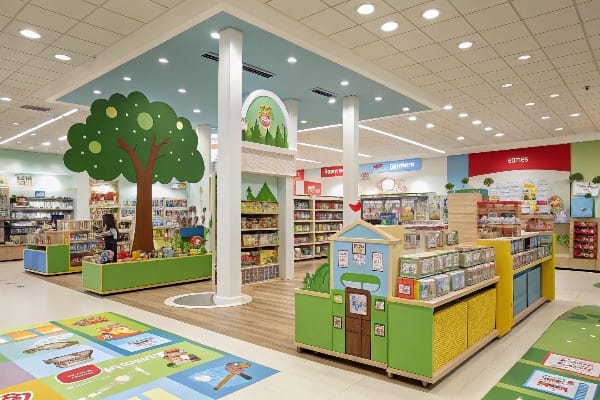
Goals, patterns, and how I test fast
I start with clear goals. I move shoppers past high-margin zones early, then place replenishment items deeper. I use floor cardboard displays to create speed bumps that hold attention without stopping carts. Pallet shippers near racetracks convert because shoppers see volume and price in one glance. I keep aisles wide enough for two carts. I protect impulse zones at checkouts with sturdy countertop units that survive hand traffic. I test layouts with heatmaps from simple traffic counts8 and with A/B display swaps9 over two weeks. I track lift, dwell, and pick-up rates. I bring in modular cardboard to try positions before a costly permanent rebuild. This reduces risk and buys proof for your board or partner.
| Layout pattern | Best for | Strengths | Risks | Test metric to watch |
|---|---|---|---|---|
| Grid/gondola10 | Supermarkets, drugstores | Efficient navigation, easy planograms | Can feel dull | Basket size, dwell time |
| Racetrack | Department, big box | Guides full tour, strong promo sightlines | Long path may tire shoppers | Path completion rate |
| Free-flow11 | Specialty, boutique | Storytelling, discovery | Hard to enforce adjacencies | Conversion by zone |
| Mixed/hybrid | Multi-category | Flexibility, seasonal power | Complex to maintain | Promo compliance |
What is a fixture in a supermarket?
Grocery trips are fast. Shoppers scan, grab, and go. Supermarket fixtures must be durable, clear, and easy to restock.
A supermarket fixture is any in-store structure that holds or presents products, such as gondolas, endcaps, pallet drops, PDQ shippers, clip strips, coolers, freezers, checkout racks, dump bins, and aisle signage.
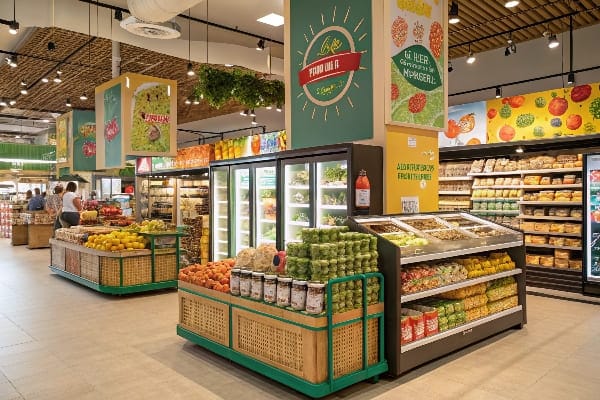
Core set and where cardboard displays12 excel
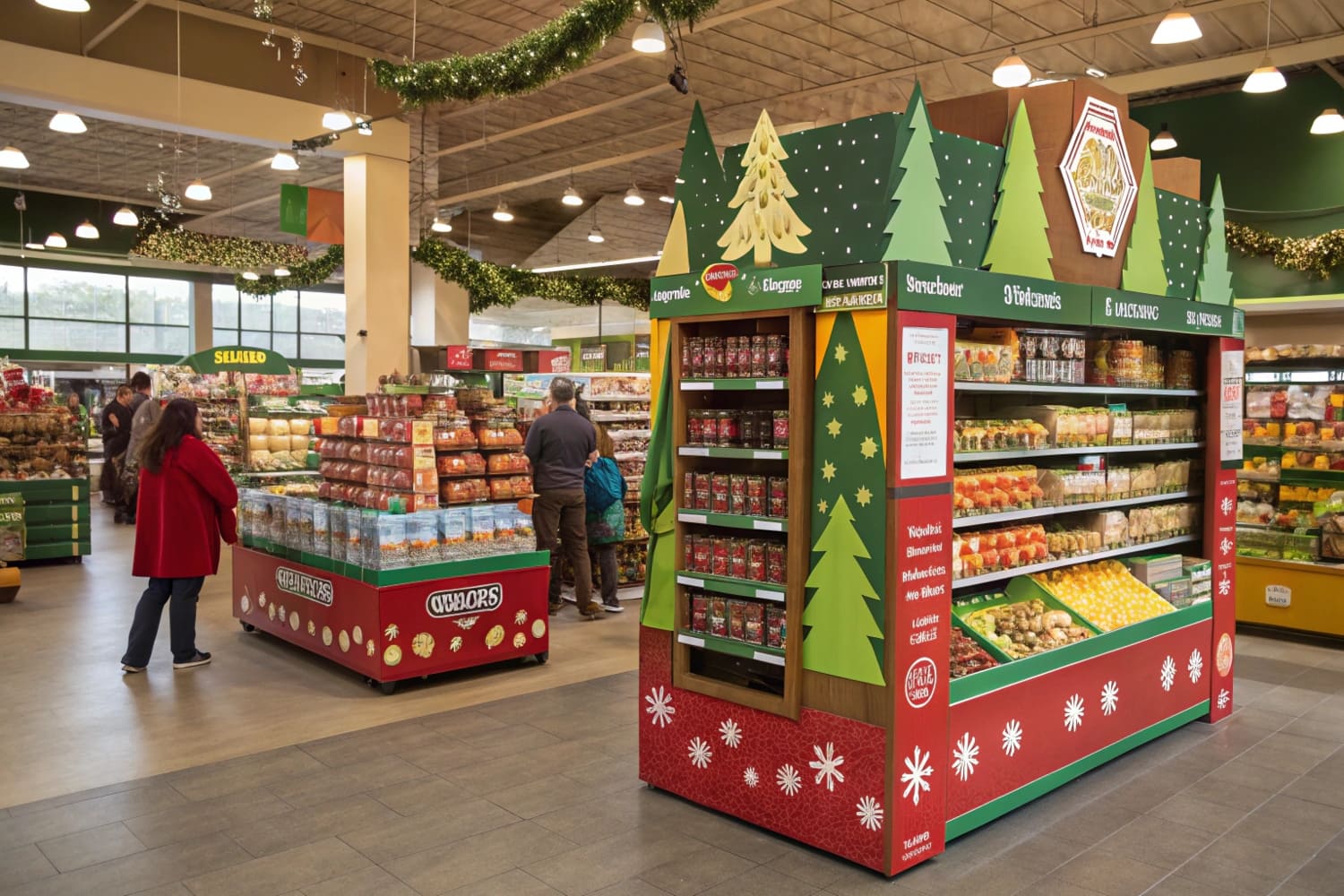
Supermarkets run on rhythm. The core set includes gondolas for center store, endcaps for weekly features, coolers and freezers for perishables, service cases, and checkout racks. I add temporary cardboard units to amplify features without heavy capex. PDQ displays13 are small shippers that drop into existing shelves to bundle trial sizes or seasonal items. Pallet displays move in fast for warehouse formats and club stores because the footprint is clear and restock is simple. Clip strips lift small items near the decision point. I pick materials based on humidity and traffic. In produce or near doors, I add water-resistant coatings and stronger E-flute or double-wall corrugate. I document every spec in the sample stage, then I run transport and crush tests. This avoids the worst pain: a display that sags or tears during week two.
| Fixture | Primary function | Typical owner | Refresh cadence | Notes for cardboard use |
|---|---|---|---|---|
| Gondola run | Core stock presentation14 | Retailer | Annual audit | Add header cards and shelf trays |
| Endcap | Weekly feature | Retailer/brand | Weekly | Use wrap graphics + trays |
| Pallet drop | Bulk and price image | Brand | 2–6 weeks | Ship flat, assemble in minutes |
| PDQ shelf shipper | Impulse near planogram | Brand | 4–8 weeks | Pre-packed for speed |
| Clip strip/hang tab | Micro cross-sell | Brand | 2–6 weeks | Keep under 1 kg total |
| Checkout rack | Last-minute add-ons15 | Retailer | Weekly | Reinforce edges for wear |
| Cooler/freezer case | Temperature-controlled | Retailer | Ongoing | Use moisture-safe coatings |
Conclusion
Refresh often, test small, and protect launch dates. Use cardboard for speed and impact. Lock specs, certify samples, and let shopper data set the final cadence.
Learn about the importance of unit velocity and how it can drive sales and improve inventory management. ↩
Explore this link to understand how Permanent shelving can optimize your retail space and enhance product visibility. ↩
Discover insights on how Temporary POP can boost your promotional efforts and attract customers effectively. ↩
Explore how cardboard window props can enhance your retail displays with vivid colors and quick setup. ↩
Learn about the advantages of tool-free tabs for faster and easier installations in retail environments. ↩
Understanding peak season cadence can help retailers optimize inventory and marketing strategies during high-demand periods. ↩
Exploring triggers for mid-cycle swaps can provide insights into effective inventory management and responsiveness to market changes. ↩
Exploring heatmaps in retail can provide insights into shopper behavior, helping you make data-driven decisions for layout improvements. ↩
Understanding A/B display swaps can enhance your retail strategy by optimizing product placement and increasing sales. ↩
Explore this link to understand how Grid/gondola layouts enhance customer navigation and boost sales. ↩
Discover the unique advantages of Free-flow layouts that promote storytelling and customer discovery in retail. ↩
Explore this link to understand how cardboard displays can enhance product visibility and sales in retail environments. ↩
Learn about PDQ displays to see how they effectively promote trial sizes and seasonal items in supermarkets. ↩
Understanding core stock presentation can enhance your retail strategy and improve product visibility. ↩
Exploring last-minute add-ons can boost impulse purchases and increase overall sales in your store. ↩