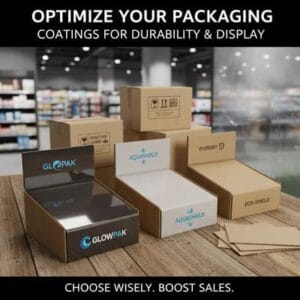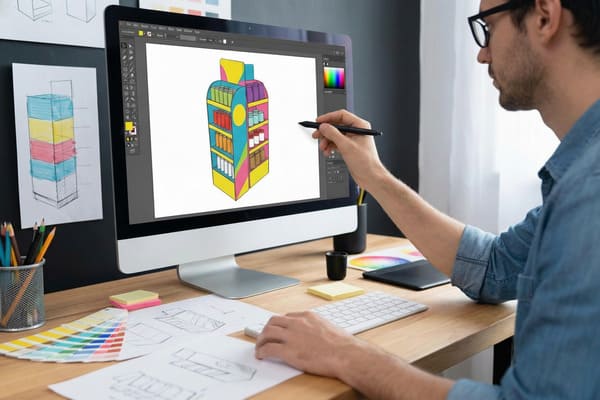
Ordering custom displays can feel like a high-stakes gamble when you manage a brand. You worry about the structural integrity of the cardboard and whether the print quality will actually match the digital file you approved.
Ordering custom endcap displays involves defining your retail footprint, selecting the right structural material like corrugated B-flute for durability, and submitting high-resolution artwork. You must approve a physical prototype to test load-bearing capacity before mass production to ensure the unit fits store specifications like Costco or Walmart.
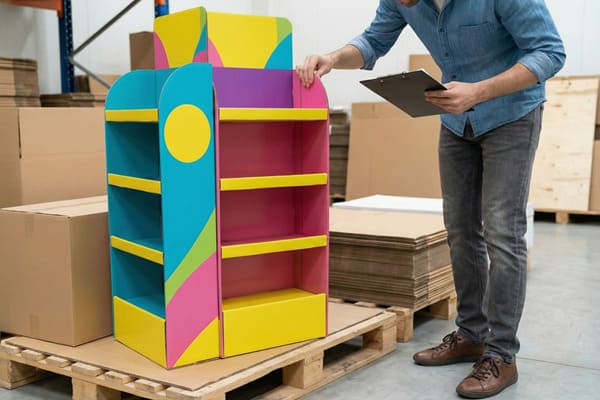
The process of getting your product from a warehouse to a prime retail spot involves many technical details. Let us look at why this specific type of display is crucial for your sales numbers and how to manage the production risks.
Are end of aisle displays worth it?
Retail floor space is incredibly expensive, and you need to know if the investment will pay off. You might question if a temporary cardboard structure can truly drive significant sales numbers compared to permanent shelving.
Yes, end of aisle displays are highly effective because they capture 100% of shopper traffic moving between aisles. They act as a visual interruption that triggers impulse buys, often increasing sales by over 30% compared to inline shelf placement, making the ROI on corrugated units exceptionally high.
Strategic ROI and Material Cost Efficiency
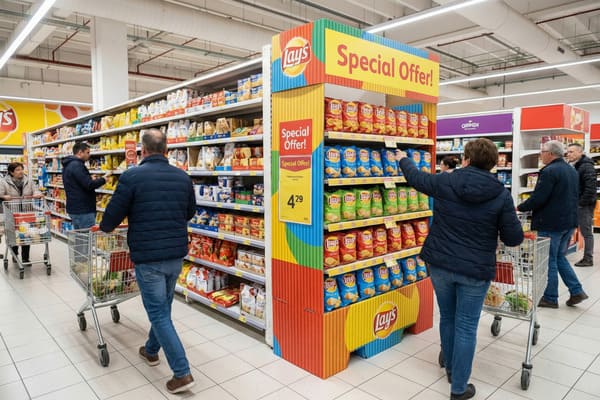
Deciding to invest in end of aisle displays requires a deep look at cost versus return. In the retail world, we call this "prime real estate" for a reason. When your product sits on a regular shelf, it competes directly with similar items on the left and right. However, an endcap1 isolates your brand. This isolation is critical for new product launches or seasonal promotions. From a manufacturing perspective, cardboard is the most cost-effective material to achieve this. Metal or wood fixtures are durable, but they are heavy, expensive to ship, and hard to customize for short campaigns.
Corrugated cardboard allows for rapid production changes. You can print high-quality graphics directly onto the material, which turns the structure into a marketing tool, not just a shelf. The key technical factor here is the strength-to-weight ratio. We often use heavy-duty corrugated board2, such as double-wall BC-flute, for these displays. This material is strong enough to hold heavy items like beverages or outdoor gear but light enough to keep shipping costs low. If you run a campaign for three months, a cardboard display pays for itself within the first few weeks due to the increased sell-through rate. The initial setup cost is low compared to the volume of product you move. Retailers like Costco or Walmart demand high sales velocity per square foot, and these displays are the best tool to meet those metrics.
| Feature | Inline Shelf Placement | Endcap Display3 |
|---|---|---|
| Visibility | Low (Hidden in aisle) | High (Visible from main walkway) |
| Competitor Proximity | Direct (Side-by-side) | Isolated (Stand-alone branding) |
| Impulse Buy Rate4 | Standard | High (+30% increase typically) |
| Material Cost | Zero (Retailer provided) | Low to Medium (Brand investment) |
| Customization | Limited to packaging | Full structural and graphic control |
I have seen many clients hesitate to spend money on what they see as "throwaway" packaging, but this is a mistake. We run rigorous load-bearing tests in my factory to prove that these low-cost materials can generate high-value sales. I ensure every dollar you spend on the display structure comes back to you in product turnover.
What is the psychology behind end cap placement?
Shoppers walk past thousands of products without looking, and you need to break that pattern. You want to understand the subconscious triggers that make them stop walking and grab your specific item.
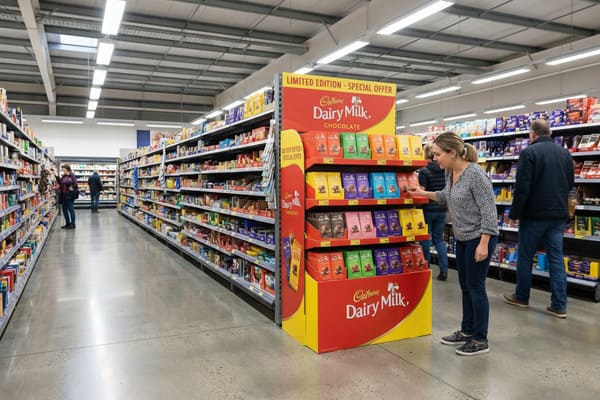
The psychology relies on the "disruption effect," where the display breaks the visual monotony of long aisles. Shoppers perceive products on endcaps as special offers or premium items. This placement leverages high-traffic visibility and urgency, mentally signaling to the customer that this product is a limited-time opportunity.
Visual Hierarchy and Consumer Behavior
The success of an endcap is not just about location; it is about how the human brain processes visual information. In the retail industry, we often talk about the "Blink Test5." You have about three seconds to grab a customer's attention. If your display is cluttered or confusing, they keep walking. The psychology here is about disrupting the "autopilot" mode of a shopper. When people walk down a main aisle, they are usually looking for a specific category. An endcap forces a pause. It presents a solution to a problem they did not know they had.
From a design standpoint, this means we must use bold colors and clear, large fonts. The structure itself contributes to this psychology. A display that is 3D or has a unique shape stands out against the flat, linear rows of standard shelving. We also have to consider the "Gold Zone6," which is the area between waist and eye level. This is where your most profitable products must sit. We design the shelves to push products forward so they look plentiful. A fully stocked display signals popularity and freshness. An empty or messy display signals neglect. We also use litho-lamination printing to make the colors pop. This high-gloss finish suggests quality. If the cardboard looks dull or cheap, the customer assumes the product inside is also cheap. The goal is to create a feeling of "smart discovery" for the shopper. They feel good about finding a deal or a cool new product on the endcap.
| Design Element | Psychological Trigger | Recommended Strategy |
|---|---|---|
| Color Usage | Emotional engagement7 | Use brand colors with high contrast |
| Structural Shape | Curiosity and disruption | 3D headers or non-standard sides |
| Stock Level | Social proof (popularity)8 | Gravity-feed shelves to keep front full |
| Message Clarity | Quick decision making | Max 5 words on the main header |
| Height | Authority and dominance | Match eye-level of target demographic |
We understand that you cannot risk your brand image on a display that looks weak or confusing. We use advanced 3D rendering tools to simulate exactly how your display will look under store lighting, ensuring the final result triggers the right buying behavior before we even cut the first piece of paper.
What is the purpose of an endcap display in retail?
You might think these displays are just for holding extra stock to clear out the warehouse. However, missing their true strategic purpose means missing out on massive brand building opportunities.
The primary purpose of an endcap display is to maximize product visibility and drive impulse purchases in high-traffic zones. Beyond sales, it serves as a billboard for brand storytelling, allowing you to launch new products, clear seasonal inventory, or educate customers without competing directly with adjacent competitors on the shelf.
Functionality Meets Brand Storytelling
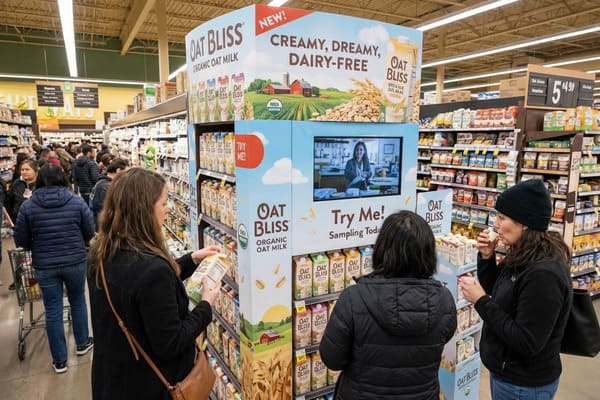
An endcap display9 serves two masters: the retailer and the brand. For the retailer, the purpose is purely economic. They need to increase the average basket size of every customer. They want products that turn over quickly. For you, the brand owner, the purpose is communication. In a standard aisle, you only have the front face of your package to tell your story. On an endcap, you have the header card, the side panels, and the shelf lips. This is essentially a billboard inside the store.
This is especially important for technical products or new market entries. If you are selling a new type of hunting gear or a complex electronic gadget, a simple box on a shelf is not enough. The endcap allows you to add educational graphics10 or even physical samples that customers can touch. Structurally, the purpose dictates the design. If the purpose is a quick seasonal liquidation, we might design a simple "dump bin" style endcap. If the purpose is a premium product launch, we design a multi-tiered stand with reinforced shelves and glossy coating. We also have to consider the lifecycle of the display. Is it for a two-week holiday push or a permanent six-month fixture? Cardboard is versatile enough for both, but the grade of paper we choose will change. We use stronger recycled Kraft paper for longer-duration displays to ensure they do not sag over time. The purpose is to bridge the gap between your marketing message and the physical product.
| Display Type | Primary Purpose | Best Use Case |
|---|---|---|
| Tiered Floor Display11 | Organized Presentation | Multiple SKUs, Premium items |
| Dump Bin | Volume Clearance | Low-price items, irregular shapes |
| Sidekick / Power Wing | Cross-merchandising12 | Small items, accessories |
| Pallet Skirt | Bulk Sales | Heavy items, warehouse clubs |
| Interactive Stand | Education | Tech products, new inventions |
I always tell my clients that a display is more than a box; it is your silent salesman. My team focuses on structural customization to ensure the physical form of the display supports your specific marketing goal, whether that is rapid clearance or premium brand building.
How to set up retail store displays?
A great design is useless if the store staff cannot assemble it correctly in a busy environment. You dread the phone call saying your expensive displays were thrown away because they were too hard to build.
To set up retail displays effectively, the design must prioritize intuitive assembly, often utilizing "pre-assembled" or "flat-packed" designs with clear instruction sheets. You must account for store labor constraints by ensuring the unit can be built in under five minutes without tools, preventing store staff from discarding complex units.
Engineering for Assembly and Logistics
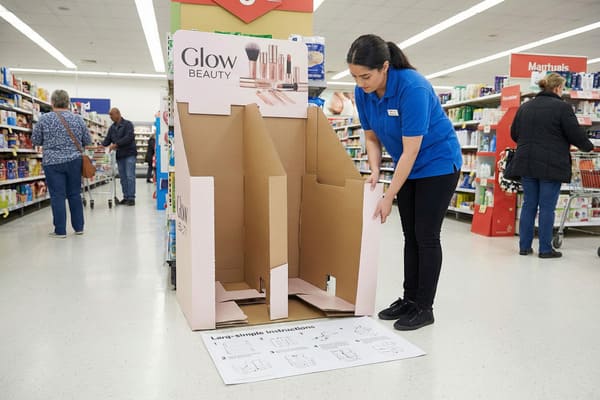
The assembly process is often the point of failure for many retail campaigns. Retail store employees are busy. They do not have time to read a twenty-page manual or look for a screwdriver. If a display takes more than a few minutes to build, it often gets thrown in the trash. This is why we focus heavily on "smart structure" design. We use techniques like "auto-bottom" or "snap-lock" bottoms. This means when you open the flat box, the bottom of the display automatically falls into place and locks.
There are two main ways to approach this: flat-packed or pre-filled. Flat-packed displays are cheaper to ship because they take up less space. However, they rely on store staff to build them. For these, we design custom instruction sheets with photos, not just text. We label the parts clearly, like "Tab A into Slot A." We test these instructions in our factory with people who have never seen the design before. The second option is pre-filled displays13 (PDQ). We assemble the display in my factory, load your product into it, put a shipping shroud over it, and send it on a pallet. When it arrives at the store, the staff just takes the cover off. This guarantees perfect execution but increases shipping costs. You have to balance the risk of bad assembly against the cost of logistics. Materials also play a role here. We use high-quality corrugated board that folds cleanly without cracking. If the paper tears during assembly, the whole unit is ruined.
| Assembly Method | Setup Time (Store) | Shipping Cost | Execution Risk |
|---|---|---|---|
| Flat-Packed (Standard)14 | 10-15 Minutes | Low | High (Staff error) |
| Flat-Packed (Auto-Lock) | 2-5 Minutes | Low | Medium |
| Pre-Filled (Shipper)15 | < 1 Minute | High | Zero (Perfect setup) |
| Hybrid (Semi-assembled) | 5 Minutes | Medium | Low |
We provide clear video instructions and simplified paper manuals for every project to solve this problem. I ensure that every design we produce is tested for assembly speed so that your investment ends up on the sales floor, not in the compactor.
Conclusion
Ordering custom endcap displays requires balancing strong structural design with smart marketing psychology to boost sales. You need a manufacturing partner who understands material limits and retail requirements to ensure success.
Explore how endcap displays can enhance product visibility and boost sales in retail environments. ↩
Learn about the benefits of heavy-duty corrugated board for creating effective and cost-efficient retail displays. ↩
Exploring the effectiveness of endcap displays can provide insights into maximizing product visibility and sales. ↩
Understanding impulse buy rates can help you optimize your marketing strategies and increase sales effectively. ↩
Understanding the Blink Test can help retailers optimize displays to capture customer attention effectively. ↩
Exploring the Gold Zone concept can enhance your merchandising strategy, ensuring profitable products are positioned for maximum visibility. ↩
Understanding emotional engagement can enhance your design strategies and connect better with your audience. ↩
Exploring social proof can help you leverage popularity to boost your brand's credibility and sales. ↩
Explore this link to understand how endcap displays can enhance retail strategies and boost sales effectively. ↩
Discover how educational graphics can engage customers and enhance their shopping experience, making your products more appealing. ↩
Explore how Tiered Floor Displays can enhance product visibility and organization in retail settings. ↩
Learn about the strategies behind cross-merchandising and how it can boost sales and customer engagement. ↩
Learn about pre-filled displays and how they can streamline logistics and improve product presentation in stores. ↩
Explore the benefits of the Flat-Packed (Standard) method to understand its efficiency and potential drawbacks. ↩
Learn about the Pre-Filled (Shipper) method to see why it offers a quick and risk-free setup. ↩