
I see brands rush baby items to shelves. Then they hit a wall. The wall is retail compliance. I help them cross it with a clear plan.
You make baby products compliant by meeting CPSC rules first, then mapping Walmart and Target item setup, packaging, labeling, and testing rules to your product type, and finally proving it with third-party reports, digital documentation, and clean master data before you ship.

I use a simple path. I start with federal safety. I layer retailer rules. I lock packaging and displays last. I gather proofs. I submit clean data. I keep a tracker and update it after each lab test and design change.
How to get approved for Walmart Marketplace?
I know approval looks hard. It is not. Walmart wants proof that you are real, compliant, and ready to fulfill orders with care and speed.
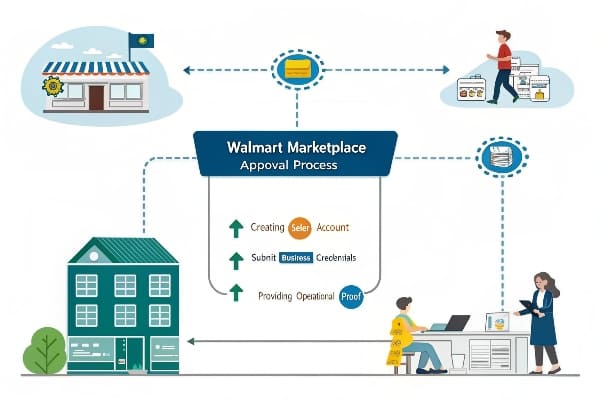
You get approved by applying with accurate business info, showing marketplace experience or proof of operations, connecting tax and bank accounts, agreeing to policies, and passing a brief security and identity review with a valid U.S. presence or authorized representative.
What I prepare before I apply
I prepare legal entity docs1, EIN, W-9, business address, support email, return policy, and a working phone. I show real product pages, UPCs, and test reports when asked. I also prepare fulfillment data2 and a PDQ or pallet plan if the item will also go in stores. I track all files in one folder. I use filenames with version and date. This speeds questions and shortens review.
Practical checklist and roles
| Step | Owner | What Walmart checks | What I submit |
|---|---|---|---|
| Legal & tax | Seller | Entity validity | EIN, W-9, business license3 |
| Banking | Seller | Payout setup | Voided check or bank letter |
| Catalog | Seller | GS1 and data quality | GS1 GTINs, clean images4 |
| Compliance | Seller | Safety and claims | CPC, test reports, warnings |
| Ops | Seller | SLA and returns | Ship times, return address |
I once helped a brand of baby bottles move from "pending" to "approved" in four days. We fixed GTIN ownership, simplified bullet points, removed one unsubstantiated claim, and uploaded the CPC. Approval followed quickly because we were precise and polite in every reply.
How much does it cost to put a product in Walmart?
People guess at cost. Costs vary. I break them into one-time, per-unit, and conditional fees so no one is surprised later.
You should plan for testing and documentation, packaging and display costs, freight, marketplace referral fees, optional fulfillment fees, and retailer chargebacks. Your mix depends on route to market, product type, and service level.

Cost blocks I budget
I split costs into buckets. First, compliance5: lab testing for CPSIA, chemical limits, and labeling. Second, packaging: PDQ trays, shelf displays, or pallet displays; print plates if offset, or digital print if small runs. Third, logistics6: inland, ocean or air, and final mile. Fourth, channel: marketplace referral fees and optional fulfillment. Fifth, risk: chargebacks for labeling, ASN, or packaging errors. I also budget a small reserve for color correction and a second sample.
Sample worksheet for planning
| Cost Bucket | Typical Drivers | Notes I give buyers |
|---|---|---|
| Compliance7 | Product type & age grade | Children's items need CPC and third-party tests |
| Packaging/Display | Print method & quantity | PDQ and pallet displays lift sell-through |
| Freight & Duties8 | Mode, INCOTERMS, season | Book early; peak season surcharges add up |
| Channel Fees | Referral %, services | Read current fee schedule and promos |
| Chargebacks | Labeling/data errors | Use checklists; test ASNs before live |
| Working Capital | Payment terms | Factor 60–90 days for big box POs |
I design displays to ship flat and assemble fast. This lowers per-store labor and freight. It looks simple, but this is where many teams save real money.
Do you need brand approval to sell on Walmart?
Many sellers ignore brand control. Then listings get blocked or merged. I treat brand as a core compliance item.
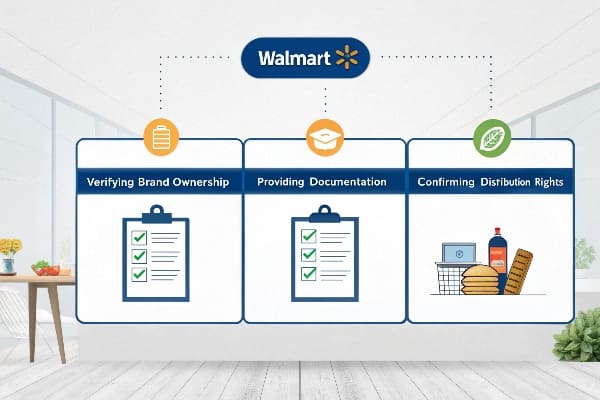
You need brand approval if your brand is restricted or if you want to control catalog ownership, prevent listing hijacks, and unlock A+ assets. You prove brand rights with GS1, trademark, or authorization letters.
What unlocks clean catalog control
I start with GS1 GTINs9 that match the brand. I keep trademark records ready. If I am an authorized reseller, I carry signed letters on letterhead with contact details. I align packaging, images, and titles with the same brand spelling and case. I never mix "Barnett Outdoors" with "Barnett Outdoor" on a single line. I keep a one-page brand style doc10 to avoid that.
Evidence and safeguards I keep on file
| Brand Asset | Why it matters | My file to submit |
|---|---|---|
| GS1 certificate11 | Confirms GTIN ownership | Latest GS1 record PDF |
| Trademark12 | Avoids takedowns & merges | USPTO record or WIPO print |
| Authorization | Proves reseller rights | Letter with term and scope |
| Packaging image | Links brand to GTIN | Flat art and photo |
| Website match | Confirms identity | Live URL screenshots |
When I onboard hunting accessories for baby-adjacent family sets, I still keep brand proofs tight. It reduces disputes and speeds edits when I push new images or safety notes.
Where to find Walmart client secret?
Teams get stuck here during API setup. They look in the wrong console. I keep a clear path and a back-up plan.
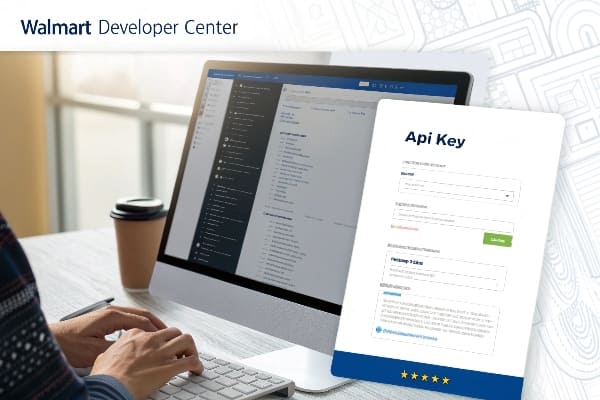
You find the Walmart client ID and client secret inside Seller Center or Developer Portal under Settings → API Keys (or API Credentials). Create or rotate keys, then store them in a secure vault.
Steps that never fail me
I log in to Seller Center with an admin role. I go to Settings and then API Keys13. I generate a new key pair if none exists, or rotate keys if shared. I copy the client ID and secret into a password vault. I restrict access to the integration team. I test the token call14 before I hand it to developers. I also schedule periodic rotation and revoke old keys after handoffs. This prevents orphaned apps and surprises.
Common pitfalls and how I avoid them
| Pitfall | Symptom | Fix |
|---|---|---|
| Wrong user role | Cannot see API menu | Ask account owner for admin |
| Expired secret15 | 401 errors | Regenerate and update server |
| Mixed sandboxes | Token works but calls fail | Match environment to credentials |
| Time skew | Signature mismatch | Sync server time with NTP |
| Leaked secret16 | Unauthorized calls | Rotate, revoke, audit logs |
I also document the base URL, scope, and retry rules next to the keys. This reduces errors when someone updates code on a Friday night.
Conclusion
Start with federal safety, layer retailer rules, prove with tests, and lock clean data. Then control brand, plan costs, and guard keys. This keeps launches on time.
Understanding legal entity docs is crucial for ensuring compliance and smooth business operations. Explore this link for detailed insights. ↩
Exploring fulfillment data can enhance your understanding of logistics and improve customer service. Check out this resource for more information. ↩
Understanding these documents is crucial for compliance and smooth operations when selling. ↩
Learn how to properly register your products and maintain high-quality listings to boost sales. ↩
Understanding compliance is crucial for ensuring your products meet safety standards and regulations. ↩
Exploring logistics optimization can significantly reduce costs and improve efficiency in your supply chain. ↩
Understanding compliance is crucial for ensuring safety and legality in children's products. ↩
Exploring freight and duties can help you optimize shipping expenses and avoid unexpected costs. ↩
Understanding GS1 GTINs is crucial for effective catalog control and brand consistency. ↩
A brand style doc helps maintain uniformity in branding, ensuring clarity and professionalism in your catalog. ↩
Understanding GS1 certificates can help you ensure proper GTIN ownership and compliance. ↩
Exploring trademark benefits can safeguard your brand from unauthorized use and legal issues. ↩
Understanding API Keys is crucial for secure integrations and managing access effectively. ↩
Learning how to test a token call ensures your API integrations are functioning correctly and securely. ↩
Understanding how to manage expired secrets is crucial for maintaining API security and preventing unauthorized access. ↩
Preventing leaked secrets is vital for protecting sensitive data; explore strategies to enhance your security practices. ↩