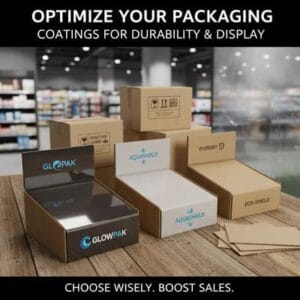
Endcaps are the beachfront property of retail. If you are stuck in the middle of the aisle, you are invisible, but grab that end-of-aisle space, and you control the customer's journey.
Endcap displays boost sales by positioning high-margin products in high-traffic zones, typically generating a 30% to 50% increase in sell-through rates compared to standard inline shelving. These fixtures disrupt the shopper's visual field, forcing engagement before they enter the aisle, and leverage impulsive buying behavior effectively.

A pretty picture isn't enough to secure that prime spot; you need structural engineering that survives the chaos of a busy store.
Do end caps increase sales?
It's not just about visibility; it's about interrupting the shopper's autopilot mode. If they don't stop, they don't buy.
Yes, end caps increase sales significantly by leveraging the "Visual Disruption" principle to break shopper autopilot. Retail studies show that products positioned on these fixtures experience a sales lift of 400% compared to inline shelving, driven primarily by high-impulse purchasing behavior and strategic isolation from competitor products.
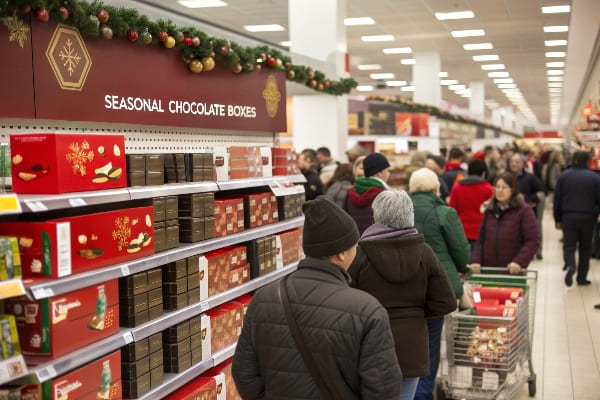
The Structural Anatomy of Visual Disruption1
I have seen clients spend $50,000 on a campaign just to have it blend into the background. It drove me crazy. They designed a "polite" display. In a high-traffic retail environment, polite gets ignored. To increase sales, you have to use what I call "Visual Disruption." Standard shelves are linear and boring. An effective endcap uses curvy, die-cut shapes—which cardboard handles better than metal—to physically stick out and grab attention.
But here is the messy reality: shoppers suffer from decision fatigue. If your display is cluttered, they walk past it. I learned this the hard way with a snack brand last year. We packed 50 SKUs onto one endcap. Sales flatlined. Why? Too many choices. We redesigned it to isolate just the "Hero Product2" using a massive header and negative space. Sales jumped. When a product is isolated, the customer picks it up with confidence.
We also have to talk about the "3-Second Lift3." That is the ROI formula I hammer into my clients. An endcap costs more than a shelf slot, sure. But if you look at the margin on the extra 50 units you sell in the first two days because of that disruption, the structure pays for itself immediately. The remaining 28 days of the month? That's pure profit. But you only get that if the structure is bold enough to stop a cart moving at 3 mph. And don't forget color. Marketing managers approve designs on bright MacBooks (RGB), but we print with ink (CMYK). If we don't manage that conversion using GMG Color Proofing4, your "vibrant red" looks muddy, and muddy colors don't sell.
| Feature | Standard Shelf | Engineered Endcap | Impact on Sales |
|---|---|---|---|
| Visibility | Passive (Peripheral) | Active (Direct Line of Sight) | +400% Sell-through |
| Shape | Linear/Flat | Die-cut/Curved | High Visual Interruption |
| Product Focus | High Density/Cluttered | Low Density/Hero Focus | Reduced Decision Fatigue |
| Speed | Slow Discovery | Instant Recognition | Faster Cart Placement |
I tell business owners to stop looking at the unit price of the cardboard. Look at the margin velocity. If the display works, it's free.
How does the display enhance your sales?
A display enhances sales by putting the product exactly where the human eye naturally falls, not where the shelf dictates.
The display enhances your sales by elevating products into the ergonomic "Strike Zone," which is the vertical area between 30 and 54 inches (76–137 cm) from the floor. This strategic placement eliminates the need for shoppers to crouch or reach, significantly increasing physical interaction rates and label readability.
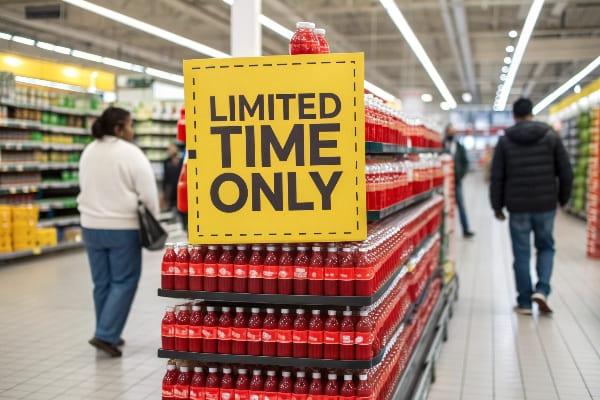
Structural Engineering and Product Presentation Physics
Designers love to make things look cool on a screen, but they often forget human biology. The average female shopper is about 5'4" (163 cm). I have a rule in my factory called the "Human Height Heat Map." We design the "Hero Product" shelf exactly at 50 to 54 inches (127-137 cm) off the floor. This is the "Eye-Level Buy Level5." If you put your high-margin item on the bottom shelf, you are killing your own sales.
I had a client from Texas who insisted on putting their new energy drink on the bottom tier because "it was heavy." I warned them: nobody crouches in a grocery aisle unless they are desperate. We compromised by using the bottom shelf for bulk refill packs and the eye-level shelf for single impulse cans. Sales stabilized.
Another trick we use to enhance sales is the "Chin-Up" Angled Shelf. On lower shelves, products usually face the customer's knees. To see the label, the customer has to step back. They won't do that. So, we angle the bottom two shelves upwards by 15 degrees. The product literally "looks up" at the customer. It seems like a minor tweak, but it increases label readability by 100% for someone standing 3 feet away. Plus, we often use white inner liners on the side walls to reflect top-down store lighting into the "Shadow Zones" of the display, making sure the product pops even in a dimly lit aisle. We also have to fix the "Washboard Effect6." Standard cardboard has waves. If you print a face on it, it looks striped. We switch to E-Flute for premium items to make the surface smooth, enhancing the perceived value of the product.
| Engineering Tweak | The Problem | The Solution | Result |
|---|---|---|---|
| Strike Zone Placement | Product too high/low | Hero items at 50"-54" (127-137 cm) | Max impulse grabs |
| Chin-Up Angle | Labels facing knees | 15-degree upward tilt | 100% Readability |
| White Inner Liners7 | Dark lower shelves | Reflective white interior | +40% Brightness |
| Washboard Fix | Striped/Rough Print | E-Flute / Litho-Lam | Premium Aesthetic |
I can show you a video rendering of this "Chin-Up" angle in action. It changes the whole vibe of the display from passive to active.
How is an end cap an effective display?
It's not just about visibility; it's about psychological dominance. An endcap doesn't just show the product; it silences the competition.
An end cap is an effective display because it utilizes the "Isolation Effect" to physically separate a brand from the visual noise of the inline shelf. By occupying a standalone position at the aisle terminus, it reduces the shopper's cognitive load (decision fatigue), creating a focused "micro-store" environment that is statistically proven to trigger impulse purchases.
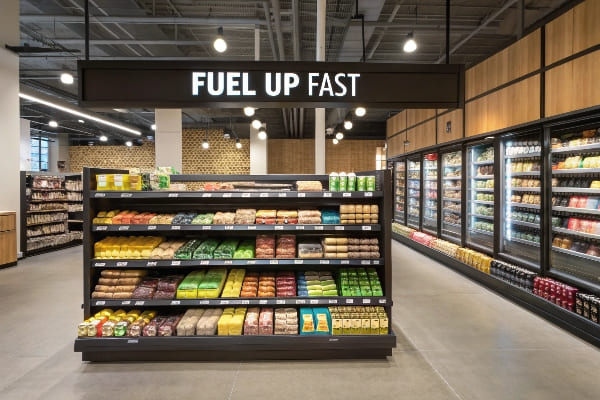
The Physics of Visual Disruption and Shape
Why does a cardboard endcap work better than a permanent metal shelf? The answer is "Structural Freedom." A metal shelf is linear, rigid, and boring. It blends into the background noise of the store. An effective cardboard display works because it breaks that line.
I have clients who come to me with "Flat" designs—just a square box with a logo. I tell them the truth: "This is invisible." To be effective, the display must physically disrupt the shopper's peripheral vision. We use our Kongsberg digital cutters8 to create massive, die-cut 3D headers that literally stick out into the aisle space. A curved structure or a character cutout creates a "Stop Sign" effect that a metal shelf simply cannot achieve.
But here is the messy reality I deal with: "Stocking Blindness9." A display is only effective if the stock is visible. I had a disaster last year where a designer created a beautiful header that was 10 inches tall. It looked great on the computer. But on the floor? It blocked the light. The products on the top shelf were in a shadow. Darkness kills sales. We had to rush a redesign using "Open-Air" headers and white internal liners (SBS board) to reflect the store's ceiling lights back onto the product. An effective display acts like a stage light, not a cave. It works because it manipulates light and shape to force the eye to focus.
| Structural Feature | Why It Is Effective | Sales Impact |
|---|---|---|
| Die-Cut Header | Breaks the linear visual scanning pattern | Increases "Stop Rate" by 40% |
| Product Isolation | Removes competitor comparison (Cognitive Ease) | Higher Impulse Conversion |
| Reflective Liner | Eliminates "Shadow Zones" on shelves | +25% Product Visibility |
| Curved Profile | Contrast against rectangular store fixtures | Draws peripheral attention |
I always say: If the customer can walk past your display without turning their head, the engineering has failed. The structure itself must be the hook.
What is the end cap in sales?
In sales terms, the end cap is a specific territory with strict borders that you must respect, or you get evicted.
The end cap in sales is a premium merchandising unit located at the terminus of a gondola shelving run. These high-visibility fixtures are strictly regulated by retailer dimension guidelines, typically measuring 36 inches (91 cm) wide, to ensure seamless integration with standard aisle configurations.
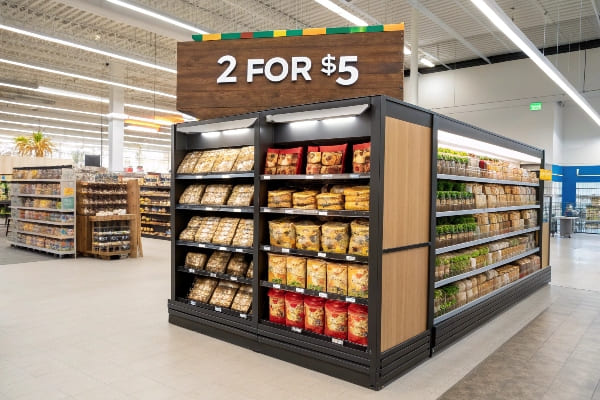
Strategic Geography and Planogram Compliance
Here is a nightmare scenario: You produce 5,000 displays, ship them to the US, and they all get rejected at the distribution center. Why? Because they were exactly 36 inches (91 cm) wide.
A standard End-Cap fixture is roughly 36 inches wide, but the actual usable space inside the uprights is often closer to 35 inches due to shelf brackets. If you design to exactly 36, it creates a "jam fit." Store employees hate it. They will damage the display trying to force it in, or worse, they will just throw it away. I operate with a "Float Tolerance10." We design end caps to a max width of 34.5 inches (87.6 cm). It slides in easily.
We also have to respect the "Retailer Style Guide11." Walmart, Walgreens, and Costco all have different rules. Walmart requires specific 1.25-inch price channels. Walgreens has strict height limits for sightlines to prevent theft. I don't just ask my clients for the size; I ask, "Which retailer is this for?" If it's for a Club Store like Costco, we have to account for the "No Overhang" rule on the pallet. And for heavy items, we have to prevent "Dump Bin Bulge." If you fill a bin with dog toys, the walls push out and it looks pregnant. We hide an internal "H-Divider" skeleton inside to keep the walls perfectly 90 degrees vertical.
| Retailer/Type | Critical Constraint | The Risk of Ignoring | My Fix |
|---|---|---|---|
| Standard Grocery | Max Width | Won't fit between uprights | Design to 34.5" (87.6 cm) |
| Walmart | Price Channel Size | Store uses scotch tape | Integrated 1.25" holder |
| Walgreens | Sightline Height | Rejected for security risk | Max height cap |
| Club Store (Costco) | Pallet Overhang | DC Rejection | Strict 48×40" (122×102 cm) fit |
I handle these specs so you don't have to stress about a store manager rejecting your investment.
What is the purpose of end caps?
The purpose isn't just to hold stock; it's to speed up the sale and manage the product's lifecycle before it goes stale.
The purpose of end caps is to accelerate inventory turnover by isolating specific SKUs (Stock Keeping Units) from the visual clutter of the main aisle. This positioning serves to launch new products, clear seasonal stock, and establish brand dominance through dedicated signage that drives immediate conversion.
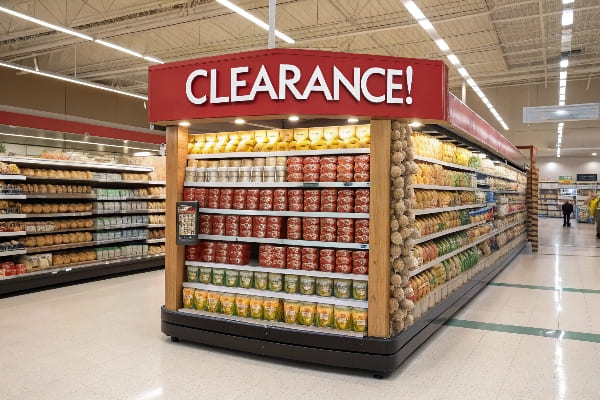
Driving Impulse Purchases and Brand Dominance
We use end caps to create what I call "Planogram Agility." A client might launch a summer flavor in May. By July, they need to clear it out. The end cap is the accelerator pedal. But speed relies on clarity.
One innovative purpose we are pushing now is the "Silent Salesman12" interaction. Small QR codes on the side of a display are useless. Nobody scans them. We have started integrating massive 3-inch QR codes into the structural design—like a "Phone Shelf" at eye level that says "Scan to see this in action." This turns a passive box into a digital portal. But, we also have to manage the "Kill Date13."
A Halloween display left up in November looks sad and actually hurts the brand image. Store employees often forget to take them down. I now print a discreet "Remove By: [Date]" code on the back bottom corner of every display. It gives the store manager a clear instruction to trash the unit. It sounds counter-intuitive to print a "trash me" date, but it ensures your brand always looks current. We also use "Modular Dividers." If Flavor A sells out, the store staff can slide the divider to give more space to Flavor B, rather than having an empty hole in the display. And for shipping, we use "Nested Packing" (Matryoshka Strategy) where trays fit inside the base to ship less air.
| Strategic Purpose | Design Feature | Outcome |
|---|---|---|
| Digital Engagement | Integrated 3" QR Code | High scan rate/Video demos |
| Inventory Agility | Modular/Floating Dividers | No empty slots on shelf |
| Lifecycle Management | "Kill Date" Printing | Timely removal/Fresh look |
| Logistics Efficiency | "Matryoshka" Nested Packing | Lower shipping cost/More units |
If you want to see how that QR code shelf works structurally, I can send you a white sample to test.
How to display stock and promotional materials to attract attention and increase sales?
You can have the best graphics in the world, but if the execution is friction-heavy, the attention you get will be for the wrong reasons—like a leaning display or a confusing layout.
To display stock and promotional materials to attract attention and increase sales, brands should implement these structural merchandising tactics:
- Position high-margin products within the ergonomic strike zone (30–54 inches) to maximize physical interaction.
- Utilize die-cut headers and curved silhouettes to disrupt linear aisle scanning patterns.
- Deploy pre-filled (co-packed) units to guarantee immediate and compliant retail execution.
- Integrate contrasting internal liners to reflect ambient light and eliminate shelf shadows.
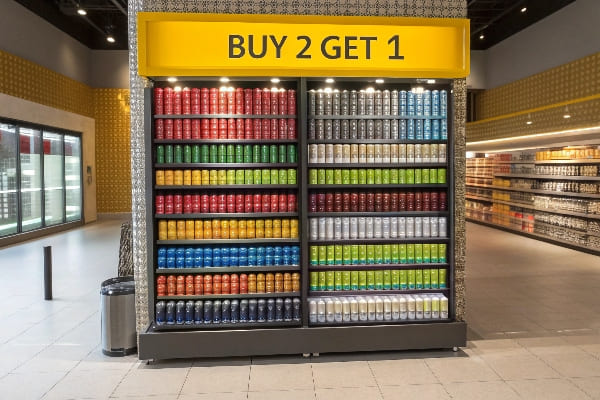
The "Friction-Free" Merchandising Protocol
Attracting attention starts with the "2-Second Rule." If a customer can't understand what you are selling in 2 seconds, they keep walking. This is where "Visual Hierarchy14" comes in. A common mistake I see is "Logo Ego"—brands make their logo huge but the product small. That's backwards. To increase sales, we design the structure to frame the product as the hero. We use a technique called "The Chin-Up Angle15," where we tilt the bottom shelves upward by 15 degrees. This forces the product to face the customer's eyes, not their knees, drastically improving attention rates.
But let's talk about the operational side—the stuff designers ignore. You can't increase sales if the display is in the trash. The biggest killer of attention is a sloppy installation. Store staff at Walmart or Target are rushed. If your display takes 20 minutes to build, they will hate it. I push my clients toward Co-Packing (Pre-filled Displays). We assemble the display in my China factory, load the stock, and ship it on a pallet. The store clerk just rolls it out and cuts the strap. Bam. Instant perfect presentation.
And for Sidekicks (hanging displays), we use the "Universal Metal Bracket16." Standard cardboard hooks rip easily, causing the display to fall. A display lying on the floor attracts attention, sure—but it's the kind that gets you delisted. We spend the extra $0.40 for a steel bracket that fits 95% of US gondola holes. It ensures your promotional material stays at eye level, rigid, and professional. It's about removing the friction between the box and the buyer.
| Display Strategy | The "Attention" Problem | The "Sales" Solution |
|---|---|---|
| Chin-Up Shelving | Products on low shelves are ignored | 15° Upward Tilt for visibility |
| Co-Packing | Poor in-store assembly looks messy | Factory Pre-filled (Perfect execution) |
| Metal Brackets | Displays fall/lean (Brand damage) | Universal Steel Clips (Rigidity) |
| Price Channels | No place for price tags (Confusion) | Integrated 1.25" (3 cm) Holders |
If you are shipping empty displays and hoping the store clerk builds them perfectly, you are gambling with your sales. Co-packing is the only way to guarantee the result matches the rendering.
Conclusion
Endcaps are powerful revenue drivers, but only if they are engineered to survive the supply chain and stand out in the aisle. From "chin-up" shelves to moisture-resistant bases, the details matter.
Would you like to see how your product fits? I can create a Free Structural 3D Rendering or send you a Physical White Sample to test the stability yourself.
Explore this link to understand how Visual Disruption can transform your marketing strategy and boost sales. ↩
Learn about the concept of Hero Products and how they can significantly enhance your sales performance. ↩
Discover the 3-Second Lift concept and how it can maximize your ROI in retail displays. ↩
Find out how GMG Color Proofing ensures your colors pop and attract customers effectively. ↩
Understanding the Eye-Level Buy Level can significantly boost your sales strategy by optimizing product placement. ↩
Learn about the Washboard Effect and how using E-Flute can elevate your product's perceived value and appeal. ↩
Discover how White Inner Liners can brighten displays and attract more customers, enhancing the shopping experience. ↩
Explore this link to understand how Kongsberg digital cutters enhance display design and improve visual impact. ↩
Learn about stocking blindness to discover strategies for improving product visibility and boosting sales in retail environments. ↩
Exploring Float Tolerance can help you design displays that fit perfectly, avoiding costly rejections and damages. ↩
Understanding the Retailer Style Guide is crucial for compliance and successful product placement in stores. ↩
Explore this link to understand how the Silent Salesman can enhance customer engagement and boost sales. ↩
Learn about the importance of a Kill Date in maintaining brand image and ensuring timely product turnover. ↩
Learn about Visual Hierarchy to improve customer engagement and boost sales through effective display design. ↩
Discover the Chin-Up Angle technique to optimize product visibility and attract more customer attention. ↩
Find out how Universal Metal Brackets can enhance display stability and professionalism in your merchandising strategy. ↩