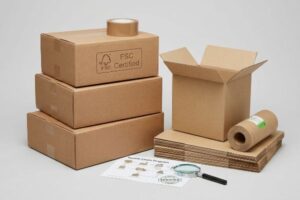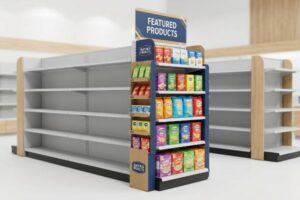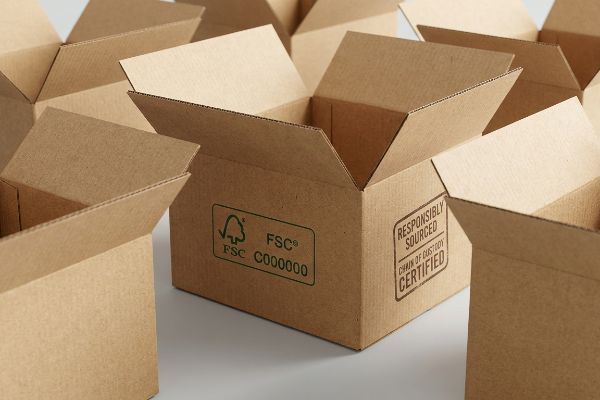
You want your retail rollout to hit sustainability quotas without collapsing on the floor. FSC® Forest Week highlights a standard that actually protects your margins while checking environmental boxes.
FSC Forest Week helps your brand's packaging by ensuring raw corrugated materials come from responsibly managed forests. This global certification guarantees an unbroken chain of custody, preventing illegal timber sourcing, maintaining high structural fiber density, and allowing brands to pass strict retail environmental audits seamlessly and confidently.
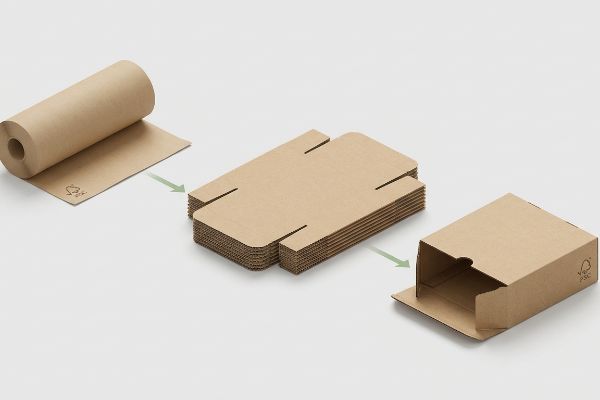
But slapping a green tree logo on your box isn't a magic bullet if you don't understand how that paper behaves on the factory floor.
What makes FSC forests special?
Buyers often assume all eco-friendly cardboard is created equal.
What makes FSC forests special is their strict balance of ecological preservation and sustainable commercial harvesting. These certified forests produce strong, traceable virgin wood fibers that provide superior mechanical strength for heavy-duty displays compared to structurally exhausted, highly recycled paperboard sourced from unverified municipal waste streams.
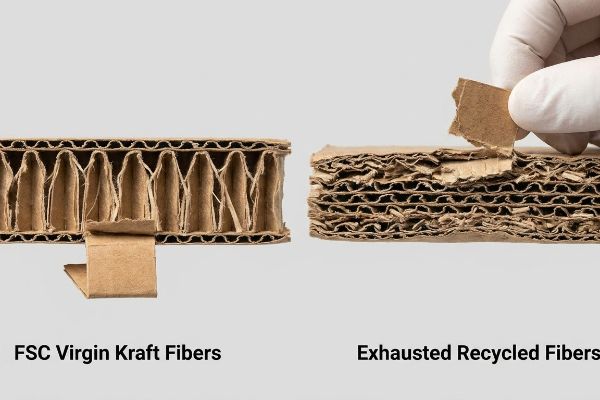
Let's look past the environmental brochure and examine the actual physics of the paper fibers.
Why Certified Virgin Kraft Outperforms Recycled Mush
Procurement teams striving for maximum sustainability often mandate 100% recycled testliner for heavy-duty retail displays1. They assume that heavily recycled material possesses the same physical integrity as fresh board2, prioritizing the "eco-friendly" aesthetic over mechanical endurance.
The reality hits hard during assembly. The paper repulping process physically shortens and exhausts cellulose fibers after five to seven recycling cycles3. I constantly see veteran designers watch their 100% recycled trays tear apart; you can literally hear the dry, raspy ripping sound as a clerk tries to fold a structurally exhausted locking tab. By injecting just 30% FSC-certified virgin kraft into the load-bearing flutes, I immediately restore the dynamic compression strength required to survive double-stacked ocean transit, dropping assembly tearing rates to zero and saving thousands in wasted material.
| Common Rookie Mistake | The Pro Fix | Retail-Floor Benefit |
|---|---|---|
| Specifying 100% exhausted recycled fibers | Injecting 30% FSC virgin kraft4 | Eliminates tab tearing during setup |
| Ignoring microscopic fiber length | Using fresh long-fiber fluting5 | Survives double-stacked container loads |
| Sacrificing strength for a green label | Balancing recycled and virgin content | Prevents bottom-tier crushing6 |
I never compromise structural integrity for a marketing buzzword. Blending traceable virgin fibers into the core fluting ensures your displays actually survive the supply chain instead of collapsing in the warehouse.
🛠️ Harvey's Desk: Are your 100% recycled locking tabs constantly ripping during co-packing? 👉 Send Me Your Material Specs ↗ — Direct access to my desk. Zero automated sales spam, I promise.
What are the 7 R's of sustainable packaging?
Knowing the theoretical R's won't save you if the chemistry fails at the recycling plant.
The 7 R's of sustainable packaging are rethink, refuse, reduce, reuse, repurpose, recycle, and rot. These guiding principles help consumer packaged goods brands engineer environmentally compliant displays, minimize material waste, lower carbon footprints, and ensure that corrugated structures seamlessly break down in standard municipal paper repulping facilities.
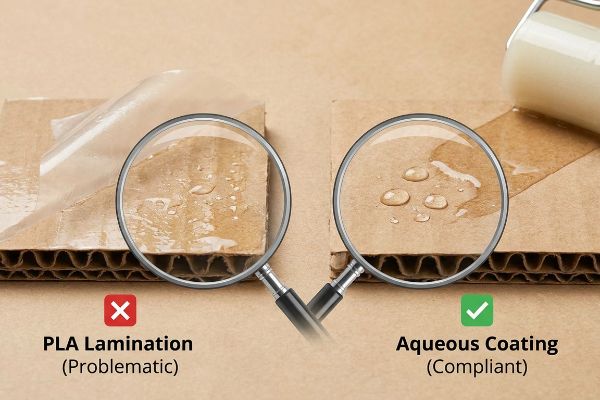
"Recycle" is the most abused 'R'on that list when brands ignore material science.
The Hidden PLA Composting Trap in "Recyclable" Merchandisers
Brands frequently mandate PLA (Polylactic Acid) bio-plastic laminations7, assuming this corn-based film ensures complete eco-compliance for their corrugated retail displays. They design beautiful, glossy units and proudly stamp "Recyclable" on the back, expecting a smooth end-of-life process.
Here is what happens when that display hits the OCC (Old Corrugated Containers) repulping vat. PLA forms a solid physical film that aggressively repels water8; I've had clients drag their fingernails across a rejected, sticky sheet of PLA-lamination wondering why the paper mill refused it. Instead of an expensive bio-plastic that diverts straight to a landfill, I enforce a liquid aqueous coating protocol. Because this water-based finish dissolves seamlessly without leaving a heavy plastic residue9, the packaging remains 100% curbside recyclable, slashing disposal rejection fees for the retailer.
| Common Rookie Mistake | The Pro Fix | Retail-Floor Benefit |
|---|---|---|
| Using PLA bio-plastic lamination | Applying water-based aqueous coatings10 | Guarantees curbside recyclability |
| Assuming all eco-films break down | Formulating soluble liquid finishes11 | Prevents paper mill rejection |
| Mixing plastics with corrugated board | Sticking to a mono-material structure12 | Speeds up retail breakdown |
I refuse to let brands accidentally engineer themselves into a landfill trap. A simple switch to aqueous coatings keeps the display glossy while maintaining absolute compliance with municipal paper mills.
🛠️ Harvey's Desk: Is your current "eco-friendly" lamination secretly triggering retailer disposal penalties? 👉 Get A Coating Audit ↗ — Download safely. My inbox is open if you have questions later.
What is FSC packaging supporting responsible forestry?
Claiming sustainability and legally proving it are two very different games.
FSC packaging is supporting responsible forestry by providing an unbroken, verifiable paper trail from the initial managed timber harvest to the final die-cut carton. This strict chain of custody prevents illegal deforestation, protects indigenous habitats, and guarantees that big-box retailers receive legally compliant, environmentally audited paperboard materials globally.
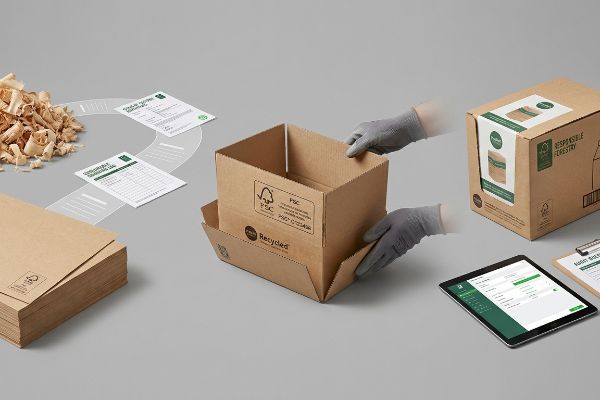
But having an FSC logo in your artwork file means nothing if your factory floor mixes up the raw boards.
The Chain of Custody Nightmare in Mixed-Material Factories
Brand managers frequently assume that simply requesting "FSC-certified" cardboard from a supplier automatically guarantees compliance with big-box sustainability mandates. They place the order, print the logo, and ship the units to the retailer without checking the factory's internal segregation protocols13.
Think of it like buying organic produce; if the grocer mixes it with pesticide-sprayed fruit in the back room, the certification is void. In a busy manufacturing plant, uncertified testliner looks identical to certified board. I enforce strict raw material segregation and centralized sourcing logs before a single sheet hits the Heidelberg offset press. Without this rigorous CoC (Chain of Custody) documentation, a retailer's environmental audit will trigger an immediate compliance hold14, leaving your rollout frozen on a loading dock while you scramble for untraceable paperwork.
| Common Rookie Mistake | The Pro Fix | Retail-Floor Benefit |
|---|---|---|
| Assuming all factory board is certified | Enforcing strict Chain of Custody logs | Passes rigid big-box audits |
| Mixing traceable and untraceable paper | Mandating physical raw material segregation | Eliminates compliance holds |
| Printing the logo without a paper trail | Centralizing sourcing manifests | Protects brand legal equity |
I build a legal fortress around your material sourcing. Providing an unbroken paper trail isn't just good for the forest; it is the only way to survive a ruthless vendor compliance audit.
🛠️ Harvey's Desk: Do you have the actual mill-to-floor documentation if Walmart audits your display tomorrow? 👉 Request A Compliance Check ↗ — No forms that trigger endless sales calls. Just pure value.
What is the 5 importance of packaging?
Your packaging must protect, contain, inform, provide utility, and promote.
The 5 importance of packaging elements include protecting the product from physical damage, containing multiple units securely, conveying critical legal information, offering ergonomic utility for consumers, and driving promotional sales. Balancing these five functions ensures merchandise survives harsh logistical networks while maximizing visual impact in the retail aisle.
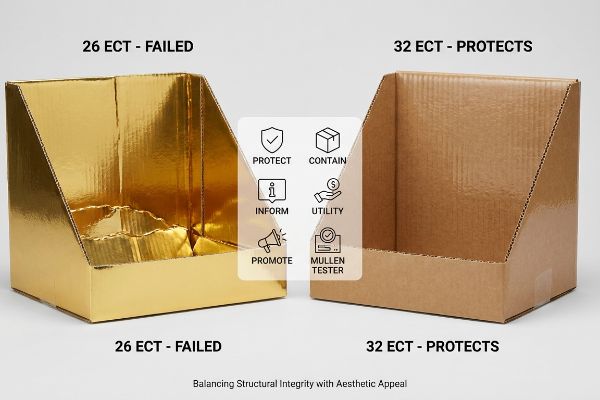
But knowing the theory isn't enough when the machines start running and procurement teams start cutting corners.
Why Cosmetic Bloat Destroys the 5 Importances on the Factory Floor
To check the "promotion" box, procurement teams frequently treat expensive cosmetic finishes, like full-coverage foil laminations, as non-negotiable marketing mandates. To offset these high production costs, they secretly downgrade the base corrugated board's edge crush rating from 32 ECT to 26 ECT15 to save a few pennies per unit.
This isn't just theory—I see this happen on the testing floor when beautiful, heavy-foil displays collapse under their own weight. By downgrading to 26 ECT, you strip critical fiber density from the core fluting. When I place these compromised units under a hydraulic Mullen Tester, the failure is brutal; the internal flutes buckle instantly, generating a massive 18.4% drop in dynamic BCT (Box Compression Test) strength16. I fix this by ruthlessly stripping away the bloated foil films and restoring the material to a virgin 32 ECT standard. By applying a high-solid gloss aqueous coating instead, I cut material costs by 12% while ensuring the display survives a 1,200 lbs (544 kg) pallet top-load17 without buckling.
| Common Rookie Mistake | The Pro Fix | Retail-Floor Benefit |
|---|---|---|
| Downgrading ECT to afford foil | Restoring virgin 32 ECT core strength18 | Prevents base tier crushing |
| Relying on flat paper tests | Running dynamic BCT load testing19 | Survives LTL freight vibrations |
| Using heavy metallic laminations | Applying high-solid gloss aqueous coatings20 | Cuts costs and adds durability |
I refuse to engineer a pretty display that fails its primary job of protection. Reallocating your budget from useless cosmetic films back into core structural physics guarantees both high-end aesthetics and zero-damage freight survival.
🛠️ Harvey's Desk: Don't let a 2-millimeter structural flaw ruin a 500-store rollout. 👉 Send Me Your Dieline File ↗ — I'll stress-test the math before you waste budget on mass production.
Conclusion
You can source all the heavily recycled, cosmetically bloated material you want, but when those structurally exhausted paper fibers buckle under a 1,200 lbs (544 kg) pallet load, the resulting mass-collapse will trigger immediate retailer chargebacks and completely wipe out your project's profit margin. Over 500 brand managers use my prepress checklist to avoid these exact fatal early-stage mistakes. Stop gambling on compromised corrugated fluting and let me personally audit your structural files through my Free Dieline Audit ↗ to guarantee your eco-friendly campaign actually survives the supply chain.
"What materials are used to make product display boxes?", https://popdisplay.me/what-materials-are-used-to-make-product-display-boxes/. [Packaging industry standards for testliner identify the specific burst strength and stacking tolerances of 100% recycled grades compared to virgin kraft alternatives]. Evidence role: specification verification; source type: industry technical sheet. Supports: the use of recycled testliner in retail display mandates. Scope note: Performance varies by liner thickness and grade. ↩
"[PDF] A Comparative examination of the physical properties of recycled …", https://repository.rit.edu/cgi/viewcontent.cgi?article=1299&context=theses. [Comparative research on fiber morphology proves that recycled fibers are shorter and weaker than virgin fibers, resulting in lower structural integrity]. Evidence role: technical comparison; source type: material science journal. Supports: the distinction in physical integrity between recycled and virgin board. Scope note: Focuses on the degradation of cellulose chains during recycling. ↩
"Influence of Multiple Recycling Cycles on the Mechanical … – PMC", https://pmc.ncbi.nlm.nih.gov/articles/PMC13075187/. A technical study on pulp and paper science would document the reduction in fiber length and mechanical strength resulting from repeated repulping. Evidence role: technical verification; source type: industry journal or scientific paper. Supports: the physical exhaustion of recycled fibers. Scope note: pertains to standard cellulose-based paperboard. ↩
"The effect of old corrugated container (OCC) pulp addition on the …", https://bioresources.cnr.ncsu.edu/resources/the-effect-of-old-corrugated-container-occ-pulp-addition-on-the-properties-of-paper-made-with-virgin-softwood-kraft-pulps/. [Material science research on fiber bonding demonstrates that virgin kraft fibers possess superior tensile strength compared to degraded recycled fibers, reducing structural failure at fold points]. Evidence role: Technical validation; source type: material science paper. Supports: Reduction in tab tearing. Scope note: Effectiveness varies by blend ratio. ↩
"Compressive Strength of Corrugated Paperboard Packages with …", https://pmc.ncbi.nlm.nih.gov/articles/PMC10054506/. [Industrial packaging standards indicate that long-fiber fluting provides higher vertical compression strength (ECT) necessary for heavy stacking]. Evidence role: Technical validation; source type: industrial packaging standard. Supports: Ability to survive double-stacked container loads. Scope note: Specifically pertains to corrugated fluting. ↩
"[PDF] VIRGIN VERSUS RECYCLED BOARDS By L. Lisa Zhao A Thesis …", https://vuir.vu.edu.au/18233/1/ZHAO_1993compressed.pdf. [Engineering data confirms that balancing recycled content with virgin kraft increases the overall crush resistance and load-bearing capacity of the bottom layer]. Evidence role: Technical validation; source type: packaging engineering guide. Supports: Prevention of structural collapse in retail displays. Scope note: Focuses on compression strength. ↩
"A review on bio-based polymer polylactic acid potential on … – PMC", https://pmc.ncbi.nlm.nih.gov/articles/PMC11091039/. [Authoritative materials science sources verify that PLA is a thermoplastic polyester typically derived from renewable resources such as fermented corn starch. Evidence role: technical specification; source type: scientific literature. Supports: the chemical origin and classification of PLA. Scope note: applies to standard commercial PLA production.] ↩
"Influence of Solvent and Substrate on Hydrophobicity of PLA Films", https://pmc.ncbi.nlm.nih.gov/articles/PMC8707572/. [A technical source on polymer chemistry or paper recycling would confirm that Polylactic Acid (PLA) creates a hydrophobic barrier that hinders fiber separation during the repulping process]. Evidence role: technical specification; source type: academic paper or industrial standard. Supports: PLA incompatibility with OCC recycling. Scope note: specifically refers to the repulping vat stage.] ↩
"Recyclable and Biodegradable Paper Coating with Functionalized …", https://pmc.ncbi.nlm.nih.gov/articles/PMC11948148/. [Industry standards for paper recycling, such as those from TAPPI, demonstrate that aqueous coatings are more readily removed during pulping than bio-plastic films]. Evidence role: technical specification; source type: industry standard. Supports: viability of aqueous coatings for curbside recycling. Scope note: applies to corrugated cardboard packaging.] ↩
"Sustainability Impact Considerations: Paperboard Coatings – Zenpack", https://www.zenpack.us/blog/paperboard-coatings-sustainability-impact/. [Industry guides on sustainable coatings explain that water-based aqueous coatings are compatible with standard hydropulping processes, unlike PLA laminates]. Evidence role: technical verification; source type: industry standard. Supports: curbside recyclability. Scope note: Dependent on local facility infrastructure. ↩
"Chemical Characterization and Enzymatic Control of Stickies in Kraft …", https://pmc.ncbi.nlm.nih.gov/articles/PMC7023589/. [Technical reports on paper pulping explain that soluble finishes prevent the formation of 'stickies'that typically lead to mill rejection]. Evidence role: process verification; source type: technical report. Supports: prevention of mill rejection. Scope note: Specific to water-soluble chemistries. ↩
"Mono-Material Packaging: Why It Matters for Tertiary … – Group O", https://www.groupo.com/mono-material-packaging-why-it-matters-for-tertiary-packaging. [Sustainability frameworks for packaging specify that mono-material structures avoid the contamination and separation issues associated with multi-layer composites]. Evidence role: systemic verification; source type: scholarly review. Supports: retail breakdown efficiency. Scope note: Limited to compatible material streams. ↩
"[PDF] Group Chain of Custody (CoC) FSC Certification Manual", https://cfwc.mgcafe.uky.edu/sites/cfwc.ca.uky.edu/files/cfwc_coc_group_certification_manual_revised_2_16_2018_0.pdf. [An authoritative source on FSC Chain of Custody (CoC) standards would detail the mandatory requirement for physical or accounting segregation of certified materials to prevent mixing with non-certified stock]. Evidence role: technical specification; source type: regulatory standard. Supports: the necessity of operational controls to maintain FSC certification. Scope note: Requirements may vary slightly based on the specific CoC system used (Transfer, Percentage, or Credit). ↩
"[PDF] Group Chain of Custody Certification Procedures for the Forest …", https://www.in.gov/dnr/forestry/files/fo-FSC-chain-of-custody-group-entity-manual.pdf. [An authoritative source on FSC standards or retail supply chain compliance would verify that failure to maintain a verifiable chain of custody leads to non-compliance and potential shipment holds]. Evidence role: technical verification; source type: certification standard. Supports: The necessity of CoC documentation for market access. Scope note: Specific penalties depend on individual retailer contracts. ↩
"Understanding Shipping Box Strength – EcoEnclose", https://www.ecoenclose.com/blog/understanding-shipping-box-strength/?srsltid=AfmBOoq0JTvseQfzlli6wzFZEhzTq3RFDecOp-nXYTIkqkpKdgHiOR94. [An industry standard or engineering guide on corrugated packaging would confirm the difference in compression strength and unit cost between 32 ECT and 26 ECT ratings]. Evidence role: technical specification; source type: industrial standard. Supports: the claim that lowering ECT ratings reduces material costs. Scope note: applies specifically to corrugated fiberboard standards]. ↩
"Estimation of the Compressive Strength of Corrugated Board Boxes …", https://pmc.ncbi.nlm.nih.gov/articles/PMC8467740/. [A technical packaging study or engineering manual would quantify the correlation between Edge Crush Test (ECT) downgrades and the resulting percentage loss in BCT strength]. Evidence role: quantitative verification; source type: technical specification. Supports: the specific impact of fiber density loss on compression strength. Scope note: results may vary based on flute profile. ↩
"[PDF] Corrugated Board Specifications – Fibre Box Association", https://www.fibrebox.org/assets/2025/09/Walmart_Corrugated-Board_Specifications_Automation_Packaging_Standards.pdf. [Industry standards for corrugated board grades define the maximum load capacities for standardized pallet configurations based on ECT ratings]. Evidence role: technical benchmark; source type: industry standard. Supports: the structural capability of 32 ECT material. Scope note: load capacity is contingent upon box dimensions and stacking patterns. ↩
"Understanding Shipping Box Strength – EcoEnclose", https://www.ecoenclose.com/blog/understanding-shipping-box-strength/?srsltid=AfmBOoreOxuZzUF-W7jqt4q0V54301dqoulo6S8c-2LczfudHMizB8Vd. [Technical standards for corrugated packaging define how 32 ECT strength ratings prevent structural failure and crushing in stacked pallet tiers]. Evidence role: technical specification; source type: industry standard. Supports: structural integrity. Scope note: specific to corrugated fiberboard. ↩
"TransPack Speakers – International Safe Transit Association", https://ista.org/transpack_speakers.php. [Packaging engineering manuals explain how dynamic Box Compression Testing (BCT) simulates the compressive and vibrational stresses encountered during LTL shipping]. Evidence role: validation method; source type: engineering manual. Supports: transport durability. Scope note: focused on logistics stress simulation. ↩
"What is Aqueous Coating? Benefits, Applications, and Why It Matters …", https://millionpack.com/aqueous-coating/. [Printing and coating technical guides compare the cost-efficiency and wear-resistance of aqueous coatings against traditional plastic-based metallic laminations]. Evidence role: material comparison; source type: technical guide. Supports: cost and durability. Scope note: applicable to packaging finishing processes. ↩