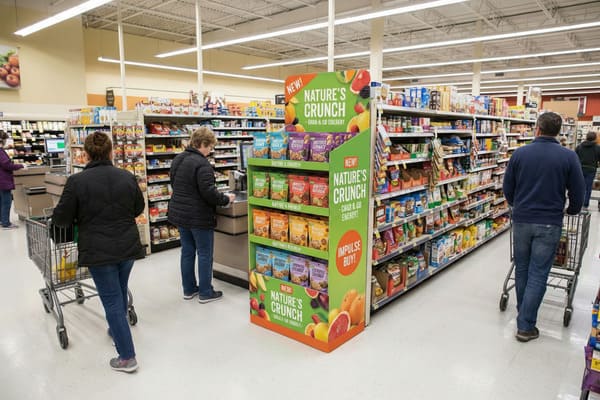
Retail shelves are crowded places where products easily get lost in the noise. If you want your brand to stand out and stop customers in their tracks, relying on standard store fixtures is often not enough to drive sales.
An FSDU, or Free Standing Display Unit, is a standalone retail fixture used to hold and showcase products. It maximizes visibility in high-traffic areas without needing existing shelf space, making it essential for promotions. These units are typically custom-printed to reinforce brand identity and drive impulse purchases.
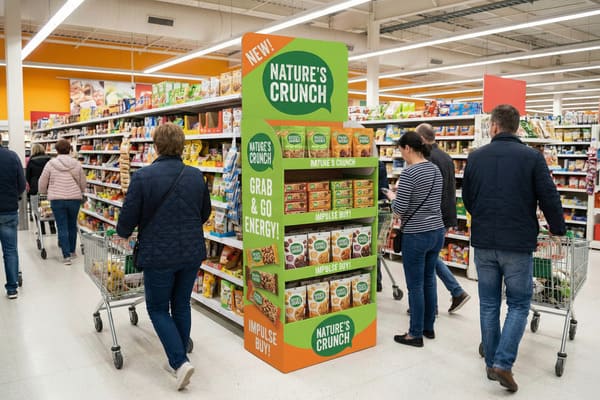
Understanding the terminology and types of displays available is the first step to a successful retail campaign. Let us look at the specific definitions and options you have to boost your product visibility.
What does fsdu mean in retail?
Many clients come to me with confusion about the alphabet soup of retail acronyms. It is important to be clear on definitions so you get exactly the structure your product needs.
In retail, FSDU stands for Free Standing Display Unit. It is a standalone structure, usually made from cardboard, designed to hold products and branding graphics. Retailers use them to interrupt the shopper's journey and drive impulse purchases in aisles or open spaces.
The Strategic Role of Standalone Units
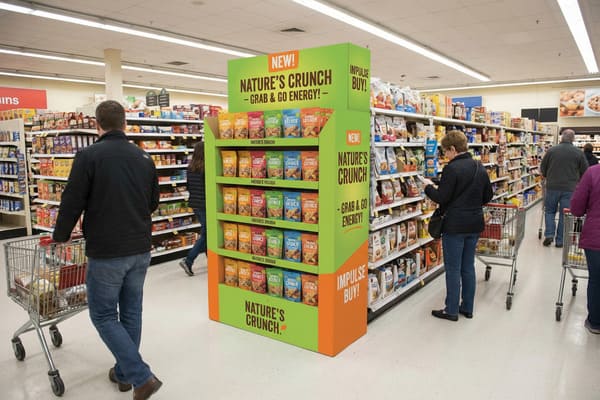
When we analyze the role of an FSDU1 in a modern retail environment, we must look beyond just a cardboard box. An FSDU is essentially a silent salesperson. In the competitive landscape of North American retail, floor space is premium real estate. A standard FSDU allows a brand to claim ownership of a specific square footage in the store, independent of the crowded gondola shelves. From a manufacturing perspective, these units are typically constructed from corrugated board, which offers a high strength-to-weight ratio. The structural design is critical here.
We use specific grades of corrugated material, such as B-flute or EB-flute, depending on the weight of the merchandise. If you are selling heavy items like beverage bottles or tools, the internal structure must be reinforced to prevent collapse. This is a common failure point I see in cheap productions. Furthermore, the FSDU serves a vital marketing function known as "interruptive marketing2." By placing these units in high-traffic aisles or near checkout zones, you force the consumer to pay attention to your product. This is different from shelf placement, where a consumer must actively look for a category. The graphic surface area on an FSDU is also significantly larger than a standard package face, giving you a billboard-like space to tell your brand story, highlight a discount, or launch a new seasonal product. In markets like the US and China, where retail is evolving fast, the ability to deploy these units quickly for short-term campaigns is a massive operational advantage.
| Feature | FSDU (Free Standing Display Unit3) | Standard Shelf Stocking4 |
|---|---|---|
| Placement | Aisle ends, open floor areas, lobby | Fixed gondola shelves |
| Visibility | 360-degree or 3-sided visibility | Front-facing only |
| Branding Space | Large headers, side panels, bases | Limited to shelf edge strips |
| Competition | Standalone (No direct competitors next to it) | Surrounded by competitor products |
| Setup | Requires assembly (often pop-up) | Manual stocking of shelves |
I have seen many businesses lose money because they picked a weak structure that collapsed in the store. To prevent this, I always insist on doing a load-bearing test in my factory before we start mass production, ensuring your display stands tall and professional.
What are the different types of Fsdu?
One design definitely does not fit all products in the display industry. You need to choose a specific structure that matches the weight, shape, and buying behavior associated with your specific inventory.
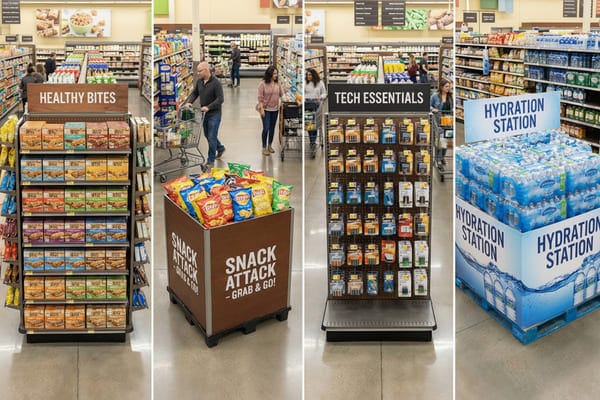
There are several main types of FSDUs designed for specific retail goals. Common varieties include standard shelved units for organized stock, dump bins for loose items, peg hook displays for hanging products, and pallet displays for bulk volume. Choosing the right type depends on product weight and packaging.
Structural Variations and Load-Bearing Logic
Selecting the correct type of FSDU is an engineering decision as much as a marketing one. The most common type is the Standard Shelved Display5. These are versatile and used for boxed goods like food, cosmetics, or electronics. The critical factor here is shelf support. For heavier items, we often add metal support bars or double-wall cardboard reinforcement under the shelves. If your product is heavy, like a crossbow or automotive parts, a standard shelf without reinforcement will bow and look cheap within days.
Another popular type is the Peg Hook Display6. This is ideal for blister-packed items, such as batteries or phone accessories. The challenge with hook displays is the "moment force" applied to the back panel. If the cardboard back is not thick enough, the weight of the products will tear the hooks right out. We often use a high-density board for the back panel to prevent this.
Then we have Dump Bins7. These are large open containers used for loose, irregularly shaped items like socks, plush toys, or discount DVDs. They rely on "rummage psychology," where shoppers feel they are finding a bargain. While they look simple, they must be strong at the bottom to hold the collective weight of hundreds of items.
Finally, Pallet Displays8 (or Quarter Pallets) are huge in big-box retailers like Costco or Walmart. These are built directly onto a wooden or plastic pallet. They are designed for forklifts to move them directly onto the sales floor. This reduces labor costs for the retailer because they do not have to unpack boxes. The engineering here must focus on transit stability, ensuring the goods do not topple during truck transport.
| Display Type | Best Product Application | Structural Priority |
|---|---|---|
| Shelved Unit | Boxed goods, bottles, jars | Vertical compression strength9 |
| Peg Hook Unit | Blister packs, accessories, small tools | Back panel tear resistance |
| Dump Bin | Loose items, clothing, sale items | Burst strength of side walls10 |
| Pallet Display | Bulk beverages, large volume goods | Transit stability & stacking strength |
I know that shipping air is expensive, so I focus on designing displays that can be flat-packed efficiently to save you logistics costs. My team creates assembly videos to make sure the store staff can set them up easily without damaging the structure.
What are the benefits of Fsdu?
You might wonder if the investment in custom displays is worth the return. When you look at the data regarding sales uplift and brand recognition, the answer becomes very clear.
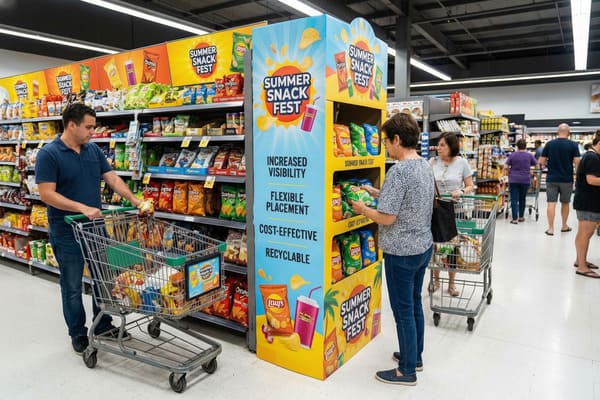
The primary benefits of FSDUs include increased brand visibility, flexibility in placement, and cost-effectiveness. They offer a large printable surface for marketing messages, are lightweight for shipping, and can be recycled after use. This makes them ideal for temporary promotions and seasonal campaigns.
ROI and Brand Impact Analysis
The decision to use cardboard FSDUs is driven by a mix of economic and branding factors. First, let us talk about Cost Effectiveness11. Compared to permanent metal or wood fixtures, cardboard displays are significantly cheaper to produce. This allows brands to roll out large-scale campaigns across hundreds of stores without breaking the budget. If a promotion changes, you can simply recycle the old unit and replace it, which brings us to Sustainability12. Modern consumers, especially Gen Z, care about the environment. Cardboard is biodegradable and recyclable. Using a material that aligns with these values enhances your brand image.
From a Marketing perspective, FSDUs offer unmatched speed to market. With digital printing technologies that we use now, we can produce high-quality graphics without the need for expensive printing plates. This means you can have a seasonal display for Halloween and a totally different one for Christmas with very short lead times.
Another massive benefit is Retail Compliance and Flexibility13. Retailers like Walmart or Target have strict rules about display dimensions. Cardboard FSDUs are easily customizable to fit these specific grid requirements. You are not stuck with a rigid size. We can cut the board to the exact millimeter required. Finally, the Sales Uplift14 is real. Studies show that products on secondary displays (like FSDUs) can see sales increases ranging from 20% to over 400% depending on the category. It triggers the "fear of missing out" or simply reminds a shopper they need your product when they are not in your home aisle.
| Benefit Category | Detail | Impact on Business |
|---|---|---|
| Financial | Low material & tooling costs | Higher profit margin per campaign |
| Operational | Flat-pack shipping15 | Lower logistics & warehousing fees |
| Environmental | 100% Recyclable material16 | Positive brand image & compliance |
| Speed | Digital print & rapid cutting | Fast reaction to market trends |
| Customization | Any shape or size possible | Perfect fit for unique products |
I believe that high quality does not have to mean high cost. I operate my business with low overheads so I can pass those savings to you, and I offer free modifications on samples until you are completely happy with the design impact.
What does CTU stand for in retail?
Sometimes you do not have enough floor space for a large unit, or your product is too small to justify it. This is where the counter environment becomes your most profitable area.
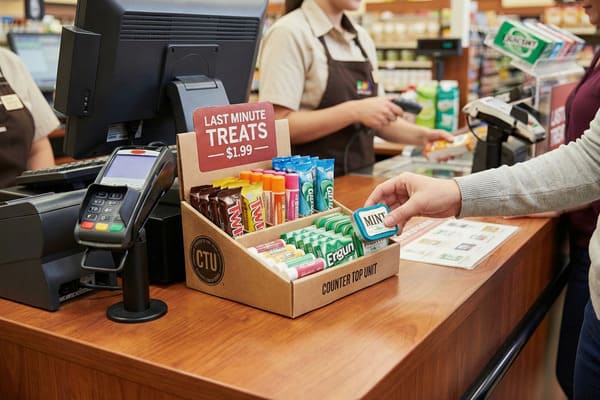
CTU stands for Counter Top Unit. These are smaller displays placed on checkout counters or service desks to capture last-minute impulse buys. They are compact, highly visible, and effective for small, low-cost items like confectionery, cosmetics, or batteries.
Maximizing the Checkout Zone
The "Checkout Zone" is often called the "Golden Zone" in retail. A CTU (Counter Top Unit17) is the weapon of choice here. Unlike floor units, CTUs must compete for very limited space. A shop owner will not allow a bulky box on their counter because it blocks line-of-sight and customer interaction. Therefore, the engineering of a CTU requires precision. It must have a small footprint but hold enough inventory to make the space profitable.
These units are often referred to as PDQ (Pretty Darn Quick) displays18 in big box stores because they come pre-loaded with products. The store associate simply tears off the shipping cover and places it on the counter. This convenience is vital. If your display takes ten minutes to assemble, the store clerk will likely throw it in the trash. Material wise, CTUs usually use E-flute or B-flute cardboard. E-flute is thinner and has a smoother surface, which allows for very high-quality printing. This is important because the display is sitting right under the customer's nose. Any printing flaw or low-quality image is easily seen at this distance.
Common industries for CTUs include cosmetics (lip balms, mascara), electronics (cables, batteries), and confectionery. The structural design often includes a tiered step system to ensure products at the back are just as visible as those in the front. Stability is also a key technical requirement; the unit must not tip over when a customer grabs an item.
| Specification | CTU Requirement | Reason |
|---|---|---|
| Footprint | Minimal (e.g., 20cm x 20cm)19 | Limited counter space available |
| Height | Low profile (under 30cm usually) | Must not block cashier visibility |
| Material | E-Flute or Clay Coated News Back (CCNB) | superior print quality for close viewing |
| Assembly | Pre-assembled or 1-step setup20 | Retail staff are busy; needs to be instant |
I understand that color consistency is a major pain point for brands. My factory uses advanced color management systems to ensure the red on your counter display exactly matches the red on your product packaging, creating a unified professional look.
Conclusion
Cardboard displays, whether they are FSDUs or CTUs, are powerful tools to increase your sales and brand presence. They offer a flexible, cost-effective way to navigate the competitive retail environment. By understanding the different types and their specific engineering requirements, you can choose the right solution that protects your product and attracts customers.
Understanding the role of FSDUs can enhance your retail strategy and improve product visibility. ↩
Exploring interruptive marketing can provide insights into effective consumer engagement strategies. ↩
Explore the advantages of FSDUs in retail settings, including increased visibility and branding opportunities. ↩
Learn how effective shelf stocking can enhance product visibility and sales in competitive retail environments. ↩
Explore this link to understand how Standard Shelved Displays can enhance product visibility and sales in retail environments. ↩
Discover the mechanics and advantages of Peg Hook Displays to optimize your product placement and maximize sales. ↩
Explore how Dump Bins can enhance customer experience and boost sales in retail environments. ↩
Learn about the advantages of Pallet Displays in reducing labor costs and improving product visibility. ↩
Understanding vertical compression strength is crucial for ensuring product safety and integrity during storage and transport. ↩
Exploring burst strength helps in selecting the right packaging to prevent product damage and enhance durability. ↩
Understanding cost effectiveness can help brands optimize their marketing strategies and budget allocation. ↩
Exploring sustainability's role in branding can reveal how eco-friendly practices attract modern consumers. ↩
Understanding Retail Compliance and Flexibility can enhance your marketing strategies and ensure your displays meet retailer requirements. ↩
Exploring Sales Uplift can provide insights into effective display strategies that significantly boost product sales. ↩
This resource will provide insights into how flat-pack shipping can significantly lower your logistics and warehousing expenses. ↩
Exploring this link will reveal how recyclable materials can enhance your brand's image and ensure compliance with environmental standards. ↩
Understanding CTUs can enhance your retail strategy, optimizing space and boosting sales effectively. ↩
Exploring PDQ displays can reveal how to streamline product placement and improve customer engagement. ↩
Explore how minimal footprint designs can optimize retail space and enhance customer experience. ↩
Learn why pre-assembled setups save time and improve efficiency for busy retail staff. ↩