
Products get lost on shelves. Packaging lacks punch holes. Space runs out. I use hang tabs to move goods to eye level, add facings, and protect shelf space.
Hang tabs are small adhesive tabs with slots that let packages hang on peg hooks. They lift visibility, unlock shelf space, and support promotions. Choose PET or paper, match slot shape to pegs, and check weight ratings.
I run PopDisplay in Shenzhen. My team and I make cardboard displays and accessories for brand launches. I wrote this guide to give buyers and engineers a clear playbook they can use today.
What are hanging tabs?
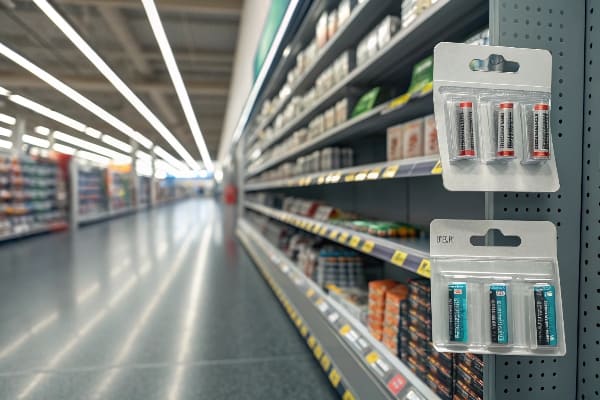
Shoppers scan at eye level. Many packs cannot hang. I add hanging tabs to put small goods where people look first.
Hang tabs are adhesive-backed hangers applied to packs so they can hang on pegboards or slatwall. They add a slot without redesigning packaging, improve facings, and suit trials, reorders, or seasonal displays.
What they do and why they matter
A hanging tab1 adds a simple slot to a flat pack. It turns a tray product into a peg-ready one. I use them when a brand cannot change the carton die-cut. I also use them when planograms need more facings with the same footprint. Tabs protect shelf space in busy seasons. They also help test new SKUs fast. In North America I see steady demand. In Asia Pacific I see fast growth with modern retail2. I pick PET when I need clarity and strength. I pick paper when I want an all-fiber route. I check the store hardware first, because slots must match pegs.
Quick spec checklist
| Spec | Typical Options | Notes |
|---|---|---|
| Material3 | PET, RPET, Paper | PET is clear and strong; paper helps sustainability claims |
| Slot shape | Euro, Delta, Round, J-hook | Match peg shape and anti-theft rails |
| Adhesive | Permanent, High-tack, Removable | Choose for varnished, uncoated, or poly bags |
| Tab form | Fold-up, Fold-down, Booklet | Fold styles pack flat; booklet hides barcode area |
| Weight rating4 | 50g–500g+ | Always test with transport vibration |
How do you use hang tabs?
New users rush the job. The tab lifts. The pack falls. I slow the steps and stop the waste.
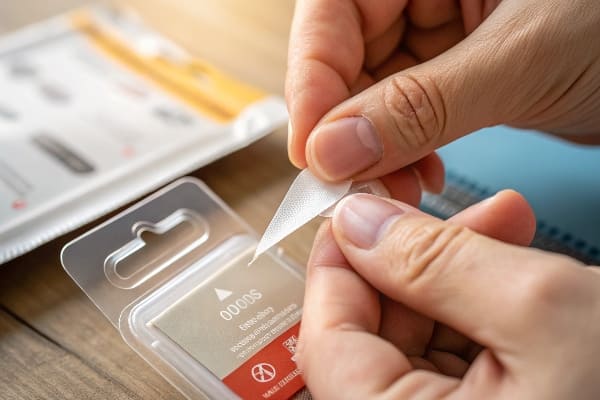
Clean the surface, place the tab above the center of gravity, press for full contact, wait cure time, then hang on the correct peg. Follow the tab's weight rating and store temperatures.
Step-by-step and common mistakes
I set up a simple flow. I wipe the pack with isopropyl alcohol5 and let it dry. I avoid dusty kraft and heavy coatings if I can. I place the tab so the slot sits above the center of gravity. I press from the middle out to remove air. I allow the adhesive to "wet out." This can take minutes to hours, based on the glue and room temperature. I hang the sample on the actual peg. I add a bump test and a 24-hour check. My factory does transport shake tests before mass use. We use 3D renders to confirm slot height in planograms.
| Step | Action | Tip |
|---|---|---|
| 1 | Clean surface | Use IPA wipe6; let dry |
| 2 | Position | Center over weight; avoid folds |
| 3 | Apply | Firm squeegee pressure |
| 4 | Dwell | Respect cure time on spec sheet7 |
| 5 | Hang + test | Use real peg; add bump test |
Avoidable pitfalls
Do not place tabs over seams or windows. Do not ignore cold-store conditions8. Adhesive gets stiff and loses tack. Do not overload a small tab. Use two tabs for wide packs. Use reinforced styles for heavy tools. For outdoor shows, use UV-stable PET9 and stronger glue. My U.S. buyers like simple work instructions inside each carton. This keeps store teams fast and safe.
What is a hang tab?
Many teams argue names. The tool is simple. I use one term in specs and keep confusion low.
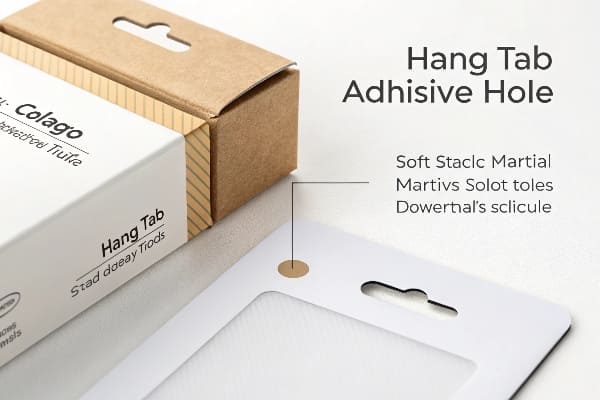
A hang tab is a small PET or paper tab with an adhesive area and a cut slot. It converts lay-flat packs into hangable goods, boosts visibility, and supports efficient planograms.
Anatomy and materials
A hang tab has two parts. One part is adhesive. The other is the hanging slot. PET gives clarity and high tear strength10. RPET supports recycled content targets. Paper tabs blend with paperboard and ease recycling stories. I choose coatings with care. Gloss UV can reduce adhesion. Water-based varnish is safer. For very smooth films, I specify high-tack acrylic. I avoid hot-melt that creeps in heat.
Picking the right build
| Option | Pros | Cons | Use When |
|---|---|---|---|
| PET | Clear, strong, durable | Not fiber-based | Tools, electronics, heavy pouches |
| RPET11 | Recycled story, clear | Supply variance | Retailers with PCR goals |
| Paper | Fiber-forward, print-friendly | Lower tear strength | Lightweight cartons, beauty |
| Permanent adhesive12 | Strong bond | Hard to remove | Long campaigns, heavy goods |
| Removable adhesive | Clean removal | Lower load | Short promos, sample kits |
Why it helps the display
Tabs unlock vertical space on a cardboard display header. They add more facings without adding shelves. This reduces corrugate weight and print cost. In my shop, we pair tabs with clip strips for cross-merch displays13. This helps impulse adds near checkout14. It also helps seasonal endcaps where time is tight. I keep forms standard, so reorders are easy and fast.
What are the different types of tabs?
Choice can freeze teams. I group types by slot, material, and form. Then I match the store hardware.
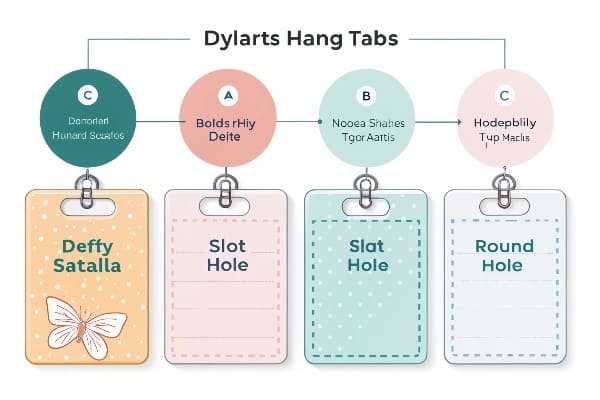
Tabs vary by material, slot shape, adhesive, and form. Common styles include Euro slot, Delta hole, round hole, J-hook, reinforced, fold-up, and booklet tabs. Choose by peg type, product weight, and packaging texture.
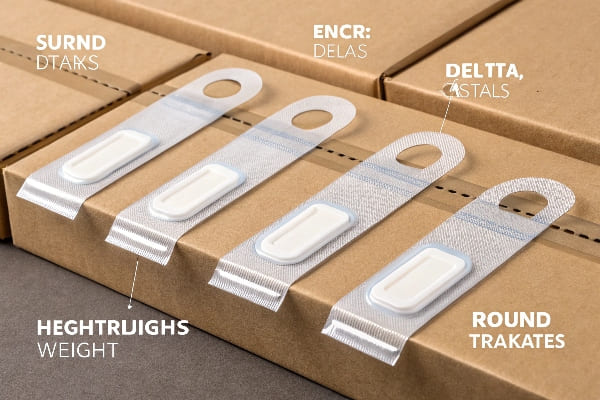
Common styles and how I choose
I start with the slot. Euro slot15 is the most common in grocery and beauty. Delta gives more tear resistance for heavy tools. Round holes suit single-peg hooks. J-hook holds blister lips. I select the form next. Fold-up ships flat and pops open in store. Fold-down hides in transport and protects the slot. Booklet tabs include a printable cover that can carry UPC or claims. I then check material and adhesive. Clear PET looks premium on electronics. Paper tabs look natural on kraft cartons. On coated boxes I pick high-tack acrylic16. On uncoated board I can use standard tack.
| Type | Typical Use | Notes |
|---|---|---|
| Euro slot17 | FMCG, beauty, snacks | Balanced tear strength and visibility |
| Delta slot | Tools, hardware | Strong shoulders for weight |
| Round hole | Pharmacy pegs | Simple and fast |
| J-hook | Blisters, accessories | Hooks under blister lip |
| Reinforced | Heavy pouches | Added PET layer or weave |
| Fold-up / down18 | Flat-pack shipping | Better cube efficiency |
| Booklet | Barcode cover | Extra print space |
Weight fit and quick sizing
I map product weight19 to tab class and peg length. Shorter pegs reduce leverage. For 50–150 g I use small PET with Euro slot. For 150–350 g I use reinforced PET or double-tab. For 350–500 g I may move to a header card or a small corrugate hanger. I run a simple test set with 10 drops and a 24-hour hang. My U.S. and U.K. buyers like a pass/fail sheet20 inside each master carton, so stores can repeat the test. This saves claims and keeps timelines on track.
Conclusion
Hang tabs are simple and strong tools. They lift visibility, save space, and speed launches. Pick the right style, test once, and scale fast.
Explore this link to understand the significance of hanging tabs in packaging and their impact on retail display. ↩
Discover insights into modern retail trends in Asia Pacific, which can help you stay ahead in the evolving market. ↩
Understanding material options can enhance your packaging strategy and sustainability efforts. ↩
Knowing weight ratings ensures your packaging can withstand transport, preventing damage and loss. ↩
Explore the benefits of isopropyl alcohol for cleaning to ensure effective preparation and hygiene in your projects. ↩
Exploring this link will provide you with detailed information on IPA wipes, their uses, and benefits for effective cleaning. ↩
Understanding cure time is crucial for ensuring proper application; this resource will clarify its significance in various processes. ↩
Understanding cold-store conditions is crucial for maintaining product quality and safety during storage. ↩
Exploring UV-stable PET can help you choose the right materials for outdoor applications, ensuring durability and performance. ↩
Understanding high tear strength is crucial for selecting durable materials in packaging, ensuring product safety and longevity. ↩
Explore the advantages of RPET packaging, especially for retailers aiming for sustainability and recycled content goals. ↩
Learn about the strong bonding capabilities of permanent adhesives, ideal for long-term campaigns and heavy goods. ↩
Explore this link to understand how cross-merch displays can boost sales and enhance customer experience. ↩
Discover strategies to maximize impulse purchases at checkout, a key area for increasing revenue. ↩
Understanding Euro slot can enhance your packaging strategy, making it more appealing and functional for retail. ↩
Exploring high-tack acrylic will help you choose the right adhesive for your packaging needs, ensuring durability and effectiveness. ↩
Explore the advantages of Euro slot packaging for FMCG and beauty products, enhancing visibility and tear strength. ↩
Learn how fold-up/down packaging can optimize shipping space and reduce costs for flat-pack shipping. ↩
Understanding product weight is crucial for effective packaging design, ensuring safety and efficiency in transport. ↩
A pass/fail sheet enhances quality control by providing clear testing results, helping to maintain product standards and reduce claims. ↩