Generic displays blend into the background, leaving your products unnoticed and your brand forgotten. You need a solution that screams your identity.
Yes, counter display stands can be fully customized to fit your branding. You can tailor the structural shape, adjust dimensions to fit specific products, and apply high-resolution graphics that match your company colors. This ensures your brand stands out at the checkout and drives impulse purchases effectively.

Customization is more than just adding a logo; it is about creating a cohesive environment for your product. When a display matches your brand voice, it builds trust. Now, let us look at how these displays actually move the needle on your revenue.
How do display stands increase sales?
You have an incredible product, but it sits hidden on a crowded shelf where no one sees it. Sales remain stagnant despite your marketing efforts.
Display stands increase sales by interrupting the shopper's routine and placing your products directly in their line of sight. They separate your items from competitors, highlight key features through custom graphics, and trigger impulse buys by positioning stock in high-traffic zones like checkout lanes or aisle ends.
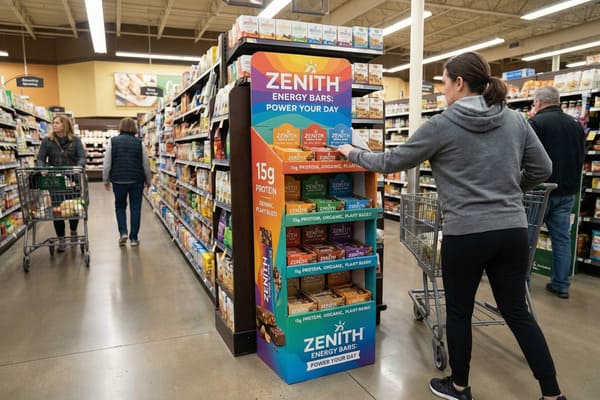
The Mechanics of Visual Interruption
The modern retail environment is a battlefield for attention. When products are lined up on a standard gondola shelf, they blend into a "sea of sameness." A custom display stand breaks this pattern. It acts as a visual speed bump. When a customer walks down an aisle, a floor display or a well-placed counter unit forces them to pause. This pause is critical. It gives your brand the three seconds it needs to communicate value.
We must also consider the psychology of the "Golden Zone1." This is the area between waist and eye level. Standard shelving often forces products into the bottom or top shelves, which are dead zones for sales. A cardboard floor display brings your entire inventory into the Golden Zone. This accessibility reduces friction. The customer does not have to reach up or bend down.
Furthermore, display stands allow for cross-merchandising2. You can place your hunting accessories next to camping gear, even if those aisles are far apart. This adjacency suggests a purchase to the customer that they had not planned. It is not just about visibility; it is about context. You are placing the solution right where the problem exists in the shopper's mind. This strategy shifts the purchase behavior from "planned" to "impulse," significantly increasing the average basket size.
• Market Share Impact: Floor displays currently hold a massive share of the POP market because they work.
• Color Psychology: Custom printing allows you to use red for urgency or green for eco-friendly vibes, directly influencing mood.
• Inventory Pressure: A full display creates a "stock pressure" effect, where abundance signals popularity to the consumer.
| Sales Factor | Standard Shelf Placement | Custom Display Stand3 |
|---|---|---|
| Visibility | Low (Blends with competitors) | High (Standalone structure) |
| Placement | Fixed to assigned aisle | Flexible (End caps, checkout, lobby) |
| Information | Limited to package text | Large billboard area for messaging |
| Impulse Rate4 | Low | Very High |
| Brand Equity | Neutral | High (Perceived as a premium brand) |
We understand that you need your product to move fast. I ensure that every display we manufacture uses high-quality print finishes that grab attention instantly. My team focuses on structural stability so that even when the display is fully stocked, it looks professional and inviting, giving your brand the confident presentation it deserves.
What size cake display counter do I need?
Choosing the wrong size for your counter unit can clutter the checkout area and annoy retailers. You risk your display being thrown away.
You need a size that balances product volume with the limited real estate of a retail counter. Generally, a width of 12 to 18 inches and a depth of 8 to 12 inches fits most standard checkout areas. The key is to maximize product facing without blocking the transaction space.

Optimizing Counter Dimensions for Retail
While the question might reference a "cake display," which usually implies a glass refrigerated unit in a bakery, the principles of sizing for a cardboard counter display (PDQ) are remarkably similar. The goal is to respect the retailer's "real estate." The checkout counter5 is the most valuable square footage in a store. If your display is too bulky, the store manager will refuse to put it up. If it is too small, your product gets lost behind gum and gift cards.
For a standard retail setting, you must consider the "footprint." Most checkout counters have a usable depth of about 10 to 15 inches before interfering with the cashier's workspace or the customer's purse ledge. Therefore, we usually engineer cardboard displays6 to have a depth of no more than 10 inches. The width is more flexible, but going beyond 18 inches can be risky unless you are in a warehouse club environment like Costco.
Height is another critical dimension. A "cake display" style unit often has tiers. In cardboard displays, we use tiered trays to lift the rear products so they are visible over the front ones. However, the total height should never exceed eye level for the cashier. Communication between the clerk and the customer must remain unobstructed. If your display blocks the view, it will be removed. We also need to look at the product itself. The internal dimensions must hold the product snugly to prevent rattling, but loose enough for easy shopping.
• Depth Limit: Keep it under 12 inches for standard retail registers.
• Height Limit: Keep it below 14 inches to avoid blocking sightlines.
• Capacity: Ensure it holds enough stock to last a full day of sales to minimize restocking labor.
| Feature | Cake Display (Glass/Permanent) | Cardboard Counter Display (PDQ) |
|---|---|---|
| Primary Goal | Preservation and View | Impulse Purchase and Branding7 |
| Typical Width | 24 to 48 inches | 8 to 18 inches |
| Typical Depth | 20 to 30 inches | 8 to 12 inches |
| Flexibility | Fixed / Heavy | Portable / Disposable |
| Cost | High Capital Expense8 | Low Marketing Expense |
I treat sizing as a precise science because I know a millimeter can mean the difference between a perfect fit and a rejected shipment. I always provide a plain white sample for you to test on your actual product packages before we start mass production. We measure twice so you only have to ship it once.
What is the purpose of a display stand?
Many view displays as simple cardboard boxes that just hold inventory. This mindset leads to weak designs that fail to communicate value.
The purpose of a display stand is to act as a silent salesman that educates customers and elevates brand perception. It organizes your inventory, protects products during transit, and delivers your marketing message directly to the consumer at the critical moment of decision-making.

Structural Integrity Meets Brand Storytelling
A display stand9 serves two masters: logistics and marketing. From a logistical perspective, its purpose is protection and organization. Especially for heavy items like hunting gear or tools, the display must be a fortress. We use corrugated board with specific flute types (like B-flute or double-wall EB-flute) to ensure the structure does not collapse under weight. If a display creates a mess on the floor, it damages the brand reputation10 instantly. The display often acts as its own shipping container (shippable PDQ), meaning it must survive the brutal journey from China to a US warehouse without a scratch.
From a marketing perspective, the display's purpose is storytelling. In an era where consumers, especially younger generations like Gen Z, value authenticity, the display is your canvas. It explains why your product matters. It holds the "Tester" unit that lets a customer feel the quality of the handle or see the brightness of the light. It transforms a passive product into an interactive experience.
The display also serves to navigate the store. It acts as a beacon. A well-designed header card (the top part of the display) attracts attention from twenty feet away. It guides the customer to your specific category. Without this landmark, your product is just another item on a confusing list. The purpose is to reduce the cognitive load on the shopper, making it easy for them to say "yes."
• Protection: Acting as a shipping buffer to prevent product damage.
• Education: Using side panels to list bullet points of technical specs.
• Organization: Keeping different SKUs (Stock Keeping Units) separated and tidy.
| Function | Description | Business Value |
|---|---|---|
| Logistical | Holds and protects stock during transport | Reduces breakage and return rates |
| Merchandising | Organizes products neatly | Reduces store labor for restocking |
| Marketing | Billboards brand message | Increases brand awareness11 and recall |
| Sales | Triggers impulse buys12 | Directly boosts revenue per square foot |
| Structural | Supports weight load | Prevents collapse and liability issues |
I know that a collapsed display is a disaster for your retail relationships. That is why I insist on rigorous weight-bearing tests in my factory. We load the display with weights heavier than your actual product to ensure it holds up in the real world. My goal is to give you peace of mind that your silent salesman is strong enough to do the job.
How to display products in a retail store?
Randomly placing products creates visual chaos and confuses the shopper. This leads to walked sales and a poor customer experience.
You should display products by grouping them logically and utilizing vertical space to grab attention. Place high-margin items at eye level, use color blocking to create visual breaks, and position standalone displays in high-traffic "Action Alleys" to disrupt the shopper's path and guide them to your brand.
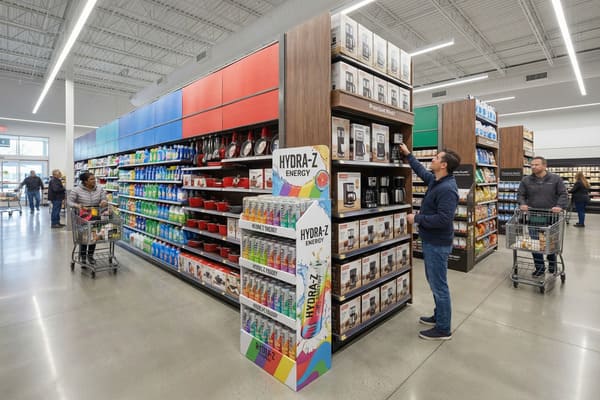
Strategic Placement and Visual Hierarchy
Displaying products is an art form grounded in data. The first rule is "Eye Level is Buy Level13." Products placed at eye level sell significantly better than those on the bottom shelf. When using cardboard displays, we artificially create this eye-level advantage. A floor display lifts your product off the ground and presents it right in the shopper's face. You want to orient the display so it faces the flow of traffic. In most US stores, traffic moves counter-clockwise. Your display should be angled to greet the customer as they round the corner, not hidden flat against a wall.
Grouping is also essential. You should use the "Good, Better, Best" strategy within the display. Place your entry-level products on the lower trays and your premium, high-margin items on the upper trays. This anchors the price point at the bottom and draws the eye upward to the quality items.
Furthermore, utilize "Color Blocking14." Don't mix all your colors randomly. Grouping products by color creates a solid block that is easier for the human eye to process from a distance. It looks organized and intentional. Finally, consider the "Touch Factor." Remove barriers. If a product is behind glass or wrapped too tightly, sales drop. Cardboard displays are open-concept. They invite the customer to pick up the box. Once a customer holds the product, the likelihood of purchase skyrockets.
• Traffic Flow: Position displays at 45-degree angles to aisle traffic.
• Cross-Selling: Place complementary items together (e.g., batteries next to flashlights).
• Refresh Rate: Move displays to different locations every few weeks to combat "store blindness."
| Strategy | Action | Outcome |
|---|---|---|
| Eye-Level Placement15 | Put best sellers on top/middle shelves | Maximum visibility and sales |
| Color Blocking | Group items by color families | Strong visual impact |
| Cross-Merchandising16 | Place near related categories | Increases basket size |
| Action Alley | Place in main wide aisles | High volume exposure |
| Interactive | Leave one product out of box | Increases tactical engagement |
We help you visualize this before we cut a single piece of cardboard. My design team provides 3D renderings that show exactly how your products will look on the shelves. I want you to see the hierarchy and layout virtually, so we can adjust the structure to maximize that "grab-and-go" appeal that retailers love.
Conclusion
Custom cardboard displays are your most efficient tool for standing out in a tough retail market. They protect your goods, amplify your brand voice, and drive sales through strategic sizing and placement. By focusing on quality design and smart engineering, you turn passive shoppers into active buyers. Let us build a display that works as hard as you do.
Understanding the Golden Zone can help you optimize product placement for maximum visibility and sales. ↩
Exploring cross-merchandising strategies can reveal innovative ways to boost impulse purchases and enhance customer experience. ↩
Explore how Custom Display Stands can enhance visibility and boost sales through effective merchandising. ↩
Understanding Impulse Rate can help you optimize product placement and increase spontaneous purchases. ↩
Explore this link to learn effective strategies for optimizing checkout counter displays, ensuring visibility and maximizing sales. ↩
Discover innovative ways to utilize cardboard displays in retail settings, enhancing product visibility and customer engagement. ↩
Explore this link to discover proven techniques that can enhance your marketing efforts and boost sales. ↩
Understanding the advantages of high capital expenses can help you make informed investment decisions for long-term growth. ↩
Explore this link to learn effective strategies for creating impactful display stands that enhance both logistics and marketing. ↩
Understanding brand reputation is crucial; this resource will provide insights into its impact on consumer trust and purchasing decisions. ↩
Explore this link to discover proven strategies that can elevate your brand's visibility and recognition. ↩
Learn techniques to enhance customer experience and boost sales through effective impulse buying strategies. ↩
Understanding this principle can dramatically enhance your product placement strategy, leading to increased sales. ↩
Exploring this technique can help you create visually appealing displays that attract more customers. ↩
Understanding Eye-Level Placement can significantly enhance product visibility and boost sales in your store. ↩
Exploring Cross-Merchandising strategies can help you effectively increase customer purchases and improve overall sales. ↩