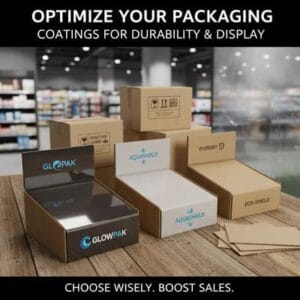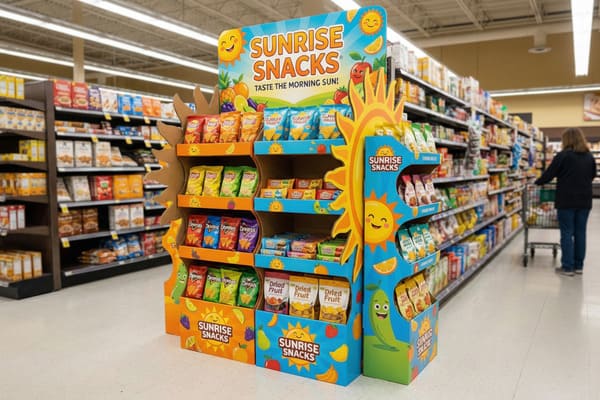
You want your product to stand out in a crowded store, but standard shelving limits your creativity. You might worry that custom displays are too expensive or difficult to produce.
Yes, you can fully customize endcap displays to fit your specific branding and product dimensions. Manufacturers allow you to adjust structural design, print high-quality graphics, and select materials like corrugated cardboard to meet retailer requirements while maximizing visual impact and driving impulse purchases.
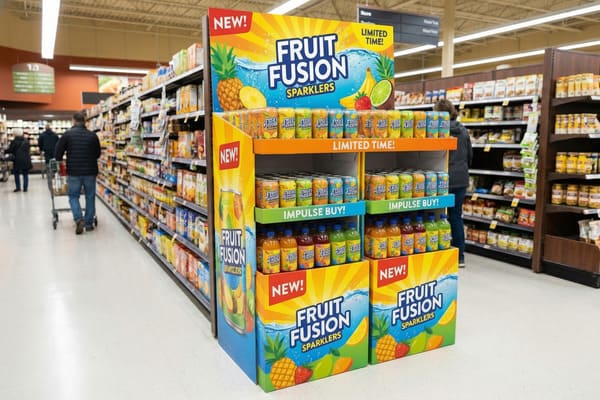
Customization is the key to retail success. Let's look at why these displays matter and how they work for your brand.
Are end of aisle displays worth it?
Investing in extra marketing materials feels risky when budgets are tight. You need to know if the return on investment justifies the cost of manufacturing and shipping these units.
End of aisle displays are absolutely worth the investment because they capture high customer traffic and trigger impulse buys. Retail data shows they can increase product sales significantly compared to standard shelf placement. They provide a dedicated space to tell your brand story without competitor distraction.
The Structural Anatomy of ROI and Durability
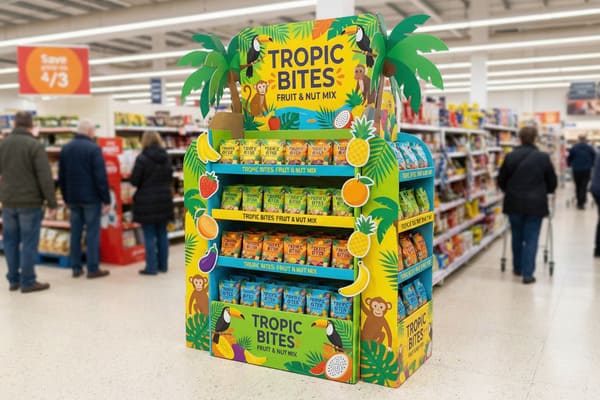
When we analyze the value of end of aisle displays, we have to look beyond just the initial sales spike. Industry data indicates that Floor POP Displays1 command a significant market share, over 43% in some reports, because they deliver results. However, the "worth" of a display is heavily dependent on its engineering. A common issue I see in the market is brands buying cheap displays that look good in a photo but fail in the store.
If you are selling heavy items, like bottled beverages or hunting equipment, the cardboard must be engineered to handle that load for weeks. We are talking about specific technical requirements here. Standard single-wall cardboard often bows under weight in humid retail environments. To make the investment worth it, you need to use double-wall corrugated board2 or reinforced internal structures. If a display collapses, you do not just lose the display; you lose product inventory and damage your relationship with the retailer.
Furthermore, the cost-effectiveness of cardboard compared to metal or wood makes it a lower-risk investment for short-term promotions. The ability to ship these flat-packed reduces logistics costs significantly. But this savings only exists if the design prevents damage during transport. A display that arrives crushed is worth zero. Therefore, the real value comes from balancing material cost with high structural integrity to ensure the unit survives the supply chain and performs on the floor.
| Feature | Cardboard Display | Permanent Fixture (Metal/Wood) |
|---|---|---|
| Initial Cost | Low | High |
| Customization3 | High (Easy to print & cut) | Low (Expensive to mold) |
| Shipping Cost | Low (Flat-pack) | High (Heavy & Bulky) |
| Durability4 | Medium (Weeks to Months) | High (Years) |
| Flexibility | Excellent for seasonal promos | Best for fixed inventory |
I know that durability is your biggest worry when shipping from China. We solve this by performing rigorous load-bearing tests in my factory before mass production. I ensure your displays can handle the weight of your products so you never face a collapse in a retail store.
What is the psychology behind end cap placement?
Understanding why customers buy is just as important as what they buy. You want to leverage shopper behavior to move more inventory during short retail windows.
The psychology behind end cap placement relies on disrupting the shopper's "autopilot" mode. Because these displays are positioned at high-traffic turn points, they command attention and signal distinct value or urgency. This prime location naturally makes consumers perceive the featured products as special, new, or on promotion.
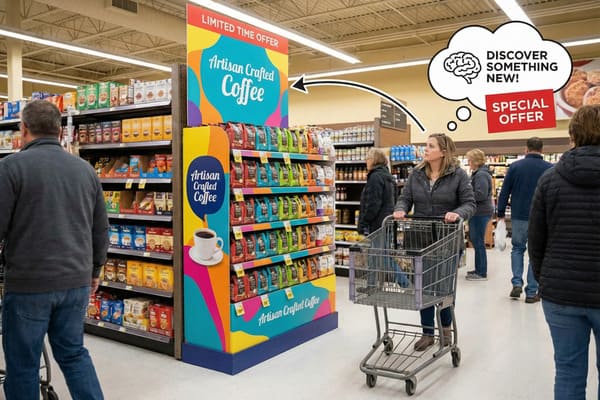
Visual Hierarchy and Consumer Attention
Shoppers in large retail chains move fast. They are usually on a mission to find specific items. The psychology of the end cap is based on interruption. It acts as a visual speed bump. But to work, the design must be flawless. We are seeing a shift in design trends towards minimalism. Too much text or clutter confuses the shopper. You have about three seconds to convey your message.
This is where print quality5 becomes a technical necessity, not just an aesthetic one. If your brand colors are inconsistent, the customer subconsciously perceives the product as lower quality. For example, if your brand uses a specific deep hunter green, and the display prints as a light lime green, it ruins the trust. This is a massive pain point for brand owners who need consistency across different marketing channels.
Digital printing advances now allow us to create high-resolution graphics that trigger emotional responses. High-quality imagery of the product in use—like a crossbow in a forest setting—creates an aspirational feeling. This connects with the consumer's desire for the experience, not just the object. The structure itself also plays a psychological role. A unique shape, like a hexagon or a curved header, breaks the visual monotony of the straight store aisles. It signals "innovation." If the display looks cheap or the colors are washed out, the psychological signal flips to "clearance item," which might not be the image you want to project for a premium product launch.
| Design Element | Psychological Trigger | Consumer Reaction |
|---|---|---|
| Bold Colors6 | Urgency / Excitement | Stops walking to look |
| Minimal Text7 | Clarity / Ease | Reads key benefit quickly |
| Eye-Level Header | Authority | Trusts the brand message |
| Unique Shape | Novelty / Innovation | Engages and touches product |
I understand how frustrating color inconsistencies can be for a brand owner. We use advanced color management tools in my production line to match your specific Pantone codes. I personally check the first production run to guarantee the red on your display matches the red on your product packaging perfectly.
What is the purpose of an endcap display in retail?
You have limited space to launch new items or clear out seasonal stock. You need a specific strategy to maximize visibility without reorganizing the entire store layout.
The primary purpose of an endcap display is to highlight specific products, such as new arrivals, seasonal items, or clearance stock, in a prime location. It separates these items from the general aisle, giving them a dedicated stage that increases visibility and encourages customers to engage with the brand.
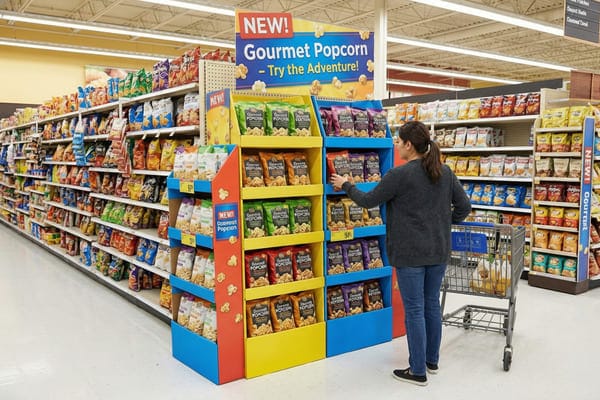
Strategic Inventory Management and PDQ Compliance
Beyond marketing, the functional purpose of an endcap is to solve logistical problems for retailers like Walmart, Costco, or large grocery chains. These retailers demand efficiency. They do not want their staff spending hours building complex cardboard structures. This is why the industry is moving heavily toward PDQ (Pretty Darn Quick)8 and pallet displays.
The purpose here is "shop-ability." The display must be easy to open and ready to sell in minutes. If a display is too hard to assemble, store employees might damage it or simply throw it away in the backroom. I have seen this happen. The design must account for the labor reality of the retail floor. Pallet displays are ideal here because they are built on a pallet in the factory, loaded with product, and shipped directly to the sales floor. The staff just removes a shroud, and it is done.
Another key purpose is sustainability compliance9. Retailers are under pressure to reduce waste. If your display uses non-recyclable clips or mixed plastics, it might be rejected by the retailer's compliance team. The trend is toward 100% recyclable corrugated board. The purpose is to move volume while adhering to strict environmental and operational standards. If the structural design fails to meet these retailer-specific guidelines, the display cannot fulfill its purpose of selling product because it will never make it to the floor.
| Retailer Requirement | Display Feature | Benefit to Brand |
|---|---|---|
| Fast Setup10 | Pre-assembled / PDQ | Product gets on floor faster |
| Strength | Reinforced Corrugated | No collapse or damage |
| Sustainability11 | 100% Recyclable Material | Meets compliance standards |
| Size Limits | Precise Dimensions | Fits designated floor plan |
I know that complex assembly instructions can kill a promotion before it starts. My design team focuses on "easy-open" structures and pre-assembled options. We provide clear video instructions for any setup required, ensuring your product gets on the floor immediately without frustrating the retail staff.
What is the purpose of endcap?
Sometimes the simplest questions have the most complex answers regarding brand strategy. You want to know the core function of this tool in your broader marketing mix.
The fundamental purpose of an endcap is to act as a silent salesperson that bridges the gap between shelf stocking and active marketing. It serves to educate the customer, demonstrate product features through text or imagery, and create a localized brand experience within a larger retail environment.
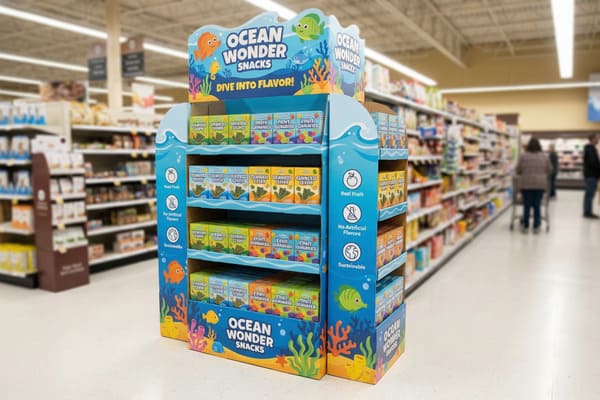
Information Delivery and Brand Storytelling
An endcap does what a standard shelf cannot do: it educates. When you are selling a product that requires explanation, like a new hunting tool or a complex electronic gadget, a price tag is not enough. The endcap provides real estate for communication. You can print detailed feature lists, usage diagrams, or benefits directly onto the header and side panels.
We are seeing a strong trend of integrating technology into these displays. Brands are adding QR codes12 or NFC tags that shoppers can scan with their smartphones. This links the physical display to a digital video or a website. This is crucial for connecting with younger demographics like Gen Z, who value authenticity and information. The display becomes a portal to your brand's digital world.
Additionally, the material itself tells a story. Using unbleached kraft paper signals an eco-friendly brand value13, which is vital in the European and North American markets right now. A glossy, high-end finish signals premium status. The purpose of the endcap is to frame your product in the correct context. It allows you to control the narrative. Without it, your product is just a commodity sitting next to a competitor. With it, your product is the hero. This educational aspect is the most underutilized purpose of cardboard displays.
| Component | Function | Marketing Goal |
|---|---|---|
| Header Board | "Hook" Message | Grab attention instantly14 |
| Side Panels | Detailed Info / QR Code | Educate and convert |
| Shelves/Trays | Product Presentation | Organize and access |
| Base | Brand Logo / Stability | Reinforce brand identity15 |
I believe that a display must do more than hold a product; it must explain it. We offer free 3D renderings to help you visualize where to place your educational text and graphics. I work with you to ensure the structural design maximizes the printable area for your key marketing messages.
Conclusion
Custom endcap displays are essential tools for increasing visibility, driving impulse sales, and telling your brand story. They offer a high return on investment when designed with durability and retail requirements in mind.
Explore this link to understand how Floor POP Displays can significantly boost your retail sales and enhance customer engagement. ↩
Learn about double-wall corrugated board to discover its crucial role in ensuring display durability and product safety. ↩
Explore how high customization in cardboard displays can enhance branding and marketing strategies effectively. ↩
Understanding durability can help you make informed decisions about display options that best suit your needs. ↩
Exploring print quality's impact on branding can help you maintain consistency and trust with your customers. ↩
Explore how bold colors can create urgency and excitement, influencing consumer decisions. ↩
Learn about the effectiveness of minimal text in conveying key benefits quickly to consumers. ↩
Understanding PDQ can enhance your knowledge of efficient retail displays and their impact on sales. ↩
Exploring sustainability compliance will reveal its importance in modern retail and how it influences consumer choices. ↩
Exploring this link will reveal how fast setup can enhance product visibility and sales. ↩
This resource will provide insights into how sustainable practices can improve brand image and customer loyalty. ↩
Explore how QR codes can enhance customer engagement and provide instant access to information. ↩
Learn why promoting eco-friendly practices can attract conscious consumers and boost brand loyalty. ↩
Discover effective strategies to capture your audience's attention right away. ↩
Learn how to strengthen your brand's presence and recognition in the market. ↩