I see shoppers rush past shelves. They ignore me unless my packaging speaks fast. That hurts sales. Custom retail packaging fixes this by making products clear, useful, and memorable.
Custom retail packaging lifts visibility, protects products, lowers waste, and speeds launches. It aligns brand, channel, and budget. It turns shelf space and unboxing into media. It improves margin through better conversion, fewer returns, and repeat orders.
I will show how I use cardboard displays and retail boxes to win speed, cost, and brand impact. I keep the words simple. I share the playbooks I use in my own factory.
What are the benefits of custom packaging?
Buyers judge in seconds. Stock boxes rarely fit your product, story, or store rules. Teams feel this as wasted space, damage, and slow setup. I solve this with tailored structures and clear print.
Custom packaging improves sell-through, reduces damage, speeds setup, and supports sustainability goals by matching structure, graphics, and materials to product, shopper, and retailer requirements. It protects margin by cutting waste while increasing perceived value.
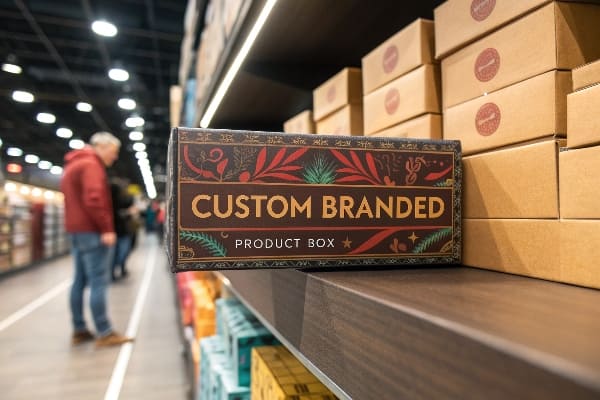
How custom packaging1 pays back
I focus on four levers. First, fit and protection cut returns. Second, bold yet simple graphics guide choice. Third, flat-pack structures reduce freight and labor. Fourth, recycled boards and water-based inks2 support retailer scorecards. In my plant, we run quick prototypes, then we load-test and ship test. We print short runs with digital to move fast, then switch to offset for volume. This step plan saves time during seasonal launches. One outdoor gear client needed floor displays for a tight date. We designed a single-wall body with hidden braces. We cut assembly to under three minutes in store. Sell-through rose because placement moved to a power aisle. The display lasted a full season without sag.
Benefits vs. Proof
| Benefit | How it helps | KPI to watch |
|---|---|---|
| Fewer returns3 | Better fit and cushions | Return rate ↓ |
| Faster setup | Tool-less tabs, QR setup guide | Assembly time ↓ |
| Higher conversion4 | Clear claims, contrast, eye line placement | Unit lift ↑ |
| Lower freight | Flat-pack, lighter board | Cost per unit ↓ |
| Greener profile | Recycled board, water inks | Retailer approval pass |
What should be the goal of custom retail boxes design?
Teams often chase looks first. The box looks great but fails shipping, or misses the shelf rule. I start with the retail journey, then I pick structure and art.
The goal is fast sell-through at the lowest total cost. Design must balance protection, clarity, speed, and sustainability to meet retailer specs and shopper needs without over-engineering.
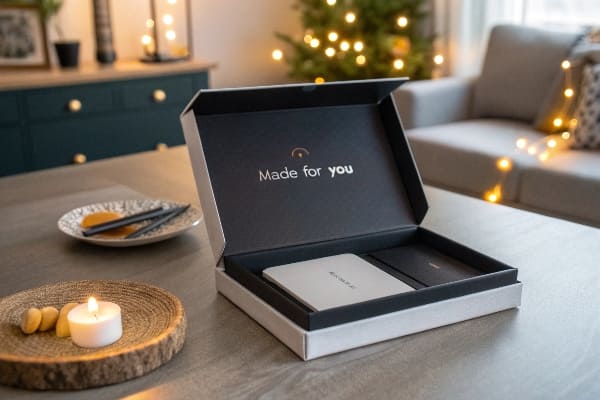
A simple goal tree I use
I map one north star: profitable sell-through5. Then I set four sub-goals. Protect, Inform, Attract, and Flow. Protect means pass drop, crush, and pallet tests. Inform means one clear claim, one image, and the must-know specs. Attract means color contrast, brand logo at the top left or top center, and clean white space. Flow means quick lines on the die-cut and simple folds that any store clerk can build. In North America, rules are stable and strict. In APAC, growth is fast, and speed matters. In Europe, sustainability weighs more6. I pick board grade and ink system by region to hit cost and green targets.
Design goals checklist
| Goal | Practical rule | Tool I use |
|---|---|---|
| Protect7 | Pass 1.2m drop, no tear at slots | Sample load test bench |
| Inform8 | One claim ≤8 words, legible at 2 meters | Print scale mockups |
| Attract | High contrast at eye level | Color bars, matte coat |
| Flow | ≤10 folds, no tools in store | QR video assembly guide |
What is custom retail packaging?
People think custom means only fancy print. It is more. It is size, structure, print, coatings, and inserts that fit your product, channel, and budget.
Custom retail packaging is a made-to-fit system that combines tailored structure, graphics, and materials to protect products, meet retailer standards, and guide shoppers from glance to purchase in seconds.
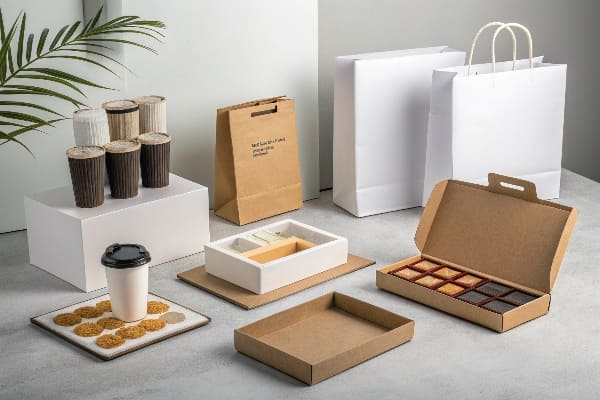
Components and choices
I break custom packaging9 into five parts. Structure defines strength and assembly. Board grade sets weight and cost. Print method sets speed and color accuracy. Coatings set feel and scuff resistance. Inserts secure parts. For a countertop crossbow accessory, I used E-flute with a strong backer. Digital print gave quick color tweaks. A water-based matte coat stopped glare under pharmacy lights. An internal tray kept parts aligned, so the window stayed neat. In APAC, packaging demand10 grows fast with urban retail. That growth favors short runs and fast refresh. My three production lines handle design, sampling, and mass runs. We allow free design edits before samples lock. This saves time when brand teams need last-minute changes.
Custom elements
| Element | Options | When I choose it |
|---|---|---|
| Structure | Mailer, tuck-end, crash-lock11 | Speed vs. strength balance |
| Board | Paperboard, corrugated (E/B/C)12 | Weight and cost trade-off |
| Digital, offset, flexo | Run size and color needs | |
| Coating | Matte, gloss, soft-touch, AQ | Shelf lighting and scuff risks |
| Insert | Card tray, pulp, foam-free locks | Sustainability and shock control |
Why is packaging important in retail?
Shoppers do not read long messages. They reach, compare, and decide fast. The box must sell without a salesperson. It must also survive the supply chain.
Packaging matters because it drives first pick, communicates value, ensures compliance, and protects the product from factory to shelf to home, which directly affects sales, cost, and brand trust.
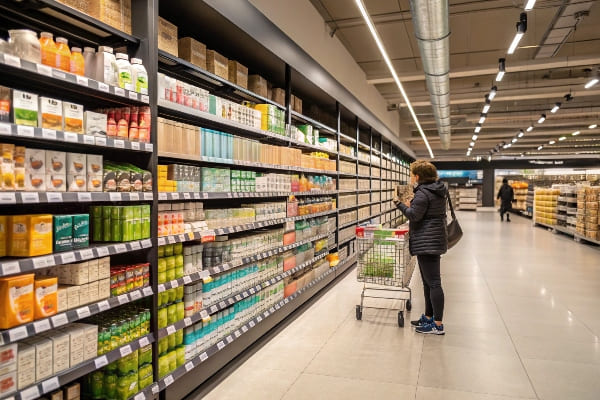
The retail moment of truth
I design for three seconds. First, stop the eye. Second, deliver one claim. Third, make the decision easy. Floor POP displays13 do this well because they stand alone. They win space and create a mini category. In my experience, floor displays often become the fastest-growing format due to strong visual impact14. Countertop units push impulse near checkout. Pallet displays speed setup in warehouse clubs. Shelf trays bring order to crowded categories. I choose based on channel. I also plan for labor. A good design reduces assembly errors. Clear print reduces shopper confusion. Strong corners reduce dented returns. These small wins roll up into real margin.
Retail impacts
| Impact | Packaging role | Measurable effect |
|---|---|---|
| Visibility15 | Color, size, placement cues | Eye tracking dwell ↑ |
| Clarity16 | Claim hierarchy, icons, QR | Confusion ↓, conversion ↑ |
| Protection | Drop/crush margins | Damage rate ↓ |
| Compliance | Labeling, barcodes, warnings | Chargebacks ↓ |
| Speed | Flat-pack, fast folds | Labor minutes per unit ↓ |
Why is branded packaging important?
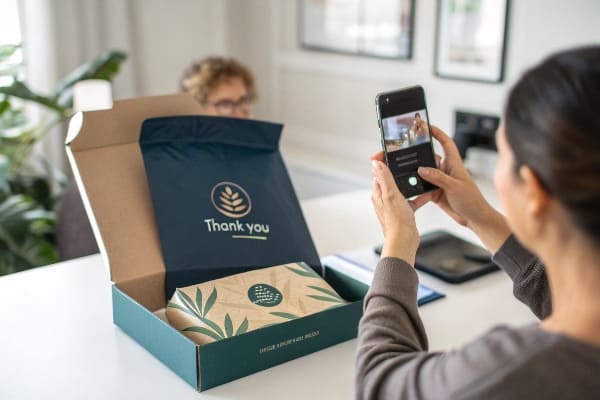
Generic boxes hide value. They also weaken memory. Strong branded packaging makes your product feel right and worth the price, even when two items are similar.
Branded packaging builds recognition, trust, and perceived value by making your promise visible and repeatable across formats, which raises willingness to pay and strengthens long-term loyalty.
Building a visible promise
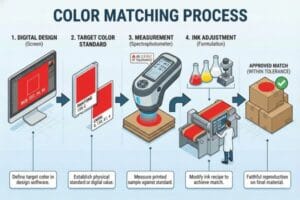
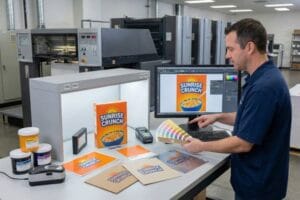
I keep brand cues17 simple and constant. Logo, color, tone, and one shape language. I apply them across boxes, trays, and floor displays. This builds memory. I test legibility from two meters. I also test color under store lights18, since club stores, pharmacies, and outdoors shops use different bulbs. I lock color with proofs before mass print. When I supported a hunting gear launch, bold charcoal and orange set a clear stance. The same angle motif ran from the retail box to the display header. Shoppers recognized the lineup fast. Reorders came in with only small art edits, which matched our business model and kept costs low.
Branding essentials
| Element | Practical choice | Pitfall to avoid |
|---|---|---|
| Color | 2–3 core colors19 | Overcrowded palettes |
| Typography | One headline, one body font | Thin strokes on kraft board |
| Imagery | Clear product hero at scale | Busy lifestyle collages |
| Voice | Short claims, active verbs20 | Vague slogans |
| Structure | Repeatable die-lines | One-off shapes every run |
What is personalized packaging?
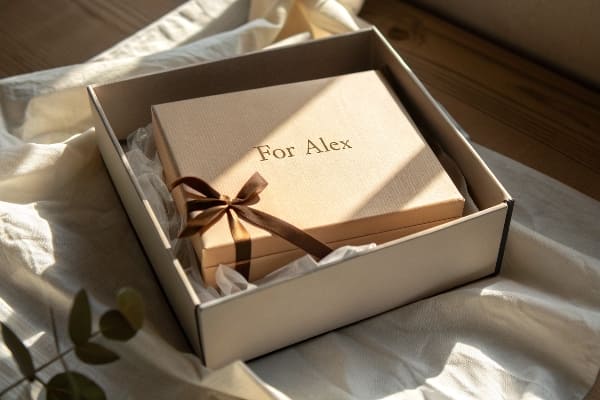
Teams ask about names on boxes and variable art. Personalization is more than names. It is any on-pack change that speaks to a segment, store, or person.
Personalized packaging uses variable data or modular elements to tailor graphics or structure for segments, stores, or individuals, raising relevance and response without breaking production efficiency.
Scalable personalization
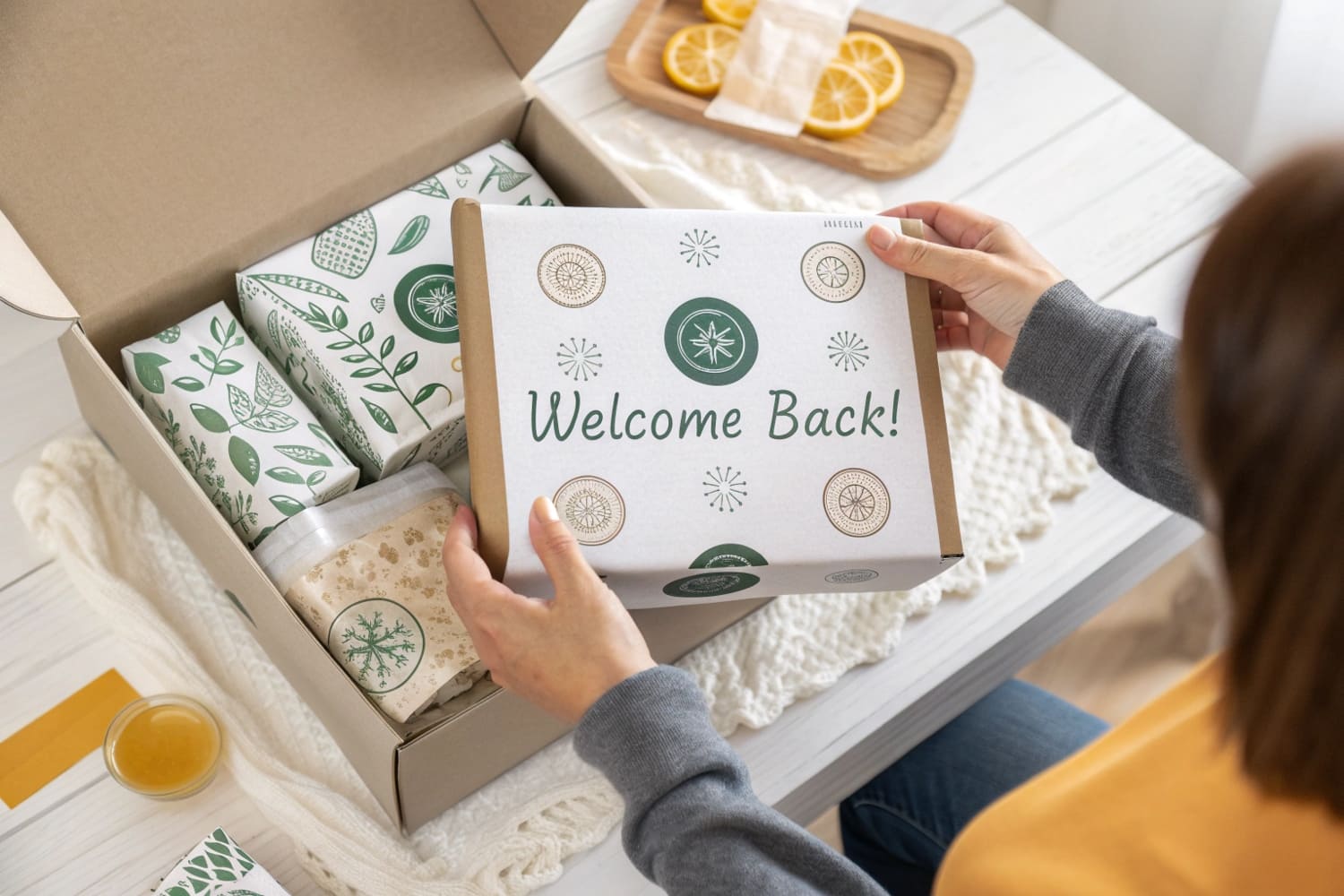
I design personalization on two levels. First, segment level for channels and regions. This may include different claims, languages, or certifications for North America, Europe, or APAC. Second, micro level for names or codes. Digital print helps here. It supports short runs and variable fields. I keep the base die-line constant and swap panels to avoid waste. For sustainability21, I choose recycled boards and water inks. This aligns with European preferences and rising global green goals. I also link packaging to online content. A QR code22 opens setup videos or AR guides. This helps complex products like crossbow accessories. A US client once used a QR fit guide on a countertop unit. Returns dropped because users picked the right parts.
Personalization options
| Level | Example use case | Production tip |
|---|---|---|
| Segment | Region-specific claims and languages23 | Lock master art, swap approved panels |
| Store | Club vs. specialty versions | Use shared headers, vary tray widths |
| Individual | Names, unique codes, offers | Digital print with CSV data merge24 |
| Interaction | QR to AR setup or care guide | Host lightweight mobile pages |
Conclusion
Custom retail packaging is a system. I design it to sell fast, ship safe, set up quick, and meet green goals. Simple rules and strong tests keep results repeatable.
Explore how custom packaging can enhance brand visibility and reduce returns, ultimately boosting your bottom line. ↩
Learn about the environmental benefits of using recycled materials and eco-friendly inks in packaging solutions. ↩
Understanding how to minimize returns can enhance customer satisfaction and improve profitability. ↩
Exploring this can provide insights into effective marketing strategies that boost sales. ↩
Explore this link to discover proven strategies that can enhance your sell-through rates and boost profitability. ↩
This resource will provide insights into the importance of sustainability in packaging, especially in the European market. ↩
Explore this link to learn about innovative testing methods that can enhance product durability and safety. ↩
This resource provides insights on crafting concise and impactful claims that capture attention and convey information clearly. ↩
Exploring this resource will provide insights into how custom packaging can enhance product appeal and functionality. ↩
This link will help you understand the trends in packaging demand, especially in fast-growing urban retail environments. ↩
Explore this link to understand how these structures balance speed and strength in packaging. ↩
This resource will help you grasp the trade-offs in weight and cost for these materials. ↩
Explore how Floor POP displays can enhance visual impact and drive sales in retail environments. ↩
Learn about the importance of strong visual impact in attracting customers and boosting sales. ↩
Understanding packaging visibility can enhance your marketing strategies and improve product appeal. ↩
Exploring packaging clarity can help you design better products that reduce confusion and increase sales. ↩
Explore this link to understand how brand cues can enhance product visibility and customer recognition. ↩
Discover insights on how different lighting affects color perception in retail, crucial for effective product presentation. ↩
Understanding core colors is crucial for effective branding, ensuring consistency and recognition. ↩
Using active verbs can significantly improve your brand’s communication, making it more engaging and impactful. ↩
Exploring this resource will provide insights into sustainable packaging practices that align with global green goals. ↩
This link will show you innovative ways QR codes can improve user experience and reduce returns in product packaging. ↩
Understanding region-specific claims can enhance your marketing strategy by tailoring messages to local audiences. ↩
Exploring digital print with CSV data merge can streamline your printing process and improve personalization in your campaigns. ↩