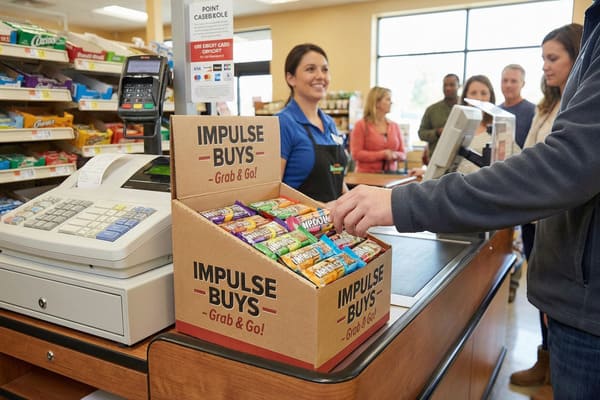
Struggling to get your product noticed at the crowded checkout counter? You are not alone. Many brands fail to capture those critical final impulse buys because they lack the right visibility tools.
Yes, counter display boxes are highly suitable for point of sale (POS) marketing. They are compact, cost-effective tools designed to sit near registers, driving impulse purchases. By organizing products and highlighting branding at the transactional moment, they significantly increase visibility and conversion rates for small items.
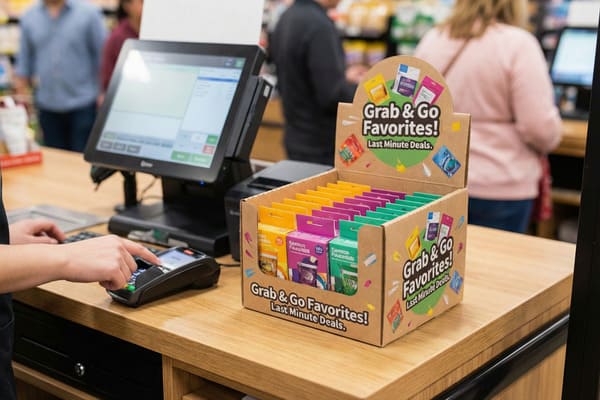
Let's explore how these displays function and why they are a crucial component of your retail strategy.
What is a POS point of sale display?
Do you know the difference between a standard shelf and a sales driver? Understanding the specific definition and engineering of a POS unit is the first step to retail success.
A POS (Point of Sale) display is a specialized marketing fixture located where the transaction occurs, such as the checkout counter. It is designed to hold products securely while using high-impact graphics to encourage last-minute impulse buys before the customer leaves the store.

The Mechanics of Checkout Marketing
When we talk about Point of Sale (POS) displays1, we are discussing a highly engineered piece of packaging that must survive the most valuable real estate in a retail store: the cash wrap. This area is small, cluttered, and highly regulated by retailers. Unlike standard shelving, a POS display must fight for space next to the register. From a manufacturing perspective, we typically use E-flute corrugated board for these units. E-flute is thin, roughly 1.5mm, but it offers a smooth surface for high-quality printing while maintaining structural rigidity for smaller items like cosmetics, confectionery, or batteries.
Retailers like Walmart, Costco, or 7-Eleven have strict compliance manuals. A counter display usually cannot exceed specific dimensions, often capping the height at 12 to 14 inches to ensure the cashier has a clear line of sight to the customer. If your display blocks the view, the store manager will throw it away. Furthermore, the structural integrity is critical. We calculate the Box Compression Test (BCT)2 values to ensure the unit does not sag under the weight of the product over time. A sagging display implies a low-quality product. The design must also account for "facing," which is the ability of the display to keep products pushed forward and organized. A well-designed POS unit acts as a dispenser, ensuring that when one item is removed, the next one is still visible or easily accessible. This requires precise die-cutting tolerances to ensure products fit snugly without being difficult for the customer to remove.
| Feature | POS Display (Counter) | Standard Shelf |
|---|---|---|
| Primary Location | Checkout Counter / Cash Wrap | Aisle Gondola |
| Goal | Impulse Buy / Last Minute Add-on3 | Planned Purchase4 |
| Material Standard | E-Flute or B-Flute Corrugated | Metal / Wood / Permanent |
| Lifespan | 4 to 8 Weeks (Temporary) | Years (Permanent) |
| Size Constraints | Strict (Small Footprint) | Standard (Matches Shelf Depth) |
I run three production lines dedicated to these specific specifications to ensure total compliance. My team checks your dimensions against major retailer guidelines and tests the structural integrity so you never face rejection at the store level.
What is a point of purchase display in marketing?
Are you confusing POP with POS? Many people use these terms interchangeably, but knowing the distinction can drastically change how you budget for your marketing campaigns.
A Point of Purchase (POP) display refers to marketing materials placed anywhere in the retail environment where customers decide to buy. Unlike POS, which is strictly at the register, POP includes floor stands, pallet displays, and shelf talkers located throughout the aisles to disrupt the shopper's journey.

Strategic Placement and Market Impact
Point of Purchase (POP)5 is the broader umbrella term that encompasses the entire shopper marketing strategy within a physical store. While POS is the final handshake, POP is the initial conversation. The market for these displays is massive, with floor displays capturing a significant share, often cited around 43% of the POP market. This is because floor displays interrupt the shopper's "autopilot" mode. When a customer walks down an aisle, they scan visually. A freestanding display unit (FSDU)6 placed at the end of an aisle (endcap) or in the middle of a wide alley (action alley) breaks the visual monotony.
Technically, these units require different materials than counter displays. For a floor display holding heavy liquids or bulk items, we cannot use the thin E-flute used on counters. We shift to BC-flute, a double-wall corrugated structure that is roughly 6-7mm thick. This provides the necessary load-bearing capacity, often rated to hold upwards of 20kg to 50kg per shelf depending on the internal support structure. The engineering here is about stability. A tall, narrow display has a high center of gravity. We must design wide bases or add internal weights to prevent tipping. In the context of the Asian and American markets, the demand for these large-format displays is growing because they offer more surface area for branding. You have veritable billboards in the store. Brands use this space for storytelling—explaining why this hunting gear is superior or why this new snack is healthy. This educational aspect is what separates POP from simple shelving. It is a disruptive marketing tool that creates a "shop-within-a-shop" experience.
| Display Type | Best Use Case | Typical Location | Material Grade |
|---|---|---|---|
| Floor Stand | New Product Launch / High Volume | Aisles / Endcaps | BC-Flute (Double Wall) |
| Pallet Display7 | Bulk Items / Club Stores (Costco) | Open Floor Zones | Heavy Duty Corrugated |
| Sidekick / Power Wing | Light Accessories | Hanging off Shelves | B-Flute |
| Shelf Talker8 | Price Promo / Info | Shelf Edge | Cardstock / Plastic |
I specialize in creating stable floor units that do not collapse under heavy inventory. We use verified double-wall materials and run rigorous load-bearing tests to guarantee your brand stands tall and safe in high-traffic aisles.
What are the benefits of point of sale display?
Why should you invest your limited budget here? The return on investment for these small cardboard units is often higher than almost any other in-store advertising method.
The primary benefits include increased impulse purchases, enhanced brand visibility, and cost-effectiveness. These displays organize inventory neatly, utilize dead counter space, and allow for high-quality branding that educates the customer. They offer a high ROI by converting traffic into sales at the final transactional moment.

ROI and Brand Visibility Engineering
The economic argument for Cardboard POS displays9 is undeniable. When you compare the cost of manufacturing a corrugated display to permanent fixtures made of metal, wood, or acrylic, the savings are massive. A cardboard unit might cost between $5 to $15 depending on quantity and complexity, whereas a permanent fixture could cost hundreds. This low barrier to entry allows brands to refresh their marketing frequently. You can change your display every season—Halloween, Christmas, or Summer—without breaking the bank. This flexibility is crucial in fast-moving consumer goods (FMCG) industries.
From a technical standpoint, modern digital printing10 has revolutionized the benefits. Years ago, you needed expensive lithographic plates, which meant you had to order thousands of units to get a good price. Now, with high-speed digital flatbed cutters and printers, we can produce short runs cost-effectively. This allows for A/B testing. You can print 100 units with Design A and 100 units with Design B to see which one sells more product. Additionally, these displays act as "silent salesmen." In a retail environment where store staff are busy or uninformed, the header card of your display does the talking. It communicates key benefits—"Organic," "Waterproof," "50% Off"—instantly. Structurally, flat-packing is another massive financial benefit. We design these displays to fold down completely flat. This optimizes shipping logistics, allowing you to fit hundreds of units on a single pallet, drastically reducing the landed cost per unit compared to pre-assembled rigid displays.
| Benefit | Description | Impact on Business |
|---|---|---|
| Cost Efficiency11 | Low material and tooling costs | Higher margins / Frequent updates |
| Logistics | Flat-packed design | Reduced shipping & storage fees |
| Brand Control | Custom print & structure | 100% ownership of visual identity |
| Speed to Market | Fast production cycle | Quick reaction to trends |
| Sustainability12 | Recyclable material | Appeals to eco-conscious buyers |
We offer free prototyping and design modifications to help you perfect this ROI calculation. I ensure your colors match your brand identity exactly using our advanced color management systems before we ever start mass production.
What is the disadvantage of POS?
Is cardboard always the perfect solution? No material is flawless, and being aware of the inherent risks helps you prevent costly in-store failures and disappointments.
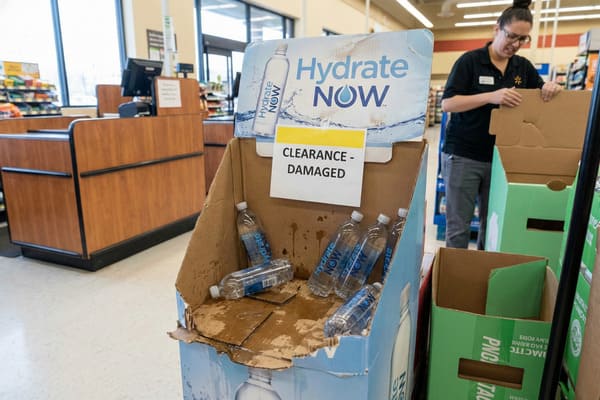
The main disadvantages of cardboard POS displays are lower durability compared to permanent fixtures and susceptibility to moisture damage. They are not designed for long-term use and can lose structural integrity if overloaded or placed in wet areas. Poor manufacturing can also lead to assembly difficulties for store staff.
Durability and Environmental Challenges
While cardboard is versatile, it has physical limitations that must be respected. The most significant enemy of a cardboard POS display is moisture13. Corrugated board is paper-based; it is hygroscopic, meaning it absorbs moisture from the air. In high-humidity environments, or if a floor mop hits the base of a floor display, the material loses its stiffness. The "flutes" inside the board soften, and the display can lean or collapse. This is a disaster for brand image. A soggy, leaning display suggests a cheap, low-quality product. To combat this, we often apply a thin film lamination (PP or PE) or a varnish, but this adds cost and can sometimes complicate recycling depending on local facilities.
Another major disadvantage is the "human factor" during assembly. If a display is designed with complex folds and tabs, store employees will not build it. Retail staff are busy. If it takes more than 2 or 3 minutes to assemble, it often ends up in the compactor, and your product ends up flat on a shelf, losing all marketing impact. We call this "compliance rate14." Poor design leads to low compliance. Furthermore, cardboard is not meant for heavy industrial items over long periods. Known as "creep," the material will slowly compress under a static load over weeks. A display that looks great on day one might look crushed by day thirty if the weight distribution was not calculated correctly. Finally, shipping damage is a real pain point. Unlike metal, cardboard dents easily. If the outer shipping carton is not robust, the corners of the display will arrive dog-eared and unprofessional.
| Disadvantage | Root Cause | Mitigation Strategy |
|---|---|---|
| Moisture Sensitivity15 | Paper absorbs water | Gloss lamination / Mop guards |
| Assembly Issues | Over-complicated design | Pre-assembled "Pop-up" designs |
| Low Durability16 | Material fatigue (Creep) | Internal dividers / Stronger flute |
| Shipping Damage | Rough logistics handling | Reinforced outer cartons / Corner protectors |
| Weight Limits | Lack of tensile strength | Adding metal or wood support bars |
I tackle fragility by using reinforced corrugated materials and conducting rigorous drop tests in my factory. My team guarantees the structure holds up during shipping so your product arrives pristine and ready to sell.
Conclusion
Cardboard POS displays are powerful tools for driving sales, but they require smart engineering to balance cost with durability. By choosing the right specifications, you ensure your product stands out without failing.
Explore this link to learn effective strategies for creating impactful POS displays that enhance customer engagement and sales. ↩
Understanding BCT is crucial for ensuring product quality and durability; this resource will provide in-depth insights into the testing process. ↩
Explore this link to discover proven techniques that can boost your impulse buy sales and enhance customer engagement. ↩
This resource offers insights on optimizing retail displays to encourage planned purchases, ensuring better sales outcomes. ↩
Understanding POP can enhance your marketing strategies, making your retail space more effective and engaging for customers. ↩
Exploring FSDUs can provide insights into effective product placement and maximizing sales in retail environments. ↩
Explore this link to understand how Pallet Displays can enhance visibility and sales in retail environments. ↩
Discover insights on how Shelf Talkers can boost customer engagement and drive sales at the shelf edge. ↩
Explore how Cardboard POS displays can enhance your retail strategy and boost sales effectively. ↩
Discover the impact of digital printing on marketing efficiency and cost savings in display production. ↩
Understanding cost efficiency can help businesses maximize profits and streamline operations. ↩
Exploring sustainability can reveal how eco-friendly practices attract modern consumers and enhance brand loyalty. ↩
Understanding moisture's impact on cardboard can help you design better displays that withstand environmental challenges. ↩
Improving compliance rate ensures your displays are assembled correctly, maximizing marketing impact and reducing waste. ↩
Explore this link to discover effective strategies for reducing moisture sensitivity in packaging materials. ↩
This resource offers insights into enhancing the durability of packaging, ensuring better product protection. ↩