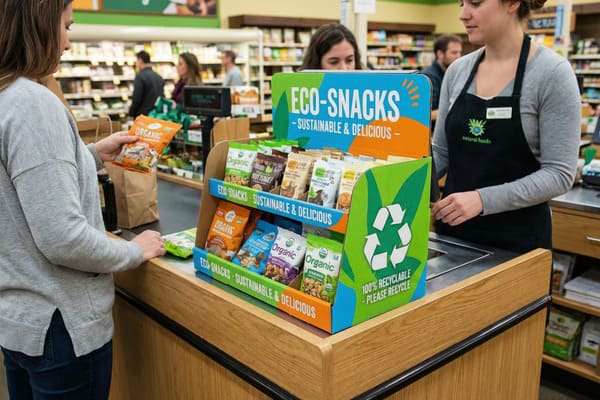
You care about the environment, and so do your customers. You might wonder if your store displays contribute to the planet's waste problem or help solve it through proper recycling.
Yes, cardboard counter displays are almost always recyclable because they are made from paper pulp. However, their recyclability depends on the inks, glues, and coatings used. If a display has plastic lamination or wax coatings, it cannot be processed in standard recycling facilities and may end up in a landfill.

Transition Paragraph:
Understanding the details of materials is key to making the right choice. Let us look at what makes some cardboard difficult to recycle and how you can avoid those mistakes.
What kind of cardboard cannot be recycled?
You want to be green, but hidden contaminants can ruin your efforts. You need to know which specific treatments make a display unfit for the recycling bin.
Cardboard that is soaked in grease, food, or wax cannot be recycled. Also, cardboard treated with wet-strength resins or heavy plastic coatings is often rejected. These contaminants prevent the paper fibers from breaking down in water, which creates defects in new recycled paper and damages processing machinery.

The Chemistry of Contamination
When we look at the technical side of recycling, the main issue is how paper breaks down in water. Standard recycling mills use a machine called a hydrapulper, which is like a giant blender. It mixes cardboard with water to separate the fibers. However, specific contaminants used in retail displays block this process. The most common enemy in our industry is wax coating1. Brands often use wax on displays for fresh produce or refrigerated items to stop moisture from destroying the stand. But wax does not dissolve in water. Instead, it clumps together and forms "stickies." These sticky blobs clog the paper machine's screens and cause holes or dark spots in the new paper, ruining the entire batch.
Another major issue is "wet-strength" resin. We sometimes add these chemicals (like Kymene) to the pulp to make displays durable in humid garden centers. These resins create a chemical bridge between fibers that water alone cannot break. If the fibers do not separate, they cannot be made into new paper. Food contamination is another factor. If a sampling tray display absorbs oil or grease from food, that oil coats the fibers. This oil prevents the water from bonding with the pulp during the recycling process. Recycling plants have strict tolerance limits for these things. If a bale of cardboard has too much wax or grease, the facility will reject the whole load to protect their equipment and paper quality.
| Contaminant | Typical Use | Recycling Problem |
|---|---|---|
| Wax Coating | Produce bins | Does not dissolve; clogs machines. |
| Wet-Strength Resin2 | Outdoor displays | Prevents fiber separation in water. |
| Food Grease3 | Sample trays | Oil prevents hydrogen bonding. |
| Heavy Glue | Assembly points | Creates sticky residue in pulp. |
I use advanced water-based varnishes in my factory that resist moisture without using wax. My team tests these coatings to ensure they protect your display in the store but still dissolve completely in standard recycling pulpers.
What is surprisingly not recyclable?
You might choose a shiny, premium finish to make your brand pop. But you should be aware that these high-end looks often make the display impossible to recycle.
Composite displays are surprisingly not recyclable. This includes cardboard with plastic lamination (PE or PP films), metallic foil stamping, or heavy use of plastic tape. These mixed materials turn simple paper into a complex waste product that standard recycling plants cannot separate, forcing them into the trash.

Surface Treatments and Material Separation
Many people assume that if the core is paper, the product is recyclable. This is wrong. The problem lies in the layers we add for aesthetics. In the display market, plastic lamination4 is very common. This is a thin layer of Polypropylene (PP) or Polyethylene (PE) glued to the paper to make it shiny and waterproof. Once this plastic is bonded to the cardboard, it becomes a composite material. To recycle this, a facility needs expensive, specialized equipment to strip the plastic away from the paper fibers. Most municipal recycling centers do not have this technology. They will view your expensive, glossy display as a contaminant and send it to the landfill.
We also need to look at metallic finishes. Hot foil stamping looks luxurious, but it stamps metal powder and polymer into the paper surface. While small amounts are sometimes okay, large foil areas contaminate the pulp. Even the ink matters. Some UV-cured inks form a hard plastic-like sheet on top of the paper. During the pulping process, these large flakes of ink can be hard to remove compared to standard water-based inks. Another surprise is the use of heavy-duty synthetic tapes or reinforcement bands inside the display. If these plastics are not removed before baling, they get tangled in the pulping rotors. It is a trade-off between looking "expensive" and being responsible. You can achieve a high-quality look without plastic films by using the right varnish, but many brands do not know this option exists.
| Finish Type | Composition | Recyclability Status5 |
|---|---|---|
| PE/PP Lamination | Plastic Film + Paper | Low (Hard to separate) |
| Aqueous Varnish6 | Water-based Polymer | High (Dissolves fully) |
| Hot Foil | Metal + Glue | Medium/Low (Contaminates pulp) |
| UV Coating | Cured Polymer | High (Breaks down safely) |
I advise my clients to replace plastic lamination with high-gloss aqueous coatings. My production process uses these eco-friendly alternatives to give you that premium shine while ensuring the display remains 100% repulpable in standard recycling streams.
Can cardboard go in a recycling bin?
Your retail partners are busy and hate dealing with complex waste. If your display is hard to dismantle, store staff will likely throw it in the trash compactor.
Yes, cardboard displays can go in the recycling bin, but only if they are flattened and stripped of non-paper parts. You must remove plastic clips, sound modules, and metal hooks first. Retailers like Walmart require displays to be "knock-down" ready so they fit into their baling equipment.

Retail Logistics and Assembly Components
Designing for the recycling bin is an engineering challenge, not just a material one. Major retailers like Costco, Walmart, and Target manage tons of cardboard waste daily. They generate revenue by selling bales of Old Corrugated Containers (OCC)7. They have strict rules about what goes into these bales. If your display is full of plastic "corro-clips," metal shelving bars, or battery-operated LED lights, it is considered "mixed waste." Store employees do not have the time to surgically remove these parts. If they see a display with too many non-paper attachments, they are instructed to throw the entire unit into the general trash compactor to avoid contaminating their cardboard bales and facing penalties.
Therefore, the structure of your display determines its fate. A "100% cardboard" design is the safest bet. This means using cardboard structural supports instead of metal bars, and paper-based header tabs instead of plastic clips. Another critical factor is the breakdown speed. We call this "knock-down" capability. A floor display must be easy to fold flat. If a display is glued into a rigid shape that requires a hammer to break apart, it will never be recycled. It takes up too much space in the bin. The goal is a design that allows a store clerk to punch out a few tabs and fold the whole thing flat in under 30 seconds. This ensures your display actually enters the recycling stream instead of the dumpster.
| Component | Recycling Barrier | Better Alternative |
|---|---|---|
| Plastic Shelf Clips | Must be removed manually | Tab-lock paper supports. |
| Sound/Light Chips | Electronic waste hazard8 | QR codes for digital content. |
| Rigid Glued Structure | Too big for bin | Fold-flat "pop-up" design9. |
| Metal Hooks | Contaminates bale | Double-wall cardboard hooks. |
I design displays with smart structural engineering that eliminates the need for plastic clips. We create intuitive "pop-up" structures that flatten instantly, helping your retail partners save labor time and meet their sustainability targets.
Does cardboard are recyclable?
You might question the long-term value of paper recycling. You need to know if the material you choose really supports a circular economy or if it just delays the landfill.
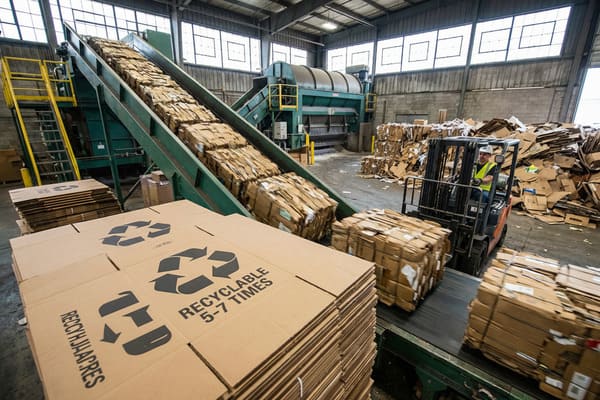
Cardboard is one of the most recyclable materials in the world, with fibers that can be reused 5 to 7 times. It relies on a global market for Old Corrugated Containers (OCC). While fibers eventually shorten and degrade, the addition of virgin pulp keeps the cycle going, making it a sustainable choice for displays.
The Lifecycle and Fiber Physics of OCC
The question "Does cardboard are recyclable?" (Is cardboard recyclable?) brings us to the physics of wood fiber. Cardboard is not infinitely recyclable like glass or aluminum. It is made of cellulose fibers from trees. Every time we recycle a box, it goes through a mechanical pulping process that cleans and de-inks the paper. During this process, the fibers get cut and shortened. Long fibers provide strength; short fibers are weak. After about 5 to 7 cycles through the recycling system, the fibers become too short to bond together. They turn into sludge and are filtered out of the system. This is why we cannot make cardboard from 100% recycled material forever. We must always introduce some "virgin" fiber (new wood pulp) into the mix to maintain the strength needed for heavy-duty displays.
However, the recycling system for corrugated board is highly efficient. The global market for OCC (Old Corrugated Containers)10 is huge. When you use a cardboard display, you are part of a closed-loop system. The material from your display today is likely to become a shipping box or a cereal carton next month. In manufacturing, we use different grades of paper for different parts of the display. We often use "Test Liner" (which has high recycled content) for the inner fluting and back panels where looks matter less. We use "Kraft Liner11" (which has more virgin fiber) for the outer face to ensure it is strong enough to hold your products and smooth enough for high-quality printing. This strategic mixing of materials maximizes sustainability without compromising performance.
| Paper Grade | Recycled Content12 | Structural Role13 |
|---|---|---|
| Virgin Kraft | 0% (100% New) | Max strength; outer print surface. |
| Test Liner | ~50-100% | Inner layers; less stress. |
| Semi-Chemical | ~30-50% | Fluting (the wavy part). |
| Grey Board | 100% | Internal stiffeners; filler. |
I source FSC-certified paper to guarantee a responsible mix of virgin and recycled fibers. My factory carefully selects the paper grade to ensure your display is strong enough for heavy retail use while maximizing the use of recycled content.
Conclusion
Cardboard displays are a smart, recyclable choice for your brand. By avoiding plastic coatings and choosing the right materials, you ensure your displays support a sustainable future.
Understanding wax coating's effects on recycling can help improve paper quality and recycling processes. ↩
Understanding Wet-Strength Resin is crucial for addressing recycling challenges and improving sustainability. ↩
Exploring the effects of Food Grease can help in finding solutions to enhance recycling efficiency. ↩
Understanding plastic lamination is crucial for making informed recycling choices and reducing waste. ↩
Understanding recyclability status helps in making eco-friendly choices and improving sustainability. ↩
Exploring the benefits of aqueous varnish can enhance your knowledge of sustainable packaging solutions. ↩
Understanding OCC is crucial for effective recycling strategies in retail logistics, ensuring sustainability and compliance. ↩
Understanding the dangers of electronic waste can help you make informed decisions about recycling and disposal. ↩
Exploring the benefits of fold-flat designs can inspire innovative solutions for sustainable packaging. ↩
Explore this link to understand the significance of OCC in recycling and its impact on sustainability. ↩
Learn about Kraft Liner's role in packaging and its benefits for strength and quality in displays. ↩
Understanding recycled content helps in making eco-friendly choices and supports sustainability in the paper industry. ↩
Exploring structural roles can enhance your knowledge of paper types and their applications in various industries. ↩