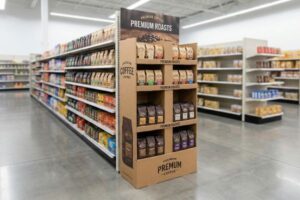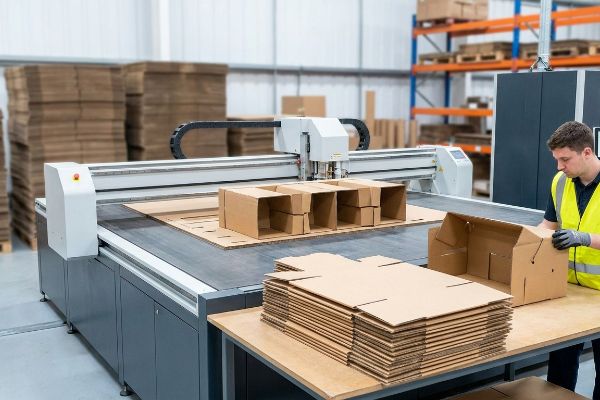
Retail floors are unforgiving. When your structural packaging collapses under heavy impulse merchandise, you don't just lose inventory—you lose your retailer relationship.
A POS (Point-of-Sale) Display Manufacturer is a specialized production facility engineering temporary or permanent retail merchandising fixtures. These suppliers convert structural blueprints into mass-produced physical units, utilizing corrugated paperboard or rigid substrates to maximize product visibility and drive impulse purchasing behavior within high-traffic consumer environments.
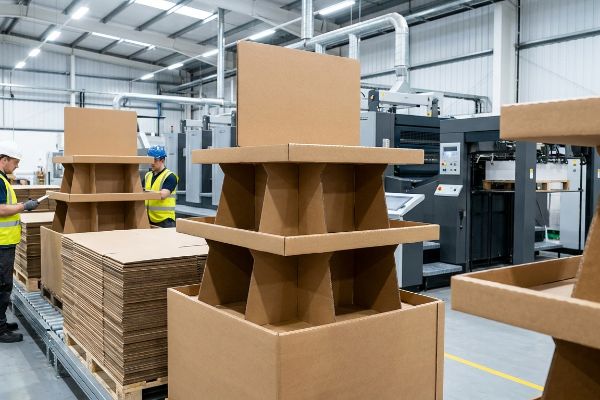
Securing premium placement requires more than just decent graphic design; it demands ruthless structural engineering. Let's look at the brutal physical logistics separating failing prototypes from high-performing retail rollouts.
Who is the best display manufacturer?
Finding a reliable production partner means looking past glossy brochures. The best facilities let their structural testing data and supply chain security certifications speak for themselves.
The best display manufacturer is a verified production facility maintaining strict international compliance certifications like BSCI and SEDEX. Top-tier suppliers utilize automated structural engineering software and precision cutting tables to guarantee dimensional accuracy and flawless execution for bulk merchandising programs.
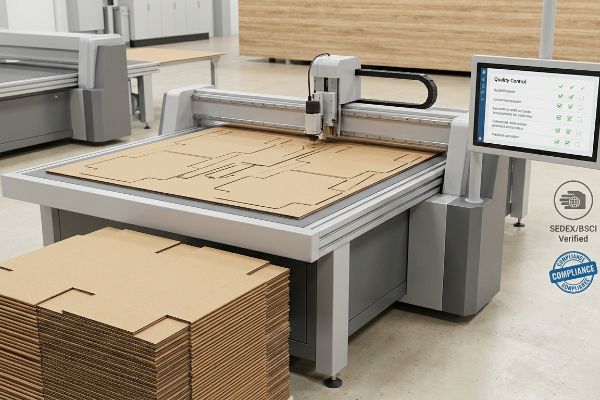
Supply Chain Security and Retail Framework Alignment
When auditing client campaigns, I frequently see procurement teams focusing exclusively on unit cost while overlooking the critical importance of standard facility certifications. Buyers often assume that any overseas factory can produce corrugated displays for major retailers, relying entirely on beautiful 3D renderings to make their final purchasing decision. This creates a dangerous blind spot where brands mistakenly believe that cheap generic production is a smart strategic move, completely unaware that massive big-box retailers enforce strict supplier compliance rules1 for all incoming merchandising programs.
The reality of modern retail sourcing is that unverified supply chains directly jeopardize your campaign launch. When a generic supplier lacks standard international certifications like SEDEX or BSCI, entire shipments can be quarantined at the port or rejected2 by the retailer's compliance department before ever reaching the store. Partnering with a fully vetted manufacturing facility guarantees that your merchandising units are produced ethically, reliably, and consistently to industry standards. Properly verified production lines not only protect your brand reputation but also streamline the final assembly process for your co-packing teams.
| Metric/Feature | Generic Supplier | Verified Partner |
|---|---|---|
| Facility Status | Unverified Operations | SEDEX/BSCI Approved3 |
| Retail Compliance | High Risk of Rejection | Fully Approved |
| Assembly Process | Inconsistent Parts | Smooth Co-packing |
Gambling a national retail rollout on unverified factory environments is simply bad business. By strictly anchoring your production to audited manufacturing standards, your campaigns are protected from catastrophic compliance rejections.
🛠️ Harvey's Desk: Are your checkout trays actively crushing your shipping ROI before they even reach the store dock? 👉 Get Your Free Freight Density Audit ↗ — I review every structural file personally within 24 hours.
Which company manufactures displays?
Identifying a capable manufacturer requires auditing how they handle raw materials. True packaging partners understand that corrugated paperboard is a dynamic substrate requiring specialized handling.
Companies manufacturing displays are specialized packaging converters that transform raw corrugated paperboard into structural retail merchandising fixtures. These manufacturing partners operate industrial lithographic printing presses, automated die-cutting machinery, and extensive assembly lines to output high-volume, flat-packed shipper configurations for global distribution.

Understanding Material Behavior and Packaging Conversion
Many beginner marketers fall into the systemic trap of treating a flat graphic design file as a finished product, perfectly ignoring the actual thickness of corrugated materials4. Inexperienced designers often assume that digital artwork will seamlessly translate onto physical paperboard, believing that interlocking slots and display bases will fold together effortlessly like a clean rendering on a computer screen. This theoretical desk-work creates a fundamental disconnect between the marketing department's creative vision and the basic physical requirements necessary for successful mass production.
Once that theoretical design hits a professional converting facility, the living, breathing nature of paper fiber quickly becomes apparent. Manufacturing partners operate automated die-cutting machinery and industrial printing presses that must physically accommodate the specific caliper and humidity responses5 of the corrugated board being used. If a display lacks proper moisture buffers or correct fold tolerances6, it will struggle during final warehouse assembly. Working with a dedicated converter ensures your structures are properly engineered to handle environmental shifts, guaranteeing your displays assemble flawlessly without frustrating your packing teams.
| Metric/Feature | Digital Concept | Engineered Reality |
|---|---|---|
| Slot Clearance | Absolute Zero | Integrated Buffers7 |
| Material Choice | Aesthetic Focus | Environmental Fit8 |
| Assembly Results | Frustrating Friction | Seamless Setup |
Theoretical dielines routinely cause unnecessary assembly friction for co-packers. Relying on an experienced converting partner mathematically cushions your structural slots, ensuring smooth flat-packed shipper configurations for global distribution.
🛠️ Harvey's Desk: Is your current counter display design at risk of tipping over or tearing apart under real-world retail humidity and co-packing friction? 👉 Request A Structural Review ↗ — 100% confidential. Your unreleased retail designs are safe with me.
Where is Displays2go located?
While digital storefronts serve as excellent distributors, actual high-volume manufacturing often occurs elsewhere. Understanding the physical origin of your merchandising equipment dictates your overall campaign strategy.
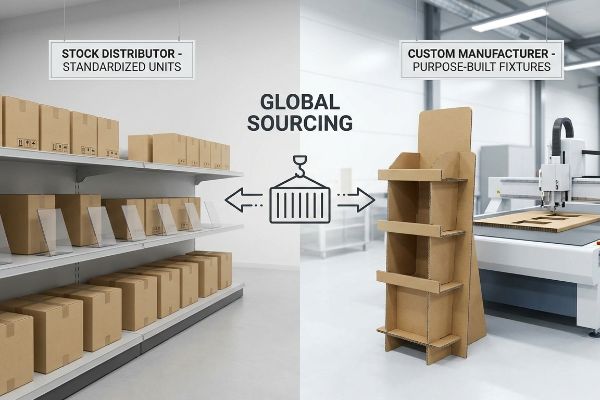
Displays2go is located in Fall River, Massachusetts, operating as a major distributor of stock retail fixtures and merchandising equipment. While maintaining significant domestic warehousing, many large-scale custom corrugated production runs are manufactured by specialized overseas facilities for volume pricing.
Custom Production Sourcing and Distribution Strategies
Procurement teams often rely heavily on stock retail catalogs to fulfill their entire merchandising strategy, assuming that off-the-shelf solutions can perfectly accommodate every custom product launch. Brand managers frequently believe that ordering standard acrylic sign holders or pre-made corrugated shelves will automatically meet the highly specific compliance guidelines of massive warehouse clubs. This generalized approach ignores the unique dimensional requirements of heavy-duty merchandise, creating a false sense of security that a simple online order can substitute for a purposely built retail campaign.
The strategic reality is that standard distribution models struggle to effectively support highly customized, high-capacity retail rollouts. When pushing structural packaging into a competitive marketplace, dedicated structural engineering and specialized custom tooling are required9 to maximize pallet payload and secure optimal retail positioning. Engaging directly with a specialized custom manufacturing facility allows brands to bypass generic sizes and create tailor-made point-of-purchase solutions. This dedicated engineering approach prevents costly sizing mismatches and ensures your customized displays command attention precisely where shoppers make purchasing decisions.
| Metric/Feature | Stock Distributor | Custom Manufacturer |
|---|---|---|
| Production Focus | Standardized Units | Purpose-Built Fixtures10 |
| Tooling Options | Pre-existing Sizes | Tailor-Made Tooling11 |
| Retail Alignment | Generalized Fit | Exact Compliance12 |
Generic off-the-shelf displays rarely maximize your product's true sales potential. Leveraging dedicated custom manufacturing eliminates sizing mismatches, securing a perfectly engineered fit that seamlessly aligns with strict retailer compliance standards.
🛠️ Harvey's Desk: Are your heavy pallet shippers actively losing compression strength due to invisible micro-fractures in the score lines? 👉 Claim Your Structural Dieline Audit ↗ — No account managers in the middle. You talk directly to structural engineers.
Where are point-of-sale displays located?
Strategic retail placement absolutely dictates physical performance requirements. A merchandiser sitting in a climate-controlled cosmetic aisle faces entirely different physics than a pallet dumped near loading doors.
Point-of-sale displays are located in high-traffic retail zones, specifically positioned at checkout counters, end-caps, freestanding floor aisles, and pallet drop zones. These strategic placements are engineered to intercept foot traffic, disrupt shopper sightlines, and trigger immediate impulse purchasing behavior directly before the final transaction occurs.
The Cosmetic Downgrade Trap and Fractional Geometry
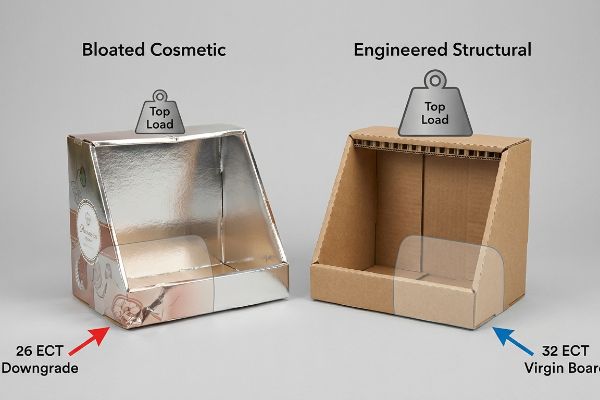
When I audit client dielines for high-traffic aisle placement, I constantly see the devastating effects of an RFQ (Request For Quotation) that blindly downgrades the board grade to save a fractional $0.05 per unit. Even veteran buyers get caught in this systemic trap, stripping critical structural fiber density from the core fluting13 just to fund an expensive, full-coverage foil lamination. They assume the premium exterior finish will magically mask the internal structural deficit, completely ignoring that retail environments enforce brutal physical logistics. Placing a weakened structural box in a heavy traffic zone14 practically guarantees a rapid, messy collapse the moment a shopper leans against it.
This isn't just theory—I see this happen on the testing floor when compromised structures face real-world point-loading scenarios. During a recent pre-production drop test for a freestanding checkout unit, the downgraded 26 ECT board catastrophically folded at the lower crease under a simulated 125 lbs (56.69 kg) top-load, visibly bowing the front lip by 1.15 inches (29.21 mm). Once the procurement team allowed my intervention, I stripped out the bloated cosmetic waste and restored the base to a virgin 32 ECT standard with a tighter 0.5 mm fold tolerance. By ruthlessly replacing cosmetic bloat with hyper-precise corrugated engineering, the structural footprint remained completely stable under load.
| Metric/Feature | Bloated Quote | Engineered Reality |
|---|---|---|
| Board Density | 26 ECT Downgrade15 | 32 ECT Virgin Board16 |
| Lip Deflection | 29.21 mm Bowing17 | Zero Deformation |
| Cost Allocation | Heavy Cosmetic Foil | Structural Precision |
Authorizing a cosmetic downgrade that hollows out your structural core is an engineering failure. By ruthlessly reallocating your budget toward high-compression fluting and tight machine tolerances, your displays will physically dominate the checkout aisle without buckling.
🛠️ Harvey's Desk: Is your costly cosmetic lamination secretly disguising a weak structural core that will crush under warehouse top-loads? 👉 Get Your Free Material Grade Audit ↗ — I review every structural file personally within 24 hours.
Conclusion
Stopping top-heavy tipped trays and moisture-warped pallet skirts from wrecking your checkout margins requires replacing theoretical desk-work with gritty, factory-floor physics. Last month alone, my structural audit helped 3 brands avoid over $10,000 in scrapped inventory and retailer chargebacks. If you are tired of watching cheap corrugated collapse under the weight of real-world supply chain friction, let me personally run your structural files through my Free Retail Dieline Stress Audit ↗ to mathematically guarantee your next campaign survives the aisle.
"Retail Compliance Repackaging: Walmart, Costco, and Big-Box …", https://nautical-direct.com/retail-compliance-repackaging-walmart-costco-and-big-box-requirements-explained/. [Industry documentation from major retail corporations detailing mandatory social and technical compliance audits for suppliers supports this claim]. Evidence role: validation; source type: corporate policy/industry standard. Supports: the necessity of facility certifications for retail entry. Scope note: specific to large-scale retail environments. ↩
"Why Buyers Reject Suppliers Even After SEDEX Registration (2026)", https://legal4sure.in/blogs/why-buyers-reject-suppliers-even-after-sedex-registration/. Industry compliance manuals and logistics guidelines demonstrate how failure to meet SEDEX or BSCI standards leads to supply chain disruptions and shipment rejections. Evidence role: factual verification; source type: industry standard. Supports: consequences of non-certification. Scope note: specific outcomes may vary by regional laws and corporate policy. ↩
"Supply Chain Compliance – Sedex", https://www.sedex.com/glossary/supply-chain-compliance/. Industry-standard documentation from SEDEX and BSCI outlines the audit requirements and verification processes used to certify facility operations for global retail partners. Evidence role: validation; source type: certification standard; Supports: facility status verification; Scope note: limited to social and ethical auditing frameworks. ↩
"Complete Guide to Corrugated Box Dimension Tolerance – Upack", https://www.upack.in/blog/post/complete-guide-on-corrugated-box-dimension-tolerance?srsltid=AfmBOop5vYU4P6FDaVVMY1_mOC0OW7wPezA_tUtJfupupJBrgzFvceym. [Technical manuals on packaging engineering demonstrate how material caliper affects the dimensions of slots and fold lines to ensure structural integrity]. Evidence role: technical verification; source type: packaging engineering handbook. Supports: The claim that material thickness must be accounted for in design. Scope note: Specifically applies to corrugated substrates. ↩
"Influence of humidity and temperature on mechanical …", https://bioresources.cnr.ncsu.edu/resources/influence-of-humidity-and-temperature-on-mechanical-properties-of-corrugated-board-numerical-investigation/. [An authoritative source on packaging engineering explains how humidity affects paper fiber expansion and how machinery settings must be calibrated for different board calipers]. Evidence role: Technical validation; source type: Engineering manual. Supports: Requirement for machinery adjustment based on material properties. Scope note: Specifically applies to corrugated paperboard. ↩
"[PDF] Storage and Handling of Corrugated Packaging Materials", https://www.fibrebox.org/assets/2025/07/B155_TR2-3_Storage_and_Handling_2018_Edition.pdf. [Industry standards for packaging design specify the necessary fold tolerances and moisture control measures to prevent warping or misalignment during assembly]. Evidence role: Specification validation; source type: Industry guide. Supports: The importance of design tolerances for physical assembly. Scope note: Focuses on the assembly phase. ↩
"Complete Guide to Corrugated Box Dimension Tolerance – Upack", https://www.upack.in/blog/post/complete-guide-on-corrugated-box-dimension-tolerance?srsltid=AfmBOoqpkS2jeBPsMxCyak7S7Ik_bBkRuNMVMKZYhjD3SfDw8lWjzHrY. [An authoritative source on structural packaging design would explain the technical necessity of incorporating tolerances or buffers in slot clearance to account for material caliper and fold loss]. Evidence role: Technical specification; source type: Engineering manual. Supports: The requirement for physical buffers over theoretical zero clearance in manufacturing. Scope note: Specific to die-cut corrugated packaging. ↩
"[PDF] Corrugated Board Packaging with Innovative Design for Enhanced …", https://bioresources.cnr.ncsu.edu/wp-content/uploads/2026/01/BioRes_21_1_2229_Tworzydlo_PSMPGG_Corrugated_Packaging_Design_Durability_Transport_25399.pdf. [Technical documentation on paperboard substrates would detail how environmental variables such as humidity and temperature influence the selection of specific fluting and liners for structural integrity]. Evidence role: Technical requirement; source type: Materials science guide. Supports: The principle that material choice must be dictated by the environment of the final display. Scope note: Focuses on substrate performance and hygroscopy. ↩
"Packaging Design Services | Custom Crates and Pallets", https://www.millwoodinc.com/services/packaging-science/design-services/. [Industry standards in structural packaging design demonstrate that custom tooling and engineering are essential for optimizing pallet payload and load stability]. Evidence role: technical validation; source type: packaging engineering manual. Supports: the requirement for specialized engineering in high-capacity rollouts. Scope note: applicable to corrugated and rigid displays. ↩
"Custom Cabinets vs. Stock Cabinets: Why the Price Difference Is …", https://marfacabinets.com/blog/custom-cabinets-vs-stock-cabinets-why-the-price-difference-is-worth-it/?srsltid=AfmBOorrL3dwljnSE02qdeLWjNdEhyrVnGNbCqJjtbvwIpazo4BPUeCd. [An industry guide on commercial display manufacturing would verify that custom manufacturers specialize in designing equipment for specific spatial or functional needs]. Evidence role: technical definition; source type: industry whitepaper. Supports: Custom production focus. Scope note: Limited to commercial display manufacturing. ↩
"Manufacturing Tooling Costs – A Complete Guide – Machine Metrics", https://www.machinemetrics.com/blog/tooling-costs. [Technical manufacturing literature explains the requirement for custom molds and dies to create non-standard parts]. Evidence role: technical specification; source type: engineering handbook. Supports: Tooling flexibility in custom manufacturing. Scope note: Applies to hard-tooling processes. ↩
"Retail Fixtures and Merchandise Displays Reference Guide", https://www.ul.com/resources/retail-fixtures-and-merchandise-displays-reference-guide. [Retail management sources document the necessity of meeting strict corporate brand guidelines for fixtures in franchised or corporate environments]. Evidence role: operational requirement; source type: retail management journal. Supports: Custom manufacturer alignment with retail brands. Scope note: Focuses on corporate retail standards. ↩
"Compressive Strength of Corrugated Paperboard Packages with …", https://pmc.ncbi.nlm.nih.gov/articles/PMC10054506/. [Technical manuals on corrugated fiberboard explain how reducing the basis weight or fiber density of the fluting directly impairs the Edge Crush Test (ECT) values and load-bearing capacity]. Evidence role: Technical validation; source type: Packaging engineering handbook. Supports: The claim that reducing fiber density compromises structural integrity. Scope note: Limited to corrugated materials. ↩
"Retail Display Failures: Structural Design Issues – LinkedIn", https://www.linkedin.com/posts/paxsolutions_packaging-display-fail-activity-7448039212622254080-5eMb. [Retail merchandising studies demonstrate that displays with suboptimal structural specifications exhibit higher failure rates when subjected to accidental physical contact in high-density foot-traffic areas]. Evidence role: Empirical evidence; source type: Merchandising industry report. Supports: The risk of display collapse in high-traffic zones. Scope note: Failure rates vary by board grade and display geometry. ↩
"ECT Ratings Explained: What They Mean for Your Corrugated …", https://epackagesupply.com/blogs/packaging-guide/ect-ratings-explained-what-they-mean-for-your-corrugated-packaging?srsltid=AfmBOop4SIAePfm0Zly0vooI-V7_-L7x7TYdzE0MO6-Y45nnQSeWYuLF. [Industry standards for corrugated fiberboard define the Edge Crush Test (ECT) values to determine the stacking strength and load-bearing capacity of materials]. Evidence role: technical specification; source type: industry standard. Supports: Material degradation in board density. Scope note: Applies to single-wall corrugated packaging. ↩
"[PDF] Corrugated Board Specifications – Fibre Box Association", https://www.fibrebox.org/assets/2025/09/Walmart_Corrugated-Board_Specifications_Automation_Packaging_Standards.pdf. [Technical specifications for virgin kraft linerboard detail the superior compressive strength of 32 ECT ratings compared to recycled alternatives]. Evidence role: technical specification; source type: material data sheet. Supports: The benefit of engineered board density. Scope note: Comparison assumes standard corrugated construction. ↩
"Point of Sale Display Guide 2026: Types & Examples", https://www.georgeandwilly.com/en-fr/blogs/blog/point-of-sale-display-types-examples-best-practices?srsltid=AfmBOorKgIWAyKXHXveNpVCUQ7_rnqGlzdfr1eXecwGTCCL97qZKA5OC. [Structural engineering data for retail displays provides specific tolerances for deflection and bowing to ensure structural integrity]. Evidence role: performance metric; source type: technical report. Supports: Quantitative measurement of lip deflection. Scope note: Specific to the geometry of the analyzed display. ↩