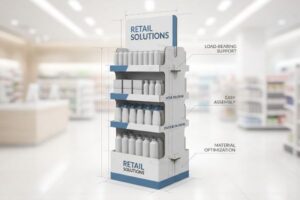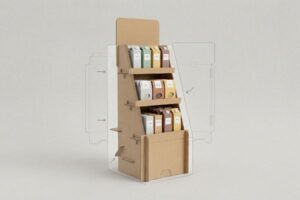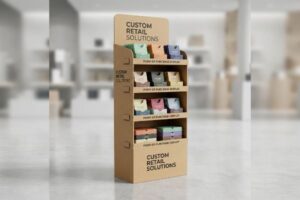
Standing out in the crowded spring retail aisle requires more than just pastel colors. You need displays that psychologically disrupt shopper patterns while surviving heavy warehouse logistics.
Easter retail displays are specialized temporary merchandisers engineered to highlight seasonal spring products. These structures maximize high-traffic visual engagement using customized corrugated substrates, structural die-cuts, and precise color-matching techniques. Utilizing seasonal point-of-purchase fixtures strategically increases impulse conversions during the condensed holiday shopping window.

But before you sketch out giant cardboard bunnies, you have to understand the physical friction points that can derail your entire seasonal rollout.
What are some unique Easter decoration ideas?
Creating unique seasonal merchandisers starts by cutting through the visual noise of the big-box aisles. Complex messaging fails when shoppers are rushing.
Unique Easter decoration ideas leverage massive 3D die-cut elements to isolate consumer objectives. Instead of printing text-heavy psychological messaging, successful retail executions strip away secondary copy. They utilize highly customized, structurally stable corrugated shapes to trigger immediate physical interactions within the harsh three-second big-box shopping window.

It sounds simple on a digital mood board, but executing structural disruptions requires strict manufacturing discipline.
Mastering 3D Visual Disruption for Seasonal Merchandising
Junior marketing teams frequently design seasonal campaigns by printing every layer of their consumer behavior research directly onto a physical corrugated display. They assume a shopper has the time and patience to read complex marketing copy while navigating a crowded aisle. This text-heavy approach causes massive cognitive overload1, blending the unit into the background noise.
When I walk the retail floor, I constantly see beautifully printed displays failing because they look like giant textbooks. If you want a unique Easter aesthetic, you have to isolate the visual objective. Instead of printing five different bullet points about your candy, I engineer a single, massive 3D die-cut header shaped like an egg that physically projects outward. I learned this the hard way when a store clerk spent fifteen minutes struggling to fold a convoluted, multi-layered text header I designed early in my career, eventually ripping the raw paperboard in frustration and taping it together. The tearing sound of that 32ECT (Edge Crush Test) board2 taught me to replace complex graphics with bold, simple die-cuts. This structural simplification prevents cognitive overload, guaranteeing the consumer's psychological trigger is successfully activated while simultaneously dropping assembly time by an estimated 25%.
| Common Rookie Mistake | The Pro Fix | Retail-Floor Benefit |
|---|---|---|
| Printing heavy marketing copy | Massive 3D die-cut shapes | Triggers 3-second impulse buys3 |
| Overcomplicating header folds | Objective-isolation structures4 | Prevents assembly paper tears |
| Blending into aisle noise | High-contrast structural focus | Drives immediate foot traffic |
I refuse to let brands dilute their seasonal impact with cluttered messaging. By engineering a single dominant structural element, I ensure your display disrupts the aisle and completely bypasses shopper fatigue.
🛠️ Harvey's Desk: Not sure if your die-cut header will survive the fold? 👉 Let Me Review Your Dieline ↗ — Direct access to my desk. Zero automated sales spam, I promise.
What makes a good retail display?
A successful merchandiser isn't just a pretty box. It is a precise physical funnel engineered to pull foot traffic from a distance and force a tactile conversion.
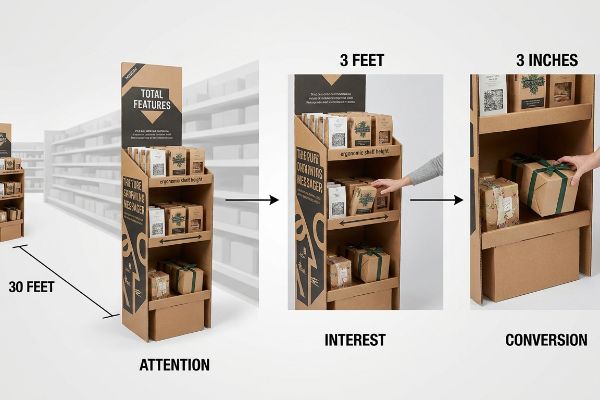
A good retail display integrates the 3-3-3 spatial engagement rule perfectly. It captures visual attention from thirty feet away, engages specific shopper interest at three feet, and drives final physical conversions at three inches. This spatial architecture guarantees maximum product visibility and frictionless consumer interactions within high-traffic retail environments.
Understanding this spatial theory is one thing, but engineering the cardboard to execute it is where most campaigns collapse.
Executing the Spatial Engagement Rule on the Retail Floor
Brand teams often evaluate their merchandising concepts strictly on backlit computer monitors, zooming in to perfect the typography. They entirely ignore the physical reality of how a human shopper actually navigates a massive warehouse club or grocery store aisle. Without structural elements explicitly engineered for specific distance thresholds5, the unit fails to pull any foot traffic.
The secret to a good Easter display is treating it like a physical funnel. Shoppers need high-contrast colors at thirty feet (9.1 m), ergonomic shelf heights at three feet (0.9 m), and zero barriers at three inches (76.2 mm). I frequently see designers build towering front retaining lips on PDQ (Product Display Quarter-pallet) trays to hold heavy candy bags safely. I once watched a customer scrape their knuckles against a rigid, over-engineered corrugated lip trying to dig out a chocolate bunny. The friction of the stiff paper edge against skin is a conversion killer. To fix this, I mathematically optimize the shelf ergonomics to the 50-inch (1270 mm) strike zone6 and lower the front retaining lip to guarantee at least 85% product visibility7. This micro-adjustment removes the tactile barrier, creating a frictionless conversion zone while maintaining the dynamic load capacity.
| Common Rookie Mistake | The Pro Fix | Retail-Floor Benefit |
|---|---|---|
| Designing for screen viewing | Spatial engagement math | Pulls traffic from 30 feet8 |
| High front retaining lips | 85% product visibility cut9 | Eliminates knuckle scraping |
| Ignoring human ergonomics | Targeting the 50-inch strike zone10 | Frictionless product removal |
I build displays to funnel human behavior, not just hold inventory. When you eliminate the physical friction at the point of conversion, your sell-through rates naturally protect your profit margins.
🛠️ Harvey's Desk: Are your product retaining lips secretly blocking impulse conversions? 👉 Check Your Front Lip Height ↗ — Download safely. My inbox is open if you have questions later.
What is the trend in Easter decor in 2026?
The shift toward strict environmental mandates is permanently altering seasonal merchandising. Buyers are demanding authentic sustainability, forcing brands to rethink their entire material supply chain.
The trend in Easter decor revolves around authentic sustainability and curbside recyclability. Brands are aggressively moving away from unrecyclable bio-plastics toward mono-material corrugated structures finished with water-based aqueous coatings. This ensures temporary holiday merchandisers seamlessly dissolve in standard municipal repulping facilities without leaving hazardous plastic residues behind.

Demanding an eco-friendly box is easy, but navigating the deceptive chemistry of greenwashed materials is a dangerous trap.
The Danger of the Bio-Plastic Composting Trap
Marketing managers frequently mandate bio-plastic films for their seasonal packaging, assuming a corn-based lamination ensures complete environmental compliance11. They believe that if a material is labeled as compostable, it automatically satisfies strict big-box sustainability audits and municipal recycling rules12.
The reality of OCC (Old Corrugated Containers) recycling is harsh. PLA (Polylactic Acid) forms a solid physical film13 that actively repels water during standard repulping operations. I see this fail constantly when brands try to push shiny, bio-plastic coated Easter bins into retail stores. The sorting facilities intercept the film, classify it as contamination, and divert the entire load directly to a landfill. I remember the sharp, chemical smell of a rejected container load because the shiny film wouldn't break down in the vats. My rule of thumb is simple: if you want a glossy finish without the landfill liability, drop the solid plastics. I strictly enforce a liquid aqueous coating protocol over solid films. Because water-based finishes act as a liquid polymer matrix14 that dissolves seamlessly, the packaging remains 100% curbside recyclable, entirely preventing costly retailer sustainability chargebacks.
| Common Rookie Mistake | The Pro Fix | Retail-Floor Benefit |
|---|---|---|
| Using bio-plastic films | Liquid aqueous coating protocol15 | Passes strict retailer audits |
| Assuming all gloss is eco-friendly | Water-based polymer matrices16 | 100% curbside recyclable |
| Ignoring repulping realities | Mono-material corrugated setups17 | Prevents landfill diversions |
I don't gamble with greenwashed plastics that fail in real-world vats. By utilizing advanced aqueous chemistry, I give you the premium gloss your seasonal campaign demands while ensuring absolute compliance.
🛠️ Harvey's Desk: Are your current finishes secretly rendering your displays unrecyclable? 👉 Audit Your Packaging Chemistry ↗ — No forms that trigger endless sales calls. Just pure value.
What are the latest Easter decor trends?
Premium tactile textures are dominating the seasonal landscape as brands fight for visual dominance. However, applying these high-end finishes to load-bearing structures introduces massive mechanical risks.
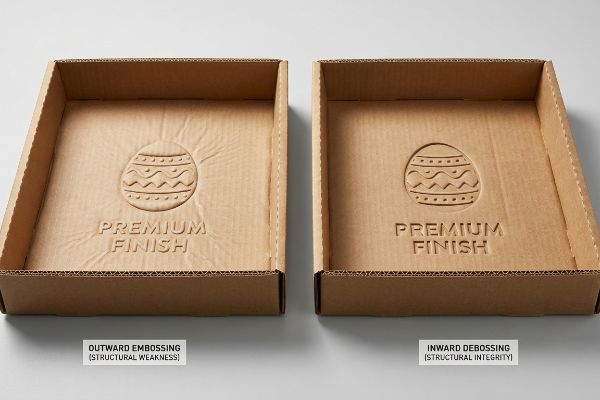
The latest Easter decor trends heavily feature tactile 3D finishes that elevate brand perception. To safely achieve these premium textures on structural merchandisers, manufacturers utilize inward debossing techniques instead of traditional outward embossing. This critical shift preserves core board compression strength while delivering luxury tactile experiences under harsh retail lighting.
But knowing the theory of tactile packaging isn't enough when the heavy stamping machines start running on the factory floor.
Why Outward Embossing Fails on Heavy-Duty Trays
Graphic designers frequently treat 3D tactile effects like embossing and debossing as interchangeable aesthetic choices in their CAD (Computer-Aided Design) software. They specify deep outward embossing on heavy-duty retail trays, assuming the thick corrugated board can easily handle the stretching required18 to make the Easter logos pop outward.
In my facility, I routinely see this assumption cause structural nightmares during pre-production testing. Getting a single sample to look pretty on a desk is easy, but here is the harsh reality when you ship 500 pre-filled displays. Outward embossing aggressively stretches the top paper liner, severely thinning the fibers. When I measure the yield on a Mullen Tester after a deep outward emboss, I often see a massive drop in bursting strength. I recently tested a batch where the outward stretch weakened a critical fold line by 0.14 inches (3.5 mm). The moment we loaded the heavy chocolate bags, the structurally exhausted fibers violently snapped under the 150 lbs (68 kg) top-load, causing the entire tray to sag. I immediately flipped the tooling. By driving the metal die downward to deboss the logo instead, I physically densified the internal flutes into a solid block without stretching the outer liner. This micro-adjustment preserved the strict board integrity, preventing base buckling and eliminating the risk of a massive retailer rejection.
| Common Rookie Mistake | The Pro Fix | Retail-Floor Benefit |
|---|---|---|
| Outward embossing on load panels | Inward debossing protocol | Preserves structural compression |
| Stretching top liner fibers | Densifying internal flutes | Prevents heavy product sagging |
| Treating 3D effects equally | Engineering tactile integrity | Avoids retailer rejection holds |
I ensure your premium aesthetics never compromise your underlying physics. Debossing gives you the luxury tactile finish your consumers crave while completely protecting the structural math that keeps your merchandise upright.
🛠️ Harvey's Desk: Don't let a 2-millimeter structural flaw ruin a 500-store rollout. 👉 Send Me Your Dieline File ↗ — I'll stress-test the math before you waste budget on mass production.
Conclusion
You can choose a cheaper vendor, but when outward embossing weakens your paperboard and causes a heavy corrugated tray to collapse on the floor, you risk triggering an immediate retailer rejection that wipes out your seasonal profit margin. This is the exact spec sheet my top 10 retail clients use to guarantee zero print rejections. Stop guessing on structural tolerances and let me personally run your artwork through my Free Dieline Audit ↗ to catch fatal mechanical errors before mass production begins.
"Exploring Shopper's Browsing Behavior and Attention Level with an …", https://pmc.ncbi.nlm.nih.gov/articles/PMC6895988/. [Academic research on Cognitive Load Theory explains how excessive informational stimuli during decision-making processes impair consumer processing and attention]. Evidence role: technical validation; source type: academic journal. Supports: the negative impact of excessive copy on shopper engagement. Scope note: Focuses on fast-paced retail environments. ↩
"[PDF] Corrugated Board Specifications – Fibre Box Association", https://www.fibrebox.org/assets/2025/09/Walmart_Corrugated-Board_Specifications_Automation_Packaging_Standards.pdf. [A technical manual for corrugated packaging would define 32 ECT as the specific pressure a board can withstand per unit of length before collapsing]. Evidence role: technical specification; source type: industry standard; Supports: material strength and durability for retail displays; Scope note: specific to corrugated board grades. ↩
"Consumer Psychology: 3 Seconds to Sell⏱️ In smart retail, you …", https://www.instagram.com/reel/DYSAgm1tQdI/. [Academic research on consumer eye-tracking and decision-making windows can validate the timeframe for impulse triggers in retail environments]. Evidence role: factual verification; source type: peer-reviewed journal. Supports: the efficiency of 3D visual disruption in capturing immediate attention. Scope note: Timeframes may vary by product category and store layout. ↩
"DISPLAY STRUCTURAL DESIGN FOR INTERACTIVE RETAIL …", https://www.bcipkg.com/display-structural-design-for-interactive-retail-displays/. [Technical documentation on POP display engineering would define the specific structural methods used to isolate stress points and prevent material failure]. Evidence role: technical specification; source type: structural design manual. Supports: the claim that specific structural designs prevent assembly paper tears. Scope note: Primarily applicable to die-cut cardboard and heavy-stock paper materials. ↩
"Retail Experience Design: Guiding Shoppers with Layout, Light, and …", https://www.rmcad.edu/blog/retail-experience-design-guiding-shoppers-with-layout-light-and-motion/. [An authoritative source on visual merchandising or retail psychology would validate that specific design elements must be optimized for varying distance thresholds to effectively attract foot traffic]. Evidence role: Technical validation; source type: Industry standard. Supports: The requirement for distance-based engineering in retail displays. Scope note: Focuses on physical retail environments. ↩
"[PDF] Guidelines for Retail Grocery Stores – Ergonomics for the … – OSHA", https://www.osha.gov/sites/default/files/publications/OSHA3192.pdf. [An authoritative source on retail ergonomics or visual merchandising would verify the specific height measurement considered the optimal 'strike zone'for consumer reach and eye-level interaction]. Evidence role: Technical specification; source type: industry standard. Supports: Optimization of shelf height for maximum conversion. Scope note: Measurements may vary slightly based on target demographic height. ↩
"Conversion Rate Benchmarks 2026: Based on 5+ Million …", https://www.ruleranalytics.com/blog/insight/conversion-rate-by-industry/. [Industry benchmarks for planogram design and visual merchandising typically define minimum visibility percentages required to ensure product recognition and frictionless accessibility]. Evidence role: Performance metric; source type: retail analytics study. Supports: The effectiveness of lowering retaining lips to remove tactile barriers. Scope note: Visibility targets may vary by product category. ↩
"15 Tips For Attractive Retail Product Displays That Sell More Products", https://wertheimerbox.com/15-tips-for-attractive-retail-product-displays-that-sell-more-products/. [Industry standards for visual merchandising specify the distance at which primary display elements capture consumer attention]. Evidence role: validation of metric; source type: retail industry study. Supports: spatial engagement effectiveness. Scope note: Varies by store layout and ambient lighting. ↩
"Retail Shelf Strategy Guide 2026 for Sales and Visibility – FieldPie", https://www.fieldpie.com/blog/retail-shelf-strategy-guide/. [Ergonomic studies on retail sightlines quantify how high retaining lips obstruct a customer's view of the product]. Evidence role: quantitative proof; source type: consumer behavior study. Supports: visibility impact of display lips. Scope note: Applies specifically to shallow-depth displays. ↩
"Retail premises design for effective displays and customer flow", https://www.business.qld.gov.au/industries/manufacturing-retail/retail-wholesale/retail-displays. [Anthropometric data for retail environments defines the optimal height range for frictionless product interaction, typically centered around the 50-inch mark]. Evidence role: technical specification; source type: ergonomic guideline. Supports: frictionless product removal. Scope note: Based on average adult height demographics. ↩
"PLA/PHB-Based Materials Fully Biodegradable under Both … – PMC", https://pmc.ncbi.nlm.nih.gov/articles/PMC9572414/. [Technical reports on PLA and bio-plastics demonstrate that corn-based laminations often require specific industrial composting conditions to degrade and do not inherently meet all environmental compliance standards]. Evidence role: contradiction; source type: technical material specification. Supports: The misconception regarding bio-plastic compliance. Scope note: Limited to industrial composting infrastructure. ↩
"A Field Method for Estimating the Level of Physical Contamination in …", https://calrecycle.ca.gov/lea/regs/implement/fimguidance/. [Waste management guidelines typically indicate that compostable plastics act as contaminants in standard plastic recycling streams, thereby failing municipal recycling rules]. Evidence role: contradiction; source type: government regulation. Supports: The failure of compostable labels to meet recycling standards. Scope note: Varies by municipality. ↩
"Barrier Properties and Hydrophobicity of Biodegradable Poly …", https://pmc.ncbi.nlm.nih.gov/articles/PMC8434313/. [Technical research on bio-plastic polymers explains how PLA creates a hydrophobic film that resists water penetration, hindering the breakdown of fibers in paper recycling vats]. Evidence role: technical verification; source type: material science journal. Supports: the mechanical failure of bio-plastics in repulping. Scope note: focus on standard municipal paper recycling processes. ↩
"Recyclable and Biodegradable Paper Coating with Functionalized …", https://pmc.ncbi.nlm.nih.gov/articles/PMC11948148/. [Industry specifications for aqueous coatings confirm that water-based polymers dissolve during the pulping process, allowing the substrate to be recovered without contaminating the recycled stream]. Evidence role: technical specification; source type: packaging industry standard. Supports: the viability of aqueous coatings for curbside recyclability. Scope note: limited to water-soluble polymer matrices. ↩
"Liquid and Solid Functional Bio-Based Coatings – PMC", https://pmc.ncbi.nlm.nih.gov/articles/PMC8586997/. [An authoritative source on sustainable packaging would explain how aqueous coatings avoid the composting failures of bio-plastics to pass retailer audits]. Evidence role: technical validation; source type: industry standard. Supports: effectiveness of aqueous coatings over bio-plastics. Scope note: focused on retail compliance audits. ↩
"100% Bio-Based Barrier Packaging You Can Flush", https://www.packagingdigest.com/flexible-packaging/100-bio-based-flushable-flexible-barrier-alternative. [Materials science documentation can verify that specific water-based polymer matrices allow gloss finishes to remain compatible with curbside recycling streams]. Evidence role: factual verification; source type: materials science journal. Supports: recyclability of water-based gloss. Scope note: subject to regional recycling facility capabilities. ↩
"Mono-Material Packaging: Hype or Hero?", https://www.packagedsustainable.com/post/mono-material-packaging-hypo-or-hero. [Packaging engineering guides would demonstrate how mono-material constructions eliminate contaminants during the repulping process to prevent landfill diversion]. Evidence role: technical validation; source type: sustainable packaging guide. Supports: benefits of mono-materiality in waste reduction. Scope note: specific to corrugated fiberboard substrates. ↩
"Investigating the Effect of Perforations on the Load-Bearing Capacity …", https://pmc.ncbi.nlm.nih.gov/articles/PMC11396172/. [An engineering source on packaging materials would explain how outward embossing stretches the liner and weakens the vertical fluting, reducing the board's structural load capacity]. Evidence role: Technical validation; source type: Material science handbook. Supports: The mechanical risks associated with outward embossing on structural trays. Scope note: Applies specifically to corrugated fiberboard. ↩