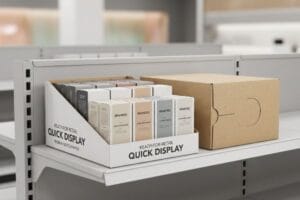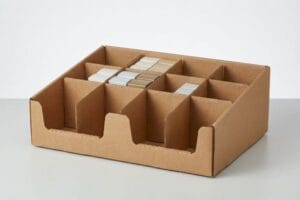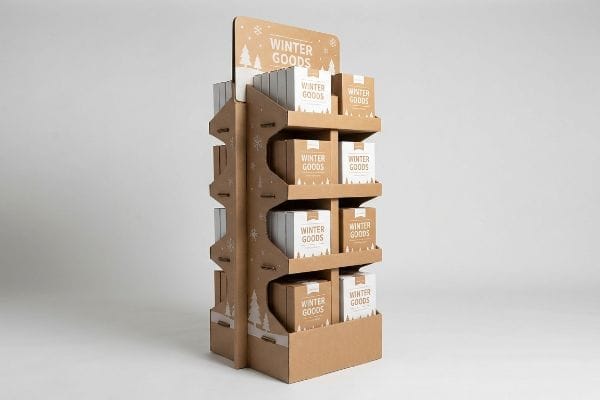
Worried your holiday retail displays won't survive the chaotic store floor? The wrong material choice can quickly ruin months of meticulous planning. Let's fix your structural strategy.
Seasonal displays are temporary retail fixtures engineered to promote specific holiday or limited-time merchandise. These highly visual structures utilize targeted graphics and modular corrugated designs to capture impulse buyers, drastically increasing seasonal product turnover while adhering to strict big-box floor lifespan guidelines.
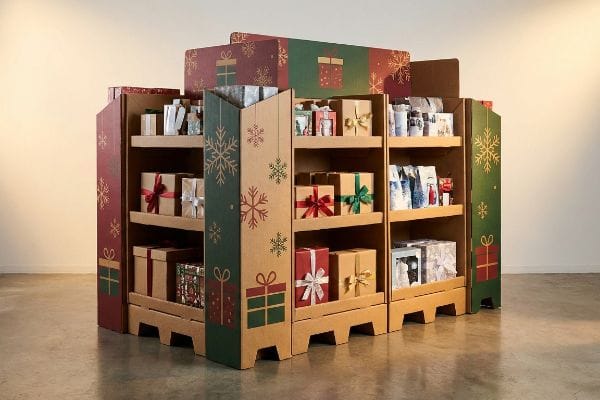
A brilliantly designed holiday fixture won't drive revenue if it collapses under a load of heavy winter merchandise. Let's look at how these structures actually perform on the floor.
What is Seasonal Display?
Grabbing attention during major holidays is tough, but keeping that fixture looking premium for weeks is the real battle.
A seasonal display is a standalone promotional unit designed for short-term retail events. These corrugated structures feature highly thematic, visually disruptive artwork aimed at driving impulse purchases during specific calendar windows, strategically bypassing permanent store shelving to place products directly in high-traffic shopping aisles.
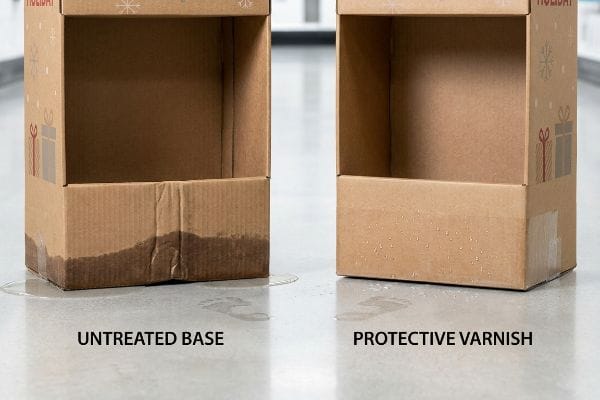
Before you launch that gorgeous holiday unit, we need to talk about where it actually sits.
Defeating the "Soggy Bottom" Seasonal Threat
Most designers build beautiful holiday graphics on standard corrugated board and assume the retailer will place it perfectly in a dry, safe aisle. The reality is that prime seasonal real estate is often located right by the entrance doors1 to catch foot traffic immediately. During winter holidays or spring showers, this places your pristine cardboard directly in the line of melting snow, rain, and aggressive nightly floor mopping.
I constantly see beautifully printed displays ruined because buyers skip base protection to save pennies. The classic rookie trap is setting a raw cardboard base on a wet floor, only to hear that soft, mushy tearing sound as the bottom flutes wick up dirty mop water like a sponge. When I review these failed units, I immediately apply our "Mop Guard" coating—a clear, water-resistant varnish barrier covering the bottom 4 inches2 (101.6 mm) of the base. This invisible shield completely stops moisture creep, ensuring your temporary unit doesn't turn into a sagging hazard that triggers an immediate retailer rejection.
| Common Rookie Mistake | The Pro Fix | Retail-Floor Benefit |
|---|---|---|
| Raw cardboard touching the floor | Apply clear varnish barrier to base | Prevents moisture wicking3 |
| Ignoring nightly cleaning routines | 4-inch (101.6 mm) bottom poly-coat4 | Survives industrial floor mopping |
| Assuming dry placement | Engineer for entryway placement | Eliminates sagging base rejections |
I never let a client ship a floor unit without sealing the bottom edges. Blocking moisture at the base guarantees your campaign stays upright and structurally sound through the entire holiday rush.
🛠️ Harvey's Desk: Are your temporary fixtures absorbing moisture and collapsing in the aisles? 👉 Let Me Review Your Dieline ↗ — Direct access to my desk. Zero automated sales spam, I promise.
What is Seasonal Visual Merchandising?
Now that the base is protected, you need a strategy to make shoppers actually stop their carts.
Seasonal visual merchandising is the strategic presentation of holiday-themed products using temporary, disruptive retail structures. It combines specialized color palettes, unique die-cut shapes, and targeted product placements to break up standard aisle monotony, capturing consumer attention within three seconds during highly competitive shopping periods.

Great artwork is important, but physical shape is what truly disrupts a shopper's peripheral vision.
The Psychology of "Visual Disruption" in Aisles
Brands frequently attempt to maximize their seasonal visual merchandising by printing incredibly complex, colorful graphics onto standard rectangular box shapes. They assume that brighter colors alone will differentiate their Valentine's Day or Halloween rollout from the competitor sitting right next to them. However, retail environments are visually overwhelming, and a flat square profile naturally blends into the endless geometric grid5 of permanent store shelving.
The most common question I get is how to make a display literally jump out without over-engineering the whole structure. Even veteran designers often overlook this blind spot, relying strictly on ink rather than structural geometry. In my facility, I know we have a winner when I hear the sharp, clean snap of our CNC (Computer Numerical Control) cutter slicing out an aggressive, curvy, die-cut header. By introducing unexpected curves and organic shapes extending beyond the standard rectangular silhouette, you create instant visual disruption that forces the human eye to pause. This structural contrast grabs attention faster than graphic changes, driving impulse engagement without adding massive material costs.
| Common Rookie Mistake | The Pro Fix | Retail-Floor Benefit |
|---|---|---|
| Relying only on printed graphics | Use aggressive die-cut headers | Breaks peripheral shopper vision6 |
| Using basic rectangular profiles | Introduce organic, curved shapes | Stands out against store shelves7 |
| Overcomplicating the base | Keep base simple, customize header | Cost-effective visual disruption |
I always prioritize custom header silhouettes over expensive foil treatments. A unique physical shape intercepts shopper traffic from down the aisle, delivering immediate visual impact long before they can even read your logo.
🛠️ Harvey's Desk: Are your holiday displays blending in because they share the exact same rectangular profile as permanent shelves? 👉 Download My Structural Guide ↗ — Download safely. My inbox is open if you have questions later.
What is Seasonal Merchandise?
Attracting the customer is only half the battle; how the actual products sit within the unit dictates your sell-through rate.
Seasonal merchandise refers to products manufactured and marketed specifically for a particular time of year or holiday event. These limited-edition items require agile packaging and flexible retail displays capable of accommodating shifting product sizes, weights, and inventory volumes throughout the short promotional window.

You cannot treat a rotating holiday inventory the same way you treat an everyday, standardized FMCG (Fast-Moving Consumer Goods) product.
Managing Assortments with Modular Dividers
When dealing with seasonal merchandise, brands typically design a custom interior tray that perfectly fits their primary feature item. They lock this internal dimension down weeks in advance, completely ignoring the reality that holiday assortments often include secondary SKUs of varying sizes. Once the promotional period starts, buyers frequently want to rotate in different gift sets or clearance items, but the rigid insert mathematically rejects the new inventory.
Think of a static display insert like pouring concrete; once it sets, you cannot change the foundation. I watch frustrated co-packers try to force oversized holiday gift boxes into rigid slots, tearing the raw paperboard and completely ruining the unboxing aesthetic. To fix this, I mandate a "Modular Divider" strategy using floating, interlocking corrugated partitions rather than glued-down walls. When a retailer needs to pivot from standard summer sunscreen bottles to wider after-sun care jars, store clerks simply slide the friction-fit divider8 over by 2 inches (50.8 mm). This flexibility drastically reduces assembly headaches and allows you to utilize one universal shipper for an entire quarter's shifting inventory.
| Common Rookie Mistake | The Pro Fix | Retail-Floor Benefit |
|---|---|---|
| Gluing down permanent dividers | Use floating, interlocking partitions9 | Adapts to changing product sizes |
| Designing for a single SKU | Engineer universal tray footprints | Consolidates tooling costs10 |
| Forcing oversized items into slots | Adjustable friction-fit channels11 | Prevents torn interior graphics |
I build flexibility directly into the math. Equipping your units with modular dividers ensures your display survives mid-season inventory shifts without forcing you to manufacture a completely new batch of inserts.
🛠️ Harvey's Desk: Struggling to fit varying holiday product dimensions into a single, cost-effective shipper display? 👉 Request a Modular Dieline Audit ↗ — No forms that trigger endless sales calls. Just pure value.
What Are Seasonal Patterns in Business?
Understanding what to build is useless if you do not understand exactly when your supply chain will allow you to build it.
Seasonal patterns in business represent predictable fluctuations in consumer demand and manufacturing capacity tied to calendar events. For retail packaging, these surges severely impact factory lead times, raw material availability, and global freight schedules, requiring highly coordinated procurement strategies to ensure timely rollout execution.
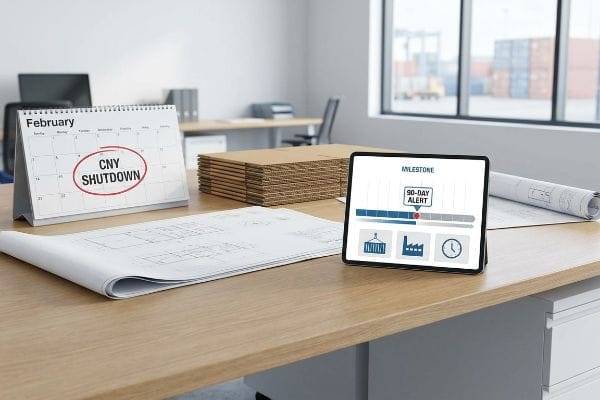
But knowing the theory isn't enough when the machines start running and global factory capacities suddenly vanish overnight.
Surviving the "CNY Gap" Supply Chain Squeeze
Procurement teams frequently plot out their holiday retail launches using standard 30-day manufacturing turnaround times, assuming global factories operate at a steady, uninterrupted pace year-round. They draft beautiful timelines for their spring/summer seasonal displays, projecting delivery dates that perfectly align with big-box reset windows. This linear thinking completely ignores the severe, systemic supply chain blackout caused by the CNY12 (Chinese New Year), a massive seasonal pattern that radically alters physical manufacturing reality.
In my facility, I routinely see brands panic when their standard February display order is rejected because the entire workforce has traveled home for three weeks13. This isn't just theory—I see this happen on the testing floor when desperate clients beg me to rush jobs, but raw material suppliers have already shut down their corrugated machines14. To combat this devastating seasonal pattern, I enforce a ruthless "CNY Gap" Strategy, firing off a hard production calendar alert exactly 90 days before the shutdown. I mandate that all structural engineering files and prepress approvals be locked in by mid-November, pushing physical production into December. By enforcing this aggressive timeline shift, I ensure the finished flat-packs are loaded into shipping containers and on the ocean 14 days before the logistics freeze, entirely preventing missed retailer launch dates and saving clients from catastrophic revenue loss.
| Common Rookie Mistake | The Pro Fix | Retail-Floor Benefit |
|---|---|---|
| Assuming standard lead times in Q1 | Enforce a 90-day production alert | Secures manufacturing capacity |
| Approving files in January | Lock in prepress by mid-November | Prevents total launch failure |
| Ignoring ocean freight bottlenecks | Ship containers 14 days early | Guarantees timely store arrival |
I never let a client gamble their Q1 revenue on standard lead times. Acknowledging massive global manufacturing pauses and adjusting your engineering timeline months in advance is the only way to guarantee your displays arrive on time.
🛠️ Harvey's Desk: Does your current structural timeline accurately account for the global material freezes that happen before major seasonal holidays? 👉 Send Me Your Delivery Schedule ↗ — I'll stress-test the math before you waste budget on mass production.
Conclusion
You can choose a cheaper vendor for your holiday push, but when an unprotected base absorbs mop water and completely collapses under 150 lbs (68 kg) of inventory, it triggers an immediate, costly retailer rejection. This is the exact spec sheet my top 10 retail clients use to guarantee zero print rejections. Stop guessing on moisture tolerances and let me personally run your structural files through my Free Dieline Pre-Flight Audit ↗ to lock down your vulnerabilities before production begins.
"Best Practices and Ideas to Increase Foot Traffic in Your Retail Store", https://www.pcc.edu/small-business/2015/11/best-practices-and-ideas-to-increase-foot-traffic-in-your-retail-store/. [Retail layout and merchandising standards confirm that high-traffic 'strike zones'near entrances are prioritized for seasonal displays to maximize impulse purchases]. Evidence role: factual support; source type: retail management industry standard. Supports: strategic placement of seasonal displays. Scope note: Applicable primarily to big-box and high-volume retail environments. ↩
"What is Varnish Coating in Packaging and Printing? | Complete Guide", https://www.wecustomboxes.com/blog/what-is-varnish-coating-in-packaging-and-printing/. [Technical guidelines for retail display manufacturing confirm that applying a moisture-resistant coating to the base of corrugated units prevents capillary action and structural failure]. Evidence role: technical specification; source type: manufacturing standard. Supports: the efficacy of varnish barriers in preventing moisture creep. Scope note: limited to temporary corrugated displays. ↩
"Tip On How to Make Cardboard Waterproof? – Custom Boxes Market", https://customboxesmarket.com/tip-on-how-to-make-cardboard-waterproof/?srsltid=AfmBOopkF9RmBivQoc419KCyzcrGRnKkgnWRyBMvfqX2YFW1iOC-zv_j. [Materials science documentation confirms that a clear varnish creates a hydrophobic seal that prevents capillary action in porous cellulose-based materials like cardboard]. Evidence role: technical validation; source type: materials science technical paper. Supports: efficacy of varnish in preventing moisture wicking. Scope note: effectiveness varies by varnish thickness and application method. ↩
"GS-53 Specialty Cleaning Products for I&I Use – Green Seal", https://greenseal.org/standards/gs-53-specialty-cleaning-products-for-industrial-and-institutional-use/. [Retail fixture engineering guidelines specify minimum barrier heights to protect structural integrity against the water volume and height of industrial mopping equipment]. Evidence role: industry standard verification; source type: retail design manual. Supports: the specific dimension for durability against floor cleaning. Scope note: dependent on specific industrial cleaning protocols. ↩
"Geometric Psychology in Visual Merchandising | Kendu", https://www.kendu.com/?magazine=geometry-in-visual-merchandising. [Authoritative studies on retail environmental psychology explain how consumers subconsciously filter out repetitive geometric patterns, requiring disruptive shapes to trigger attention]. Evidence role: theoretical foundation; source type: academic journal or retail design guide. Supports: the claim that standard shapes fail to create visual disruption. Scope note: applicable to high-stimulus retail environments. ↩
"The Impact of Visual Elements of Packaging Design on Purchase …", https://pmc.ncbi.nlm.nih.gov/articles/PMC11851823/. [A study on visual attention in retail environments can validate how non-linear elements like die-cut headers interrupt automatic peripheral scanning.] Evidence role: technical validation; source type: academic journal. Supports: the effect of die-cut headers on shopper attention. Scope note: specific to peripheral vision disruption. ↩
"The Psychology Behind Retail Displays", https://www.theglobaldisplaysolution.com/blog/the-psychology-behind-retail-displays/?srsltid=AfmBOooi1rmf55ciTBpTXYQ72wGBQc3Y5rSLLX1YyQp5wlKsG7QsE8si. [Environmental psychology research explains how organic shapes provide high visual contrast against the rigid grid of standard retail shelving.] Evidence role: design principle validation; source type: retail design study. Supports: the use of curved shapes to increase visibility. Scope note: limited to contrast psychology. ↩
"Discover the Benefits of Corrugated Box Dividers for Your Business", https://www.estic-maillot.com/en/corrugated-box-dividers/. [Technical specifications for packaging inserts describe friction-fit designs as a method for securing partitions without permanent bonding]. Evidence role: mechanical specification; source type: industry standard. Supports: ease of manual adjustment by retail staff. Scope note: Effectiveness depends on material tolerances. ↩
"Movable Partitions for Retail Stores – Modernfold", https://www.modernfold.com/en-US/movable-partitions-for-retail-stores. [Retail design literature would demonstrate how non-permanent interlocking dividers allow for rapid reconfiguration of product assortments. Evidence role: operational validation; source type: retail management guide. Supports: flexibility in product sizing. Scope note: specifically for modular seasonal displays.] ↩
"Product Launch Displays: Maximizing Impact Without Breaking the …", https://www.creativedisplaysnow.com/product-launch-displays/. [An authoritative source on industrial design or retail fixtures would explain how standardized footprints reduce the requirement for unique molds. Evidence role: financial validation; source type: manufacturing guide. Supports: cost reduction through universal design. Scope note: limited to hard-goods fixture production.] ↩
"Merchandising Display Systems", https://www.peerlessassigns.com/wp-content/uploads/2022/09/Peerless-Assigns-Merchandising-Brochure-2022.pdf. [Technical specifications for retail display systems would confirm that friction-fit mechanisms allow size adjustments without putting stress on surrounding materials. Evidence role: technical specification; source type: engineering handbook. Supports: prevention of graphic damage. Scope note: applies to modular partitioning.] ↩
"Chinese New Year and its Impact on Global Supply Chain", https://ctl.mit.edu/news/chinese-new-year-and-its-impact-global-supply-chain. [An industry report on global logistics would document the annual cessation of manufacturing activity and freight delays in China during the Lunar New Year period]. Evidence role: factual verification; source type: logistics report. Supports: impact of CNY on manufacturing. Scope note: Focuses on China-based production and exports. ↩
"Chinese New Year Shutdown 2026: How to Prepare – ShipBob", https://www.shipbob.com/blog/chinese-new-year-shutdown/. Global logistics and economic reports confirm that the Lunar New Year typically results in a multi-week cessation of manufacturing activity across China. Evidence role: factual verification; source type: industry report. Supports: the duration and scale of the production gap. Scope note: Shutdown periods vary slightly by year and province. ↩
"Supply chains and corrugated packaging: A marriage made to last", https://www.supplychaindive.com/spons/supply-chains-and-corrugated-packaging-a-marriage-made-to-last-1/727713/. Packaging industry analyses verify that raw material producers, including paper and corrugated mills, pause operations during the holiday freeze. Evidence role: technical verification; source type: trade publication. Supports: the systemic nature of raw material unavailability during CNY. Scope note: Specific to the Asia-Pacific manufacturing region. ↩