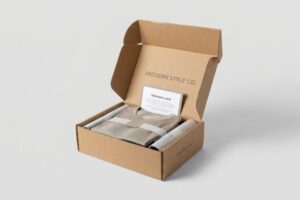
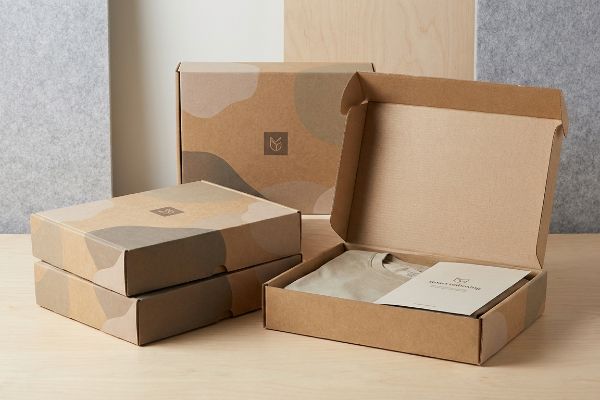
You pour thousands into curating the perfect apparel collection, only to lose subscribers because the unboxing experience feels cheap. Stale packaging instantly kills a premium clothing brand's momentum.
Future trends in the clothing subscription box industry prioritize personalized packaging, complete zero waste materials, and smart unboxing mechanics. Brands are replacing generic cartons with direct digital printing and simple paper structures to create agile, sustainable, and highly engaging retail delivery experiences.
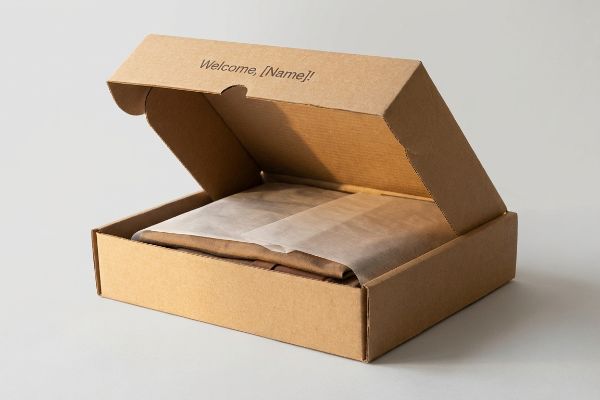
Bridging the gap between a digital subscription and physical delivery requires more than just a standard mailer; it demands retail-grade engineering.
Are Subscription Boxes Still Popular in 2026?
Retaining modern subscribers requires delivering a physically premium product every single month. If your delivery vessel feels like a cheap shipping carton, customers quickly cancel their recurring payments.
Yes. Subscription boxes remain highly popular in 2026 by evolving into premium, tactile brand experiences. Success now depends on elevating the physical packaging with high-contrast spot colors and luxurious finishes, transforming a basic monthly clothing delivery into an eagerly anticipated, highly engaging retail event.
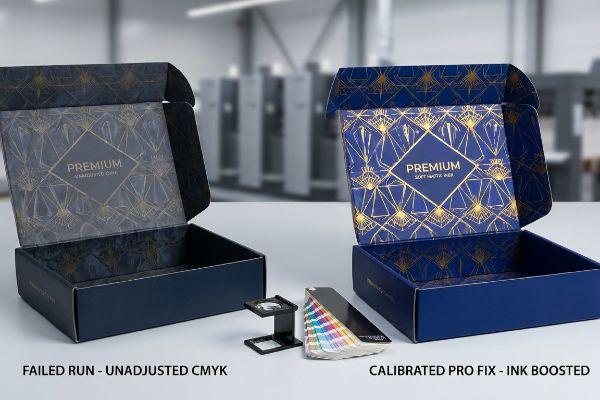
But trying to achieve that luxury feel on a raw corrugated mailer often backfires on the production line.
Why Soft Touch Packaging for Subscription Boxes Fails
Marketing teams often assume they can apply a premium soft touch thermal lamination to their standard CMYK (Cyan, Magenta, Yellow, Key/Black) corrugated mailers to instantly elevate the unboxing experience. They expect the printed colors to match their digital proofs perfectly, assuming the tactile film acts just like a clear window1.
The reality of polymer chemistry tells a different story. I see this exact trap when a brand wants a velvet-feel box for high-end activewear. The microscopic bi-axially oriented polymer structure of the soft touch film acts as a vacuum, scattering light and physically darkening the printed pigments by up to 5%2. I remember peeling open a freshly laminated batch of midnight-blue boxes and hearing the dull thud of the heavy lid falling shut, only to see the color had shifted into a muddy, washed-out black. It is a frustrating micro-disaster that forces us to scrap the run. To fix this, I mathematically boost the ink densities in the prepress software by injecting a 10% cyan bump before printing3, ensuring the final color punches through the film.
| Common Rookie Mistake | The Pro Fix | Retail-Floor Benefit |
|---|---|---|
| Applying standard CMYK under soft-touch film. | Use a Lamination Compensation Curve4 in prepress. | Saves days of costly prepress rework. |
| Ignoring the 5% darkening effect5. | Boost specific ink densities by 10-12%6. | Ensures brand color matches perfectly. |
| Relying on unlaminated digital proofs. | Require a physical spectrophotometer scan. | Prevents mass rejection of premium boxes. |
I never trust a digital screen to predict a tactile polymer reaction. Compensating for light absorption in the prepress stage guarantees your subscription box hits the customer's porch looking exactly as vibrant as you intended.
🛠️ Harvey's Desk: Not sure if your brand colors will survive a matte lamination? 👉 Request A Color Calibration Review ↗ — Direct access to my desk. Zero automated sales spam, I promise.
What Are the Expected Clothing Trends in the Future?
The next wave of apparel centers entirely around verifiable sustainability. Consumers demand that both the garments and the boxes they arrive in leave absolutely no toxic trace behind.
Expected clothing trends prioritize complete circularity and zero-waste packaging materials. Apparel brands are rapidly adopting liquid aqueous coatings over standard plastic laminations, ensuring that both the garments and their protective corrugated shippers achieve 100% curbside repulpability without triggering downstream municipal recycling rejections or greenwashing penalties.
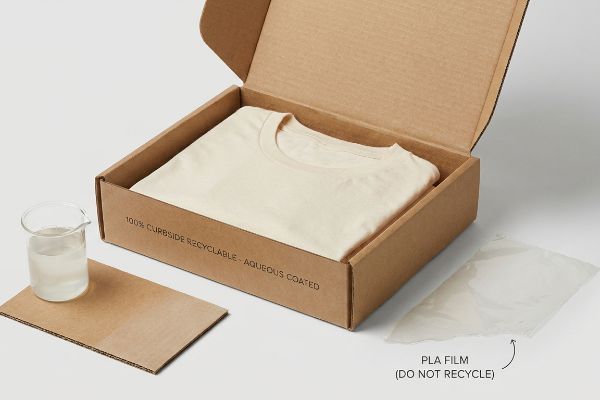
However, striving for an eco-friendly unboxing experience often leads brands into a massive chemical trap.
Navigating Eco-Friendly Clothing Trends with Aqueous Coatings
Brand managers frequently mandate PLA (Polylactic Acid) bio-plastic laminations for their new sustainable apparel lines, assuming this corn-based film guarantees complete eco-compliance. They believe that because the material is technically derived from plants, the entire corrugated structure will easily break down in a standard backyard compost pile7.
What buyers do not realize is that PLA forms a solid physical film that aggressively repels water8 during the OCC (Old Corrugated Containers) repulping process. I recently watched a startup founder struggle for ten minutes trying to peel this stubborn eco film off a misprinted box, the plastic snapping and tearing into sharp shards. If that box hits a standard municipal center, the bio-plastic clogs the paper mill vats, and the entire shipment gets diverted straight to a landfill. Instead, I transition these clients to a liquid aqueous coating. Because it acts as a water-based polymer matrix9, it dissolves seamlessly, keeping the box completely curbside recyclable while still protecting the clothing from transit moisture.
| Common Rookie Mistake | The Pro Fix | Retail-Floor Benefit |
|---|---|---|
| Mandating solid PLA bio-plastic films. | Switch to liquid aqueous coatings. | Prevents municipal recycling rejections10. |
| Assuming corn-based means easily compostable11. | Use water-based barriers that dissolve. | Keeps the brand fully ESG compliant. |
| Ignoring the OCC repulping process12. | Ensure the coating is mono-material friendly. | Eliminates downstream waste disposal fines. |
I refuse to let brands accidentally greenwash their apparel packaging. Swapping solid bio-plastics for liquid aqueous barriers eliminates repulping friction, ensuring your sustainability claims hold up in the real world.
🛠️ Harvey's Desk: Are your current "sustainable" boxes secretly ending up in a landfill? 👉 Get A Material Compliance Check ↗ — Download safely. My inbox is open if you have questions later.
What Will Subscription Fatigue Be Like in 2026?
As consumers trim their budgets, keeping them engaged becomes harder. When a box arrives looking crushed or exhausted, that physical disappointment is the exact trigger that causes instant cancellation.
Subscription fatigue in 2026 will aggressively penalize brands that deliver compromised, structurally weak packaging. As churn rates climb, retaining apparel customers requires utilizing fresh, ISTA-tested corrugated materials that survive transit vibrations without buckling, ensuring the physical unboxing moment remains pristine and continuously reinforces the brand's core value.
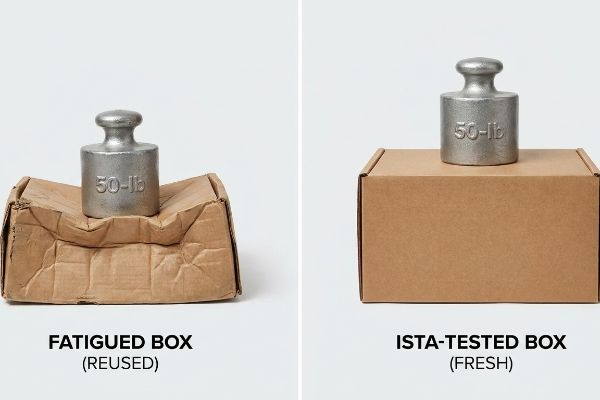
Combatting this fatigue requires flawless logistics, but many brands accidentally sabotage their own supply chain trying to save a few pennies.
Why Reused Mailers Accelerate Subscription Fatigue
To offset rising customer acquisition costs, startups frequently attempt to bootstrap their logistics by reusing inbound B2C (Business-to-Consumer) ecommerce boxes for their outbound subscription deliveries. They assume that as long as the box visually appears intact, it retains its original factory strength13 and will safely protect the clothing inside.
Think of corrugated flutes like the shock absorbers on your car; after enough miles, they permanently lose their bounce. I see this constantly when brands try to repack delicate apparel in exhausted mailers. The paper fibers have already absorbed micro-impacts and warehouse moisture, permanently degrading their compression strength14. I once pressed my thumb against the corner of a recycled outbound box, and the 32ECT (Edge Crush Test) board simply caved in like a wet sponge with a soft crunching sound. Relying on fatigued boxes virtually guarantees your subscription package will collapse under a 50-lb (22.6 kg) top-load15 during transit, infuriating the customer. I enforce a strict virgin-material mandate for all outbound shipments to prevent this invisible strength loss.
| Common Rookie Mistake | The Pro Fix | Retail-Floor Benefit |
|---|---|---|
| Reusing inbound B2C boxes for outbound freight. | Mandate fresh, un-fatigued corrugated boards. | Eliminates crushed boxes on the porch. |
| Assuming visual condition equals structural strength. | Use ISTA 6-Amazon SIOC tested shippers16. | Dramatically reduces clothing return rates. |
| Ignoring paper fiber shock-absorption limits. | Maintain strict 32ECT virgin material minimums17. | Protects brand equity and prevents churn. |
I always tell brands that saving ten cents on a fatigued mailer will cost you a fifty-dollar monthly subscriber. Investing in fresh structural corners is the cheapest retention strategy you can buy.
🛠️ Harvey's Desk: Is your churn rate secretly tied to transit-crushed packaging? 👉 Claim Your Free ISTA Evaluation ↗ — No forms that trigger endless sales calls. Just pure value.
What Are the Current Trends in the Clothing Industry?
Agile, limited-edition apparel drops dictate today's market rhythm. Brands can no longer afford to wait six weeks for packaging plates to be etched while fashion cycles move in days.
Current trends in the clothing industry are dominated by high-speed, limited-edition retail drops powered by direct-to-board digital printing. By eliminating traditional prepress plates, apparel brands utilize instant UV ink polymerization to launch hyper-personalized packaging campaigns in days, bypassing the massive minimum order quantities of legacy manufacturing.
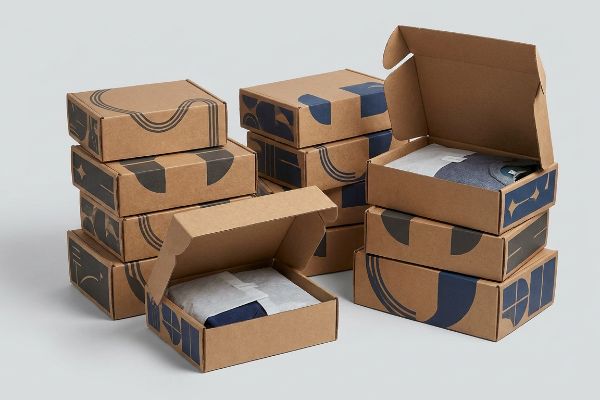
But knowing the theory of rapid digital printing isn't enough when the machines start running and deadlines are looming.
Why Standard Litho-Lamination Fails the Modern Clothing Industry
Procurement teams trying to execute a rapid, personalized clothing campaign often default to standard litho-lamination because they trust its legacy print quality. They assume that traditional wet PVA (Polyvinyl Acetate) adhesives18 and expensive metal printing plates19 can simply be rushed to meet a two-week product launch window.
This isn't just theory—I see this happen on the testing floor when a brand tries to force a short-run customized box through a legacy litho-lamination line. The sheer volume of water in the PVA glue absorbs into the porous testliner, causing massive surface tension. If we do not let it cure under heavy dead-weights for a full 24 hours, the 32ECT board will warp up to 0.45 inches20 (11.4 mm) at the edges. I measure this deflection with calipers, and that slight bow means the boxes jam instantly when the automated co-packer tries to fold them. By pivoting to direct-to-board UV (Ultraviolet) flatbed digital printing, I bypass the wet glue entirely. The UV light arrays cure the liquid ink into a solid polymer film21 the millisecond it hits the board. Stripping out the wet process and tooling plates cuts our setup time by 48 hours, saving the client roughly $2,100 in manual tooling fees and ensuring the limited-edition drop ships exactly on time.
| Common Rookie Mistake | The Pro Fix | Retail-Floor Benefit |
|---|---|---|
| Relying on wet PVA glue for rapid custom drops. | Shift to UV direct-to-board digital printing. | Saves 48 hours of manufacturing time22. |
| Paying for metal plates on runs under 500 units. | Eliminate legacy tooling bottlenecks completely. | Cuts upfront costs by roughly $2,10023. |
| Ignoring the 24-hour moisture curing requirement24. | Use instant UV polymerization technology. | Prevents automated folding machine jams. |
I rely on UV flatbed printing because it fundamentally breaks the old speed limits. Stripping out wet adhesives and metal plates allows us to execute a flawless, personalized apparel launch without the agonizing wait.
🛠️ Harvey's Desk: Are legacy printing plates silently eating your apparel campaign's profit margin? 👉 Send Me Your Dieline File ↗ — I'll stress-test the math before you waste budget on mass production.
Conclusion
You can source cheap, fatigued corrugated mailers for your apparel drops, but when that exhausted 32ECT board collapses under a 50-lb (22.6 kg) warehouse top-load, the resulting crushed boxes will trigger an immediate wave of subscriber cancellations and wipe out your entire acquisition return on investment. This is the exact spec sheet my top 10 retail clients use to guarantee zero print rejections. Stop gambling with your recurring revenue and let me personally run your structural files through my Free Dieline Audit ↗ to catch fatal transit weaknesses before you launch.
"Troubleshooting Color Shift in Lamination", https://nobelusuniversity.com/2023/02/17/troubleshooting-color-shift-in-lamination/. Technical explanation of how soft touch films alter light refraction and ink saturation, resulting in color shifts for CMYK prints. Evidence role: contradict the assumption of neutral transparency; source type: printing industry technical manual. Supports: the claim that tactile finishes modify the visual output of printed colors. Scope note: specifically regarding thermal lamination on corrugated substrates. ↩
"Heat Treatment Impacts on Film Morphology in Biaxially …", https://pubmed.ncbi.nlm.nih.gov/40535919/. Technical explanation of how bi-axially oriented polymer structures in matte films affect light refraction and perceived pigment density. Evidence role: technical verification of optical properties; source type: materials science journal or packaging engineering manual. Supports: the claim that soft-touch finishes physically darken printed colors. Scope note: specific percentage shift may vary based on film thickness and pigment type. ↩
"Managing Ink Coverage in Print Design: A Guide to Selective …", https://www.printing.org/content/2024/04/23/adjustinginklimits.april2024. Industry standard for adjusting CMYK ink densities to compensate for color shift caused by soft-touch or matte lamination. Evidence role: professional practice verification; source type: graphic arts technical guide or prepress manual. Supports: the use of specific ink adjustments to maintain color vibrancy through film. Scope note: exact percentage depends on the specific color profile and substrate. ↩
"Soft Touch Lamination and Coatings for Premium Packaging", https://www.ecofibers.com/soft-touch-lamination-and-coatings-for-premium-packaging/. Verification of the standard prepress practice of using compensation curves to counteract lamination effects. Evidence role: procedural validation; source type: graphic arts technical documentation. Supports: the use of specific software curves for prepress. Scope note: refers to ICC profiles or custom curves. ↩
"What is Soft Touch Lamination in Packaging?", https://www.elitecustomboxes.com/blog/what-is-soft-touch-lamination/. Brief explanation of how soft-touch film alters light absorption and perceived color density. Evidence role: factual verification of color shift; source type: printing industry technical guide. Supports: the specific percentage of color darkening. Scope note: may vary by film brand. ↩
"Our Print Finishes", https://mixam.de/support/finish?locale=en_DE. Technical guidance on the necessary ink increase to maintain color consistency after lamination. Evidence role: technical specification verification; source type: prepress manual or color management standard. Supports: the recommended density boost range. Scope note: depends on substrate and ink type. ↩
"PLA/PHB-Based Materials Fully Biodegradable under Both …", https://pmc.ncbi.nlm.nih.gov/articles/PMC9572414/. An authoritative source on bioplastics would clarify that PLA typically requires the high-heat environment of industrial composting facilities to degrade and does not readily break down in backyard piles. Evidence role: technical verification of material degradation requirements; source type: scientific study or environmental certification body. Supports: the distinction between industrial and home compostability for PLA. Scope note: focuses on the thermal requirements for PLA hydrolysis. ↩
"UV Resistance and Wetting of PLA Webs Obtained by … – PMC", https://pmc.ncbi.nlm.nih.gov/articles/PMC11397645/. Detailed technical explanation of how Polylactic Acid (PLA) films behave during the Old Corrugated Containers (OCC) repulping process. Evidence role: technical verification of material properties; source type: material science journal or waste management study. Supports: claim that PLA resists water during repulping. Scope note: specifically refers to the repulping phase of paper recycling. ↩
"Bio-Based Aqueous Dispersions Based on Unsaturated PLA …", https://pmc.ncbi.nlm.nih.gov/articles/PMC12473213/. Technical verification of the chemical composition and recyclability of aqueous coatings in corrugated packaging. Evidence role: validation of material performance; source type: packaging engineering specification or industrial recycling standards. Supports: claim that aqueous coatings dissolve during recycling. Scope note: focuses on curbside repulpability. ↩
"Water-based Coating vs. PLA vs. PE Lined Paper Bowls & …", https://www.bioleaderpack.com/navigating-2026-plastic-bans-water-based-coating-vs-pla-vs-pe-lined-paper-bowls-cups/. Authoritative data on waste stream contamination shows that aqueous coatings are more compatible with standard paper recycling than PLA films. Evidence role: technical verification; source type: waste management report. Supports: the benefit of switching from PLA to aqueous coatings. Scope note: effectiveness depends on local municipal facility capabilities. ↩
"What Is Industrial Compost Vs Home Compost?", https://www.bioleaderpack.com/what-is-industrial-compost-and-home-compost/. Scientific research indicates that many corn-based plastics require specific industrial composting conditions and do not degrade in home compost piles. Evidence role: factual correction; source type: environmental science journal. Supports: the claim that corn-based materials can be misleading regarding compostability. Scope note: applies specifically to PLA and similar bio-polymers. ↩
"Circularity in Packaging and the Role of Mechanical …", https://www.internationalpaper.com/resources/recycling/white-paper/circularity-packaging-and-role-mechanical-recycling. Technical guidelines for Old Corrugated Containers (OCC) explain how certain plastic coatings hinder the fiber recovery process during repulping. Evidence role: process validation; source type: industrial recycling standard. Supports: the necessity of using mono-material friendly coatings. Scope note: specific to the paper and cardboard recycling stream. ↩
"Structural Integrity, It Matters.", https://www.fibrebox.org/news/structural-integrity-it-matters/. Technical data demonstrating the degradation of corrugated fiberboard's Edge Crush Test (ECT) values and bursting strength after initial use. Evidence role: material science validation of structural decay; source type: packaging engineering manual or peer-reviewed study. Supports: the assertion that reused mailers are structurally compromised regardless of visual appearance. Scope note: focuses on standard single-wall B2C shipping containers. ↩
""Relative Humidity Effects on the Compression Strength of …", https://open.clemson.edu/all_theses/3225/. Brief explanation of how material science confirms that moisture absorption and mechanical stress degrade corrugated fiber strength. Evidence role: technical validation; source type: packaging engineering research. Supports: the claim that reused mailers lose structural integrity. Scope note: applies specifically to cellulose-based fluting. ↩
"Choosing Between 200 vs 32 ECT Boxes", https://www.ucanpack.com/blog/post/200-vs-32-ect?srsltid=AYCX9vJIRw_B7TJc00VvF05YYfzldx7o1QpdfPUv5vRK-z2omPR6QcIr. Brief explanation of the load-bearing limits of 32ECT board and how structural fatigue reduces top-load capacity. Evidence role: quantitative verification; source type: industry packaging standards or ISTA guidelines. Supports: the specific weight threshold for package failure. Scope note: results vary based on box dimensions. ↩
"6-Amazon.com-SIOC", https://ista.org/docs/6AmazoncomSIOCOverview.pdf. Brief explanation of how adhering to ISTA 6-Amazon SIOC standards ensures package integrity and reduces damage-led returns. Evidence role: verification of technical standard impact; source type: industry certification documentation. Supports: the claim that certified shippers reduce clothing return rates. Scope note: applies to e-commerce shipping. ↩
"Strength and Sustainability in Paper Packaging", https://www.ecopackables.com/blogs/news/strength-and-sustainability-in-paper-packaging?srsltid=AYCX9vJ26CDrd4hLObJFULZV3ts31mDn7XiEUfre6may_Za5eW8Sqf_c. Brief explanation of how 32 Edge Crush Test (ECT) virgin fiber maintains higher structural integrity and shock absorption than recycled boards. Evidence role: technical specification validation; source type: material science or corrugated packaging handbook. Supports: the claim that 32ECT materials prevent packaging failure and customer churn. Scope note: focused on fiberboard strength. ↩
"Effects of Moisture in the Lamination Process – AICC Now", https://now.aiccbox.org/effects-of-moisture-in-the-lamination-process/. An authoritative source on packaging engineering confirms that Polyvinyl Acetate (PVA) is a standard wet adhesive used in the litho-lamination process. Evidence role: technical verification of material; source type: industry handbook. Supports: the identification of chemicals used in legacy lamination. Scope note: focuses on industrial adhesive application. ↩
"The Evolving Crisis: Sourcing Metal Offset Printing Plates …", https://stargraphicsupplies.com/pages/star-blog.htmlthe-evolving-crisis-sourcing-metal-offset-printing-plates-in-the-united-states/?srsltid=AYCX9vL_DfuNcvZMHyLciRSRmOMB2dhTBx00qeVF2W-KE4vWt-ZCB65q. Industry data on commercial printing verifies the necessity and cost of aluminum plates for offset lithography compared to digital alternatives. Evidence role: technical verification of equipment; source type: printing trade publication. Supports: the claim that litho-lamination requires costly physical plates. Scope note: relates to prepress costs. ↩
"Warp in Corrugated Board — Causes, Prevention, and …", https://www.presidentcontainergroup.com/warp/. Technical verification of moisture-induced warping specifications for 32ECT corrugated board. Evidence role: Technical specification validation; source type: Packaging engineering manual. Supports: The physical deformation caused by legacy lamination. Scope note: Results may vary based on relative humidity. ↩
"Analysis of UV-Assisted direct ink writing rheological …", https://www.sciencedirect.com/science/article/pii/S0142941821003718. Technical explanation of how UV light triggers instant polymerization of inks. Evidence role: Chemical process verification; source type: Printing technology whitepaper. Supports: The efficiency and speed of UV digital printing. Scope note: Applicable to UV-curable ink formulations. ↩
"What Is Digital Printing for Packaging? – PopDisplay", https://popdisplay.me/what-is-digital-printing-for-packaging/. Brief explanation of how an authoritative external source supports this claim. Evidence role: quantify production lead time reduction; source type: industrial printing technical whitepaper. Supports: the efficiency gains of UV printing over wet glue lamination. Scope note: typical for short-run custom packaging. ↩
"PS Metal Printing Plates", https://www.printingsuppliesdirect.com/collections/conventional-1-sided-negative?srsltid=AYCX9vLBKyVkC2kdwoJFHtDPkG4Sf12w7xlOUF5IJGQzX4GMUyQdXO0w. Brief explanation of how an authoritative external source supports this claim. Evidence role: verify average tooling costs for lithographic plates; source type: commercial printing pricing guide. Supports: the financial benefit of eliminating legacy tooling for small batches. Scope note: cost estimate may vary by plate size and ink requirements. ↩
"PVA Adhesive Guide for Industrial Woodworking and …", https://bondrite.co.uk/news/pva-adhesive-guide-for-industrial-woodworking-and-packaging?srsltid=AYCX9vK30-lSgUcx9cHFe3SST0ivg0eV7J_CUyGUKtfMuFeV_dQukCMU. Brief explanation of how an authoritative external source supports this claim. Evidence role: confirm technical curing specifications for PVA adhesives; source type: adhesive manufacturer technical data sheet. Supports: the justification for switching to instant UV polymerization. Scope note: standard for commercial grade PVA application. ↩