
Compact Retail Footprint
Supports secondary placement, grocery aisles and promotional zones where a larger pallet display would use too much floor space.
PopDisplay manufactures custom quarter pallet displays for brands, distributors and retail programs. Typical MOQ starts from 100+ units, with structural design, prototyping, load review, printing and factory-direct bulk production.
Each 1/4 pallet display is engineered around the buyer's pallet footprint, product dimensions, total loaded weight, SKU layout, retailer brief, artwork and flat-pack or pre-packed distribution plan.
B2B Bulk Display Programs
Custom manufacturing for brands, distributors, packaging agencies and retail teams. This is not a consumer-ready stock product: the structure is developed from your product data, pallet footprint and retail program requirements.
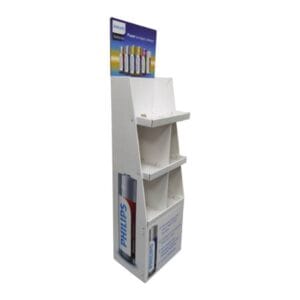
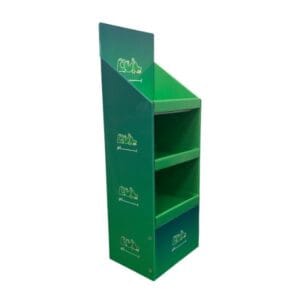
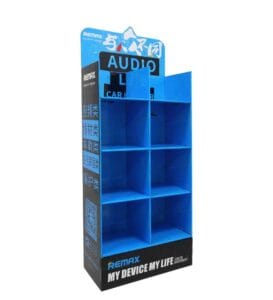
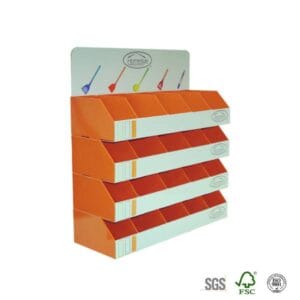
Review products and structure examples below, then open a detail page to compare layout, graphics and retail use. Every B2B project can be customized around the confirmed footprint, total product load and target retailer.
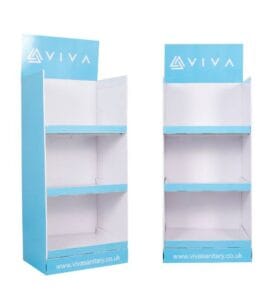
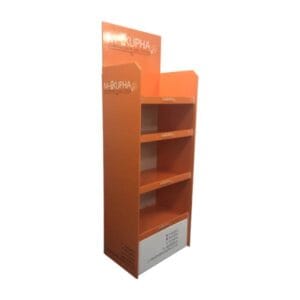
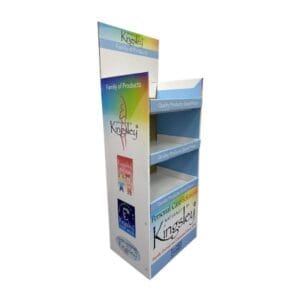
B2B Custom Manufacturing · Typical MOQ 100+
The products above are structure references, not fixed stock sizes. Send your product dimensions, unit weight, SKU count, target capacity, retailer or pallet footprint, quantity and artwork status for a custom structural recommendation.
This compact pallet format is selected when a retail program needs stronger product capacity and branded presence than a small floor stand, without using the space of a half or full pallet unit.
Supports secondary placement, grocery aisles and promotional zones where a larger pallet display would use too much floor space.
Shelves, trays, case-stack sections or dividers can organize one SKU or a coordinated range within a compact footprint.
Headers, side panels, tray fronts and pallet skirts create visible campaign surfaces from multiple shopper approaches.
The structure can be planned for flat-pack assembly, pre-assembly or pre-packed distribution according to freight and store-labor requirements.
The correct format depends on retail space, product weight, target capacity, replenishment plan and the current retailer brief. Final dimensions should be confirmed before the dieline is prepared.
| Format | Typical Buying Use | Capacity & Placement | Planning Priority |
|---|---|---|---|
| Quarter pallet / 1/4 pallet | Compact promotions, secondary placements, grocery and selected club-store programs | Lower footprint with more capacity than many standard floor stands | Confirm retailer footprint, total loaded weight and center of gravity |
| Half pallet | Medium-volume promotions and wider product ranges | More facings and replenishment capacity, but requires more floor space | Balance product density, shopper access and transport stability |
| Full pallet | High-volume warehouse, club-store and bulk merchandising programs | Maximum capacity and visual block, with the largest footprint | Plan pallet handling, stacking, shipping and retailer compliance early |
For educational definitions, common size references and broader examples, read the complete quarter-pallet buying guide. This category page is focused on products, manufacturing and quotation planning.
A compact pallet unit cannot be engineered from artwork or one product weight alone. PopDisplay reviews the complete loaded system: pallet footprint, product dimensions, total quantity, shelf or tray span, vertical load path, board grade, flute direction, base support, display height, center of gravity, warehouse handling and store setup. Load capacity is therefore project-specific rather than a single advertised number.
Use the retailer brief or pallet standard to confirm whether the program requires a 24 × 20 in reference, 600 × 400 mm module or another approved size.
Multiply unit weight by target capacity and include trays, shelves, dividers and packed cases when reviewing the complete display load.
Corrugated grade and flute orientation are selected around compression, bending, print surface, shelf span and distribution conditions.
Tray edges, vertical supports, side panels and the base should transfer product weight downward without relying on unsupported printed panels.
Tall or dense products can make a compact unit top-heavy. Product placement, base reinforcement and display height are reviewed before sampling.
Flat-pack, pre-assembled and pre-packed programs require different joints, carton plans, protection, assembly instructions and warehouse processes.
| Buyer Input | Engineering Review | Production Decision |
|---|---|---|
| Retailer / pallet footprint | Base dimensions, pallet compatibility, overhang and store-placement limits | Final dieline footprint and pallet interface |
| Product size, unit weight and target quantity | Total loaded weight, tray depth, shelf span, facings and replenishment access | Board grade, supports, tray layout and reinforcement |
| SKU count and merchandising plan | Product separation, visibility, shopper access and refill sequence | Shelves, trays, dividers, case-stack sections or mixed configuration |
| Artwork and shopper-facing sides | Header, side-panel, tray-front, barcode, claim and price-message visibility | Printable panels, dieline zones and print-proof requirements |
| Flat-pack or pre-packed distribution | Assembly time, carton size, freight, protection, loading point and warehouse handling | Joint design, packing plan, instructions and QC checkpoints |
The unit is developed around the product and retail program rather than selected from a fixed stock size.
Use open shelves, angled trays, reinforced tray fronts or product-retaining edges according to package shape and weight.
Build around master cases, retail-ready trays, product wells or mixed layouts when shelf access is not the best approach.
Separate flavors, sizes or product families while controlling facings, product movement and restocking.
Add campaign graphics, product claims, price messaging and branded surfaces after the structure is approved.
Material strength, print process, lamination, coating and finishing options are selected for the project requirements.
Choose the packing route based on freight cost, loading location, warehouse workflow, damage risk and retailer setup.
This structure is often considered for packaged products that need a compact branded block, practical replenishment and more capacity than a countertop or small freestanding display.
Snacks, bottled drinks, packaged food, sauces, multipacks and seasonal grocery promotions.
Explore food displaysVitamins, wellness items, pharmacy products and personal-care ranges that need organized trays or shelves.
Explore health displaysTreats, grooming products, accessories and packaged pet goods requiring a reinforced compact unit.
Explore pet displaysToys, collectibles, entertainment products and seasonal gift campaigns with strong printed presentation.
Explore toy displaysCompact pallet merchandising for high-traffic aisles, secondary placements and seasonal product groupings.
Explore grocery programsReview product capacity, pallet handling, printed panels and buyer-supplied requirements for warehouse retail programs.
Explore club-store resourcesRetailer names and channel pages are planning references only. They do not imply endorsement, official partnership, current approval or automatic acceptance. Final approval depends on the current buyer brief and retailer review process.
This representative project example shows how PopDisplay reviews a custom 1/4 pallet cardboard display request for a grocery or retail promotion. Project images are shown for structure reference; brand artwork can be replaced for your retail program.
Generated structure reference: quarter pallet base, 3-tier tray structure, printed side panels, pallet skirt and header. Final graphics, dimensions and product loading are customized for each retail program.
Our team would first check product size, unit weight, total display quantity, SKU count, target retailer, artwork status and whether the quarter pallet display should ship flat-packed, pre-assembled or pre-packed for distribution. The next step is a structure proposal with a 3D rendering or dieline so the buyer can review product placement, pallet skirt, brand panels and store-facing presentation.
This example is a non-branded structure reference based on common grocery and club-store quarter pallet display requirements. Final materials, dimensions, loading, artwork and compliance depend on your product data and current retailer brief.
For a qualified B2B project, the buyer can review the proposed structure, sample, loading assumptions, print proof and packing plan before approving mass production.
The project begins with the buyer’s product dimensions, unit weight, target capacity, SKU count, pallet footprint, retailer brief, artwork status and distribution method. The structural team then plans the product layout, supports, printed panels, assembly and packing route before the dieline and prototype are approved.
Production can include structural design, 3D rendering, prototype sampling, printing, die cutting, assembly review, load and stability review, flat-pack or pre-pack planning, QC photography and export packing.
Review product placement, footprint, header, side panels, pallet skirt and shopper-facing presentation.
Confirm product fit, tray depth, support positions, assembly method and printable artwork zones.
Check total weight, distribution, shelf or tray span, base structure and reinforcement assumptions.
Review color, barcode placement, claim area, retail messaging and campaign graphics before printing.
Confirm flat-pack or pre-packed method, carton count, assembly instructions, palletization and export packing.
Request sample, production or packing photos to verify important details before shipment.
 Customer Project FeedbackReview video feedback and referral screenshots from PopDisplay custom display projects. View testimonials →
Buyers should evaluate communication, product-fit review, sample approval, loading assumptions, print presentation, packing details and production follow-up. Customer proof on this page relates to PopDisplay’s overall custom display service; each pallet structure is engineered for its own product and retailer requirements.
Certification documents, audit details and test reports can be discussed and provided when applicable to the material, destination market and qualified B2B project.
For an accurate B2B proposal, provide the product dimensions, unit weight, SKU count, target units per display, required quantity, retailer or pallet footprint, artwork status, delivery country and preferred deadline.
The final 1/4 pallet structure is not selected from a fixed stock size. PopDisplay uses the confirmed project inputs to prepare the structural recommendation, 3D rendering, prototype plan, loading review, printing specification, packing method and production quotation.
Typical MOQ starts from 100 units for most custom quarter pallet display projects. The final MOQ depends on footprint, structural complexity, corrugated material, printing method, packing requirements and production setup.
Please provide product dimensions, unit weight, SKU count, target units per display, required quantity, target retailer or pallet footprint, artwork status, delivery country and preferred deadline.
Yes. PopDisplay can prepare a structural concept or 3D rendering, followed by a blank or printed prototype when required, so the buyer can review product fit, appearance, assembly and loading before bulk production.
Load capacity is project-specific. We review total loaded weight, product distribution, board grade, shelf or tray span, vertical supports, base structure, center of gravity and handling conditions, then validate the approved structure through prototype or load review when required.
Yes. The structure can be planned for flat-pack shipping, pre-assembly or pre-packed distribution. The recommended method depends on product loading, freight cost, warehouse operations, damage risk and retailer setup requirements.
Yes. Share the current retailer brief, pallet footprint, packing instructions and compliance documents supplied by the buyer. PopDisplay can design toward those requirements, while final approval remains subject to the retailer or buyer review process.
Vector artwork is preferred after the structure and dieline are approved. The team can confirm printable panels, bleed, barcode and claim areas, color requirements and any finishing options before the print proof is released.
Timing depends on structural design, artwork readiness, prototype review, testing, order quantity, printing, packing and delivery requirements. Share the required in-store or delivery date so sampling and production timing can be reviewed before order confirmation.
B2B Bulk Programs · Typical MOQ 100+
Send your product dimensions, unit weight, SKU count, target capacity, retailer or pallet footprint, quantity and artwork status. PopDisplay can provide structural recommendations, free 3D rendering, prototyping, load review and factory-direct production.
