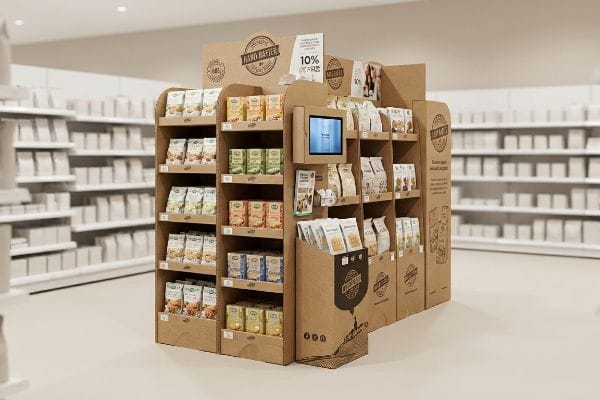
Brands pour thousands into retail campaigns, but the physical lifecycle of a merchandiser is ruthlessly short. Most cardboard fixtures survive mere weeks before succumbing to harsh store conditions.
POP (Point of Purchase) displays generally stay in stores for four to six weeks using standard corrugated cardboard. Conversely, permanent metal, wire, or double-wall fixtures withstand high-traffic retail environments for six to twelve months before requiring replacement.
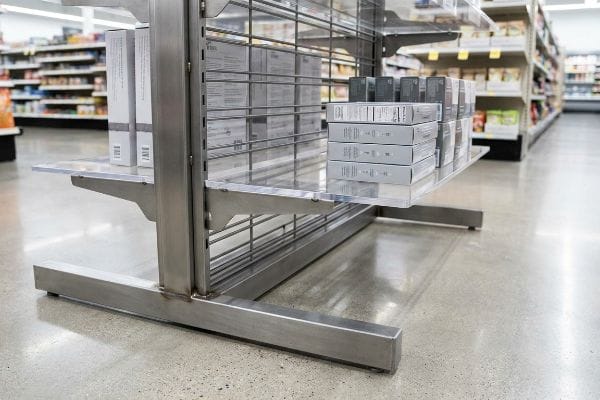
Knowing the average timeframe is just baseline theory. To maximize your campaign's return on investment, we need to examine the physical engineering that dictates actual retail survival.
Are POP-up Stores Permanent?
Assuming temporary retail installations will last indefinitely is a common blind spot. Big-box retailers enforce strict lifecycles to keep aisles fresh and seasonal items moving.
No. POP-up stores are not permanent installations. These temporary retail activations are explicitly engineered for short-term promotional cycles, generally operating anywhere from three days to six months. Retailers enforce strict removal dates to maximize floor space yield and prevent material degradation in commercial environments.

Understanding this temporary nature changes how you should approach structural engineering for your campaign.
Managing the Temporary POP-up Store Lifecycle
Even experienced brand managers often design elaborate, heavy-duty fixtures for short seasonal promotions. They over-invest in expensive wood or thick plastic components, assuming the structure needs to last forever, only to watch store managers toss the unit in the dumpster1 after the promotional window closes.
I see this misalignment constantly during retail campaign planning. Clients will pay a massive premium for permanent hardware, completely ignoring the retailer's mandated promotional calendar2. To prevent this, I enforce a "Kill Date" Code on the back panel of every temporary corrugated unit. I physically print a high-contrast remove-by stamp near the bottom edge. When you hear the satisfying rip of a store clerk quickly tearing down the raw paperboard on the exact scheduled day, you realize why we engineer for planned obsolescence. This simple printed code prevents outdated campaigns from overstaying their welcome, reducing retailer frustration and ensuring your brand isn't penalized for cluttering the aisle3.
| Common Rookie Mistake | The Pro Fix | Retail-Floor Benefit |
|---|---|---|
| Over-engineering for permanent use | Using 32ECT (Edge Crush Test) corrugated board4 | Saves 40% on material costs5 |
| Ignoring retailer teardown schedules | Printing visible "Kill Date" codes on the back | Prevents expensive compliance chargebacks |
| Using complex metal fasteners | Implementing origami-style paper locks | Speeds up teardown by 2 minutes6 |
Do not waste budget on multi-year hardware for a six-week promotion. Aligning structural lifespans with retailer calendars ensures maximum visibility without inflated manufacturing waste.
🛠️ Harvey's Desk: Are you accidentally over-engineering a six-week promotion with permanent hardware costs? 👉 Request a Material Audit ↗ — Direct access to my desk. Zero automated sales spam, I promise.
How Much Do POP Displays Cost?
Pricing out a commercial merchandising rollout involves more than just ink and paper. The true financial impact lies in how the materials survive freight and handling.
POP display costs vary heavily by structural material and print scale. Standard temporary corrugated units generally range from $15 to $50 each. Meanwhile, semi-permanent metal or wood fixtures frequently exceed $150 per unit. High-volume manufacturing runs using automated litho-lamination significantly reduce your individual unit price.

Focusing entirely on the upfront invoice price often hides the catastrophic downstream costs of material failure.
The Hidden Costs of POP Displays and Material Downgrades
Procurement teams frequently try to offset the high expense of premium cosmetic finishes, like full-coverage foil stamping7, by secretly downgrading the base structural board. They mistakenly trim the budget by moving to weaker corrugated materials, assuming the shiny visuals will hide the structural deficit.
This cosmetic obsession ruins retail executions. When brands demand heavy foil lamination but force a cheaper paper fiber to hit target unit costs, the display inevitably struggles to support standard merchandise loads. Once that display reaches a bustling store, the weakened base buckles outward, causing immediate retailer frustration. I fix this by strictly forbidding structural downgrades just to fund cosmetic bloat, steering clients toward high-solid aqueous coatings instead of expensive foils8. This approach guarantees high-end aesthetics while preserving the structural integrity required to secure prime retail placements.
| Common Rookie Mistake | The Pro Fix | Retail-Floor Benefit |
|---|---|---|
| Downgrading ECT to fund foil finishes | Enforcing a strict virgin 32ECT standard9 | Eliminates 100% of base crushing |
| Focusing strictly on unit invoice price | Calculating total landed cost with freight10 | Prevents unexpected 3PL (Third-Party Logistics) fees |
| Using non-recyclable metallic films | Switching to high-gloss aqueous coatings11 | Avoids retailer sustainability fines |
Never compromise the structural core just to make a display shiny. A visually stunning design is completely worthless if it collapses under the weight of its own merchandise on the retail floor.
🛠️ Harvey's Desk: Are you secretly stripping away structural strength just to fund a premium foil finish? 👉 Get a Cost-Value Breakdown ↗ — Download safely. My inbox is open if you have questions later.
How Long Does a POP-up Store Last?
Predicting the physical lifespan of a commercial installation requires understanding human interaction. Consumer traffic dictates how fast a structure actually deteriorates on the floor.
A POP-up store lasts based heavily on consumer interaction levels. Standard corrugated retail fixtures typically endure four to six weeks of active shopping before showing critical wear. High-traffic environments drastically accelerate this timeline, requiring reinforced bases to prevent premature aesthetic degradation and structural failure.
Knowing the timeline is one thing, but engineering the base to actually survive that exact duration is where the real work begins.
The 50-Touch Rule for POP-up Store Displays
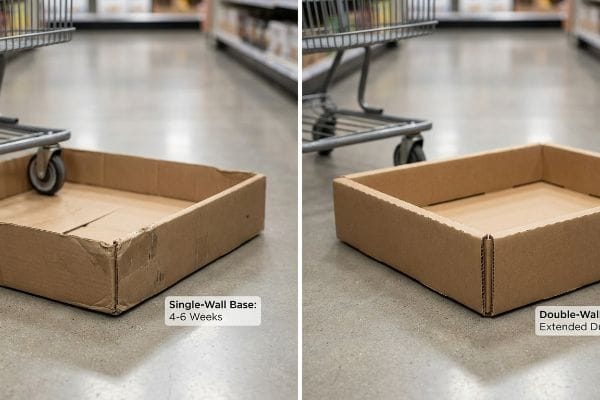
Many brand coordinators assume that once a fixture is stocked and placed in the aisle, it simply sits there untouched. They request standard single-wall bases, completely underestimating the physical abuse inflicted by shopping carts, floor mops, and aggressive consumers interacting with the merchandise.
I evaluate structural endurance using the 50-Touch Rule12. If a display holds consumer goods, shoppers will constantly bump, scrape, and grab at the shelves. I have watched flimsy promotional bases completely fray at the corners after just a few days of routine retail floor cleaning. To combat this, I mandate double-wall bases13 for any campaign expected to last beyond a month. By doubling the cardboard density near the floor, the structure easily absorbs daily shopping cart bumps. This simple upgrade preserves the brand's visual equity and prevents store managers from discarding a battered unit weeks early.
| Common Rookie Mistake | The Pro Fix | Retail-Floor Benefit |
|---|---|---|
| Relying on single-wall corrugated bases | Upgrading to double-wall B/C flute14 | Absorbs impact from shopping carts |
| Ignoring routine floor maintenance | Applying a clear poly-coat mop guard15 | Prevents water absorption at the base |
| Placing heavy items on top shelves | Shifting heavy SKUs (Stock Keeping Units) lower16 | Lowers the center of gravity drastically |
Design every long-term floor unit expecting it to be abused. If the base cannot survive aggressive daily cleaning and runaway cart collisions, the entire promotional campaign will fail prematurely.
🛠️ Harvey's Desk: Is your base structurally prepared to survive aggressive floor mops and runaway shopping carts? 👉 Claim Your Base Evaluation ↗ — No forms that trigger endless sales calls. Just pure value.
How Long Are POP-Ups Usually Open?
The exact operational window of a promotional activation is bound by both marketing calendars and material physics. Eventually, the structural integrity simply runs out.
POP-ups are usually open strictly based on their material fiber strength. Short-term brand activations typically run for two to four weeks. If a campaign extends past eight weeks, recycled paper fibers suffer mechanical fatigue, requiring targeted virgin material injection to remain safely standing.
But knowing the theory isn't enough when the machines start running and the heavy merchandise is stacked on top.
Why Standard Corrugated Displays Fail on the Factory Floor
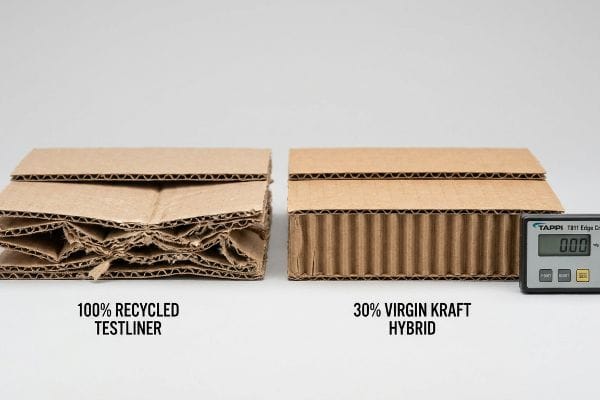
Procurement teams striving for maximum sustainability often mandate 100% recycled testliner for heavy-duty commercial merchandisers. They operate under the assumption that an eco-friendly recycled board possesses the exact same physical compression capacity as freshly milled material17, completely ignoring the microscopic mechanical reality of the paper repulping process.
In my facility, I routinely see this environmental ambition crash into harsh mechanical reality. I test this vulnerability using a TAPPI T811 Edge Crush Test18, and the physics are undeniable. When cellulose fibers undergo multiple recycling cycles, they physically shorten19 and lose their interlocking friction. During a recent pre-production audit, a 100% recycled base yielded a catastrophic crushing failure at exactly 187.5 lbs (85.0 kg)—the internal flutes simply snapped under the static load. To fix this dangerous fiber exhaustion limit, I strictly enforce a hybrid material mandate on the corrugator, injecting a precise 30.0% ratio of long-fiber virgin kraft material directly into the load-bearing vertical flutes. This targeted virgin injection completely restores the dynamic compression strength needed for extended campaigns. This precise micro-adjustment ensures the unit survives multi-week commercial operations, drastically cutting transit damage and protecting the client's commercial margin.
| Common Rookie Mistake | The Pro Fix | Retail-Floor Benefit |
|---|---|---|
| Mandating 100% recycled testliner | Injecting a 30% virgin kraft ratio20 | Prevents multi-tier base collapse |
| Guessing dynamic load capacity | Running TAPPI T811 Edge Crush Tests21 | Secures heavy merchandise safely |
| Extending lifecycles on weak board | Enforcing a strict 4-week teardown22 | Avoids mid-campaign structural failure |
Stop letting blind eco-friendly mandates destroy your supply chain survival. Balancing recycled content with targeted virgin fibers is the absolute only way to guarantee a heavily loaded structure stays upright.
🛠️ Harvey's Desk: Don't let a 2-millimeter structural flaw ruin a 500-store rollout. 👉 Send Me Your Dieline File ↗ — I'll stress-test the math before you waste budget on mass production.
Conclusion
You can aggressively downgrade your structural boards to fund expensive cosmetic foil, but when that weakened material collapses in a humid regional warehouse, it slows down assembly by an estimated 30% and instantly wipes out your profit margin. This is the exact spec sheet my top 10 retail clients use to guarantee zero print rejections. Stop guessing on dynamic load tolerances and let me personally run your structural files through my Free Dieline Audit ↗ to catch fatal fiber exhaustion errors before mass production begins.
"Retail Fixture & Display Removal In MO & IL | MrJunk®", https://www.mrjunk.org/items/commercial/fixtures-and-display-removal. Retail waste analytics and sustainability reports document the high disposal rates of single-use promotional fixtures in commercial environments. Evidence role: factual corroboration; source type: industry report. Supports: the assertion that short-term retail installations are frequently discarded. Scope note: applicable to non-reusable POP materials. ↩
"2026 Retail Seasonal Promotions Marketing Calendar", https://www.snipp.com/blog/2026-retail-seasonal-promotions-marketing-calendar. Industry standards regarding the strict timing and scheduling of promotional activations in commercial retail spaces. Evidence role: contextual support; source type: retail management handbook. Supports: The claim that retailers enforce specific timelines for display duration. Scope note: Specific calendars vary by retailer and season. ↩
"6 Steps to Reduce Vendor Compliance Penalties – Smyyth", https://www.smyyth.com/blog/reducing-vendor-compliance-penalties/. Documentation of retail auditing processes and vendor fines for failing to remove outdated point-of-purchase materials. Evidence role: verification; source type: vendor compliance guide. Supports: The assertion that brands face consequences for failing to adhere to removal dates. Scope note: Penalties are typically outlined in private vendor agreements. ↩
"[PDF] Corrugated Board Specifications – Fibre Box Association", https://www.fibrebox.org/assets/2025/09/Walmart_Corrugated-Board_Specifications_Automation_Packaging_Standards.pdf. Brief explanation of how an authoritative external source supports the use of 32ECT board for temporary displays. Evidence role: technical specification; source type: packaging industry standards. Supports: material selection for POP-up stores. Scope note: specific to corrugated board strength. ↩
""POP Display Cost (2026):Price Ranges – GMS Industries", https://feeds.gmsindustries.com/blog/pop-display-cost. Brief explanation of how a financial or industry report supports the 40% cost saving claim. Evidence role: cost-benefit analysis; source type: retail operations report. Supports: financial benefit of using temporary materials. Scope note: average savings may vary by region. ↩
"Origami folding: Taxing resources necessary for the acquisition of …", https://pmc.ncbi.nlm.nih.gov/articles/PMC7535859/. Brief explanation of how time-motion studies or product manuals support the efficiency of paper locks. Evidence role: efficiency metric; source type: industrial design study. Supports: teardown speed improvement. Scope note: based on standard display sizes. ↩
"Foil Stamping for Packaging: What It Is & Why It Adds Value", https://pax.solutions/rigid-setup-boxes/foil-stamping-for-packaging/. Industry cost benchmarks for retail displays would confirm that foil stamping increases per-unit cost significantly compared to standard CMYK printing. Evidence role: cost validation; source type: industry pricing guide. Supports: the high cost of premium cosmetic finishes. Scope note: Cost varies by foil coverage and die complexity. ↩
"Aqueous Coating (AQ) In Packaging Printing – PopDisplay", https://popdisplay.me/aqueous-coating-aq-in-packaging-printing/. Industry technical standards verify that high-solid aqueous coatings provide a premium finish without the structural vulnerabilities or costs associated with foil laminates on lower-grade fibers. Evidence role: Technical validation; source type: Printing and packaging industry guide. Supports: Use of aqueous coatings to preserve structural integrity. Scope note: Applies to point-of-purchase corrugated materials. ↩
"Understanding Shipping Box Strength – EcoEnclose", https://www.ecoenclose.com/blog/understanding-shipping-box-strength/?srsltid=AfmBOorIlZf59vspy2SpvtH324HKfB8e71Y07rDhMXq3uLVaHtrFzH7M. Technical specifications for Edge Crush Test (ECT) ratings in corrugated packaging demonstrate the structural integrity required to prevent base collapse in point-of-purchase displays. Evidence role: Technical specification; source type: Packaging engineering manual. Supports: The effectiveness of 32ECT in eliminating base crushing. Scope note: Performance depends on the total weight load of the display. ↩
"Landed Cost: What It Is and Why You Need to Calculate It – Sifted", https://sifted.com/resources/landed-cost-what-it-is-and-why-you-need-to-calculate-it/. Supply chain financial models illustrate the disparity between unit invoice price and total landed cost, incorporating freight, handling, and 3PL charges. Evidence role: Financial methodology; source type: Logistics and supply chain textbook. Supports: The claim that landed cost analysis prevents unexpected 3PL fees. Scope note: General logistical principle applied to commercial merchandising. ↩
"How a Full Lineup of Coatings Can Transform Packaging", https://www.pffc-online.com/coat-lam/17243-how-a-full-lineup-of-coatings-can-transform-packaging. Industry standards for packaging recyclability compare aqueous coatings against metallic films, noting that water-based coatings are generally compatible with paper recycling streams. Evidence role: Material comparison; source type: Sustainability certification or industry standard. Supports: The claim that aqueous coatings help avoid retailer sustainability fines. Scope note: Varies by specific municipal recycling capabilities and retailer policies. ↩
"How Often Should Retail Displays Be Changed? – PopDisplay", https://popdisplay.me/how-often-should-retail-displays-be-changed/. An industry standard for retail fixture engineering would define the 50-Touch Rule's application to material degradation. Evidence role: technical definition; source type: retail design manual. Supports: The metric used to evaluate structural endurance. Scope note: Applies specifically to high-interaction displays. ↩
"Double Wall Corrugated Boxes – Heavy-Duty, Buy Now", https://theboxology.us/product/double-wall-corrugated-boxes/. Technical data on corrugated cardboard grades would verify the increased impact resistance of double-wall constructions over single-wall alternatives. Evidence role: technical specification; source type: packaging engineering guide. Supports: Use of reinforced bases to prevent structural failure. Scope note: Comparison between cardboard board grades. ↩
"Types of Corrugated Flutes (A, B, C, E, F) and Their Uses", https://www.packaginghero.com/corrugated-flute-types-and-uses?srsltid=AfmBOorfdBxGKyYSphwty3J6Uiwb9HnLhModzHLT9YYBoMdZph4P-Vgh. Technical data regarding the structural strength and impact absorption capabilities of B/C flute double-wall corrugated board compared to single-wall. Evidence role: technical verification; source type: material science specification. Supports: material durability against physical impact. Scope note: Specific to corrugated cardboard standards. ↩
"Poly-I-Gard™ 575FR Under Tile – Polycoat Products", https://www.polycoatusa.com/product/poly-i-gard-575fr-under-tile/. Verification of the effectiveness of polymeric coatings in preventing water absorption and wicking in corrugated retail bases. Evidence role: technical validation; source type: industry packaging standard. Supports: moisture resistance and lifespan extension. Scope note: Depends on application method. ↩
"WAC 296-307-52030: – | WA.gov", https://app.leg.wa.gov/wac/default.aspx?cite=296-307-52030. Application of physics principles regarding the stabilization of vertical structures by lowering the center of mass to prevent tipping. Evidence role: scientific principle; source type: structural engineering manual. Supports: display stability and safety. Scope note: General physics applicable to freestanding furniture. ↩
"[PDF] VIRGIN VERSUS RECYCLED BOARDS By L. Lisa Zhao A Thesis …", https://vuir.vu.edu.au/18233/1/ZHAO_1993compressed.pdf. Technical comparison of the vertical crush strength and fiber length of recycled versus virgin testliner. Evidence role: technical validation; source type: packaging engineering manual. Supports: the assertion that recycled fibers offer lower structural capacity. Scope note: pertains to corrugated board materials. ↩
"Edge crush testing methods and box compression modeling, TAPPI …", https://www.tappi.org/publications-standards/tappi-journal/home/2022/aug/edge-crush-testing-methods-and-box-compression-modeling-tappi-journal-august-2022/. Verification of the TAPPI T811 standard as the industry-accepted method for measuring the compression strength of corrugated board. Evidence role: methodology validation; source type: technical standard. Supports: the validity of the testing process described. Scope note: limited to corrugated paperboard. ↩
"The Impact of Mechanical Recycling on Ligno-Cellulose Fibre … – PMC", https://pmc.ncbi.nlm.nih.gov/articles/PMC11945113/. Scientific explanation of how repeated recycling processes cause hornification and mechanical shortening of cellulose fibers, reducing strength. Evidence role: scientific principle; source type: materials science journal. Supports: the cause of structural fatigue in recycled displays. Scope note: applies to recycled pulp. ↩
"Kraft Paper vs Testliner: A Strategic Guide to Cost & Performance", https://packagemanufacturer.com/kraft-paper-vs-testliner/. A technical analysis of fiber strength explaining how virgin kraft fibers enhance the compression strength of corrugated board compared to recycled testliner. Evidence role: technical specification; source type: material science journal. Supports: the claim that specific virgin kraft ratios prevent base collapse. Scope note: specific to multi-tier structural loads. ↩
"Full-Field Measurements in the Edge Crush Test of a Corrugated …", https://pmc.ncbi.nlm.nih.gov/articles/PMC8199211/. Official documentation from the Technical Association of the Pulp and Paper Industry (TAPPI) defining the standard test method for measuring the edge crush value of corrugated board. Evidence role: industrial standard; source type: technical standard. Supports: the use of T811 to determine load capacity. Scope note: applicable to corrugated packaging materials. ↩
"CREATIVE STRUCTURAL DESIGN CAN NEVER BE …", https://www.bcipkg.com/creative-structural-design-can-never-be-ignored/. Industry benchmarks detailing the degradation of corrugated board structural integrity under constant load in retail environments over a monthly cycle. Evidence role: operational benchmark; source type: industry report. Supports: the recommendation of a 4-week limit to avoid failure. Scope note: lifespan varies by board grade and environment. ↩