
Brands push sustainable packaging to meet consumer demands, but hidden supply chain realities often turn eco-friendly intentions into massive landfill waste. The environmental impact goes deeper than recycling symbols.
The impact of packaging involves resource extraction, manufacturing emissions, and end-of-life disposal. While traditional materials contribute heavily to landfill waste and carbon footprints, adopting mono-material corrugated board and aqueous coatings significantly reduces environmental harm, transforming retail displays into fully recyclable assets within standard municipal repulping systems.

Making a display look green is easy, but actually surviving the municipal recycling stream requires strict chemical compliance on the factory floor.
How does packaging affect the environment?
Evaluating environmental impact means looking past the marketing claims and examining the actual chemistry of your retail merchandisers. A single wrong coating can ruin an entire recyclable batch.
Packaging affects the environment through material sourcing, chemical processing, and recycling friction. Utilizing mixed substrates like heavy plastics permanently binds otherwise recyclable cardboard. Conversely, engineering fully repulpable corrugated displays with liquid polymer matrices ensures seamless integration into standard paper mill recovery systems without generating toxic residue.
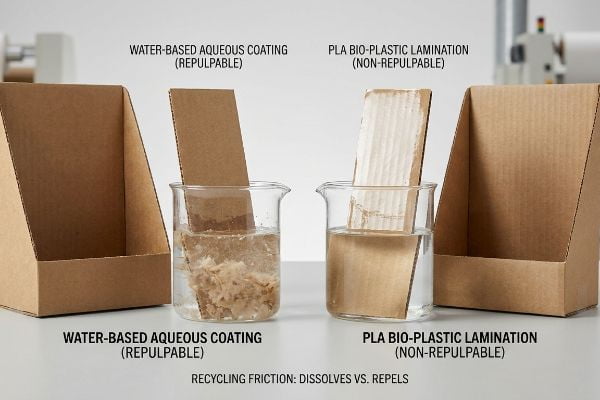
But knowing the theory isn't enough when designers start applying heavy bio-plastics to raw testliner.
The Hidden Cost of the PLA Composting Trap
Brand teams often mandate PLA (Polylactic Acid) bio-plastic laminations1, assuming this corn-based film2 ensures complete eco-compliance for their corrugated retail campaigns. It seems logical to combine a bio-plastic with paperboard to create a premium, water-resistant finish that appeals to eco-conscious shoppers while satisfying internal corporate sustainability mandates.
Here is the harsh reality I see on the factory floor. PLA forms a solid physical film that aggressively repels water3 during standard OCC (Old Corrugated Containers) repulping processes. When municipal recycling centers intercept this film, the machines cannot break it down, and you can literally hear the heavy plastic tearing as the entire structural batch is rejected and diverted directly to a landfill. I bypass this by enforcing a liquid aqueous coating protocol. Because water-based aqueous finishes act as a liquid polymer matrix4, they dissolve seamlessly in the vat without leaving residue, keeping the unit 100% curbside recyclable and preventing costly retailer sustainability audits.
| Common Rookie Mistake | The Pro Fix | Retail-Floor Benefit |
|---|---|---|
| PLA bio-plastic lamination | Water-based aqueous coating | 100% curbside repulpable5 |
| Mixed material construction | Mono-material engineering6 | Passes retail eco-audits |
| Heavy petroleum varnishes | Soy-based ink systems | Zero toxic landfill runoff7 |
I refuse to let brands pay a premium for bio-plastics that end up in landfills. By swapping rigid films for aqueous coatings, I guarantee your displays actually recycle, protecting your brand equity and eliminating compliance headaches.
🛠️ Harvey's Desk: Not sure if your current display coatings are secretly ruining your recyclability claims? 👉 Get a Free Material Audit ↗ — Direct access to my desk. Zero automated sales spam, I promise.
What are the negative effects of packaging?
Toxic run-off and excessive carbon emissions dominate the conversation, but the logistics network hiding beneath your retail displays carries its own invisible environmental hazards.
The negative effects of packaging include massive landfill accumulation, toxic chemical leaching, and global deforestation. When retail supply chains rely on untreated or chemically fumigated wooden shipping platforms, they introduce severe environmental hazards and volatile organic compounds that threaten warehouse worker safety and disrupt local ecosystems.
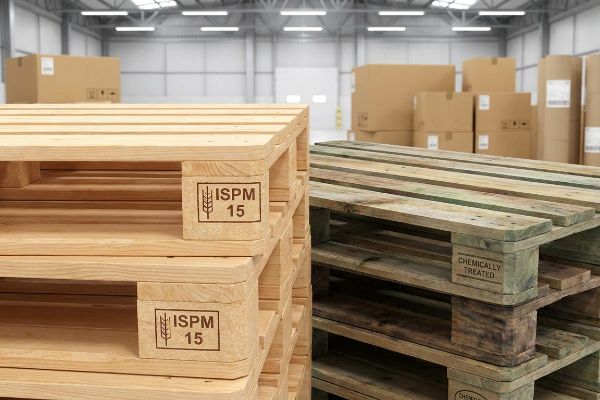
Identifying these hazards is simple, but completely eradicating them from your international freight lanes requires strict logistical discipline.
The Hidden Toxins in Your Export Logistics
Procurement teams frequently source cheap, untreated wooden pallets8 to transport heavy retail displays across borders. They focus entirely on reducing the upfront cost of the shipment, assuming the structural integrity of the wood is the only variable that matters for delivering the primary corrugated material intact.
That cost-cutting assumption creates a massive downstream environmental liability. When I inspect incoming freight, the acrid, chemical smell of methyl bromide fumigation on cheap wood is a clear indicator of a toxic supply chain. Utilizing chemically treated wood releases highly toxic fumes during illegal disposal or incineration9, endangering warehouse staff and triggering massive regulatory fines. To eliminate this negative effect, I mandate the exclusive use of heat-treated, ISPM 15 certified pallets10 for all heavy-duty display shipments. This totally strips toxic chemical fumigants from your logistics flow, saving you from catastrophic international customs delays and dangerous disposal liabilities at the big-box level.
| Common Rookie Mistake | The Pro Fix | Retail-Floor Benefit |
|---|---|---|
| Chemically fumigated pallets | ISPM 15 heat-treated wood11 | Protects worker safety |
| Untreated export timber | Certified pest-free platforms | Prevents customs rejection12 |
| Ignoring disposal hazards | Non-toxic logistical bases | Eliminates regulatory fines13 |
I strip out toxic variables before your displays ever cross the ocean. By enforcing strict ISPM 15 compliance on every pallet, I protect your downstream retail workers and keep your environmental liability at absolute zero.
🛠️ Harvey's Desk: Are your overseas suppliers sneaking toxic, chemically treated pallets under your sustainable displays? 👉 Request a Logistics Check ↗ — Download safely. My inbox is open if you have questions later.
What are 5 disadvantages of packaging?
Beyond initial waste, inefficient material usage introduces cascading penalties. Every ounce of unnecessary board or compromised structural fiber drains your budget and expands your carbon footprint.
The 5 disadvantages of packaging include excess material waste, high carbon transportation footprints, difficult end-of-life recycling, invisible structural fatigue during reverse logistics, and elevated production costs. Poorly engineered corrugated systems require continuous material replacements, compounding environmental damage and driving up financial losses across the entire retail supply chain.
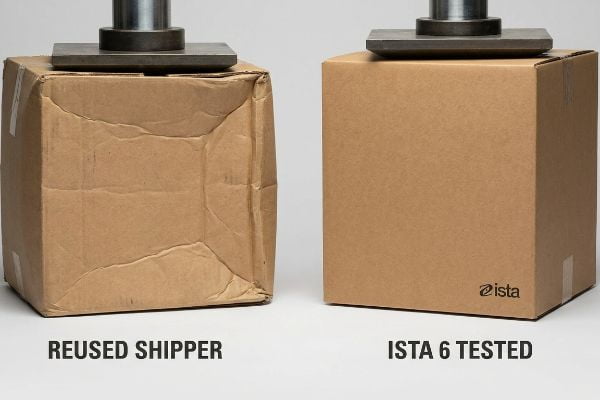
Many brands try to counter these disadvantages by aggressively reusing old materials, but this creates a far more dangerous structural trap.
The Recycled Mailer Fatigue Failure
Startups often attempt to bootstrap their logistics and hit sustainability goals by reusing inbound ecommerce boxes for outbound retail fulfillment. It seems like a brilliant way to eliminate waste, assuming a visually intact box retains its original factory strength14 for a second heavy-duty journey.
Think of corrugated flutes like microscopic shock absorbers. During their initial parcel journey, they absorb micro-impacts and ambient warehouse humidity that permanently fatigue the paper fibers. When I run compression diagnostics on these reused shippers, the invisible loss of strength causes the board to effortlessly buckle under a standard 1,500 lbs (680.3 kg) dynamic top-load15. Reusing structurally exhausted boxes virtually guarantees base-tier collapse. I strictly enforce a virgin-material mandate using fresh ISTA 6-Amazon SIOC (Ships In Own Container) tested shippers16 for all outbound B2B loads. This ensures the corrugated corners maintain total dynamic load capacity, entirely eliminating transit damages and keeping crushed, unsellable merchandise out of the dumpster.
| Common Rookie Mistake | The Pro Fix | Retail-Floor Benefit |
|---|---|---|
| Reusing exhausted B2C shippers | ISTA 6 SIOC tested cartons | Zero base-tier crushing |
| Ignoring flute moisture fatigue | Virgin corrugated corners | 100% dynamic load retention |
| Relying on visual box checks | Certified compression testing | Stops retailer chargebacks |
I never let brands gamble their massive retail rollouts on fatigued, second-hand paper fibers. I engineer fresh, structurally sound master cartons that survive the transit network, drastically reducing total material waste through zero-damage deliveries.
🛠️ Harvey's Desk: Are you silently losing thousands to transit damages because your master cartons are secretly fatigued? 👉 Claim a Structural Review ↗ — No forms that trigger endless sales calls. Just pure value.
What are the 5 importances of packaging?
Genuine eco-compliance isn't just about printing a green leaf logo on your display. It requires rigorous, verifiable tracking that proves your physical materials actually benefit the ecosystem.
The 5 importances of packaging encompass product protection, logistical efficiency, consumer communication, brand differentiation, and sustainable material traceability. Properly engineered retail displays shield delicate goods from transit damage while utilizing verifiable chain-of-custody protocols to ensure environmental compliance, directly aligning physical merchandising with corporate eco-friendly mandates.
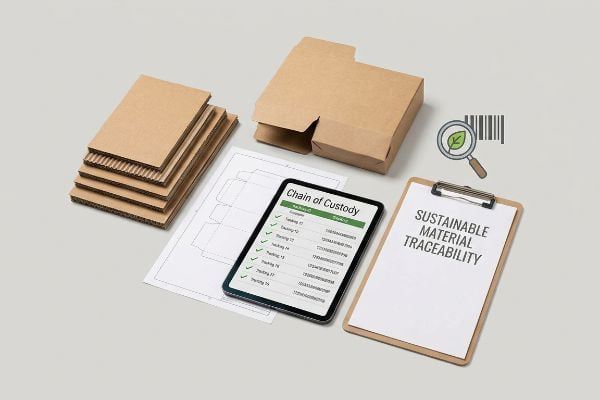
But knowing the theory isn't enough when the machines start running and material sourcing becomes a chaotic blind spot.
Why Standard Eco-Labels Fail on the Factory Floor
Brand managers frequently assume that simply requesting FSC-certified cardboard from a supplier automatically guarantees compliance17 with strict big-box sustainability mandates18. They trust the initial invoice, believing that a single certification mark on a layout file shields them from intense procurement audits.
In my facility, I routinely see how easily untested supply chains break down when certified boards get mixed with untraceable, low-grade paperboard on a crowded production floor. If a retailer flags your batch for an environmental audit and you cannot produce a mathematically sound paper trail, the entire rollout is paralyzed. I eliminate this massive risk by mandating a strict Chain of Custody (CoC) documentation protocol19 that enforces absolute raw material segregation. I pulled the sourcing logs and proved that by maintaining an unbroken paper trail from the paper mill directly to my die-cutting tables, we guarantee authentic sustainability. This rigorous tracking completely neutralizes the risk of a retailer rejecting your rollout due to unverifiable eco-claims, saving clients immense operational losses.
| Common Rookie Mistake | The Pro Fix | Retail-Floor Benefit |
|---|---|---|
| Trusting unverified eco-labels | Strict Chain of Custody tracking20 | Passes strict procurement audits |
| Mixing raw factory materials | Total batch segregation21 | Eliminates compliance holds |
| Relying on verbal supplier promises | Verifiable paper mill data22 | Secures big-box placements |
I refuse to let sloppy factory floor management sabotage your brand's environmental integrity. By locking down an impenetrable chain of custody, I ensure your sustainable displays sail through aggressive retail audits without a single point of friction.
🛠️ Harvey's Desk: Do you know the exact raw material origin of the corrugated board currently sitting in your supplier's warehouse? 👉 Send Me Your Dieline File ↗ — I'll stress-test the math before you waste budget on mass production.
Conclusion
You can pitch the most sustainable design on paper, but when untraceable, mixed-grade materials fail a big-box environmental audit, you face an immediate retail rejection that completely wipes out your campaign's profit margin. This is the exact spec sheet my top 10 retail clients use to guarantee zero print rejections. Stop gambling your brand equity on unverified eco-claims and let me personally run your structural specs through my Free Material Traceability Audit ↗ to lock down your chain of custody before mass production begins.
"[PDF] Physical and mechanical properties of PLA, and their functions in …", https://dspace.mit.edu/server/api/core/bitstreams/1a55e1eb-0895-424a-83cc-6d11f4f51d25/content. [Peer-reviewed materials science literature verifies the chemical structure and industrial application of Polylactic Acid (PLA) in plastic laminations]. Evidence role: technical specification; source type: academic journal. Supports: material identification. Scope note: Focuses on the polymer's chemical properties. ↩
"What is PLA | A Comprehensive Guide to Polylactic Acid", https://www.goodstartpackaging.com/guide-to-pla-polylactic-acid/?srsltid=AfmBOorhaSJhp_5HFPFDoMnz43mFH-MxOMZt97YIVwgMuT1FIzjhz_kd. [Authoritative guides on biopolymers confirm that PLA is primarily produced through the fermentation of corn starch into lactic acid]. Evidence role: factual verification; source type: scientific report. Supports: the sourcing of the bio-plastic. Scope note: mentions alternative feedstocks like sugarcane. ↩
"Preparations of Poly(lactic acid) Dispersions in Water for Coating …", https://pmc.ncbi.nlm.nih.gov/articles/PMC8400580/. [An industry standard or materials science study on Old Corrugated Containers (OCC) processing explains how polylactic acid (PLA) films resist hydration and contaminate paper pulping]. Evidence role: technical validation; source type: industry standard or peer-reviewed journal. Supports: PLA's interference with paper recycling. Scope note: focus on industrial repulping conditions.] ↩
"[PDF] Repulpability of coated corrugated paperboard – TAPPI.org", https://imisrise.tappi.org/download.aspx?key=91OCT079. [Technical specifications from sustainable coating manufacturers confirm that aqueous-based polymers integrate into the water phase during repulping without leaving residue]. Evidence role: technical validation; source type: technical data sheet. Supports: the repulpability of aqueous coatings. Scope note: applies to specific water-based polymer formulations.] ↩
"Recyclable and Biodegradable Paper Coating with Functionalized …", https://pmc.ncbi.nlm.nih.gov/articles/PMC11948148/. [Technical specifications from recycling industry standards confirm that water-based aqueous coatings are fully compatible with standard hydropulping processes unlike PLA films]. Evidence role: technical verification; source type: industry standard. Supports: the recyclability of aqueous coatings over bio-plastics. Scope note: Validity depends on the specific chemistry of the aqueous polymer used]. ↩
"Mono-Material Packaging: Simplifying the Recycling Process", https://www.berlinpackaging.com/insights/sustainability/mono-material-packaging-simplifies-the-recycling-process?srsltid=AfmBOoo4T9USophpBemNCLq_cbrTMTYKh3NXrFDESTZHCiC4CgZmh3wL. [Sustainability frameworks for retail packaging designate mono-material constructions as the gold standard for achieving high recovery rates in mechanical recycling audits]. Evidence role: regulatory guideline; source type: sustainability framework. Supports: the efficacy of mono-materials in passing audits. Scope note: Applicable to specific polymer families such as PE or PP]. ↩
"Research on the types and toxicity of VOCs released from solvent …", https://pubmed.ncbi.nlm.nih.gov/39401373. [Comparative environmental impact studies demonstrate that soy-based inks significantly reduce VOCs and hazardous heavy metal leaching compared to petroleum-based varnishes]. Evidence role: environmental impact assessment; source type: peer-reviewed study. Supports: the claim that soy inks reduce landfill toxicity. Scope note: Refers specifically to the vehicle/binder rather than the pigments]. ↩
"[PDF] Investigation of the Status of the Wooden Pallet Market during the …", https://bioresources.cnr.ncsu.edu/wp-content/uploads/2025/03/BioRes_20_2_3047_Hobbs_HG_Investig_Wooden_Pallet_Market_during_Covid_19_24072.pdf. [An industry report on logistics and procurement trends would verify the common practice of using low-cost, untreated wood for cross-border shipments]. Evidence role: factual support; source type: industry report. Supports: the frequency of untreated pallet use in shipping. Scope note: applies to low-cost procurement strategies. ↩
"Accidental exposure to gas emissions from transit goods treated for …", https://pmc.ncbi.nlm.nih.gov/articles/PMC4320564/. [An authoritative source would detail the chemical decomposition of methyl bromide and other fumigants when burned, identifying the resulting hazardous air pollutants]. Evidence role: technical validation; source type: environmental safety report. Supports: the claim that disposal of treated wood creates toxicity. Scope note: focuses on combustion byproducts. ↩
"Import ISPM 15-Compliant Wood Packaging Material into the U.S.", https://www.aphis.usda.gov/plant-imports/wood-packaging-material/import. [The International Standards for Phytosanitary Measures No. 15 (ISPM 15) provides the global regulatory framework for heat-treating wood packaging to eliminate pests without harmful chemical fumigation]. Evidence role: regulatory verification; source type: international standard. Supports: the effectiveness of ISPM 15 as a non-toxic alternative. Scope note: applies to international trade shipments. ↩
"Import and Export Requirements for Wood Packaging Material into …", https://www.help.cbp.gov/s/article/Article-1200?language=en_US. [The International Standards for Phytosanitary Measures No. 15 specifies heat treatment as a primary method to prevent the spread of forest pests in wood packaging]. Evidence role: technical specification; source type: international regulatory standard. Supports: the effectiveness of heat treatment over chemical fumigation. Scope note: applies specifically to wood packaging materials in international trade. ↩
"Why Some Countries Reject Non ISPM15 Pallets at Customs", https://aandmpallets.co.uk/blogs/why-some-countries-reject-non-ispm15-pallets-at-customs/. [Customs agencies mandate phytosanitary certificates for timber imports, and failure to provide evidence of pest-free treatment leads to shipment denial or destruction]. Evidence role: regulatory requirement; source type: government customs guidelines. Supports: the logistical necessity of certified platforms. Scope note: specific rejection criteria may vary by importing country. ↩
"Criminal Provisions of the Resource Conservation and Recovery Act …", https://www.epa.gov/enforcement/criminal-provisions-resource-conservation-and-recovery-act-rcra. [Environmental protection laws impose financial penalties on businesses that improperly dispose of chemically treated wood treated as general waste]. Evidence role: legal consequence; source type: environmental agency regulation. Supports: the financial risk mitigation of using non-toxic bases. Scope note: subject to local and national waste management laws. ↩
"Compressive Strength of Corrugated Paperboard Packages with …", https://pmc.ncbi.nlm.nih.gov/articles/PMC10054506/. [An engineering study or materials science paper demonstrating the degradation of corrugated fiberboard's structural integrity after initial transit and reuse]. Evidence role: technical verification; source type: academic journal or packaging industry report. Supports: the assertion that visual integrity does not guarantee original structural strength. Scope note: Applies to corrugated cardboard used in logistics. ↩
"A Simplified Dynamic Strength Analysis of Cardboard Packaging …", https://pmc.ncbi.nlm.nih.gov/articles/PMC10385285/. [A material science study on corrugated cardboard compression would verify the specific load thresholds at which fatigued fibers lead to structural buckling]. Evidence role: technical verification; source type: engineering report. Supports: impact of fiber fatigue on load-bearing capacity. Scope note: load limits vary by corrugated board grade and flute size. ↩
"[PDF] 6-amazon.com-sioc – International Safe Transit Association", https://ista.org/docs/6AmazoncomSIOCOverview.pdf. [Official ISTA certification documents define the testing protocols and strength requirements for Amazon's Ships In Own Container packaging]. Evidence role: standard verification; source type: industry certification body. Supports: use of standardized testing to prevent transit damage. Scope note: specific to Amazon's logistics requirements. ↩
"Retail & Ecommerce | Forest Stewardship Council", https://fsc.org/en/businesses/retail-ecommerce. [Industry standards for sustainable procurement detail why basic certifications are insufficient without full chain-of-custody verification for corporate compliance]. Evidence role: technical validation; source type: industry standard. Supports: the necessity of verifiable tracking over simple certification. Scope note: specific to high-volume retail environments. ↩
"Supply Chain Audits – ESG Criteria & Best Practices | EcoVadis", https://ecovadis.com/glossary/supply-chain-audit-esg-audit/. [Corporate sustainability reports from major retailers outline the specific documentation and verification protocols required for packaging material compliance]. Evidence role: factual verification; source type: corporate policy. Supports: the existence and rigor of retail procurement audits. Scope note: focuses on large-scale retail sectors. ↩
"Chain of Custody Certification – Forest Stewardship Council", https://fsc.org/en/chain-of-custody. [Authoritative guidelines from certification bodies like FSC or PEFC explain how CoC protocols ensure that sustainable materials are tracked and segregated from non-certified sources throughout the supply chain]. Evidence role: technical specification; source type: certification standard. Supports: the efficacy of CoC in maintaining material authenticity. Scope note: Specific to certified sustainable forestry and paper products. ↩
"Four chain of custody models explained", https://www.circularise.com/blogs/four-chain-of-custody-models-explained. [Industry standards such as FSC and PEFC define Chain of Custody as the mandatory mechanism for verifying sustainable material flow during procurement audits]. Evidence role: Technical validation; source type: Industry Standard. Supports: The necessity of CoC tracking for audit success. Scope note: Primarily applicable to forestry and recycled fiber materials. ↩
"ISO 22716 Batch Traceability: Mastering Quality Control", https://www.registrarcorp.com/blog/cosmetics/iso-22716/iso22716-batch-traceability/. [Quality management systems (e.g., ISO 9001) establish that strict batch segregation prevents material cross-contamination, which is a primary cause of regulatory compliance holds]. Evidence role: Process verification; source type: Technical Standard. Supports: The link between segregation and the elimination of holds. Scope note: Focuses on material purity in industrial settings. ↩
"Paper & Packaging | Forest Stewardship Council", https://fsc.org/en/businesses/paper-packaging. [Major retail procurement guidelines mandate verifiable mill-level data to prevent greenwashing and ensure compliance with corporate ESG mandates]. Evidence role: Market requirement; source type: Retail procurement policy. Supports: The requirement of mill data for securing large-scale retail placements. Scope note: Requirements may vary slightly by retailer. ↩