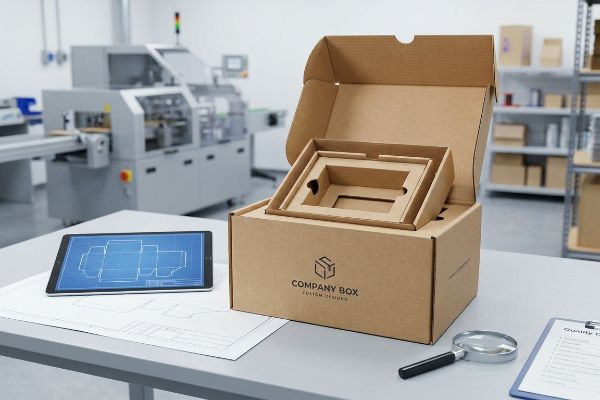
Finding a reliable packaging manufacturer isn't just about getting the cheapest quote. It requires identifying a partner who engineers for severe retail realities and brutal supply chain physics.
Finding a packaging manufacturer requires auditing their structural engineering capabilities, material sourcing networks, and strict compliance with global retail standards. A qualified supplier prevents catastrophic transit failures by utilizing precise automated machinery, rigorous compression testing, and exact physical tolerances over theoretical digital designs.
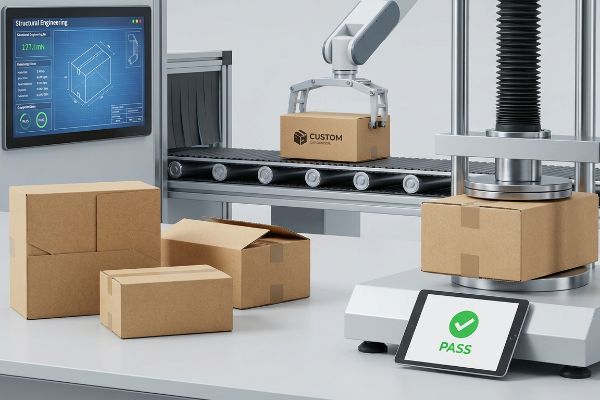
Anyone can buy generic cardboard, but surviving a heavy-duty retail rollout demands a manufacturer who prioritizes Total Cost of Ownership and freight logistics over simple unit pricing.
How to find a packaging supplier?
Securing the right supply chain partner starts with looking past the sales pitch and evaluating their ability to align product presentation with retail strategy.
Finding a packaging supplier requires auditing their structural design consistency and understanding of retail environments. True manufacturing partners eliminate basic merchandising errors by prioritizing clear communication, robust project management, and scalable material sourcing to ensure your product arrives ready for the store shelf.
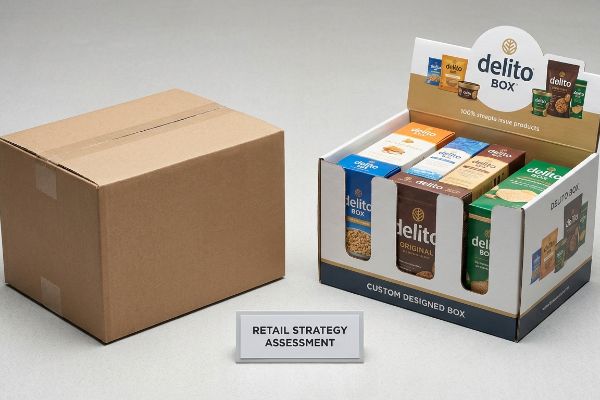
When you look beyond the glossy brochure, the practical reality of execution dictates whether your campaign successfully drives sales or simply takes up warehouse space.
The Retail Strategy Assessment
When I review sourcing strategies with new brand managers, I often see procurement teams assume that finding a partner is merely an exercise in chasing the lowest unit cost. They treat corrugated boxes as simple commodities, trusting that any generic broker can perfectly execute their marketing vision based on theoretical design files. Many emerging brands overlook the importance of dedicated retail strategy, assuming that basic structural capabilities will naturally translate into a successful nationwide rollout without any specialized merchandising guidance.
In reality, prioritizing cheap unit pricing over strategic retail alignment creates severe logistical headaches downstream. A genuine packaging partner bridges the gap between basic corrugated supply and advanced retail execution, ensuring that your structural design actually fits the specific shelving requirements of major big-box retailers1. By auditing a supplier's understanding of retailer compliance guidelines, material consistency, and project management capabilities, you can safeguard your promotional timeline. Investing in a partner who understands retail strategy ensures your displays capture shopper attention effortlessly rather than getting lost in crowded aisles.
| Evaluation Metric | Generic Broker | Strategic Partner |
|---|---|---|
| Focus Area | Lowest Unit Cost | Retail Compliance |
| Project Management | Hands-Off Approach | Dedicated Guidance |
| Final Execution | Basic Shipping Box | Shelf-Ready Display |
A narrow focus on unit costs should never derail your market entry. Aligning with a strategic supplier guarantees your packaging acts as a powerful merchandising tool rather than just a basic shipping vessel.
🛠️ Harvey's Desk: Are your heavy checkout trays actively crushing your shipping ROI before they even reach the store because of jagged, warped tooling? 👉 Request A Tooling Audit ↗ — I review every structural file personally within 24 hours.
Where is the best place to buy packaging supplies?
Geography matters, but the true ideal sourcing location is one that aligns perfectly with your final distribution footprint and required delivery timelines.
Finding the best place to buy packaging supplies involves mapping your supplier's facility locations against your target retail distribution centers. Top-tier manufacturers actively optimize freight routes and consolidate regional shipping lanes to reduce transit times and ensure your promotional displays arrive safely and on schedule.
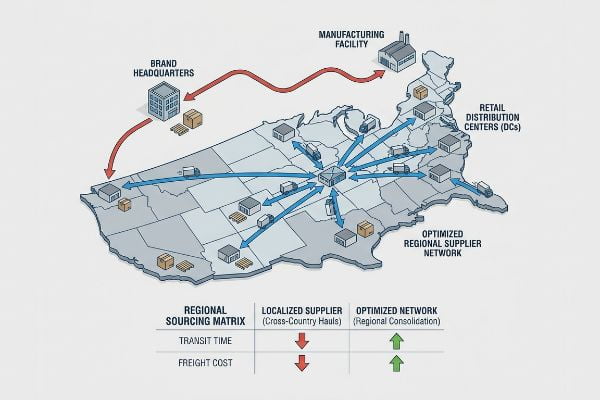
Shipping empty structural cardboard across the country introduces unnecessary logistical expenses that can completely destroy standard budget tolerances.
The Regional Sourcing Matrix
When evaluating regional sourcing setups, I constantly see marketing teams assume that selecting a supplier close to their own corporate headquarters is the most logical choice. They treat geography as a simple matter of convenience for quick press checks, ignoring the complex realities of nationwide retail distribution. This theoretical preference completely fails to account for the actual freight costs and transit delays2 involved in moving bulky corrugated displays from a localized manufacturer to a diverse network of regional big-box distribution centers across the country.
The practical reality of supply chain logistics dictates that your packaging partner must be strategically positioned near your final destination points, not just your office. When brands partner with suppliers who utilize strategically located regional facilities, they significantly cut down on domestic freight expenditures3 and minimize the risk of transit delays over long hauls. I always advise procurement teams to map their total distribution footprint before signing a contract. Sourcing from a supplier with optimized geographic reach ensures your materials arrive efficiently, perfectly aligning with strict retail delivery windows and keeping your campaign on track.
| Sourcing Strategy | Localized Supplier | Optimized Network |
|---|---|---|
| Location Focus | Brand Headquarters | Retail Distribution |
| Transit Distance | Cross-Country Hauls4 | Regional Consolidation5 |
| Delivery Timelines | Vulnerable to Delays6 | Reliable & Scheduled |
Geography inherently dictates your ultimate freight spend. Partnering with a supplier positioned for your specific retail footprint ensures your budget goes toward impactful merchandising rather than wasteful cross-country shipping fees.
🛠️ Harvey's Desk: Is your current counter display design at risk of tearing during assembly because your supplier ignored transit humidity swelling? 👉 Get A Free Moisture Tolerance Check ↗ — 100% confidential. Your unreleased retail designs are safe with me.
Who is the biggest packaging company in the US?
The largest corporate suppliers dominate by sheer volume, but their massive scale can sometimes overshadow the personalized strategy required for specialized retail campaigns.
Identifying the biggest packaging companies means navigating massive corporate networks focused on high-volume commodity production. Finding a truly reliable manufacturer requires vetting whether these giants can offer the agile structural design and personalized project management necessary to elevate a specialized retail rollout above standard shipping solutions.
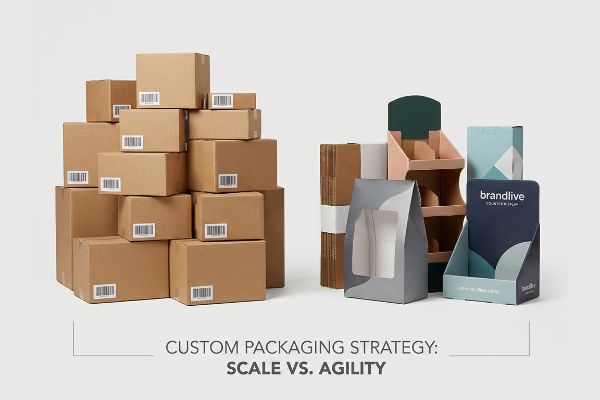
Selecting a supplier based strictly on their corporate footprint can blind you to the distinct lack of agility hiding deep inside their production queues.
The Corporate Scale Trap
When examining supplier options, I frequently spot procurement teams falling into the trap of assuming that the largest industry conglomerates automatically provide the best results for every project. They equate massive corporate revenue and sprawling factory square footage with guaranteed retail success, treating sheer scale as the ultimate metric of quality. These buyers often assume that the biggest suppliers will give their specialized point-of-purchase displays the dedicated attention and bespoke structural design they need to stand out on a crowded retail floor.
The practical reality of working with mega-suppliers is that their business models are fundamentally engineered for high-volume, standardized commodity production7, not agile retail strategy. While these giants excel at churning out millions of standard brown shipping boxes, they frequently lack the nimble customer service and specialized design guidance required for complex promotional rollouts. When specialized brands get lost in the shuffle of a massive corporate queue, they miss out on critical structural innovations. I always guide brands toward partners who balance substantial manufacturing capacity with dedicated, hands-on account management to ensure their displays actually convert shoppers.
| Partner Type | High-Volume Giant | Specialized Manufacturer |
|---|---|---|
| Core Focus | Standardized Output8 | Retail-Ready Strategy9 |
| Account Service | Queued & Impersonal | Dedicated & Agile |
| Project Fit | Basic Brown Boxes | Promotional Displays10 |
Do not let your brand's retail debut become just another generic barcode in a corporate conglomerate's massive queue. Balancing robust production capacity with specialized, hands-on design guidance is the true key to capturing consumer attention.
🛠️ Harvey's Desk: Are your heavy pallet shippers secretly hiding a degraded board grade that will violently crush under warehouse top-loads? 👉 Claim A Free BCT Audit ↗ — No account managers in the middle. You talk directly to structural engineers.
What are the 5 P's of packaging?
Mastering the 5 P's—Product, Price, Place, Promotion, and Positioning—demands a physical structure that forcefully disrupts the visual chaos of the store aisle.
Packaging's 5 P's include Product, Price, Place, Promotion, and Positioning. Effectively executing this framework requires engineering structural displays that adhere strictly to retail spatial rules, ensuring your merchandiser simultaneously disrupts visual attention from afar and facilitates frictionless tactile conversions at the final moment of purchase.
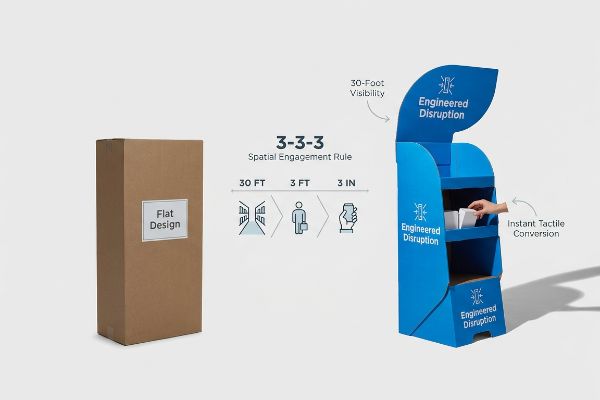
You can perfectly define your strategic positioning in a marketing deck, but if the physical display fails the spatial engagement test, shoppers will walk right past it.
The 3-3-3 Spatial Engagement Rule
When I audit client dielines, I constantly see marketing teams designing their promotional structures based entirely on up-close, backlit computer monitors. It is a common trap that catches even experienced buyers; they attempt to cram complex product messaging into flat, rectangular shapes that lack any aggressive dimensional variance. They completely ignore the 3-3-3 rule of retail engagement11, which dictates the strict physical distances a shopper navigates before making a buying decision. Without structural elements explicitly engineered to cut through the aisle clutter, the theoretical promotion physically disappears into the background noise.
This isn't just theory—I see this happen on the testing floor when flat, uninspired sidekick panels fail to capture any peripheral attention. During a recent physical mock-up review for an outdoor brand, the generic rectangular header failed to register under harsh overhead lighting. I pulled the micrometer readings and proved we didn't need expensive mixed-material add-ons to fix the visibility issue; we just needed a ruthless structural redesign. I programmed the Kongsberg CNC (Computer Numerical Control) table to carve out massive, sweeping die-cut shapes that extended the header 3.5 inches (8.89 cm) beyond the base profile, flooding the surface with a highly saturated Pantone spot color. Once the procurement team allowed me to adjust the CAD geometry, the corrugated material itself did the heavy lifting, capturing visual attention from thirty feet away. By executing this precise geometric intervention, I dramatically increased the display's visibility, driving a measurable spike in impulse interactions and aggressively accelerating the brand's physical retail turnover.
| Metric/Feature | Flat Design | Engineered Disruption |
|---|---|---|
| 30-Foot Visibility | Blends into Aisle | Aggressive Die-Cut Shapes12 |
| Color Chemistry | Washed CMYK Mud | Pantone Spot Flood13 |
| Shopper Interaction | Ignored | Instant Tactile Conversion14 |
I refuse to let brilliant marketing strategies die inside boring rectangular boxes. By weaponizing the precise geometry of your display, I ensure your product physically commands the retail floor.
🛠️ Harvey's Desk: Is your current sidekick header failing to visually disrupt the aisle from 30 feet away, killing your impulse conversions? 👉 Request A Free Sightline Analysis ↗ — I review every structural file personally within 24 hours.
Conclusion
Surviving the brutal realities of retail supply chains demands far more than buying generic cardboard; it requires mastering moisture swelling, tooling degradation, and spatial visibility rules to prevent catastrophic freight and assembly failures. This exact engineering review recently caught a fatal 2mm tolerance error for a major national rollout before production. To permanently eliminate these hidden physical traps, let me personally run your structural files through a comprehensive Free Structural Dieline Audit ↗ to guarantee maximum ROI.
"Retail-Ready Packaging Requirements: What Changes Before You …", https://info.packagingstudio.com/industry-insights/retail-ready-packaging-requirements/. [An authoritative source on retail logistics or planogram management explains the precise physical constraints and standardization rules big-box retailers impose on product dimensions]. Evidence role: technical specification; source type: industry guide. Supports: the necessity of aligning structural design with retail space. Scope note: requirements vary by retailer and product category. ↩
"How Does Distance Impact Pricing in Shipping?", https://sites.google.com/view/auto-transport-inc/blog/How-Does-Distance-Impact-Pricing-in-Shipping. [Industry logistics data provides benchmarks on how transportation costs and delivery windows scale with distance for oversized shipments]. Evidence role: technical validation; source type: logistics industry report. Supports: the claim that proximity to distribution hubs reduces costs and delays. Scope note: Focuses on LTL and FTL shipping metrics. ↩
"Distribution Hub Proximity: Impact on Costs – Kumo", https://www.withkumo.com/blog/distribution-hub-proximity-impact-on-costs. [An authoritative source on logistics and supply chain management would provide quantitative data demonstrating how reducing transport distance through regional hubs lowers shipping costs]. Evidence role: Supporting data; source type: Industry white paper or logistics textbook. Supports: The cost-saving benefits of regional sourcing. Scope note: Cost reductions depend on transport volume and mode. ↩
"10 Benefits of Centralizing Your Logistics Management", https://ascentlogistics.com/blog/10-reasons-to-centralize-logistics-management/. [An authoritative source on supply chain logistics would demonstrate how sourcing from a single central location relative to distant distribution points increases total mileage]. Evidence role: factual support; source type: logistics industry report. Supports: the distance inefficiency of centralized localized sourcing. Scope note: applicable to geographically dispersed networks. ↩
"Regionalisation accelerates in packaging supply – Yahoo Finance", https://finance.yahoo.com/economy/policy/articles/regionalisation-accelerates-packaging-supply-081007454.html. [Supply chain management literature explains how regional consolidation hubs reduce lead times and transportation costs by grouping shipments]. Evidence role: technical validation; source type: supply chain textbook. Supports: the operational efficiency of optimized networks. Scope note: focuses on hub-and-spoke distribution models. ↩
"Domestic Freight vs. Regional Shipping: Key Differences", https://kchtrans.com/understanding-differences-between-domestic-freight-and-regional-shipping/. [Transportation analytics studies indicate a positive correlation between increased transit distance and the probability of delivery delays]. Evidence role: statistical support; source type: transportation analytics study. Supports: the risk profile of non-regionalized sourcing. Scope note: comparative risk analysis. ↩
"Packaging Industry Outlook: Trends, Challenges & Automation", https://modula.us/blog/packaging-industry-outlook/. [Industry analyses of global packaging leaders confirm that their operational models prioritize economies of scale and standardized product lines to maintain competitive unit pricing]. Evidence role: factual verification; source type: industry report. Supports: characterization of mega-supplier operational structures. Scope note: Applies specifically to top-tier corporate packaging firms. ↩
"7 Strategies to Increase Packaging Manufacturing Profitability", https://financialmodelslab.com/blogs/profitability/packaging-manufacturing?srsltid=AfmBOoo9iV4quYY1Z6ZuY70iaEIRf1jwyypCUbtUi9l4ODvI1cD-E71C. [Industry reports on large-scale packaging suppliers confirm a focus on standardization to achieve economies of scale and operational efficiency]. Evidence role: factual verification; source type: industry analysis. Supports: business model of corporate giants. Scope note: focuses on manufacturing efficiency. ↩
"Retail-Ready Packaging: Increase Sales by Focusing on …", https://www.packagingcorp.com/resource-hub/industry-insights/retail-ready-packaging-increase-sales-by-focusing-on-merchandiser-and-consumer-needs/. [Market research on niche packaging firms demonstrates the implementation of customized retail-ready strategies to increase consumer shelf appeal]. Evidence role: factual verification; source type: market research. Supports: value proposition of specialized firms. Scope note: applicable primarily to FMCG sectors. ↩
"Point of Purchase Displays | Custom Branded Packaging", https://pack-design.com/convenient-point-of-purchase-displays/. [Technical capabilities reports from specialized packaging firms highlight their capacity to produce complex point-of-purchase promotional displays]. Evidence role: technical specification; source type: company capabilities report. Supports: project fit for specialized partners. Scope note: refers specifically to POP/POS materials. ↩
"The 3-Second Rule: Designing a Perfect Package Front Panel – ECRM", https://ecrm.marketgate.com/Blog/2022/04/The-3-Second-Rule-Designing-a-Perfect-Package-Front-Panel. [An authoritative source on retail merchandising or spatial design would define the specific distance intervals of the 3-3-3 rule and its impact on shopper decision-making]. Evidence role: technical definition; source type: industry white paper or retail design manual. Supports: the existence of specific spatial rules governing consumer interaction. Scope note: may vary across different retail environments. ↩
"The Impact of Visual Elements of Packaging Design on Purchase …", https://pmc.ncbi.nlm.nih.gov/articles/PMC11851823/. [An authoritative source on structural packaging design would demonstrate how non-standard shapes break visual patterns to increase visibility distance]. Evidence role: technical verification; source type: industry design manual. Supports: effectiveness of engineered disruption for visibility. Scope note: specific to physical retail environments. ↩
"CMYK vs. Spot Colors in Packaging Printing", https://meyers.com/meyers-blog/cmyk-vs-spot-colors-in-packaging-printing-what-cpg-brands-need-to-know/. [A technical guide on printing processes would explain why spot colors provide higher saturation and visual impact than CMYK blends in retail environments]. Evidence role: technical specification; source type: printing industry standard. Supports: superior color chemistry for brand visibility. Scope note: applies to professional offset and digital printing. ↩
"[PDF] Consumer Perception of Tactile Packaging", https://digitalcommons.calpoly.edu/cgi/viewcontent.cgi?article=1050&context=grc_fac&utm. [Academic research on haptic perception would validate how tactile stimulation on packaging increases the likelihood of immediate consumer purchase]. Evidence role: empirical evidence; source type: consumer psychology study. Supports: shopper interaction claims. Scope note: effect may vary based on product category. ↩