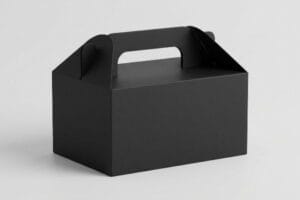
The home fragrance market is unforgiving. If heavy glass merchandise isn't structurally protected and visually commanding, it gets lost in the aisle. Custom packaging is the definitive solution.
A candle display box is a specialized secondary packaging structure engineered to physically protect fragile merchandise during transit while simultaneously maximizing point-of-purchase visibility. These corrugated merchandisers utilize strategic die-cuts, custom inserts, and high-contrast lithographic printing to accelerate consumer impulse conversions on the retail floor.

Before you ship thousands of heavy glass jars into a sprawling big-box logistics network, you must align your structural engineering with strict retail compliance frameworks.
What Are the Legal Requirements for Candle Boxes?
Compliance isn't just about scanning barcodes; it's about surviving internal chemical volatility.
It depends. The legal requirements for candle boxes globally mandate strict hazard labeling and absolute material safety. Because candles contain concentrated fragrance oils, structural packaging must utilize solvent-resistant adhesives and non-toxic substrates to prevent catastrophic mechanical failure and ensure absolute consumer safety during intense retail distribution.
Navigating strict compliance is tricky when the product itself attacks the packaging.
Understanding What Are the Legal Requirements for Candle Boxes in Retail
Standard Kraft paper boxes look fantastic for an eco-friendly brand aesthetic, but beginners often assume raw paperboard is chemically sufficient for scented goods1. They rely on standard retail templates, treating a heavy, oil-rich glass jar exactly the same as a dry cosmetic powder.
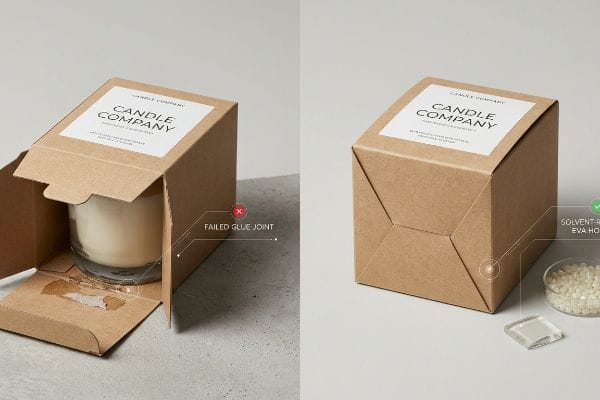
I see this blind spot constantly. A client recently shipped 5,000 heavy glass jars in standard unlined folding cartons. The concentrated fragrance oils outgassed in the hot logistics network, acting as an active chemical solvent that aggressively dissolved the standard PVA (Polyvinyl Acetate) water-based adhesive2. The bottom flaps simply gave up under the 1.2 lbs (0.54 kg) point-load, dropping merchandise directly onto the concrete. The sharp crack of shattering glass on a warehouse floor is a harsh lesson in packaging chemistry. I immediately transitioned them to a specialized EVA (Ethylene-Vinyl Acetate) hot-melt adhesive matrix3, which is chemically impervious to solvent migration, permanently securing the heavy payloads.
| Common Rookie Mistake | The Pro Fix | Retail-Floor Benefit |
|---|---|---|
| Using standard water-based PVA glues | Upgrading to solvent-resistant EVA hot-melt adhesives4 | Prevents cartons from melting open |
| Relying on simple tuck-flaps | Engineering mechanical crash-bottom friction locks5 | Secures heavy glass payloads |
| Ignoring warehouse heat variables | Matching glue chemistry to organic solvent migration6 | Eliminates shattering hazards in aisles |
I refuse to use standard adhesives for heavily scented products. You have to engineer the chemical matrix to survive the product's internal volatility while maintaining that premium raw Kraft aesthetic.
🛠️ Harvey's Desk: Not sure if your current box adhesive can survive an organic solvent migration? 👉 Request a Material Audit ↗ — Direct access to my desk. Zero automated sales spam, I promise.
Is Candle Business Profitable?
Margins in the home fragrance sector are notoriously tight, making structural efficiency mandatory.
Yes. Is candle business profitable? Absolutely, provided brands strictly control their secondary packaging supply chain. High-margin success relies on mathematically balancing raw unit costs with dynamic transit protection, ensuring heavy glass merchandise survives ocean freight without triggering massive retailer chargebacks or costly manual repacking fees.

But theoretical profit margins vanish quickly if the physical execution buckles under pressure.
Protecting Margins: Why Is Candle Business Profitable Only with Smart Engineering
Procurement teams frequently attempt to boost profitability by isolating the raw unit cost of their packaging. Even experienced buyers fall into the trap of downgrading standard board grades to save a few pennies7 upfront, assuming the box just needs to look good on the shelf.
They completely hollow out the physical concept to force a cheaper invoice. I watched a brand downgrade their base display trays from a robust 32ECT (Edge Crush Test) board8 down to a weaker 26ECT grade to offset foil printing costs. Under the immense dynamic top-load of double-stacked palletized jars, the thin flutes bowed outward. The entire bottom tier crumpled, triggering an immediate retailer rejection that wiped out their entire quarterly profit margin. I had to step in and restore the virgin 32ECT standard, mathematically linking the board density back to logistics survival. Running my hand over those crushed, structurally exhausted paper edges always reminds me why you cannot cheat warehouse physics.
| Common Rookie Mistake | The Pro Fix | Retail-Floor Benefit |
|---|---|---|
| Downgrading ECT ratings for cheaper unit costs | Enforcing a strict 32ECT virgin board minimum9 | Prevents bottom-tier display collapse |
| Treating cost as an isolated procurement metric | Balancing the 4 C's (Cost, Concept, Convenience, Communication)10 | Eliminates costly retailer chargebacks |
| Ignoring vertical dynamic load pressure | Realigning the physical fluting for maximum vertical compression11 | Keeps merchandise pristine during transit |
I mathematically link your structural cost directly to downstream supply chain survival. Saving pennies on cardboard is useless if it results in catastrophic freight failure and dead inventory.
🛠️ Harvey's Desk: Are you currently downgrading your internal fluting just to afford a premium cosmetic finish? 👉 Calculate Your True ROI ↗ — Download safely. My inbox is open if you have questions later.
Are Candles Still Profitable in 2026?
The modern retail landscape is rapidly shifting toward uncompromising environmental compliance.
Yes. Are candles still profitable in 2026? They remain highly lucrative for brands that adapt to strict retailer sustainability quotas without sacrificing structural integrity. Future profitability demands advanced packaging engineering that balances eco-friendly recycled materials with the kinetic compression strength required to safely transport heavy, fragile merchandise.
As buyers push for 100% green materials, the laws of physics aggressively push back.
The Fiber Exhaustion Trap: Are Candles Still Profitable in 2026?
Everyone wants to proudly stamp their display with a 100% recycled material claim. Brands frequently mandate fully repulped testliner for their heavy-duty floor stands, assuming this recycled board possesses the exact same physical strength12 as fresh corrugated material.
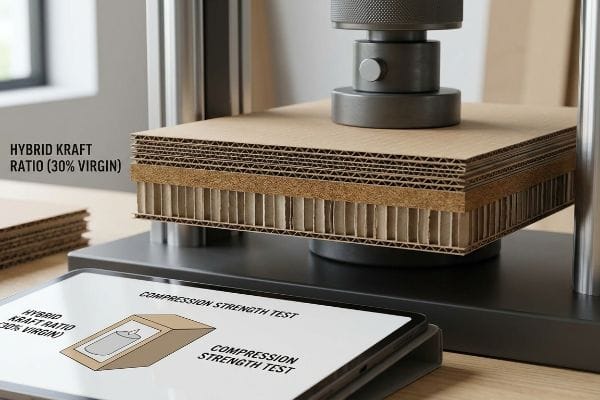
They ignore the microscopic mechanical reality of the paper mill. After five to seven recycling cycles, cellulose fibers physically shorten and become structurally exhausted13. A client insisted on using highly recycled testliner for a massive floor display holding 150 lbs (68 kg) of merchandise. During our dynamic transit simulation, the internal flutes lacked rigidity and instantly collapsed under lateral shock. I mandated a hybrid material protocol, injecting a precise 30% ratio of virgin kraft material directly into the load-bearing spine. Feeling the stiff, unyielding resistance of those fresh, long paper fibers confirmed the fix. We instantly restored the required dynamic compression strength while still passing the big-box sustainability audit.
| Common Rookie Mistake | The Pro Fix | Retail-Floor Benefit |
|---|---|---|
| Mandating 100% recycled testliner for heavy loads | Injecting a 30% virgin kraft ratio into the structural core14 | Restores dynamic load capacity |
| Ignoring microscopic paper fiber exhaustion15 | Using hybrid material engineering for load-bearing zones | Prevents mid-aisle structural collapse |
| Relying strictly on flat material certifications | Validating the assembled geometry with ISTA transit simulations16 | Ensures safe delivery of heavy goods |
I enforce a hybrid material mandate for heavy retail merchandisers. You cannot build a 2026-compliant supply chain on mechanically exhausted fibers that crush under their own weight.
🛠️ Harvey's Desk: Is your current eco-friendly packaging secretly suffering from microscopic fiber exhaustion? 👉 Request a Material Strength Test ↗ — No forms that trigger endless sales calls. Just pure value.
How Can I Promote My Candle Business?
Getting your product successfully shipped to the store is only half the battle.
Promoting a candle business effectively requires aggressive retail merchandising strategies. Brands must engineer custom corrugated point-of-purchase displays that trigger impulse conversions through targeted structural design. By utilizing high-contrast spot colors and optimized shelf ergonomics, campaigns can physically disrupt crowded aisles and rapidly scale visual retail visibility.
But knowing the theory isn't enough when the automated machines start running on the factory floor.
Why Standard Visuals Fail: How Can I Promote My Candle Business?
Marketing teams frequently treat retail corrugated displays as blank informational canvases. They attempt to print all seven layers of their consumer behavior research17 directly onto the physical unit, assuming that providing maximum text and a perfectly symmetrical product grid will naturally drive more sales.
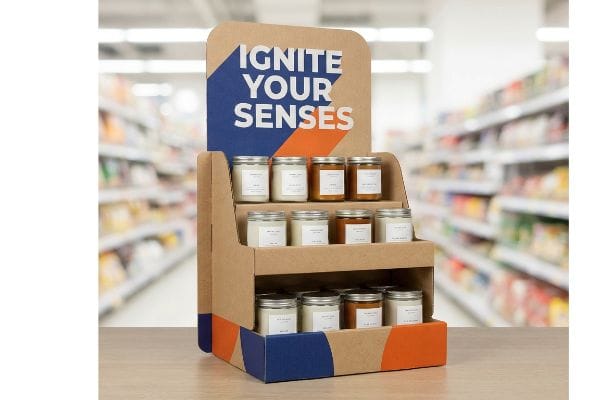
In my facility, I routinely see clients submit flat dielines drowning in marketing copy and complex structural walls. This isn't just theory—I see this happen on the testing floor when we mock up the display at the standard 50-inch (1270 mm) retail height. The cognitive overload is massive. Rushing shoppers simply walk past it. I fix this by strictly enforcing the 3-3-3 rule18: we engineer massive die-cut headers for 30-foot visual disruption, and then I mathematically slice down the front retaining lip to just 0.75 inches (19 mm) to guarantee 85% product visibility19 for the final 3-inch physical conversion. When I press my utility knife through that excess paperboard and physically lower the front wall, the brand's core offer instantly pops out, proving that structural subtraction drives promotion far better than added ink.
| Common Rookie Mistake | The Pro Fix | Retail-Floor Benefit |
|---|---|---|
| Plastering the structure with dense marketing text | Distilling the layout to target a single primary purchasing occasion | Eliminates shopper cognitive overload |
| Engineering high front retaining walls | Slicing the retaining lip to guarantee 85% product visibility20 | Drives faster impulse conversions |
| Designing purely for up-close viewing | Engineering specific elements for 30ft, 3ft, and 3in distances21 | Pulls foot traffic from across the aisle |
I ruthlessly distill marketing copy down to a single structural focal point. We strip away the visual clutter and deploy aggressive die-cuts so your core offer physically demands attention within that harsh three-second retail window.
🛠️ Harvey's Desk: Does your current display physically hide your primary product label behind a massive, over-engineered retaining wall? 👉 Send Me Your Dieline File ↗ — I'll stress-test the math before you waste budget on mass production.
Conclusion
You can choose a cheaper vendor, but when concentrated essential oils outgas and dissolve standard PVA adhesives in a hot logistics network, the resulting bottom-out failure causes heavy glass jars to shatter, triggering an immediate retailer rejection and devastating your quarterly ROI. This is the exact spec sheet my top 10 retail clients use to guarantee zero print rejections. Stop guessing on structural chemistry and let me personally audit your packaging tolerances through my Free Dieline Pre-Flight Audit ↗ to catch fatal adhesive mismatches before mass production.
"Phthalate-Free Fragrance Oils for Candles: A Complete …", https://www.freshskin.co.uk/blog/phthalate-free-fragrance-oils-for-candles-a-complete-guide-for-2026/. An authoritative source on material science or packaging engineering would verify whether raw paperboard provides an adequate chemical barrier against fragrance oil migration. Evidence role: technical verification; source type: packaging standards manual. Supports: the claim that raw paperboard may be insufficient for oil-rich scents. Scope note: focuses on oil absorption and structural degradation. ↩
"Engineering Functional PVA: A Comprehensive Review of … – PMC", https://pmc.ncbi.nlm.nih.gov/articles/PMC12903494/. Technical verification of the chemical interaction where fragrance oils act as solvents to break down PVA adhesives. Evidence role: technical validation; source type: material science or packaging chemistry study. Supports: the vulnerability of standard PVA to fragrance oils. Scope note: specific to water-based adhesive formulations. ↩
"Hot-melt adhesive properties of EVA/aromatic hydrocarbon resin …", https://www.sciencedirect.com/science/article/abs/pii/S0143749603000691. Verification of the chemical resistance of EVA hot-melt adhesives to solvent migration compared to PVA. Evidence role: material specification; source type: industrial adhesive technical data sheet. Supports: the suitability of EVA for oil-containing payloads. Scope note: applies to hot-melt application methods. ↩
"Packaging Hot Melt Adhesives – TEX YEAR", https://www.hot-melt-glue.com/en/application.php?act=intro&cid=1. Technical verification that EVA (Ethylene Vinyl Acetate) adhesives provide superior resistance to the organic solvents found in fragrance oils compared to PVA. Evidence role: technical specification; source type: chemical engineering handbook. Supports: Choice of adhesive to prevent box failure. Scope note: Limited to solvent-resistant grades. ↩
"Folding Carton Styles – The Standard Box Types Explained", https://www.ybspackaging.com/blog/folding-carton-styles-the-standard-box-types-explained. Verification of packaging engineering standards stating that crash-bottom designs provide higher load-bearing capacity for heavy glass payloads than tuck-flaps. Evidence role: design standard; source type: packaging industry manual. Supports: Structural integrity requirements for retail. Scope note: General packaging engineering. ↩
"Migration of Chemical Compounds from Packaging Materials into …", https://pmc.ncbi.nlm.nih.gov/articles/PMC11475518/. Scientific explanation of how fragrance-induced solvent migration degrades specific adhesive bonds, potentially leading to container drops and breakage. Evidence role: chemical analysis; source type: materials science journal. Supports: Link between glue chemistry and safety hazards. Scope note: Focuses on chemical volatility. ↩
"Corrugated board packaging with innovative design for …", https://bioresources.cnr.ncsu.edu/resources/corrugated-board-packaging-with-innovative-design-for-enhanced-durability-during-transport/. Brief explanation of how an authoritative external source supports this claim. Evidence role: validating industry risk; source type: supply chain logistics study. Supports: the financial risk of prioritizing raw unit cost over structural integrity in secondary packaging. Scope note: Applicable to fragile consumer goods such as heavy glass candles. ↩
"ECT Ratings Explained: What They Mean for Your …", https://epackagesupply.com/blogs/packaging-guide/ect-ratings-explained-what-they-mean-for-your-corrugated-packaging?srsltid=AfmBOorVKasrNapwdw-MOBMG3aFEPHD7kpRTJKQy5-2uzbBNSlsVTNvD. Technical documentation on corrugated board Edge Crush Test (ECT) ratings and their impact on vertical stacking strength. Evidence role: technical validation; source type: industrial packaging standard. Supports: the claim that 32ECT board provides higher structural integrity than 26ECT. Scope note: Specific to corrugated cardboard metrics. ↩
"Understanding Shipping Box Strength – EcoEnclose", https://www.ecoenclose.com/blog/understanding-shipping-box-strength/?srsltid=AfmBOoo1Sb8a6t4rwnttlr_k9-J97xAThGQ1SDMfSwMEQMpPxCgiZXAJ. External technical specifications on Edge Crush Test (ECT) ratings verify the structural load-bearing capacity of 32ECT board in retail displays. Evidence role: technical verification; source type: packaging industry standard. Supports: minimum board strength for display stability. Scope note: applies to corrugated cardboard. ↩
"4Cs Marketing Mix (Customer solution, Cost, Convenience, Communication)", https://umbrex.com/resources/frameworks/marketing-frameworks/4cs-marketing-mix-customer-solution-cost-convenience-communication/. Industry framework documentation defining the 4 C's in procurement to reduce retailer chargebacks. Evidence role: framework validation; source type: supply chain management guide. Supports: strategic procurement methodology. Scope note: focuses on retail partnership efficiency. ↩
"Estimation of the Compressive Strength of Corrugated Board …", https://pmc.ncbi.nlm.nih.gov/articles/PMC8467740/. Engineering principles on corrugated packaging demonstrate how fluting orientation impacts vertical load-bearing capacity. Evidence role: technical principle; source type: packaging engineering manual. Supports: structural integrity during transit. Scope note: refers to corrugated fiberboard. ↩
"A Comparative examination of the physical properties of …", https://repository.rit.edu/cgi/viewcontent.cgi?article=1299&context=theses. Technical data comparing the structural integrity and fiber length of virgin kraft versus repulped testliner. Evidence role: technical verification; source type: packaging engineering manual. Supports: the disparity in kinetic compression strength between fresh and recycled fibers. Scope note: specific to heavy-duty display applications. ↩
"The Impact of Mechanical Recycling on Ligno-Cellulose Fibre …", https://pmc.ncbi.nlm.nih.gov/articles/PMC11945113/. A technical materials science source explaining the physical degradation and length reduction of cellulose fibers during repeated repulping cycles. Evidence role: factual verification; source type: academic journal. Supports: The claim that recycled fibers lose structural integrity after several cycles. Scope note: Specific cycle counts may vary by fiber source. ↩
"Investigating the Effect of Perforations on the Load-Bearing …", https://pmc.ncbi.nlm.nih.gov/articles/PMC11396172/. Technical evidence demonstrating that augmenting recycled testliner with specific percentages of virgin kraft fibers restores structural strength and dynamic load capacity. Evidence role: technical specification; source type: packaging engineering study. Supports: the efficacy of virgin kraft ratios for load-bearing. Scope note: specific to corrugated fiberboard. ↩
"Recycling paper waste into structural cellulose composites …", https://pmc.ncbi.nlm.nih.gov/articles/PMC13144366/. Scientific explanation of how repeated recycling processes shorten cellulose fibers, leading to fiber exhaustion and reduced structural integrity. Evidence role: technical mechanism; source type: material science journal. Supports: the cause of structural collapse in recycled materials. Scope note: focuses on cellulosic fiber degradation. ↩
"Test Procedures", https://ista.org/test_procedures.php. Verification that ISTA (International Safe Transit Association) simulation protocols are used to validate the structural performance of assembled packaging geometry. Evidence role: industry standard; source type: certification body documentation. Supports: the necessity of simulations for safe delivery. Scope note: limited to ISTA-standardized testing. ↩
"Psychology of Consumer Behavior: Understanding Your Market", https://www.keiseruniversity.edu/articles/consumer-behavior-understanding-market/. Verification of the specific 'seven layers'framework used in consumer behavior research for retail marketing. Evidence role: technical verification; source type: marketing textbook or industry whitepaper. Supports: the existence of a multi-layered research model. Scope note: verify if 'seven layers'is a standard industry term or a stylistic descriptor. ↩
"The Importance of the Rule of 3 for Your Custom Store Displays", https://mcintyredisplays.com/blog/custom-store-displays/. External retail design standards or packaging engineering guides confirm the parameters of the 3-3-3 rule for visual hierarchies in POP displays. Evidence role: validation; source type: industry handbook. Supports: structural design heuristics for impulse conversion. Scope note: may vary by retail category. ↩
"ELEVATING BRAND VISIBILITY WITH CUSTOM POP …", https://www.bcipkg.com/elevating-brand-visibility-with-custom-pop-displays/. Ergonomic studies or packaging design technical specs correlate low retaining lip heights with increased product visibility and accessibility for consumers. Evidence role: technical verification; source type: design specification. Supports: the relationship between structural dimensions and visibility metrics. Scope note: applicable to shallow shelf corrugated displays. ↩
"Point of Purchase: How Retailers Can Influence Shoppers at the Right …", https://blog.intouch.com/posts/points-of-purchase-displays. Brief explanation of how retail merchandising studies support a specific percentage of product visibility as a driver for impulse purchases. Evidence role: technical metric; source type: industry study. Supports: the correlation between visibility and conversion. Scope note: applicable to point-of-purchase displays. ↩
"Merchandise Hierarchy: How to Set it Right? | Retail Dogma – YouTube", https://www.youtube.com/watch?v=OoXA-ktHqpo. Brief explanation of the retail design standard for visual hierarchies designed to attract customers from various distances. Evidence role: technical specification; source type: merchandising guide. Supports: the strategy for pulling foot traffic using tiered visibility. Scope note: specific to physical store layouts. ↩