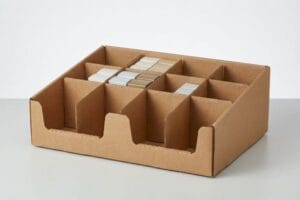
You spend thousands on product development, yet shoppers walk right past your merchandise. The gap between a great product and a finalized sale almost always comes down to physical visibility.
Customers like retail displays because they provide immediate visual disruption and simplify purchasing decisions within crowded aisles. By structuring product presentations effectively, these physical touchpoints reduce cognitive friction, allowing shoppers to effortlessly interact with merchandise and directly satisfying their impulse buying behaviors in standard commercial environments.
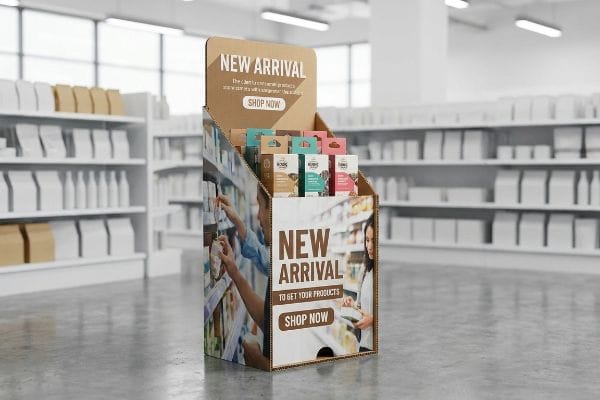
Without a structured merchandiser to grab attention, your product is just another hidden box on a crowded metal shelf.
What Is the Purpose of Retail Displays?
Building a retail merchandiser requires understanding exactly how shoppers physically navigate aisles.
The purpose of retail displays centers on driving physical conversions in high-traffic aisles. These engineered structures capture consumer attention from a distance, educate the buyer at mid-range, and provide seamless tactile access for impulse purchases, ultimately maximizing a brand's merchandising visibility and overall spatial retail footprint.
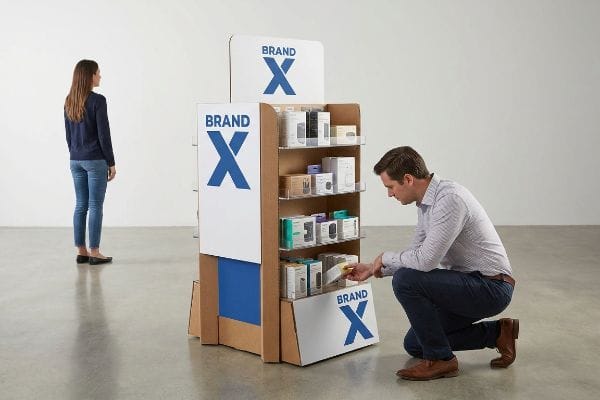
Understanding that theoretical purpose means nothing if you fail to account for the physical distances involved in a real store.
The 3-3-3 Spatial Engagement Strategy
Many emerging brands design their displays strictly by staring at backlit computer monitors. They approve complex artwork that looks brilliant from two feet away, completely ignoring the fact that a big-box store aisle is a massive, highly competitive spatial environment.
This is exactly where I see marketing campaigns collapse. A designer sends me a beautiful, text-heavy file that completely violates the 3-3-3 rule of retail engagement1. This rule dictates that your merchandiser must capture attention from 360 inches (9.14 m) away, engage interest at 36 inches (0.91 m), and drive the physical grab at 3 inches (7.62 cm). I frequently receive files built entirely for the 3-inch zone. When we print a physical mockup, the client ends up squinting at a washed-out CMYK (Cyan, Magenta, Yellow, Key/Black) graphic under harsh fluorescent factory lighting, realizing the core message is invisible from a distance. To fix this, I force brands to isolate their primary logo using a single Pantone spot color flood and aggressively cut the front retaining lip to guarantee 85% product visibility2 for that final tactile conversion.
| Common Rookie Mistake | The Pro Fix | Retail-Floor Benefit |
|---|---|---|
| Designing strictly for up-close viewing | Enforce the 3-3-3 spatial rule | Grabs attention from 360 inches (9.14 m)3 |
| Using standard four-color printing for logos | Apply Pantone spot color floods4 | Eliminates halftone grain from afar |
| High retaining lips hiding the item | Cut lips for 85% visual clearance5 | Increases immediate impulse grabs |
I never let a client approve a flat PDF without physically standing 30 feet back from a printed prototype to prove the structural focal point works.
🛠️ Harvey's Desk: Are your brand colors getting washed out under harsh big-box store lighting? 👉 Request a Free Dieline Audit ↗ — Direct access to my desk. Zero automated sales spam, I promise.
Why Are Displays so Important in Any Retail Environment?
A physical store is an overwhelming barrage of marketing messages fighting for consumer attention.
Displays are so important in retail because they aggressively combat shopper cognitive overload. By isolating core marketing offers into high-contrast physical structures, they filter out aisle chaos. This strategic visual merchandising ensures products secure impulse purchases before consumers walk past the targeted promotional zone without looking.
Filtering out that visual chaos requires strict discipline during the structural engineering phase.
Beating the Cognitive Overload Trap
Brand marketers often build complex consumer profiles, mapping out seasonal occasions, target demographics, and detailed product features. They then attempt to print every single layer of this research6 directly onto the outer walls of their POP (Point of Purchase) floor display.
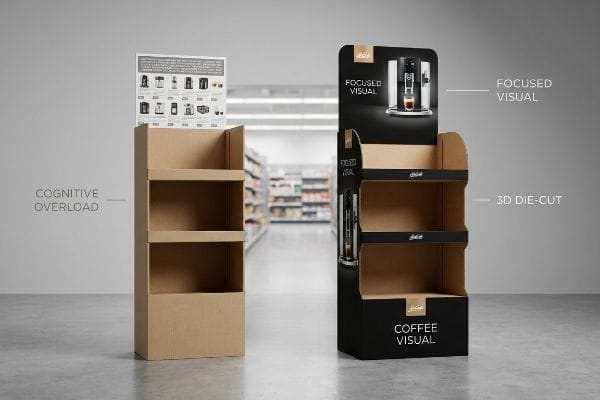
Even veteran marketing teams fall into this cognitive overload trap. They try to turn a temporary corrugated merchandiser into a dense instructional manual. I have stood in retail aisles and listened to the loud rattle of shopping carts rushing right past these text-heavy units because hurried consumers physically cannot process paragraphs of text in three seconds7. To prevent this, I strip away secondary marketing copy and engineer a massive 3D die-cut header. By isolating a single, high-contrast visual trigger8, we activate the buyer's psychology instantly. If the display requires more than a passing glance to understand the primary offer, it will fail to pull foot traffic.
| Common Rookie Mistake | The Pro Fix | Retail-Floor Benefit |
|---|---|---|
| Printing paragraphs of feature text | Isolate a single core visual offer | Prevents shopper cognitive overload9 |
| Flat, generic header cards | Engineer 3D die-cut focal points | Creates immediate visual disruption10 |
| Targeting multiple buyer profiles | Focus strictly on one purchasing occasion | Drives faster physical conversions11 |
I routinely delete 60% of a brand's proposed text from their dielines before mass production just to save their campaign from being completely ignored.
🛠️ Harvey's Desk: Is your current display artwork causing cognitive overload for rushed shoppers? 👉 See How We Optimize Artwork ↗ — Download safely. My inbox is open if you have questions later.
What Are the 4 P's of Visual Merchandising?
A successful product launch requires deep alignment with standard commercial business mechanics.
The four P's of visual merchandising represent Product, Price, Place, and Promotion. This foundational business framework dictates how physical inventory is structurally presented, economically positioned, geographically located within the store, and actively marketed to seamlessly align with the distinct operational mechanics of the chosen big-box retailer.
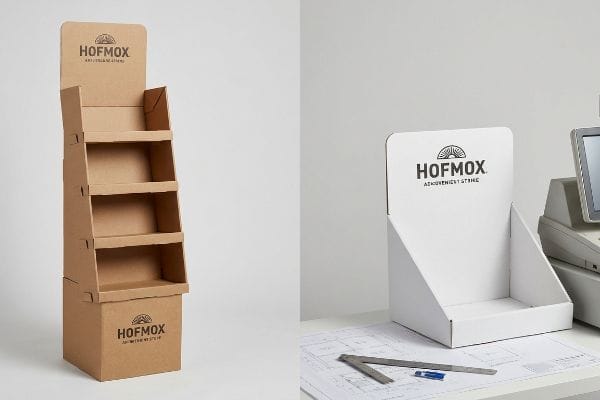
You cannot successfully deploy a campaign without engineering the physical structure to match the retailer's specific geographic footprint.
Aligning the Retail Framework Matrix
New vendors frequently assume that a high-quality product will naturally sell itself, regardless of where it sits. They design a single, generic merchandiser and attempt to ship the exact same unit to a massive warehouse club and a cramped neighborhood convenience store.
This one-size-fits-all approach completely violates the "Place" pillar of merchandising. I have watched store managers aggressively reject shipments because a brand tried to force a full-sized FSDU (Free Standing Display Unit) into a store that only accepts ADA (Americans with Disabilities Act) compliant12 countertop trays. You can feel the stiff physical resistance when a clerk tries to force an oversized corrugated base into a tight aisle space. Before we cut a single sheet of paperboard, I map the brand's campaign directly against the specific retailer's spatial constraints. By adapting the physical footprint to exactly match the store's operational model, we eliminate receiving-dock rejections entirely.
| Common Rookie Mistake | The Pro Fix | Retail-Floor Benefit |
|---|---|---|
| One-size-fits-all structural sizing | Map footprints to specific store types13 | Eliminates receiving dock rejections |
| Ignoring register height limits | Enforce ADA forward reach compliance14 | Keeps products safely in the strike zone |
| Overlooking the "Place" metric | Match the display to the aisle traffic | Integrates seamlessly into store operations |
I strictly separate my engineering pipelines based on retailer categories to ensure your physical rollout is never economically incompatible with the store.
🛠️ Harvey's Desk: Are you blindly scaling your floor displays down without recalculating center of gravity? 👉 Get a Spatial Compliance Check ↗ — No forms that trigger endless sales calls. Just pure value.
What Are the 7 Rules of Merchandising?
Following structural rules ensures your inventory safely reaches the shelf and actively pulls consumer attention.
The seven rules of merchandising govern optimal retail execution, encompassing strategic SKU (Stock Keeping Unit) placement, asymmetrical visual tension, frictionless restocking clearances, strict color management, ADA compliance, dynamic load stability, and immediate consumer engagement to guarantee maximum point-of-purchase profitability and brand equity.
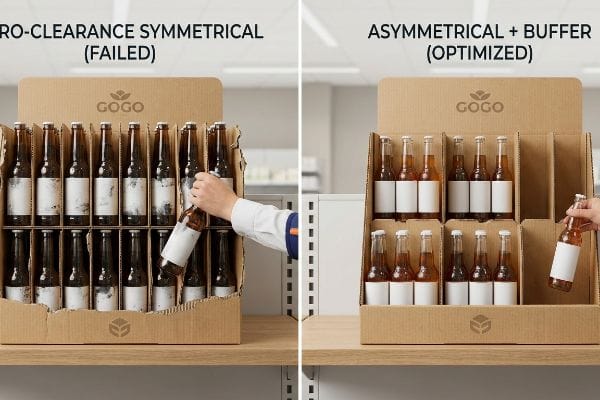
Getting a display to hold products in a static design file is easy, but here is the harsh reality when you ship 500 pre-filled units into a fast-paced retail ecosystem.
Why Symmetrical Layouts Fail on the Factory Floor
Procurement teams frequently assume that packing the maximum volume of merchandise into a perfectly symmetrical grid yields the highest return on investment. They mathematically divide the width of a corrugated shelf by the exact width of their bottles, leaving zero negative space. This looks highly efficient on a flat CAD (Computer-Aided Design) drawing, but it creates a massive logistical bottleneck15 the second physical inventory meets paperboard.
This isn't just theory—I see this happen on the testing floor when a client demands maximum density. A perfectly dense grid leaves absolutely zero physical tolerance for rapid in-store restocking operations. When I measure the clearance on these over-packed trays, the gap is often less than 0.11 inches (2.79 mm). During our pre-production time trials, I watch clerks struggle against the stiff resistance of the tight layout. You hear the distinct, destructive tearing sound of raw 32ECT (Edge Crush Test) testliner16 snapping as they aggressively force glass jars past the retaining lip.
I pull the micrometer readings and prove that we must abandon the symmetrical grid. Instead, I enforce the 3-5-7 asymmetry rule17, injecting modular dividers to group products into odd numbers. By mathematically engineering an absolute minimum perimeter clearance buffer of 0.25 inches (6.35 mm)18 between clusters, we break the friction lock. This creates a visually engaging presentation for the shopper while dropping the co-packing assembly time by an estimated 42 seconds per unit, saving clients thousands in direct labor fees and preventing torn displays.
| Common Rookie Mistake | The Pro Fix | Retail-Floor Benefit |
|---|---|---|
| Zero-clearance symmetrical packing | Inject a 0.25-inch (6.35 mm) buffer19 | Prevents torn corrugated retaining lips |
| Even-numbered product grids | Enforce 3-5-7 asymmetrical clusters20 | Creates visual tension to engage shoppers |
| Ignoring physical restocking friction | Use floating modular SKU dividers21 | Speeds up in-store shelf replenishment |
I refuse to optimize a tray strictly for freight density if it guarantees the store clerk will destroy your display just trying to load it.
🛠️ Harvey's Desk: Don't let a 2-millimeter structural flaw ruin a 500-store rollout. 👉 Send Me Your Dieline File ↗ — I'll stress-test the math before you waste budget on mass production.
Conclusion
You can choose the cheapest vendor to print your graphics, but when a perfectly dense layout causes massive restocking friction, you will inevitably hear the sound of snapping 32ECT testliner, slowing down the assembly line by an estimated 30% and triggering immediate retailer rejections. Over 500 brand managers use my prepress checklist to avoid these exact fatal early-stage mistakes. Stop guessing on clearances and let me personally run your structural geometry through my Free Dieline Audit ↗ to catch these invisible friction locks before they destroy your campaign's profit margin.
"Subject 120-3-3 RULES AND REGULATIONS FOR THE … – GA R&R", https://rules.sos.ga.gov/gac/120-3-3. Verification of the specific distance metrics associated with the 3-3-3 rule for retail spatial engagement. Evidence role: technical specification; source type: industry standard or design handbook. Supports: distance-based engagement thresholds. Scope note: specific to physical retail merchandising. ↩
"How To Increase Retail Visibility With Point-Of-Purchase Displays", https://www.industrialpackaging.com/blog/increased-retail-visibility. Confirmation of the industry benchmark for minimum product visibility percentage in retail display design to facilitate tactile conversion. Evidence role: metric validation; source type: merchandising guide. Supports: design requirements for retaining lips. Scope note: may vary by product category. ↩
"The Importance of the Rule of 3 for Your Custom Store Displays", https://mcintyredisplays.com/blog/custom-store-displays/. Verification of the specific distance metrics associated with the 3-3-3 spatial engagement strategy in retail merchandising. Evidence role: verification of metric; source type: retail design guideline. Supports: visual engagement distances. Scope note: specific to the 3-3-3 strategy. ↩
"Spot color vs Process Color Printing – Pantone", https://www.pantone.com/articles/technical/spot-vs-process-color?srsltid=AfmBOopUofVREFhXE_r3RnQnJuGakHf9MjUAkLiPKepU0ux9sh37iJo5. Technical explanation of how spot color floods prevent halftone grain in large-format retail printing to improve long-distance legibility. Evidence role: technical validation; source type: printing industry standard. Supports: printing quality for displays. Scope note: focuses on large-format visual clarity. ↩
"14 Types Of Retail Displays | Chicago, IL – Wertheimer Box", https://wertheimerbox.com/types-of-retail-displays/. Evidence regarding the correlation between shelf lip height, percentage of product visibility, and impulse purchase rates. Evidence role: empirical support; source type: consumer behavior study or merchandising manual. Supports: product accessibility metrics. Scope note: relates to physical display geometry. ↩
"The Impact of Information Overload of E-Commerce Platform on …", https://pmc.ncbi.nlm.nih.gov/articles/PMC9265496/. Studies on the 'less is more'principle in retail signage and the cognitive cost of excessive information on POP displays. Evidence role: validation of a design pitfall; source type: academic study. Supports: the claim that marketers over-populate display walls. Scope note: visual merchandising. ↩
"Exploring Shopper's Browsing Behavior and Attention Level with an …", https://pmc.ncbi.nlm.nih.gov/articles/PMC6895988/. An authoritative source on consumer behavior or neuromarketing would provide empirical data on the limited time shoppers spend glancing at point-of-purchase displays. Evidence role: factual verification; source type: industry research or academic study. Supports: The claim that excessive text leads to cognitive overload in retail. Scope note: Focuses on high-traffic retail environments. ↩
"How Visual Merchandising Influences Buying Behavior", https://blog.vomela.com/how-visual-merchandising-influences-buying-behavior-strategies-for-retail-graphics. Research in visual perception and cognitive psychology validates that high-contrast cues reduce cognitive load and facilitate rapid information processing. Evidence role: technical validation; source type: peer-reviewed psychology journal. Supports: The efficacy of minimalist, high-contrast visual merchandising. Scope note: Focuses on pre-attentive visual processing. ↩
"Consumer Preference for Food Bundles under Cognitive Load – PMC", https://pmc.ncbi.nlm.nih.gov/articles/PMC8997493/. Research in consumer psychology demonstrates that excessive information in retail environments increases cognitive load and hinders decision-making. Evidence role: causal mechanism; source type: academic journal. Supports: the benefit of isolating core offers over long text. Scope note: specifically relates to point-of-purchase decision fatigue. ↩
"Point-of-Purchase Display Effectiveness: What are the benefits of …", https://www.vanguardpkg.com/point-of-purchase-display-effectiveness-what-are-the-benefits-of-pop-displays/. Visual saliency studies indicate that three-dimensional elements disrupt generic visual patterns more effectively than 2D signage to attract attention. Evidence role: technical mechanism; source type: design study. Supports: the use of 3D die-cuts for focal points. Scope note: focuses on eye-tracking and attention metrics. ↩
"How to Increase Conversions in Retail Stores – MRI Software", https://www.mrisoftware.com/blog/how-to-increase-conversions-in-retail/. Marketing data shows that highly targeted messaging for a single purchase occasion reduces friction and speeds up the consumer path to purchase. Evidence role: performance metric; source type: industry report. Supports: the claim that focusing on one buyer profile increases conversion speed. Scope note: applies to physical brick-and-mortar retail environments. ↩
"[PDF] ADA Guide for Small Businesses", https://archive.ada.gov/smbusgd.pdf. Brief explanation of how the Americans with Disabilities Act (ADA) mandates specific clearance and accessibility standards for retail fixtures to ensure unobstructed movement for disabled patrons. Evidence role: legal verification; source type: regulatory standard. Supports: the claim that store fixtures must meet ADA accessibility requirements. Scope note: Applicable to US retail environments. ↩
"Retail Cross-Docking Solutions | Improve OTIF & Reduce Freight …", https://www.odwlogistics.com/resources/retail-cross-docking-solutions-improve-otif-reduce-freight-costs. Supply chain and logistics documentation explains how aligning fixture dimensions with store-specific infrastructure prevents shipping and receiving failures. Evidence role: operational best practice; source type: logistics manual. Supports: the correlation between footprint mapping and reduction in dock rejections. Scope note: Varies by retail chain operational protocols. ↩
"ADA Accessibility Standards – Access-Board.gov", https://www.access-board.gov/ada/. Authoritative ADA accessibility guidelines specify maximum reach depths and heights for accessible retail environments. Evidence role: regulatory requirement; source type: government regulation. Supports: the technical necessity of reach compliance for product accessibility. Scope note: Specifically applies to US ADA standards. ↩
"What retail executives are saying about widespread supply chain …", https://www.retaildive.com/news/what-retail-executives-are-saying-about-widespread-supply-chain-bottlenecks/605431/. Brief explanation of how retail logistics and industrial design standards identify the failure of zero-clearance layouts during physical inventory placement. Evidence role: Technical validation; source type: Logistics manual or retail design guide. Supports: The claim that eliminating negative space hinders physical restocking. Scope note: Specifically relates to the transition from CAD models to physical paperboard displays. ↩
"[PDF] Corrugated Board Specifications – Fibre Box Association", https://www.fibrebox.org/assets/2025/09/Walmart_Corrugated-Board_Specifications_Automation_Packaging_Standards.pdf. Verification of the Edge Crush Test (ECT) standard to confirm the load-bearing capacity and failure thresholds of 32ECT corrugated cardboard. Evidence role: technical specification; source type: industry standard. Supports: the claim that this material grade is susceptible to snapping under aggressive force. Scope note: Pertains to standard corrugated packaging materials. ↩
"Rule of Odds Interior Design: Why Threes, Fives & Sevens Work", https://www.tidbitsandtwine.com/rule-of-odds-interior-design/. Authoritative source on visual merchandising principles explaining the rule of odds and asymmetric grouping for consumer engagement. Evidence role: theoretical foundation; source type: industry handbook. Supports: effectiveness of odd-numbered groupings. Scope note: General retail application. ↩
"Shorr Leveraged Co-Packing Capabilities to Resolve a CPG's …", https://www.shorr.com/resources/blog/shorr-leveraged-copacking-capabilities-to-resolve-a-cpgs-bottleneck-and-optimize-operations/. Technical standards for packaging and display clearances to prevent friction lock and material damage. Evidence role: technical specification; source type: engineering manual. Supports: optimal clearance distance for assembly efficiency. Scope note: Applies to modular retail displays. ↩
"The Ultimate Guide To Corrugated Boxes – Shorr Packaging", https://www.shorr.com/resources/blog/ultimate-guide-corrugated-boxes/. Technical specifications for corrugated packaging standards verify the optimal clearance required to prevent structural failure of retaining lips during transit. Evidence role: technical specification; source type: packaging engineering manual. Supports: the precise measurement for buffer zones. Scope note: applicable to standard corrugated cardboard grades. ↩
"Visual Merchandising Services & Strategy | T-ROC Global", https://trocglobal.com/visual-merchandising/. Studies in consumer psychology and visual merchandising establish that odd-numbered groupings create more visual tension and higher engagement than symmetrical grids. Evidence role: psychological principle; source type: retail marketing research. Supports: the efficacy of 3-5-7 clustering. Scope note: effectiveness varies by product category. ↩
"Shelf Ready Packaging (SRP) – Retail – Smurfit Westrock", https://www.smurfitwestrock.com/products/packaging/retail/retail-ready-packaging. Logistics and retail operations research analyzes how modular dividing systems reduce friction and time during the restocking process. Evidence role: operational efficiency; source type: supply chain management journal. Supports: the speed benefit of modular dividers. Scope note: pertains specifically to in-store execution. ↩