Securing retail floor space is an uphill battle, but structural graphics shouldn't be. You need printing methods engineered to survive punishing supply chains and harsh fluorescent lighting.
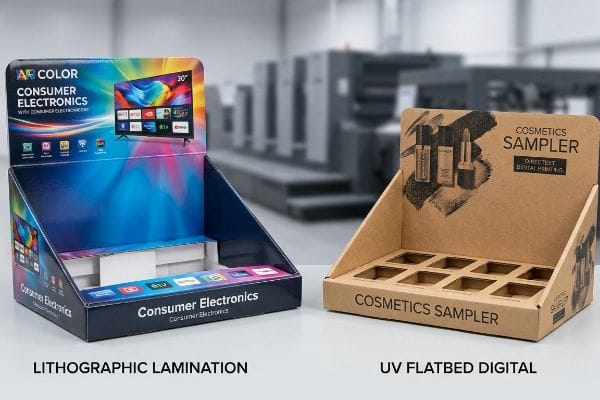
Printing styles for display packaging dictate optical clarity and structural resilience. The most effective methods include lithographic lamination for high-volume retail campaigns and UV (Ultraviolet) flatbed digital printing for rapid, plate-free prototyping. The optimal choice balances graphic resolution, material absorption rates, and overall manufacturing budget constraints.
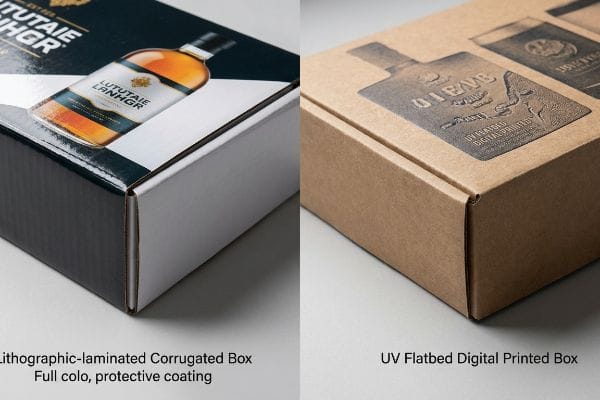
Selecting the right ink and application method is more than a marketing aesthetic—it is a brutal physical calculation. Let's break down how high-performance printing interacts with raw paperboard.
What Format Is Best for Poster Printing?
Large-scale graphics require flawless execution, but retail strategy often dictates different formats to balance visual impact with campaign budgets and store footprint requirements.
The best format for poster printing relies on matching the display type to your retail goals. Standard digital printing handles most promotional signage efficiently, while offset lithography provides cost-effective volume for massive national rollouts where brand consistency is non-negotiable.
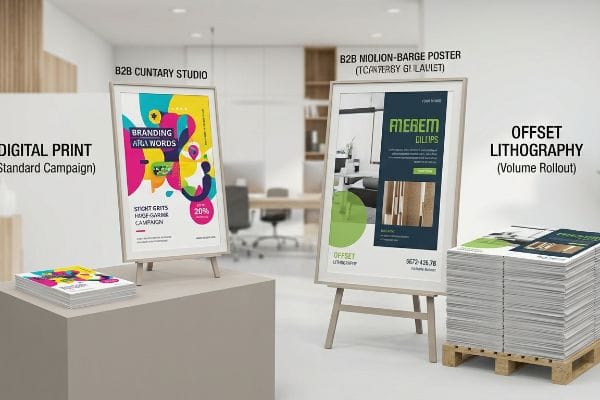
Choosing the right poster format involves aligning your visual merchandising goals with the specific retail environment you are targeting.
The Strategic Campaign Approach
Marketing teams frequently assume that a single poster format will work perfectly across all retail environments, treating boutique counter displays and massive big-box endcaps exactly the same. They believe that standard glossy paper and generic digital inks will automatically grab consumer attention, regardless of the store's layout or the specific lighting conditions in the aisle. This generalized approach completely ignores how different shopping environments require distinct visual strategies1 to effectively guide customer traffic and drive impulse purchases.
In reality, successful retail merchandising demands a highly tailored format strategy. Massive big-box stores benefit heavily from rigid, large-format corrugated boards2 that can stand independently and command attention from fifty feet down the main aisle. Conversely, intimate boutique settings require smaller, high-resolution graphic formats that invite closer inspection at the checkout register. By matching your exact poster format to the specific retail category, brands maximize their visual impact and ensure their marketing spend translates directly into increased foot traffic.
| Retail Strategy | Standard Campaign | Volume Rollout |
|---|---|---|
| Printing Format | Digital Printing3 | Offset Lithography4 |
| Ideal Use Case | Seasonal Promotions | National Campaigns |
| Visual Impact | Targeted Local Focus | Consistent Brand Reach |
Aligning your printing format with your specific retail strategy ensures maximum visibility while protecting your marketing budget from unnecessary overspending on the wrong materials.
🛠️ Harvey's Desk: Are your short-run promotional graphics destroying your packaging budget with unnecessary tooling fees? 👉 Request a Free Print Optimization Audit ↗ — I review every structural file personally within 24 hours.
What Are the 7 Types of Packaging?
Understanding retail merchandisers is crucial for effective product placement, allowing brands to maximize visibility and drive targeted consumer engagement across different areas of the store.
The seven types of packaging across retail include floor displays, countertop units, pallet wraps, shelf trays, hang tabs, interactive setups, and master shipping cartons. Each distinct category serves a specific strategic purpose in guiding the customer journey from the aisle to the checkout register.
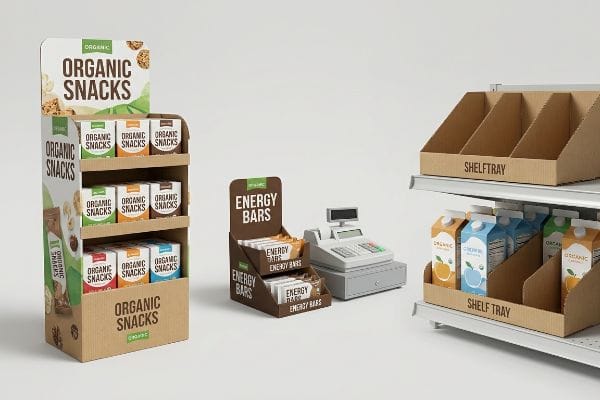
Categorizing your retail rollout is just the first step in building a cohesive and profitable in-store merchandising strategy.
The Multi-Tiered Merchandising Plan
Emerging brands often assume that simply placing products on a standard in-line shelf is enough to secure consistent retail sales volume. They view the various types of secondary packaging and freestanding displays as unnecessary luxury expenses rather than critical touchpoints in the consumer journey. This simplified mindset overlooks how different store zones, from the primary traffic aisles to the final checkout counters, influence shopper psychology and dictate completely different purchasing behaviors5.
The reality of modern retail requires a multi-tiered display strategy to capture consumer attention at every possible step. A towering floor display introduces the brand and its overarching message to shoppers navigating the main aisles, while compact countertop units are specifically positioned to capture last-minute impulse buys6 while customers wait in line. Understanding how to deploy these seven packaging types effectively allows brands to surround the consumer, building multiple opportunities for engagement and significantly increasing the overall likelihood of a final purchase7.
| Packaging Type | Strategic Purpose | Retail Location |
|---|---|---|
| Floor Display8 | Brand Introduction | Main Store Aisles |
| Countertop Unit9 | Impulse Purchasing | Checkout Registers |
| Shelf Tray10 | Category Dominance | Standard In-line Shelves |
Deploying the correct packaging type for specific store zones transforms passive browsers into active buyers by strategically placing products exactly where purchasing decisions are made.
🛠️ Harvey's Desk: Are your heavy checkout trays actively tearing at the seams because your designer shrank a floor display file? 👉 Get a Custom Engineering Quote ↗ — 100% confidential. Your unreleased retail designs are safe with me.
How Do You Print on Packaging?
Applying graphics to retail packaging is a foundational step in product marketing, requiring a clear understanding of your campaign goals and desired brand positioning.
Printing on packaging generally utilizes either digital or traditional offset methods. Digital printing offers incredible flexibility and speed for smaller, targeted campaigns, while traditional methods provide unmatched efficiency and color consistency for long-term, high-volume retail rollouts.
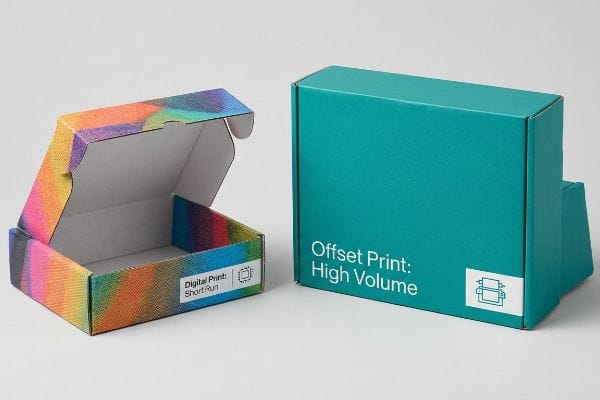
Selecting a printing method relies heavily on balancing your anticipated sales volume with the specific visual requirements of your target audience.
The Lifecycle Application Method
Many new product managers believe that all printing methods produce identical results, assuming they can simply send a digital design file to any manufacturer and automatically receive perfect packaging in return. They treat the printing process as a simple commodity, prioritizing the lowest possible upfront quote without considering how the chosen application method aligns with their broader marketing strategy or their long-term production scale.
A successful retail launch requires aligning the print method directly with the campaign's strategic lifecycle. Digital printing is ideal for testing new markets11 with fast, low-volume runs, allowing responsive brands to pivot their messaging quickly based on early consumer feedback. Alternatively, established products demand the powerful economies of scale provided by traditional offset printing12 to maintain absolute brand consistency across thousands of nationwide retail locations. Choosing correctly ensures your packaging continuously communicates premium quality while staying strictly within your established budget constraints.
| Printing Method | Best For | Campaign Goal |
|---|---|---|
| Digital Print13 | Short Seasonal Runs | Market Testing & Agility |
| Offset Print14 | High-Volume Rollouts | Brand Consistency & Scale |
| Flexo Print15 | Simple Mailer Boxes | Cost-Effective Shipping |
Selecting the appropriate printing technique guarantees your packaging visually resonates with consumers while maintaining the strategic scale required for long-term retail success.
🛠️ Harvey's Desk: Are your large floor display panels actively warping and bowing out of alignment before they even leave the warehouse? 👉 Request a Free Structural Cure Audit ↗ — No account managers in the middle. You talk directly to structural engineers.
What Are the Different Types of Print Styles?
Selecting the wrong color blending technique can instantly downgrade a premium brand into a cheap imitation. You must control how optical dots interact with paper fibers.
The different types of print styles in manufacturing encompass standard CMYK process printing, PMS spot color applications, and flexographic direct printing. Each style determines how pigment binds to substrates, directly impacting contrast visibility and preventing optical muddying under harsh lights.
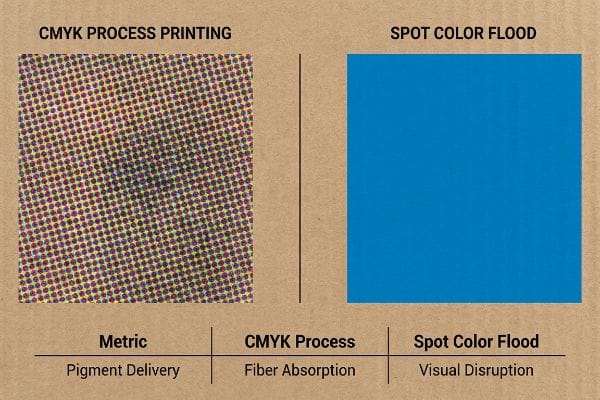
Brand managers often approve digital PDF artwork without understanding how those exact colors translate mechanically onto raw, unsealed corrugated surfaces.
The CMYK Halftone Mud Prevention
Marketing teams frequently convert solid corporate logos into standard four-color CMYK formats, assuming process printing will seamlessly match the vibrant RGB glows of their computer screens. They completely ignore the microscopic physical reality of optical blending on porous testliner. Standard four-color machinery relies on spraying thousands of tiny, overlapping halftone dots that absorb unevenly into the raw paper fibers16. When viewed under the harsh, unforgiving fluorescent lighting of a big-box retailer, this theoretical optical blending fails mechanically, creating a washed-out, grainy logo.
In my facility, I routinely see RFQs from procurement teams that blindly downgrade ink specifications to standard CMYK just to shave pennies off the unit cost. During a recent pre-production color check for an electronics end-cap, the CMYK halftone dots bled severely into the 32ECT board17, rendering the primary logo muddy and illegible from twenty feet away. By utilizing our D50 lighting booth and optical density scanners, I proved we didn't need expensive foil laminations—we just needed a targeted spot color flood. Replacing the overlapping optical dot blend with a solid, high-density layer of pre-mixed Pantone spot ink guaranteed razor-sharp contrast18. The material itself handled the heavy lifting, ensuring the brand didn't sacrifice intense visual disruption for a minor prepress budget cut.
| Metric/Feature | CMYK Process Printing | Spot Color Flood |
|---|---|---|
| Pigment Delivery | Overlapping Halftone Dots19 | Solid Pre-Mixed Ink20 |
| Fiber Absorption | High (Muddy Edges) | Controlled (Sharp Lines) |
| Visual Disruption | Washed-Out at 20 ft21 | High-Contrast Visibility |
I will not let a faulty ink profile sabotage a meticulously engineered structure. Controlling the specific pigment density at the prepress stage guarantees your branding survives the brutal retail ecosystem.
🛠️ Harvey's Desk: Is your primary brand logo looking washed out and grainy when printed onto large corrugated floor displays? 👉 Claim Your Free Prepress Color Audit ↗ — I review every structural file personally within 24 hours.
Conclusion
Whether aligning a targeted retail strategy or eliminating CMYK halftone mud to maximize optical disruption, surviving the retail aisle demands microscopic factory precision. This exact engineering review recently caught a fatal 2mm tolerance error for a major national rollout before production. Stop letting theoretical CAD designs and unchecked visual assumptions destroy your hard-earned logistics margins; let me personally run your structural files through a Free Structural Dieline Audit ↗ to guarantee your next campaign executes flawlessly on the floor.
"The Impact of Visual Merchandising on Consumer Impulse …", https://www.academia.edu/26921302/The_Impact_of_Visual_Merchandising_on_Consumer_Impulse_Buying_Behaviour. An authoritative source on retail design or environmental psychology would explain how visual cues must be adapted to specific store layouts to influence consumer behavior. Evidence role: theoretical foundation; source type: industry study or academic paper. Supports: the necessity of tailoring poster formats to the retail environment. Scope note: applies to physical brick-and-mortar retail environments. ↩
"What Types of Products Are Best Suited for Corrugated …", https://popdisplay.me/what-types-of-products-are-best-suited-for-corrugated-display-boxes/. Analysis of the structural and cost-benefit advantages of using corrugated materials for standalone signage in large retail spaces. Evidence role: technical validation; source type: retail design guide. Supports: material selection for big-box stores. Scope note: limited to standalone corrugated displays. ↩
"4 Ways Digital Printing Can Add Value to Your Brand", https://greatnorthernpackaging.com/2021/11/30/4-ways-digital-printing-can-add-value-to-your-brand/. Technical documentation on commercial printing explains why digital printing is preferred for low-volume, fast-turnaround seasonal campaigns. Evidence role: technical validation; source type: industry printing guide. Supports: the suitability of digital formats for standard seasonal campaigns. Scope note: Applies to small to medium print batches. ↩
"When Is Cost-Effective Offset Printing the Right Choice?", https://graphcom.com/when-is-cost-effective-offset-printing-the-right-choice/. Printing industry standards confirm that offset lithography provides the lowest unit cost and highest consistency for large-scale national rollouts. Evidence role: technical validation; source type: printing technology manual. Supports: the use of offset lithography for volume rollouts. Scope note: Specifically relevant for high-volume production. ↩
"The Psychology Of Retail: How Store Layout Impacts Sales", https://www.forbes.com/councils/forbesbusinesscouncil/2025/01/03/the-psychology-of-retail-how-store-layout-impacts-sales/. Research in retail psychology and spatial analysis demonstrates how different store zones affect consumer decision-making and impulse buying. Evidence role: corroboration; source type: academic study or industry report. Supports: The claim that store layout and zoning influence buyer behavior. Scope note: Effects may vary by product category. ↩
"The Role of POP Displays in Impulse Buying Decisions | Sunbelt", https://www.sunbeltplastic.com/blog/role-of-pop-displays-in-impulse-buying-decisions/. Industry research on point-of-purchase psychology confirms the efficacy of countertop placement for impulse sales. Evidence role: functional validation; source type: marketing research. Supports: the strategic use of countertop units for unplanned purchases. Scope note: Effectiveness varies by product category. ↩
"Retail Displays That Convert: Strategies for Boosting Sales", https://orangepkg.com/blog/retail-displays-that-convert-strategies-for-boosting-sales/. Studies on multi-touchpoint retail environments demonstrate higher conversion rates when consumers encounter brands at multiple stages of the store journey. Evidence role: quantitative proof; source type: consumer behavior study. Supports: the claim that multi-tiered strategies increase purchase likelihood. Scope note: Results depend on cohesive branding and placement. ↩
"9 Ways Emerging Brands Can Win Customers With Retail …", https://www.smurfitwestrock.com/blog/9-ways-emerging-brands-can-win-customers-with-retail-displays. Retail merchandising guidelines identify floor displays as key tools for maximizing visibility during new product launches in high-traffic areas. Evidence role: verification; source type: retail management guide. Supports: the use of floor displays for brand introduction. Scope note: limited by store footprint and aisle regulations. ↩
"What Are the Benefits of Countertop Displays in Retail? | Ripple Group", https://www.ripple.co.uk/blog/what-are-the-benefits-of-countertop-displays. Industry research on point-of-purchase (POP) marketing confirms that small-scale displays at checkout facilitate impulse buys. Evidence role: validation; source type: marketing research. Supports: the strategic link between countertop placement and consumer impulse behavior. Scope note: effectiveness varies by product price point. ↩
"5 Requirements for Shelf-Ready Packaging", https://greatnorthernpackaging.com/2025/11/19/5-requirements-for-shelf-ready-packaging/. Packaging industry standards for shelf-ready packaging (SRP) explain how trays maintain organization and maximize brand block visibility on shelves. Evidence role: technical specification; source type: packaging industry standard. Supports: the role of trays in achieving category dominance. Scope note: primarily applicable to FMCG sectors. ↩
"10 Benefits of Digitally Printed Packaging", https://www.standfastgroup.com/10-benefits-of-digitally-printed-packaging/. Industry standards for commercial printing detail the reduced setup time and lower costs of digital presses for short-run market tests. Evidence role: factual support; source type: printing industry guide. Supports: utility of digital printing for agile market entry. Scope note: specific to low-volume campaigns. ↩
"Offset Printing vs. Digital Printing | TPH Global Solutions", https://www.tphinc.com/custom-point-of-purchase-pop-pos-retail-store-displays-packaging-blog/theres-more-than-one-way-to-print-focus-on-offset-printing/. Manufacturing textbooks on lithography explain how fixed setup costs are amortized over large quantities to lower unit costs. Evidence role: technical validation; source type: manufacturing textbook. Supports: cost-efficiency of offset printing for mass production. Scope note: applicable to high-volume retail rollouts. ↩
"Digital Printing Packaging Market Size, Forecast, Share", https://www.mordorintelligence.com/industry-reports/digital-printing-packaging-market. Industry printing guides explain how the absence of printing plates makes digital print the most cost-effective choice for low-volume, agile production. Evidence role: technical validation; source type: industry handbook. Supports: suitability for short seasonal runs and market testing. Scope note: focuses on low-volume cost benefits. ↩
"Benefits of Offset Printing: Quality, Consistency, and Cost- …", https://waltonpress.com/benefits-of-offset-printing-quality-consistency-and-cost-efficiency-explained/. Technical documentation on offset lithography details its ability to maintain precise color consistency across extremely high print volumes. Evidence role: technical validation; source type: manufacturing standard. Supports: claim regarding high-volume rollouts and brand consistency. Scope note: excludes small-batch efficiency. ↩
"What Printing Process Is Best for Corrugated Packaging?", https://www.assetliquidity.net/blog/what-printing-process-is-best-for-corrugated-packaging. Packaging industry reports confirm that flexography is the primary method for corrugated shipping materials due to its high speed and low per-unit cost. Evidence role: technical validation; source type: packaging industry report. Supports: application to simple mailer boxes and cost-effective shipping. Scope note: specifically applicable to corrugated substrates. ↩
"[PDF] 1. Dot gain is the increase of halftone dot sizes as ink absorbs into the …", https://www.coloradomesa.edu/art/documents/student-resources/study-guide-2019.pdf. Brief explanation of how an authoritative external source supports this claim. Evidence role: technical verification; source type: printing industry manual or material science journal. Supports: the mechanical cause of optical blending failure on porous substrates. Scope note: specifically for uncoated/porous papers. ↩
"Mathematical modelling and compensation strategies for printing …", https://pmc.ncbi.nlm.nih.gov/articles/PMC12574880/. Technical explanation of ink absorption and dot gain in uncoated 32ECT corrugated board. Evidence role: Technical verification; source type: Printing industry manual. Supports: Substrate-driven ink bleed. Scope note: Specific to porous cardboard materials. ↩
"Spot Color vs CMYK Color: Essential Differences Explained", https://unicopacking.com/en/new/spot-color-vs-process-color.html. Comparative analysis of spot color density versus CMYK halftone optical blending. Evidence role: Technical justification; source type: Graphic arts textbook. Supports: Use of Pantone colors for visual contrast. Scope note: Applies to high-visibility branding. ↩
"Color Halftones", http://facweb.cs.depaul.edu/sgrais/color_halftones.htm. Technical explanation of how CMYK creates secondary and tertiary colors via overlapping halftone screens. Evidence role: technical specification; source type: printing manual. Supports: CMYK pigment delivery. Scope note: Standard offset and digital printing. ↩
"What's a spot color? And when should you use one?", https://marcom.purdue.edu/?tips-of-the-week=whats-a-spot-color-and-when-should-you-use-one. Verification that spot colors use specifically pre-blended inks rather than a process mix. Evidence role: technical specification; source type: ink manufacturer guide. Supports: Spot color pigment delivery. Scope note: Pantone Matching System (PMS) standards. ↩
"Halftone – Wikipedia", https://en.wikipedia.org/wiki/Halftone. Analysis of the viewing distance at which halftone screen patterns may lose contrast or appear washed out compared to solid fills. Evidence role: visual performance metric; source type: graphic design standards. Supports: CMYK visual disruption. Scope note: Variable based on dot gain and substrate. ↩