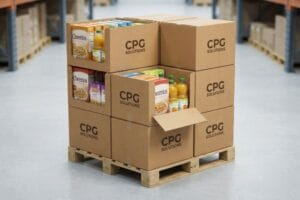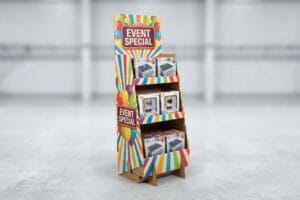
You need a retail rollout that grabs attention without bleeding your budget, but permanent acrylic displays are actively destroying your shipping margins. The solution sits in engineered paper physics.
Choosing cardboard for custom display boxes provides brands with a highly adaptable, fully recyclable, and flat-packed merchandising system. This material drastically reduces global shipping volume and tooling costs compared to permanent fixtures, while still supporting massive structural loads when engineered correctly.
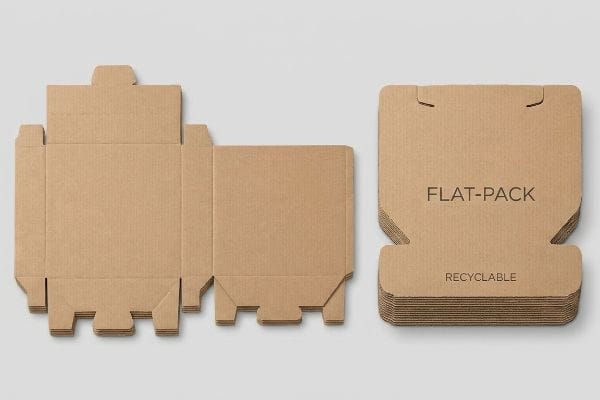
Moving past basic definitions, let's look at the brutal logistical realities of retail environments where TCO (Total Cost of Ownership) dictates the winners and losers of any physical campaign.
What are the advantages of cardboard boxes?
The advantages of cardboard boxes include their unique ability to ship entirely flat, maximizing cubic container density. This eliminates the freight costs associated with shipping pre-assembled rigid fixtures, drastically improving supply chain efficiency and overall campaign profit margins.
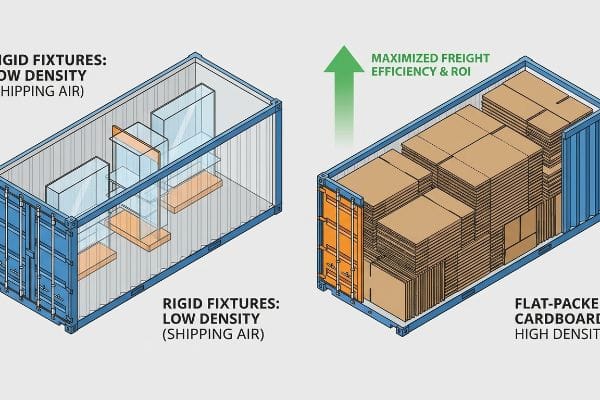
The true financial victory does not happen on the retail floor; it happens inside the dark hull of the cargo ship.
The Freight Density Advantage
When auditing client supply chains, I constantly see brands bleeding cash because they rely on rigid displays. These permanent materials look fantastic on a mood board, but a typical retail campaign only lasts a few weeks. Opting for heavy acrylic setups often results in paying exorbitant ocean freight rates just to move empty space1 across the Pacific, severely cutting into your promotional budget before sales even begin.
The reality of retail strategy demands maximum efficiency per square foot, and flat-packed corrugated materials completely bypass this freight trap. By utilizing engineered paper boxes, you can fit exponentially more units into a standard shipping container2 compared to assembled fixtures. This streamlined approach allows your merchandising team to scale campaigns across hundreds of stores effortlessly, dramatically lowering your total cost of ownership and accelerating your speed to market.
| Strategic Feature | Permanent Fixture | Corrugated Cardboard |
|---|---|---|
| Campaign Lifespan | Massive Overkill | Perfect for 8-12 Weeks3 |
| Shipping Density | Low (Full of Air) | High (Flat-Packed)4 |
| Cost Efficiency | Expensive Freight5 | Maximum ROI |
Smart brands win by mastering freight efficiency rather than just buying permanent displays. Utilizing lightweight, flat-packed corrugated shippers guarantees your marketing budget actually goes toward customer acquisition instead of cargo space.
🛠️ Harvey's Desk: Are your oversized master cartons actively crushing your shipping ROI before they even reach the retail store? 👉 Get a Free Freight Density Audit ↗ — I review every structural file personally within 24 hours.
What are the advantages of using cardboard as a modelling material?
Using cardboard as a modelling material allows for rapid, low-cost structural iteration on digital cutting tables. This flexible substrate enables packaging designers to physically validate retail layouts and footprints within twenty-four hours before committing to a larger production run.
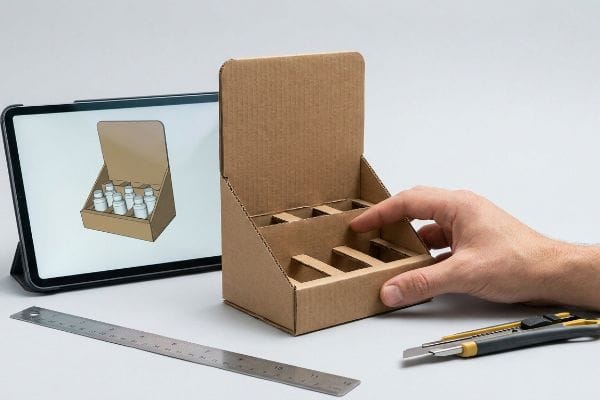
However, the transition from a flat digital screen to a physical, three-dimensional mockup is exactly where most unoptimized designs completely fall apart.
The Physical Validation Protocol
Rapid prototyping is the absolute lifeblood of successful retail execution, yet many brands try to skip this phase to save time. Designing an appealing mockup on a digital screen is easy, but a two-dimensional rendering ignores the physical realities of store shelf placement6. If you simply push a raw, unvalidated design straight into full production, you risk creating a display that looks completely out of proportion or fails to hold the actual retail product correctly.
The commercial reality is that physical mockups prevent costly merchandising disasters7 on the actual store floor. By utilizing corrugated board for preliminary modeling, brand managers can physically interact with the structure, adjust the branding panels, and ensure proper product accessibility. This hands-on validation step guarantees that the final display accurately reflects your marketing vision, completely removing the guesswork and ensuring a seamless alignment between your creative team and the final retail environment.
| Validation Step | Digital Only Approach | Corrugated Modeling |
|---|---|---|
| Concept Verification | Guesswork and Assumptions | Hands-On Physical Check |
| Iteration Speed | Slow Revisions | Rapid Daily Adjustments8 |
| Production Risk | High Chance of Errors | Confirmed Shelf Alignment9 |
Never let an untested digital render dictate your entire retail rollout. Physical cardboard prototyping empowers your brand to perfect merchandising layouts quickly, ensuring absolute confidence before spending a single dollar on mass production.
🛠️ Harvey's Desk: Is your current structural dieline secretly harboring dimensional blind spots that will cause a massive assembly bottleneck on the co-packing line? 👉 Request a Structural Dieline Audit ↗ — 100% confidential. Your unreleased retail designs are safe with me.
Why is cardboard packaging better?
Cardboard packaging is definitively better because it provides an unmatched strength-to-weight ratio while remaining fully customizable through strategic printing. This eco-friendly material delivers dynamic branding capabilities that elevate the customer unboxing experience while surviving standard global supply chain environments.
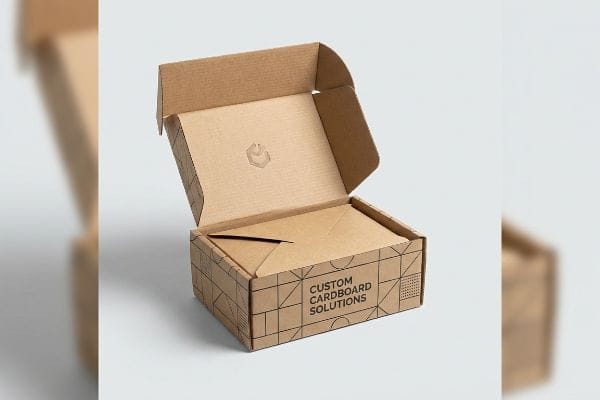
Achieving that legendary structural strength requires surviving the violent, high-pressure mechanical processes of the active factory floor.
The Eco-Branding Shift
Beyond basic sustainability profiles, many marketing teams assume that premium unboxing experiences require expensive, non-recyclable materials. Generic packaging suppliers often push rigid setups or heavy plastics to achieve a high-end feel, ignoring the evolving expectations of modern consumers10. Relying on these outdated materials makes your brand look environmentally insensitive and dramatically inflates your unit costs11 without actually improving the visual impact on the retail shelf.
Modern retail strategy proves that high-quality corrugated board is fundamentally superior for both brand perception and logistical execution. With advanced digital printing and custom die-cutting techniques, cardboard can be easily tailored into stunning, highly engaging consumer touchpoints that pop on crowded shelves. It seamlessly bridges the gap between premium aesthetics and responsible sourcing, empowering marketers to launch visually striking campaigns that resonate deeply with eco-conscious shoppers while maintaining an incredibly agile supply chain.
| Packaging Metric | Rigid Plastics | Custom Cardboard |
|---|---|---|
| Consumer Perception | Often Deemed Wasteful | Eco-Friendly and Smart |
| Branding Flexibility | Expensive to Customize | Highly Adaptable Printing |
| Market Agility | Slow Supply Chains | Fast Retail Turnarounds |
Superior retail branding does not require environmentally harmful plastics or inflated budgets. Premium corrugated setups offer the perfect balance of stunning visual customization and sustainable agility, ensuring your products dominate the aisle responsibly.
🛠️ Harvey's Desk: Are raw manufacturing tolerances causing invisible micro-fractures in your heavy-duty packaging before it even ships? 👉 Claim a Crease Matrix Analysis ↗ — No account managers in the middle. You talk directly to structural engineers.
What is the purpose of a cardboard box?
The purpose of a cardboard box is to provide a highly engineered protective enclosure that absorbs external kinetic impacts. Its geometric structure redistributes dynamic vertical weight through specialized paper flutes, securely safeguarding retail merchandise from the point of origin to the final consumer.
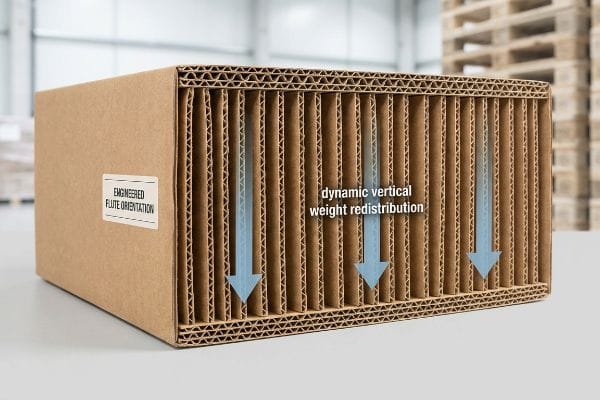
To truly understand this reliable protection, we must look at the exact geometric physics governing the paper structure itself.
The Engineering Mechanics Behind Corrugated Strength
When evaluating packaging structures, I always anchor my analysis on the fundamental physics of the material's geometry. A standard corrugated box is not just stacked paper; it is an integrated system of arches and columns12 designed to mathematically redirect physical stress away from the internal product. Novice procurement teams assume any thick box will suffice, entirely overlooking the catastrophic failures that occur when dynamic transit forces strike an unoptimized paper profile.
To maximize this load-bearing capacity, a seasoned engineer must calculate the precise grain direction of the raw paperboards. Just like framing a load-bearing wall, the internal arches of the corrugated medium must be oriented vertically13 against gravity. When a 2,500 lbs (1133.9 kg) pallet of merchandise is double-stacked inside an ocean transit container, these vertical flutes engage their maximum compression metrics, transferring the kinetic load directly down to the wood base. If miscalculated horizontally, the columns instantly lose mechanical advantage14, causing the bottom tier to completely crush under the warehouse weight.
| Engineering Metric | Generic Application | Engineered Reality |
|---|---|---|
| Flute Orientation | Random or Horizontal | Strict Vertical Alignment15 |
| Force Distribution | Localized Stress Points | Even Downward Kinetic Transfer16 |
| Load Capacity | Standard Box Limits | Maximum Double-Stacking Defense17 |
I build boxes based on strict mathematical principles because your product's survival depends entirely on the invisible physics locked inside the paper. Precision engineering ensures maximum structural dominance against crushing supply chain forces.
🛠️ Harvey's Desk: Is an overlooked flaw in your material's grain orientation quietly destroying your master carton's stacking strength? 👉 Get a Structural Box Analysis ↗ — I review every structural file personally within 24 hours.
Conclusion
By locking down your packaging's physical tolerances and optimizing your master carton bounding boxes, you completely eliminate the catastrophic crushed corners and dead freight space that quietly destroy your profit margins. This exact engineering review recently caught a fatal 2mm (0.07 inches) tolerance error for a major national rollout before production. To ensure your next campaign survives both the ocean transit and the retail floor, let me personally run your structural files through my Free Supply Chain Density Audit ↗ to expose hidden risks today.
"How to Reduce Volumetric Weight Shipping: Save 30% on Freight …", https://seafreightgo.com/reduce-volumetric-weight-shipping/. [Logistics manuals on volumetric weight and ocean freight pricing explain the cost inefficiency of shipping non-collapsible items]. Evidence role: technical verification; source type: logistics whitepaper. Supports: the freight density advantage of cardboard. Scope note: relates to CBM pricing in ocean shipping. ↩
"Flat Pack Containers Vs Standard Containers | Full Guide", https://boshboxes.store/flat-pack-containers-vs-standard-containers/. [A logistics or supply chain study would quantify the volumetric efficiency and unit density increase when shipping flat-packed corrugated materials versus pre-assembled rigid fixtures]. Evidence role: technical validation; source type: logistics whitepaper or industry case study. Supports: freight density advantage. Scope note: efficiency gains depend on the specific dimensions and complexity of the fixtures. ↩
"How Long Does Corrugated Boxes Last? – The Boxery Blog", https://www.theboxery.com/blog/how-long-does-corrugated-boxes-last/?srsltid=AfmBOoq_auMFz-GjPWifd8C8BNshUpZKyIOg0JMZ8AGy7bl6RYT8EAF1. Industry standards for point-of-purchase (POP) displays provide data on the durability and operational lifespan of corrugated materials in retail environments. Evidence role: technical specification; source type: industry manual. Supports: the recommended duration for cardboard campaign usage. Scope note: lifespan varies by board grade and foot traffic. ↩
"Rigid vs Corrugated Boxes: Which Is Better for Packaging?", https://www.halfpricepackaging.com/blog/custom-rigid-vs-corrugated-boxes-for-product-packaging. Logistics research on cubic container utilization demonstrates how flat-packing materials maximizes shipping density compared to pre-assembled rigid structures. Evidence role: factual verification; source type: logistics study. Supports: shipping density advantages. Scope note: focused on volumetric efficiency. ↩
"Flat Pack vs. Assembled Rigid Boxes: Which Shipping Method is …", https://www.linkedin.com/pulse/flat-pack-vs-assembled-rigid-boxes-which-shipping-method-ricky-fang-4m4oc. Comparative freight analysis would show the cost increase associated with shipping air in pre-assembled rigid fixtures versus the efficiency of collapsed cardboard. Evidence role: cost analysis; source type: economic report. Supports: cost inefficiency of permanent fixtures. Scope note: costs are subject to current carrier rates. ↩
"3D Rendering for Retail Design: A Guide to Retail Rendering", https://www.archivinci.com/blogs/3d-rendering-for-retail-design. [Industrial design literature and ergonomics guides explain how 2D models fail to account for spatial depth, occlusion, and physical constraints encountered in real-world retail environments]. Evidence role: technical justification; source type: professional manual. Supports: the necessity of physical prototyping for spatial validation. Scope note: specifically relates to 2D vs 3D spatial awareness. ↩
"The Impact of Retail Merchandising on Store Development …", https://merchcoservices.com/the-impact-of-retail-merchandising-development-success/. [Industry analysis or case studies on retail design can quantify the financial risks associated with production errors that are mitigated through physical prototyping]. Evidence role: supporting fact; source type: industry report. Supports: the economic utility of preliminary modelling. Scope note: Financial impact varies based on the scale of the retail rollout. ↩
"Rapid Prototyping for Packaging | Zenpack", https://www.zenpack.us/design/rapid-prototyping-packaging/. [Authoritative sources on rapid prototyping in packaging design validate that physical cardboard models allow for high-frequency, daily design iterations.] Evidence role: factual support; source type: industry whitepaper or design textbook. Supports: iteration speed benefits. Scope note: specifically relates to corrugated substrate. ↩
"[PDF] Investigating the mechanical properties of paperboard packaging …", https://repository.rit.edu/cgi/viewcontent.cgi?article=1066&context=japr. [Packaging engineering standards demonstrate that physical prototypes are used to verify precise spatial fit and alignment on actual retail shelving to prevent production errors.] Evidence role: technical validation; source type: engineering manual. Supports: risk mitigation. Scope note: refers to retail footprint validation. ↩
"[PDF] 2025 Sustainable Packaging Trends Report", https://sustainablepackaging.org/wp-content/uploads/2025/04/2025-Packaging-Innovations-Trends-Report_SPC_03_compressed.pdf. [Market research studies on consumer behavior demonstrate a significant shift toward preferring brands that use sustainable, recyclable packaging]. Evidence role: supporting market trend; source type: industry report. Supports: consumer demand for eco-branding. Scope note: trends may vary by regional demographic. ↩
"Plastic vs Paper Packaging: The Pros and Cons – Swiftpak", https://www.swiftpak.co.uk/insights/plastic-vs-paper-packaging-the-pros-and-cons. [Comparative cost analysis of packaging materials indicates that sustainable cardboard alternatives often reduce per-unit production and shipping costs compared to heavy plastics]. Evidence role: economic verification; source type: cost analysis report. Supports: financial advantage of cardboard. Scope note: cost variance depends on order volume. ↩
"The Power of Structural Engineering Have you ever wondered why …", https://www.instagram.com/reel/DYEX5-NNUsD/. [Materials science research on corrugated fiberboard explains how the fluting creates a structural geometry of arches and columns to support vertical loads]. Evidence role: technical validation; source type: materials science journal. Supports: the structural mechanics of corrugated cardboard. Scope note: specific to vertical compression strength. ↩
"Estimation of the Compressive Strength of Corrugated Board Boxes …", https://pmc.ncbi.nlm.nih.gov/articles/PMC8467740/. [A packaging engineering handbook would verify that aligning flutes vertically maximizes the board's compressive strength]. Evidence role: technical validation; source type: engineering manual. Supports: orientation for load bearing. Scope note: applies to vertical stacking. ↩
"On the Design of Corrugated Boards: A New FEM Modeling … – arXiv", https://arxiv.org/html/2507.02189v1. [Materials science research on corrugated board failure confirms that horizontal orientation drastically reduces the edge crush test (ECT) value]. Evidence role: failure analysis; source type: technical study. Supports: impact of incorrect orientation. Scope note: limited to compressive loads. ↩
"Guide to Understanding Flutes in Corrugated Boxes – Gentlever", https://gentlever.com/flutes-types-sizes-and-thickness-in-corrugated-boxes/. [Authoritative packaging engineering sources confirm that vertical flute alignment is critical for maximizing the compressive strength of corrugated board]. Evidence role: technical specification; source type: engineering textbook. Supports: the necessity of vertical orientation for load-bearing. Scope note: specific to corrugated fiberboard construction. ↩
"Mechanics of Materials: Axial Load – Boston University", https://www.bu.edu/moss/mechanics-of-materials-axial-load/. [Materials science research demonstrates how the geometric arrangement of flutes redistributes vertical kinetic energy to prevent localized structural failure]. Evidence role: mechanical principle; source type: peer-reviewed journal. Supports: the efficiency of force distribution in engineered boxes. Scope note: applies to axial compressive loads. ↩
"How to Calculate Stacking Strength of Corrugated Box – Lansbox", https://lansbox.com/calculate-corrugated-box-stacking-strength/. [Industry standards for Box Compression Testing (BCT) provide metrics for the minimum load capacity required to support double-stacked retail shipments]. Evidence role: industry standard; source type: technical certification. Supports: the engineering of load capacity for stacking. Scope note: varies by paper grade and flute type. ↩