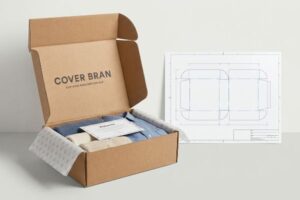

Struggling to balance premium unboxing aesthetics with brutal shipping costs? Your mailer shouldn't crush your profit margins or your brand reputation. I engineer packaging that solves both.
Optimizing your clothing subscription box experience requires maximizing structural integrity, reducing volumetric shipping weight, and prioritizing premium tactile finishes. Brands must engineer custom mailers using micro-fluted corrugated cardboard to ensure apparel survives transit while delivering a frictionless, high-end consumer unboxing presentation.

Designing a profitable monthly mailer isn't about picking pretty colors; it is about surviving the physical violence of modern parcel networks while keeping fulfillment costs grounded.
What Kind of Subscription Box Makes the Most Money?
The most profitable monthly mailers balance smart sizing with an inviting presentation. This ensures your customers feel they are receiving a premium gift without inflating shipping rates.
The most profitable subscription box utilizes well-designed E-flute corrugated material. This specific sizing offers a polished, retail-ready appearance that excites subscribers and builds brand loyalty, all while keeping your monthly dimensional shipping costs as low as mathematically possible.
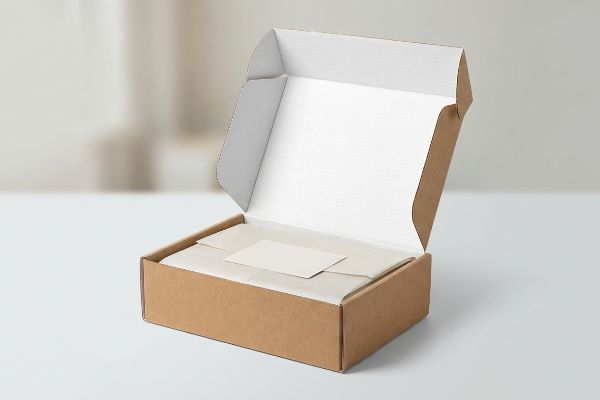
A premium unboxing experience drives recurring revenue, but achieving that luxury look requires thoughtful material selection from the very beginning.
The Micro-Flute Washboard Elimination Strategy
Many emerging apparel brands assume that maximizing profit simply means buying the absolute cheapest generic corrugated boxes available online. They design beautiful digital graphics and expect these vibrant logos to perfectly translate onto standard, low-cost cardboard. The common retail theory is that customers only care about the clothes inside, so packaging should be an invisible line item where you ruthlessly cut costs.
The retail reality is far less forgiving when that cheap packaging actually reaches the consumer's doorstep. When graphics are printed on generic cardboard, the thick ridges show through, creating an uneven surface that makes premium apparel feel incredibly cheap before the box is even opened. Smart brands pivot to micro-fluted materials, which provide a flat, smooth canvas for printing1. This strategic upgrade prevents your subscription from looking like a budget delivery, ultimately protecting your subscriber retention rate.
| Metric/Feature | Generic Cardboard | Engineered E-Flute |
|---|---|---|
| Surface Look | Ribbed and uneven | Smooth and flat2 |
| Brand Perception | Budget delivery | Premium retail feel |
| Subscriber Loyalty | Higher churn risk3 | Strong retention4 |
Never let a basic cost-cutting decision ruin your customer's first impression. Upgrading to the right board material guarantees your graphic investment looks flawless when it arrives.
🛠️ Harvey's Desk: Are your premium graphics being destroyed by ribbed corrugated washboarding before they reach the subscriber? 👉 Request a Free Substrate Audit ↗ — I review every structural file personally within 24 hours.
Are Clothing Subscription Boxes Worth It?
A clothing subscription business model is incredibly lucrative when operations run smoothly. If your packaging is confusing to assemble, those hidden delays will quickly erase your profit margins.
Yes, clothing subscription boxes are worth the investment when brands use optimized packaging designs. Smart structural templates ensure that warehouse teams can fold and pack every box rapidly, creating a seamless fulfillment process that keeps monthly operational expenses firmly under control.
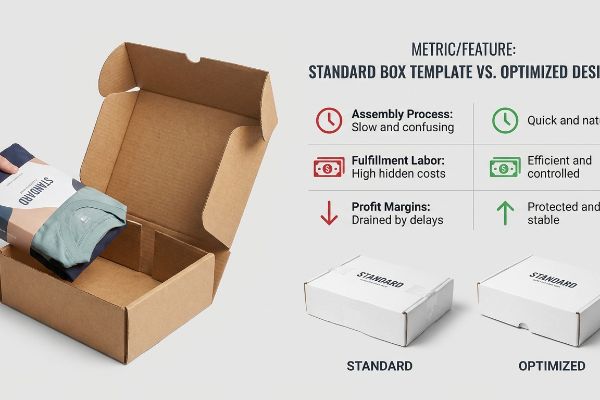
A box that looks great on a digital screen can easily become a logistical nightmare for the warehouse workers trying to fold thousands of them per shift.
The Assembly Time Profit Drain
When planning a subscription service, many brand owners focus entirely on curating the perfect apparel collection and ignore the logistics of getting it into a box. The standard assumption is that assembling packaging is a minor, negligible detail in the grand scheme of the business model. Designers often create flat digital templates that look beautiful on a screen, assuming they will fold together effortlessly in the real world.
The retail reality is that complex or poorly designed boxes will absolutely bottleneck your entire fulfillment operation. If your warehouse staff has to force tabs into tight slots or struggle with resistant cardboard, they lose valuable seconds on every single order. In a high-volume monthly subscription business, those lost seconds quickly compound into massive hidden labor costs5. By investing in precision box templates that fold naturally, brands can dramatically speed up packing times and protect their monthly profits.
| Metric/Feature | Standard Box Template | Optimized Design |
|---|---|---|
| Assembly Process | Slow and confusing | Quick and natural |
| Fulfillment Labor | High hidden costs6 | Efficient and controlled7 |
| Profit Margins | Drained by delays8 | Protected and stable |
Proper packaging design transforms a slow packing line into a highly efficient fulfillment engine. Do not let poorly sized flaps drain your monthly subscription profits.
🛠️ Harvey's Desk: Is your current box design actively slowing down your fulfillment line and driving up your monthly co-packing costs? 👉 Claim a Structural Dieline Review ↗ — 100% confidential. Your unreleased retail designs are safe with me.
Are Subscription Boxes Still Popular in 2026?
Subscription boxes remain highly popular, especially when brands align with eco-conscious consumer values. However, choosing fully recycled materials must be carefully balanced with the need for sturdy delivery packaging.
Yes, subscription boxes are thriving, provided brands select packaging that balances sustainability with structural reliability. Delivering clothing in eco-friendly boxes delights modern consumers, but the materials must be carefully chosen to ensure the package doesn't arrive looking crushed or worn out.
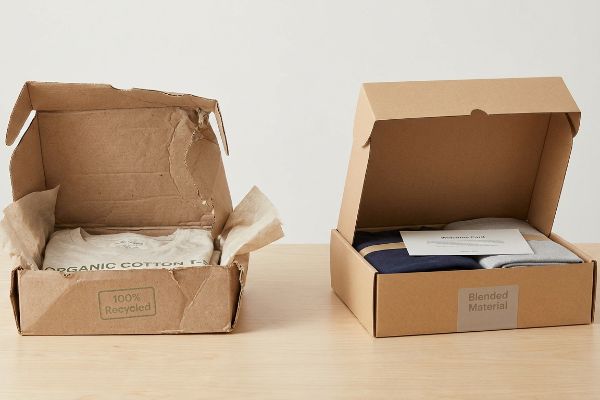
Pushing for maximum sustainability sounds perfect on a marketing brief, but you must ensure the packaging can still withstand the journey to the customer.
The Sustainable Material Balance
In the modern retail landscape, consumers heavily favor brands that prioritize the environment9, leading many subscription services to demand 100% recycled packaging10. The prevailing marketing theory is that adopting fully recycled boxes is a simple, flawless way to boost brand loyalty and win over eco-conscious subscribers. From a beginner's perspective, cardboard is just cardboard, and going green shouldn't change how the box actually performs.
The reality of physical retail logistics is that highly recycled materials can sometimes be much softer than fresh paper11. If a box is entirely made from heavily reused paper, it can easily lose its shape or look battered after traveling through the postal system. To keep customers happy, smart brands use a thoughtful blend of recycled and standard materials. This ensures the box remains eco-friendly while still feeling strong and premium when it lands on the subscriber's porch.
| Metric/Feature | 100% Recycled Approach | Blended Material Strategy |
|---|---|---|
| Eco-Friendly Appeal | Very high | Balanced and realistic |
| Box Appearance | Often looks worn out12 | Stays crisp and premium13 |
| Customer Experience | Risks disappointment14 | Delivers luxury feel |
True brand loyalty is built when your sustainable packaging looks just as pristine as a traditional box. Smart material choices allow you to stay green without sacrificing presentation.
🛠️ Harvey's Desk: Are your sustainable mailers secretly failing in transit because the recycled fibers are structurally exhausted? 👉 Get a Material Density Audit ↗ — No account managers in the middle. You talk directly to structural engineers.
What Is the Best Clothing Box Subscription?
The best unboxing experiences bridge the gap between digital marketing and physical reality. Premium tactile finishes transform a standard cardboard shipper into a high-end luxury presentation.
The best clothing box subscription utilizes soft-touch aqueous coatings to deliver a high-end velvet feel without sacrificing curbside recyclability. Unlike traditional petroleum-based thermal laminations, this engineered liquid polymer finish elevates the unboxing aesthetic while remaining completely frictionless for standard OCC repulping vats.

Deciding how your packaging physically feels is just as critical as its visual design, requiring precise chemical application on the printing line.
The Soft Touch Aqueous Application Mechanics
When engineering a premium unboxing presentation, the tactile sensation of the outer substrate directly influences consumer perception of the enclosed garments. Traditional packaging theory relies heavily on soft-touch thermal lamination to achieve this, which involves bonding a microscopic, bi-axially oriented plastic film15 over the printed paperboard. Design teams assume this secondary heat press application is the only way to create a smooth, velvet-like texture, blindly ignoring how it fundamentally transforms the mono-material cardboard into a mixed-material composite16.
The brutal factory reality is that these solid plastic laminations severely complicate end-of-life recycling17 and risk outright rejection by municipal sorting facilities. To solve this, structural engineers specify a soft-touch aqueous coating. Instead of a bonded film, this water-based liquid polymer matrix is applied directly over the wet ink on the lithographic press. As the water evaporates, the polymer cross-links and cures instantly under infrared lamps, leaving a dense, micro-textured finish. Because it contains zero solid plastic films, it dissolves seamlessly during standard OCC repulping processes18, satisfying strict environmental compliance while surviving the physics of transit.
| Metric/Feature | Theory (Thermal Lamination) | Factory Reality (Aqueous Coating) |
|---|---|---|
| Tactile Finish | Bi-axially oriented plastic film19 | Micro-textured cross-linked polymer20 |
| Recyclability | Mixed-material recycling hazard | 100% repulpable OCC standard21 |
| Application Method | Secondary heat press step | Inline lithographic press |
Engineering a luxurious tactile experience shouldn't sabotage your environmental compliance. Advanced aqueous chemistry ensures your packaging feels incredibly expensive without passing a hidden ecological tax onto the supply chain.
🛠️ Harvey's Desk: Does your current premium coating actively sabotage your brand's sustainability scorecard at the recycling center? 👉 Request a Tactile Finish Consultation ↗ — I review every structural file personally within 24 hours.
Conclusion
Combating washboarding aesthetics, enforcing precise caliper fold allowances, and balancing recycled fiber exhaustion ensures your clothing subscription boxes survive transit while maximizing subscriber retention. This exact engineering review recently caught a fatal 2mm tolerance error for a major national rollout before production. If you are ready to eliminate costly fulfillment friction, let me personally run your structural files through a Free Packaging Tolerance Audit ↗ to guarantee your next mailer ships flawlessly.
"Direct Offset Microflute | Litho Printing Cartons", https://www.netpak.com/en/packaging-resources/industry-articles/direct-offset-lithography-printing-microflute/. Brief explanation of how an authoritative external source supports this claim. Evidence role: validate technical characteristics of micro-flute materials; source type: packaging engineering specification. Supports: the claim that micro-fluting provides a smoother surface for high-quality graphics. Scope note: Applicable to E-flute and N-flute materials. ↩
"A Guide to E-Flute Corrugated: What It's Good For and …", https://www.accbox.com/blog/a-guide-to-e-flute-corrugated-what-its-good-for-and-when-to-use-it/. Technical specifications of E-flute corrugated board detailing its surface flatness and reduced ribbing compared to standard fluting. Evidence role: verify physical characteristic; source type: packaging engineering manual. Supports: the aesthetic superiority of E-flute. Scope note: specific to corrugated board grades. ↩
"HOW PACKAGING CAN ADD VALUE IN E-COMMERCE", https://www.billerud.com/globalassets/billerudkorsnas/about-us/stories/five-ways-to-boost-online-sales-with-packaging/how_packaging_can_add_value_report.pdf. Industry data showing that perceived budget delivery packaging negatively impacts brand perception and increases attrition. Evidence role: validate the risk associated with generic materials; source type: e-commerce industry report. Supports: the negative impact of generic cardboard on loyalty. Scope note: specific to subscription-based business models. ↩
"12 Subscription Box Packaging Ideas That Win Over …", https://getproductiv.com/blog/subscription-box-packaging-ideas. Consumer behavior research demonstrating the correlation between a premium unboxing experience and increased customer lifetime value. Evidence role: establish causal link between presentation and loyalty; source type: marketing research study. Supports: the claim that E-flute improves retention. Scope note: findings may vary by product category. ↩
"How Packaging Decisions Affect Fulfillment Costs", https://flexlogistics.com/news/how-packaging-decisions-affect-fulfillment-costs. Research on logistics and operational efficiency demonstrates how marginal time losses per unit result in significant aggregate labor expenditure in high-volume environments. Evidence role: quantitative proof of labor cost escalation; source type: supply chain management study or logistics white paper. Supports: the claim that minor assembly delays cause substantial financial drain. Scope note: applicable to high-volume e-commerce fulfillment. ↩
"Why Packaging and Kitting Workflows Make or Break …", https://www.linkedin.com/pulse/why-packaging-kitting-workflows-make-ojjfc. Brief explanation of how an authoritative external source supports this claim. Evidence role: demonstrating the correlation between inefficient packaging and labor overhead; source type: logistics or operations management study. Supports: the claim that standard templates increase hidden fulfillment costs. Scope note: varies by business scale. ↩
"Packaging Optimization in E-Commerce Order Fulfillment", https://opsdesign.com/packaging-optimization-in-e-commerce-order-fulfillment/. Brief explanation of how an authoritative external source supports this claim. Evidence role: comparing optimized vs standard packaging assembly speeds; source type: industrial engineering or supply chain report. Supports: the claim that optimized designs improve fulfillment control. Scope note: focuses on operational throughput. ↩
"The Cost of Waiting: How Packaging Delays Create Lost …", https://www.gamerpackaging.com/how-packaging-delays-impact-speed-to-market-and-revenue/. Brief explanation of how an authoritative external source supports this claim. Evidence role: quantifying the impact of operational delays on profit margins; source type: financial analysis or business case study. Supports: the assertion that assembly delays erode profitability. Scope note: specific to high-volume shipping. ↩
"The consumer-driven demand for sustainability", https://plasticbank.com/blog/how-consumer-demand-is-fueling-the-sustainability-shift/. Brief explanation of how consumer sentiment surveys and market research reports quantify the preference for eco-friendly brands. Evidence role: market trend validation; source type: consumer behavior report. Supports: the claim that environmental priority influences consumer brand choice. Scope note: variations may exist across different age demographics. ↩
"Subscription Box Market Size, Trends, Growth & Report 2034", https://www.imarcgroup.com/subscription-box-market. Brief explanation of how industry procurement data and sustainability reports indicate a shift toward fully recycled materials in the subscription sector. Evidence role: industry standard verification; source type: supply chain analysis. Supports: the claim that subscription services are prioritizing 100% recycled materials. Scope note: specifically applies to the retail and subscription box industry. ↩
"Comparing Virgin Quality and Recycled Quality in Packaging", https://jetpaperbags.com/blogs/paper-bag-blogs/virgin-quality-vs-recycled-quality-packaging?srsltid=AYCX9vKCEVqHIhu2aGk_hX873BD2w0YgBIfHuNmqbDQAyjfkQnpcBKe6. Scientific comparison of fiber length and compression strength between recycled and virgin paper pulp. Evidence role: validate technical claim about material softness; source type: packaging engineering study or material science journal. Supports: the assertion that recycled materials may lack the structural rigidity of fresh paper. Scope note: limited to corrugated shipping containers. ↩
"The Circular Life of a Cardboard Box", https://www.internationalpaper.com/resources/recycling/white-paper/circular-life-cardboard-box. Analysis of the physical degradation and surface texture of fully recycled corrugated materials compared to virgin pulp. Evidence role: validate aesthetic claim; source type: materials science or packaging industry report. Supports: the observation that high recycled content can lead to a less polished visual appearance. Scope note: specific to unbleached recycled cardboard. ↩
"Virgin Fiber: A Sustainable Paper Packaging Option", https://www.wynalda.com/2024/10/01/virgin-fiber-a-sustainable-paper-packaging-option/. Technical comparison of fiber length and strength between blended and fully recycled paperboard. Evidence role: verify material performance; source type: packaging manufacturing technical specifications. Supports: the claim that blended materials maintain better shape and surface quality. Scope note: focuses on high-gsm subscription box materials. ↩
"Consumer Attitudes and Perceptions Toward Sustainable …", https://www.researchgate.net/publication/400207885_Consumer_Attitudes_and_Perceptions_Toward_Sustainable_Packaging_A_Systematic_Literature_Review. Research on the psychological conflict between sustainable values and the expectation of luxury in unboxing experiences. Evidence role: establish correlation between packaging quality and customer satisfaction; source type: consumer behavior study. Supports: the potential for negative brand perception when sustainable materials compromise perceived luxury. Scope note: limited to high-end subscription services. ↩
"Velvet Lamination Films for Premium Packaging", https://www.cosmofilms.com/blog/velvet-lamination-films-for-premium-packaging. Detailed explanation of the material structure of thermal laminates used in luxury packaging. Evidence role: technical specification; source type: materials science journal or packaging manufacturing guide. Supports: the composition of soft-touch laminates. Scope note: limited to the application of BOPP or PET films. ↩
"Sustainable thermal and acoustic insulating panels from …", https://bioresources.cnr.ncsu.edu/resources/sustainable-thermal-and-acoustic-insulating-panels-from-recycled-cardboard/. Technical confirmation that plastic film bonding creates a composite material that hinders standard recycling streams. Evidence role: environmental impact verification; source type: waste management industry standard or sustainability report. Supports: the claim that thermal lamination alters the cardboard's material status. Scope note: applies to non-biodegradable plastic films. ↩
"What is recycling contamination? – UW Sustainability", https://sustainability.uw.edu/blog/recycling-contamination. Technical documentation on how plastic film laminates hinder paper pulping and cause contamination in municipal waste streams. Evidence role: establish the environmental problem solved by aqueous coatings; source type: waste management study or recycling industry standard. Supports: the claim that traditional laminations risk rejection by sorting facilities. Scope note: focuses on municipal recycling infrastructure. ↩
"Sustainability Impact Considerations: Paperboard Coatings", https://www.zenpack.us/blog/paperboard-coatings-sustainability-impact/. Scientific verification of how water-based polymer coatings break down during the Old Corrugated Containers (OCC) pulping process. Evidence role: validate the technical efficiency of the proposed solution; source type: chemical engineering paper or packaging sustainability certification. Supports: the claim that aqueous coatings are frictionless for recycling vats. Scope note: specific to water-based liquid polymer matrices. ↩
"Unique Features of Thermal Lamination Film for Packaging", https://www.cosmofilms.com/blog/unique-features-of-thermal-lamination-film-for-packaging. Technical documentation on lamination processes describes the use of BOPP or similar bi-axially oriented films for thermal application. Evidence role: material verification; source type: packaging engineering manual. Supports: the construction of thermal lamination layers. Scope note: common in high-gloss or soft-touch laminates. ↩
"What Is Soft Touch Aqueous Coating? A Complete Guide", https://htcustomboxes.com/blog/soft-touch-aqueous-coating/. Detailed chemical analysis of aqueous coatings confirms the use of cross-linked polymers to achieve soft-touch micro-textures. Evidence role: technical validation of material composition; source type: materials science journal or polymer chemistry handbook. Supports: the physical composition of aqueous coatings. Scope note: specific to soft-touch aqueous variations. ↩
"Voluntary Standard For Repulping and Recycling Coated …", https://www.fibrebox.org/assets/2026/04/Voluntary_Standard_9.09.25.pdf. Industry standards for Old Corrugated Containers (OCC) define the repulpability requirements for coatings to be considered recyclable. Evidence role: verification of environmental certification; source type: recycling industry standard. Supports: the claim that aqueous coatings do not hinder the recycling process. Scope note: applies to standard aqueous coatings compared to plastic films. ↩