En parcourant les rayons d'un magasin, on remarque d'imposantes structures en carton qui attirent immédiatement le regard. Mais concevoir un présentoir réussi ne se résume pas à empiler des boîtes ; c'est une science logistique rigoureuse.
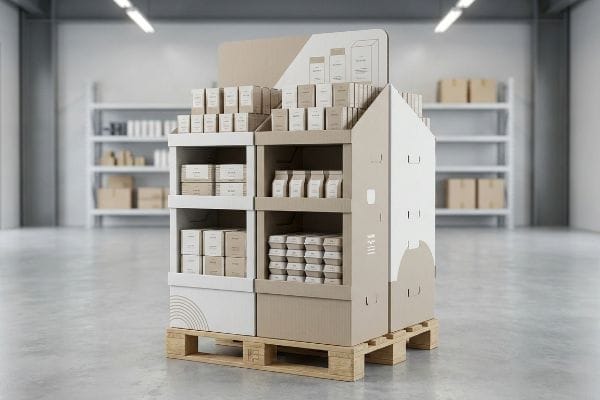
Un présentoir sur palette est une structure de vente au détail de grande taille, montée directement sur un châssis en bois. Conçus pour les zones à fort passage, ces présentoirs autoportants sont livrés entièrement assemblés et chargés de produits, directement en rayon. Cette stratégie optimise la visibilité de la marque et réduit considérablement le temps d'installation nécessaire aux vendeurs.
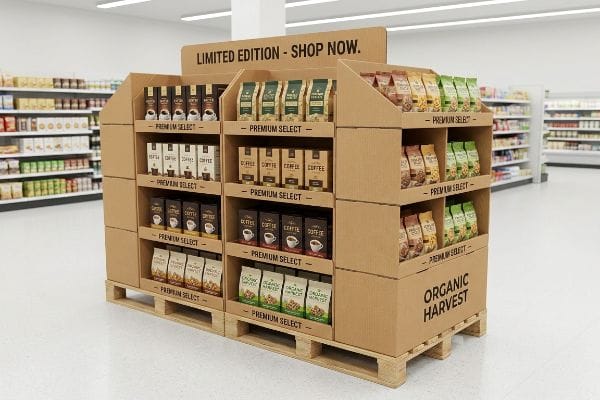
Voyons comment ces unités massives stimulent les ventes au détail immédiates et simplifient la logistique.
Qu'est-ce qu'une palette PDQ ?
Le temps est l'ennemi absolu de la gestion commerciale. Si la construction d'une structure prend trop de temps, le responsable du magasin la laissera tout simplement enfermée dans l'arrière-boutique.
Une palette PDQ est un présentoir de vente préchargé, conçu pour une mise en rayon immédiate. Contrairement aux présentoirs classiques livrés à plat, ces structures à déploiement rapide arrivent entièrement assemblées sur leur base en bois. Les vendeurs n'ont qu'à retirer l'emballage de protection, exposant ainsi instantanément les produits sans avoir à effectuer de pliage manuel complexe du carton.
Mais une mise en place rapide sur la surface de vente nécessite une planification structurelle intelligente dès le départ.
Pourquoi les plateaux modulaires pré-encollés préservent votre palette PDQ
Les marques partent souvent du principe qu'envoyer des présentoirs complexes et démontables aux magasins permettra de réduire les frais d'expédition initiaux. Elles conçoivent des plateaux en carton sophistiqués en supposant que les employés des magasins les plieront rapidement et les disposeront dans les rayons. Cette stratégie, en théorie, semble efficace sur le plan budgétaire, mais elle ignore totalement les réalités de la pénurie de main-d'œuvre dans les grandes surfaces et le rythme effréné des magasins.
À leur arrivée, ces kits en kit sont souvent négligés par les vendeurs surchargés de travail. Si le montage d'un plateau prend plus de quelques minutes, toute la campagne promotionnelle risque d'être abandonnée en réserve. La solution stratégique consiste à utiliser des plateaux modulaires pré-encollés, intégrés dès la fabrication² . En expédiant des unités entièrement assemblées sur une palette PDQ³ , les marques garantissent une mise en rayon immédiate, assurant ainsi que leurs produits haut de gamme atteignent les clients de passage plutôt que de prendre la poussière dans les allées d'un entrepôt.
| Erreurs courantes des débutants | La solution pro | Avantage du magasin |
|---|---|---|
| pliages d'origami complexes à plat | Plateaux modulaires ondulés pré-encollés | Réduit le temps de préparation de 40 %4 |
| S'appuyant sur le verrouillage manuel des onglets | Collage automatisé de boîtes en usine5 | Empêche les déchirures des graphismes en carton |
| Fixations adhésives sur la ligne d'emballage | Empilage à emboîtement sans friction6 | Protège la valeur de la marque premium |
Toute campagne commerciale réussie repose sur la suppression des obstacles en magasin. Concevez vos unités pour un déploiement immédiat afin de garantir la présence de votre produit en rayon.
🛠️ Le bureau d'Harvey : Vous vous demandez si la conception de vos plateaux ralentit votre sous-traitant ? 👉 Obtenez une analyse gratuite de vos fichiers ↗ — Accès direct à mon bureau. Zéro spam commercial automatisé, promis.
Qu'est-ce que la marchandise sur palettes ?
Obtenir un emplacement de choix dans une grande surface de vente est un véritable parcours du combattant. Il ne faut pas s'attendre à ce qu'un magasin vous accorde un espace immense simplement en le demandant.
Les marchandises sur palette sont des produits vendus en vrac, conçus et emballés spécifiquement pour être vendus directement depuis une base de transport en bois. Cette stratégie logistique élimine le réapprovisionnement individuel des rayons, grâce à l'utilisation de séparateurs en carton ondulé et de plateaux empilables qui maintiennent les marchandises lourdes en toute sécurité tout en préservant l'attrait visuel pour les clients de passage.
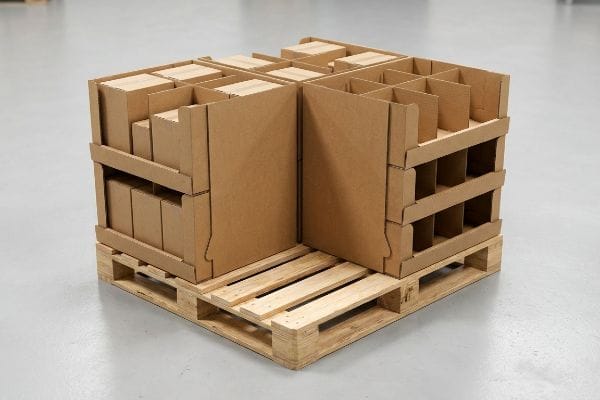
Toutefois, la présentation de ces marchandises exige une compréhension approfondie des règles spatiales strictes du détaillant.
La géométrie fractionnaire des marchandises sur palettes
Un piège fréquent pour les équipes d'approvisionnement débutantes est de proposer un présentoir de sol de 122 x 102 cm (48 x 40 pouces)pour le lancement d'un nouveau produit. Elles partent du principe que leur campagne promotionnelle doit occuper toute la surface du présentoir pour un impact visuel significatif. Ces équipes s'attendent à ce que les acheteurs de la grande distribution leur cèdent volontiers un emplacement de choix en rayon pour un produit non testé, ignorant la rigueur avec laquelle les grandes surfaces gèrent leur surface de vente.
Les responsables de magasin rejetteront d'emblée cet agencement trop important, car ils considèrent l'espace de vente comme un bien immobilier de premier choix. Pour éviter ce refus, les marques doivent optimiser leur espace en le divisant logiquement en demi-palettes ou quarts de palettes⁸.En disposant mathématiquement quatre présentoirs plus petits sur une base principale, plusieurs marques peuvent partager un même emplacement à fort passage. Proposer ces formats fractionnés plus judicieux maximise la densité d'exposition⁹,augmentant considérablement vos chances de convaincre les acheteurs et d'obtenir un meilleur retour sur investissement.
| Erreurs courantes des débutants | La solution pro | Avantage du magasin |
|---|---|---|
| Lancer complet 48×40 bases10 seulement | subdivisions fractionnaires en ingénierie | Augmente les chances d'approbation de l'acheteur |
| Gaspillage d'espace aérien vide | Conception de boîtes compactes pour quarts de palette11 | Optimise la densité de la surface de vente. |
| Ignorer les règles de circulation piétonne en magasin | Utilisation de configurations de demi-palettes12 | Adapté aux intersections à fort trafic |
Pour obtenir un espace de vente optimal, il est essentiel de respecter les contraintes spatiales du magasin. Présenter un agencement compact et bien pensé est la meilleure façon de convaincre les acheteurs.
🛠️ Le bureau de Harvey : Votre agencement actuel respecte-t-il les limites d’espace imposées aux détaillants ? 👉 Demandez un audit d’agencement ↗ — Téléchargement sécurisé. Je reste à votre disposition pour toute question.
Qu'est-ce qu'une palette prête à être exposée ?
La transition d'un transporteur à un détaillant nécessite une planification structurelle. Le retrait de certaines parties d'un emballage de protection modifie le fonctionnement de l'unité en magasin.
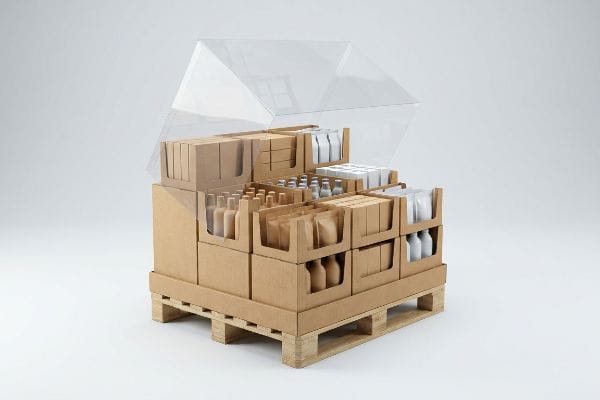
Une palette prête à exposer est une structure hybride de transport et de vente au détail, livrée entièrement chargée et instantanément disponible pour les clients. Grâce à des films prédécoupés ou des bâches amovibles, ces emballages spécialisés protègent les produits pendant le transport et deviennent immédiatement des supports de vente à forte visibilité, mettant en valeur la marque, une fois arrivés en magasin.
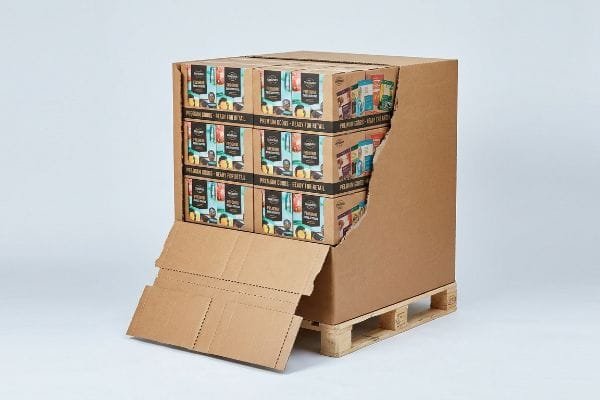
Cette conversion instantanée fait sensation lors d'une présentation, mais elle doit être soigneusement planifiée pour réussir son parcours.
Élever le carton de transport aux normes du commerce de détail
Les équipes d'approvisionnement cherchent souvent à réaliser des économies en utilisant des conteneurs semi-ouverts (HSC)<sup>13 qui s'ouvrent facilement pour former un présentoir. Elles partent du principe que cette conception simple, ouverte sur le dessus, suffit au transport de marchandises lourdes et à une présentation soignée. De prime abord, cette configuration théorique semble être un moyen très efficace de réduire les coûts des matières premières<sup>14</sup> tout en garantissant un accès facile aux produits pour les clients de passage.
En pratique, ces bacs ouverts ont souvent une apparence désordonnée et peu attrayante lorsqu'ils arrivent en magasin. Sans une stratégie de présentation adaptée, les cartons de transport standard font bon marché et ne mettent pas en valeur le positionnement haut de gamme de la marque. La solution optimale consiste à concevoir des emballages spécialement conçus pour la présentation, avec des perforations nettes et des graphismes dynamiques<sup>15</sup>. Cette amélioration stratégique garantit qu'une fois la protection extérieure retirée par les vendeurs, la structure restante constitue un véritable atout marketing et non un simple carton brun vide.
| Erreurs courantes des débutants | La solution pro | Avantage du magasin |
|---|---|---|
| Utiliser des boîtes simples à ouverture sur le dessus | Linceuls perforés de marque | Améliore le merchandising visuel |
| Ignorer le processus de déballage | Panneaux détachables propres | Simplifie la configuration au niveau du magasin |
| Se contenter de l'esthétique des transports en commun | Graphiques de vente au détail à contraste élevé | Capte instantanément l'attention des acheteurs |
Ne laissez jamais votre marque sacrifier son image haut de gamme pour des méthodes d'expédition bon marché. Un système d'emballage adapté à la présentation garantit un transport fiable et une mise en valeur optimale de vos produits.
🛠️ Le bureau de Harvey : Vos bacs ouverts s'effondrent sous le poids des charges de votre entrepôt ? 👉 Réclamez votre réparation structurelle ↗ — Pas de formulaires qui déclenchent des appels commerciaux incessants. Uniquement de la valeur.
Quelle est la différence entre palette et palette de couleurs ?
Une simple erreur d'interprétation d'une lettre dans le cadre des achats peut faire dérailler un projet entier. L'une concerne la logistique physique de l'entrepôt, tandis que l'autre dicte la présentation de marque haute fidélité.
La différence entre une palette et une plaque de couleur réside dans leur fonction physique, contrairement à leur conception visuelle. Une palette est le support en bois massif utilisé pour le transport des présentoirs de vente au détail, tandis qu'une plaque de couleur désigne la sélection précise des couleurs d'encre Pantone ou CMJN utilisées pour imprimer les éléments graphiques d'une marque sur du carton ondulé.
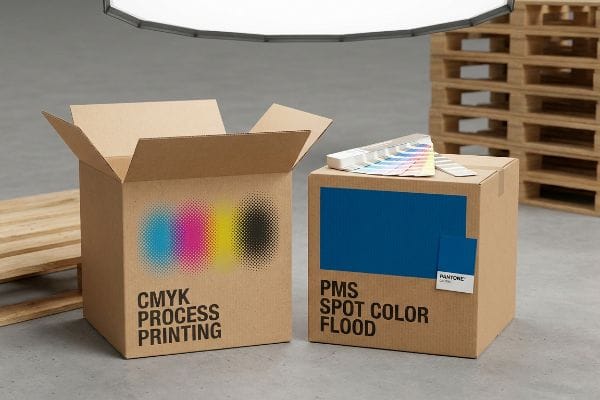
Mais connaître la théorie ne suffit pas lorsque les machines se mettent en marche et que les encres humides entrent en contact avec le carton brut.
Pourquoi votre palette de couleurs ne fonctionne pas en usine
Les équipes marketing convertissent fréquemment leurs palettes de couleurs institutionnelles en formats CMJN standard (Cyan, Magenta, Jaune, Noir), partant du principe que l'impression en quadrichromie reproduira fidèlement l'affichage sur leurs écrans numériques. Elles supposent que les règles d'impression commerciale des magazines glacés s'adapteront parfaitement aux emballages épais destinés à la vente au détail. Or, ce raisonnement ignore fondamentalement la réalité physique de l'absorption de l'encre liquide par le papier ondulé en usine. Elles s'attendent à une perfection absolue, basée sur l'image d'un écran rétroéclairé.
Dans mon atelier, je vois régulièrement des palettes numériques magnifiquement conçues se transformer en désastres granuleux et délavés. Lorsque les points de trame standard en quatre couleurs atteignent le support non scellé, je peux constater visuellement que l'encre encore humide s'infiltre irrégulièrement dans les fibres du papier, créant un logo brouillé. Je remédie à ce problème en appliquant un protocole strict d'application de couleur directe sur la presse. En remplaçant le mélange optique de points par une seule couleur directe PMS (Pantone Matching System)16, nous garantissons une application dense de pigment. De plus, la compensation du pH du papier17 empêche l'encre de se dégrader chimiquement lors du séchage, assurant ainsi une visibilité optimale et un contraste élevé.
| Erreurs courantes des débutants | La solution pro | Avantage du magasin |
|---|---|---|
| S'appuyer sur le CMJN pour des logos de qualité | Application de la couleur d'accompagnement PMS18 | Assure une visibilité de marque impeccable |
| Négliger la porosité du papier non scellé | Réglage de la densité d'encre pour le testeur19 | Empêche l'absorption graphique trouble |
| Se fier aux couleurs des écrans numériques | tests physiques d'éclairage D5020 | Augmente la valeur perçue du produit |
Les écrans numériques ne peuvent pas dicter la fabrication physique. Seuls des relevés spectrophotométriques précis et un ajustement chimique de l'absorption du papier permettent de garantir que les couleurs de votre marque résistent aux contraintes du carton ondulé brut.
🛠️ Le bureau de Harvey : Vos couleurs de marque ternissent-elles sur le carton brut ? 👉 Envoyez-moi votre fichier de découpe ↗ — Je vérifierai les calculs avant que vous ne gaspilliez votre budget en production de masse.
Conclusion
Vous pouvez choisir un fournisseur moins cher, mais si ce carton ondulé ouvert s'effondre sous le poids d'une double pile dans un entrepôt humide, l'écrasement des coins qui en résultera entraînera un refus immédiat du détaillant et anéantira la marge bénéficiaire de votre campagne. Plus de 500 responsables de marque utilisent ma checklist prépresse pour éviter précisément ces erreurs fatales en début de production. Ne vous fiez plus aux lois de la physique du carton ondulé : laissez-moi auditer personnellement vos fichiers d'emballage grâce à mon audit gratuit de pré-production ↗ afin de détecter ces points faibles avant le lancement de la production en série.
« La main-d’œuvre du commerce de détail est en crise. Les logiciels de merchandising visuel peuvent-ils y remédier ? », https://onedoor.com/resource/retail-labor-shortage/. [Les rapports sectoriels et les données économiques sur les effectifs du commerce de détail confirment la fréquence des pénuries de main-d’œuvre dans les grandes surfaces]. Rôle de la preuve : justification causale ; type de source : rapport sectoriel ; arguments : nécessité de présentoirs pré-assemblés ; portée : s’applique principalement aux secteurs du commerce de détail à fort volume .
« 14 types de présentoirs de vente au détail | Chicago, IL », https://wertheimerbox.com/types-of-retail-displays/. [Les normes industrielles relatives aux emballages pour points de vente expliquent comment les plateaux pré-encollés réduisent le temps d'assemblage sur site et les coûts de main-d'œuvre]. Rôle de la preuve : validation technique ; type de source : guide de l'industrie de l'emballage. Appui : solution stratégique de fabrication. Note de portée : axé sur la réduction de la main-d'œuvre d'assemblage .
« 5 avantages des présentoirs sur palettes en magasin – Bennett Packaging », https://bpkc.com/blogs/blog/5-benefits-of-pallet-displays-in-retail-stores . [La documentation logistique du secteur du commerce de détail confirme que les palettes PDQ pré-assemblées augmentent la rapidité de mise en place des présentoirs promotionnels en minimisant l'effort des vendeurs]. Type de preuve : preuve causale ; source : étude de gestion du commerce de détail. Conséquences : mise en conformité immédiate en magasin. Remarque sur la portée : variable selon la politique du détaillant.
« Est-il temps de changer de fournisseur de carton ondulé ? – Akers Packaging », https://www.akers-pkg.com/is-it-time-to-change-your-corrugated-vendor/ . [Des rapports sectoriels sur la logistique de détail et le montage de présentoirs sur le lieu de vente fournissent des données comparatives sur le gain de temps réalisé grâce à l’utilisation de plateaux pré-encollés par rapport au pliage manuel]. Type de preuve : Vérification quantitative ; type de source : Livre blanc sectoriel. Sujet : Gain d’efficacité des plateaux modulaires. Remarque : Les gains de temps peuvent varier en fonction de la complexité du présentoir.
« Pourquoi les machines à coller les boîtes sont essentielles à la conception des emballages… – Cenwan », https://www.cenwanmachine.com/blog/why-understanding-box-gluing-machines-can-help-you-appreciate-packaging.html . [La documentation technique sur l’emballage explique comment les adhésifs appliqués en usine offrent une force de collage plus constante que les languettes manuelles, évitant ainsi les défaillances structurelles et les déchirures graphiques]. Rôle de la preuve : Explication technique ; type de source : Guide de fabrication d’emballages. Sujet : La fiabilité du collage automatisé. Remarque sur la portée : Spécifique aux matériaux en carton ondulé.
« Réduire la fréquence d'effondrement des palettes : Partie II », https://www.packworld.com/home/article/13372817/reducing-the-occurrence-of-collapsing-pallet-loads-part-ii. [Les manuels de logistique de la chaîne d'approvisionnement détaillent comment les conceptions structurelles emboîtables stabilisent les charges palettisées et minimisent les déplacements pendant le transport sans avoir recours à des adhésifs]. Rôle de la preuve : Spécification technique ; type de source : Manuel de logistique. Appui : L'avantage de l'empilage emboîtable. Note de portée : Se concentre sur la stabilité physique pendant le transport .
« Dimensions standard des palettes : Guide complet pour les acheteurs – Meridian », https://www.meridianpkg.com/feeds/blog/standard-pallet-size. [Les normes de l’industrie pour la logistique nord-américaine confirment que 48 × 40 pouces est la dimension standard des palettes GMA utilisées pour les présentoirs de vente en gros]. Rôle de la preuve : spécification technique ; type de source : norme industrielle ; Contribue à : la précision des dimensions des palettes ; Remarque sur la portée : s’applique spécifiquement au marché nord-américain .
« Types de présentoirs sur palette : palettes entières, demi-palettes et quarts de palettes – GreenDot Packaging », https://greendotpackaging.com/understanding-pallet-display-types-full-half-and-quarter-pallet-displays/ . [Les normes de merchandising du secteur documentent l’utilisation de palettes fractionnées pour accroître la variété des références et la visibilité des marques sur une surface réduite ] . Rôle de la preuve : vérification technique ; type de source : publication spécialisée dans la distribution. Appuie : la pratique logistique d’utilisation de palettes fractionnées. Remarque : les dimensions standard peuvent varier selon les distributeurs.
« Comment les présentoirs sur palettes personnalisés stimulent les ventes en gros », https://atlaspackaginginc.com/how-custom-pallet-displays-drive-bulk-purchase-opportunities/ . [Une étude logistique démontre la relation mathématique entre la réduction de l'encombrement des unités de vente et l'augmentation des ventes au mètre carré dans les zones commerciales à fort trafic] . Type de preuve : indicateur de performance ; source : rapport d'analyse commerciale. Confirme : l'affirmation selon laquelle le dimensionnement fractionné optimise l'utilisation de l'espace. Remarque : les résultats spécifiques dépendent de la catégorie de produits et de l'agencement du magasin.
« Palette GMA en bois traité thermiquement – 48 x 40 po H-1260 – ULINE », https://www.uline.com/Product/Detail/H-1260/Pallets/Heat-Treated-Wood-GMA-Pallet-48-x-40. [Les normes de l'industrie pour la logistique nord-américaine spécifient la dimension 48 x 40 pouces comme taille standard pour les palettes GMA destinées à la vente au détail]. Rôle de la preuve : spécification technique ; type de source : norme industrielle. Supporte : dimensions standard de la base de la palette. Remarque sur la portée : principalement applicable aux marchés nord-américains .
« Présentoirs en quart de palette : le guide complet – Bennett Packaging », https://bpkc.com/blogs/blog/quarter-pallet-display-the-complete-guide. [Les spécifications d’emballage pour les présentoirs de vente au détail préconisent le fractionnement en quart de palette afin d’optimiser la densité verticale et de réduire l’espace perdu]. Type de preuve : spécification technique ; source : norme de l’industrie de l’emballage. Justifie : avantages du fractionnement. Remarque : Spécifique aux indicateurs de densité de présentation .
« Présentoir sur palette vs présentoir au sol : quelle est la différence ? », https://brownpackaging.com/pallet-display-vs-floor-display-what-is-the-difference/. [Les guides de conception logistique et de vente au détail définissent les configurations en demi-palettes comme une méthode stratégique pour optimiser l’espace au sol aux intersections de magasins à fort trafic]. Rôle de la preuve : pratique technique ; type de source : guide de gestion de la vente au détail. Appui : efficacité du fractionnement des palettes. Note de portée : axé sur l’optimisation de l’espace au sol .
« Conteneur à demi-fentes (HSC) – General Packaging Corporation », https://gpctexas.com/corrugated-packaging-boxes/half-slotted-container/ . [Un manuel technique d'emballage ou une norme industrielle du carton ondulé définit la conception structurelle et les applications courantes des conteneurs à demi-fentes.] Rôle de la preuve : définition technique ; type de source : norme industrielle. Appuie : l' identification des HSC comme un format d'emballage spécifique. Note de portée : s'applique aux classifications standard du carton ondulé.
« Boîtes FOL vs. RSC : Quelle boîte en carton ondulé vous convient le mieux ? », https://www.bluerosepackaging.com/blog/fol-vs-rsc-boxes-comparing-the-top-contenders-in-corrugated-boxes/. [Des données comparatives sur l’emballage démontrent que la réduction des fentes dans la conception des contenants diminue la surface totale de carton ondulé nécessaire.] Rôle de la preuve : validation économique ; type de source : analyse de fabrication. Appuie : l’affirmation selon laquelle les boîtes en carton ondulé haute résistance (HSC) réduisent les coûts des matériaux. Note de portée : les économies de coûts varient selon la qualité du carton et les dimensions .
« Les meilleures solutions d'emballage prêtes à la vente pour le commerce de détail », https://gouldingmedia.com/the-best-shelf-ready-packaging-solutions/. [Une source faisant autorité en matière d'emballage et de logistique pour le commerce de détail validerait l'utilisation de films perforés pour la transition des emballages de transport vers les présentoirs de point de vente]. Rôle de la preuve : validation technique ; type de source : guide sectoriel ou norme d'ingénierie de l'emballage. Appui : optimisation de la conception pour la mise en rayon. Note sur la portée : se concentre sur les spécifications de conception structurelle .
« Couleurs d'accompagnement ou CMJN pour la conception d'emballages : lequel est le meilleur ? », https://stampaprints.com/blog/spot-color-vs-cmyk-for-packaging/?srsltid=AfmBOoo7SgaNVyXzkxi_7fZJ14DToDLGlE6aaL0EPZKzjNIQD4IYeuwB . [Les normes d'impression professionnelles expliquent comment les couleurs d'accompagnement PMS garantissent une densité de couleur homogène et évitent l'effet de grain associé aux points de trame sur les matériaux absorbants]. Type de preuve : spécification technique ; source : manuel de l'industrie de l' imprimerie. Convient à : l'utilisation des couleurs d'accompagnement pour les pigments haute densité. Précision : ce document porte sur les supports d'emballage poreux.
« Comprendre le rôle des interactions papier-encre sur… – PMC – NIH », https://pmc.ncbi.nlm.nih.gov/articles/PMC10145729/. [La littérature scientifique sur la chimie des encres confirme que le pH du support papier influence le processus de polymérisation et la stabilité finale de la couleur du pigment]. Type de preuve : affirmation factuelle ; type de source : revue de génie chimique ou de sciences de l’imprimerie. Arguments : corrélation entre l’équilibre du pH et les variations de couleur de l’encre. Précision : spécifique aux encres chimiquement réactives .
« PMS vs CMJN pour l’emballage : lequel est le meilleur ? », https://pax.solutions/corrugated-packaging/pms-vs-cmyk-for-packaging/. [Ce guide d’impression de référence explique comment le Pantone Matching System (PMS) garantit l’uniformité des couleurs sur différents supports, contrairement aux couleurs quadri CMJN]. Rôle de la preuve : validation technique ; type de source : norme industrielle ; Appui : utilisation de couleurs d’accompagnement pour la visibilité de la marque. Remarque sur le champ d’application : s’applique principalement à l’impression offset et flexographique .
« Quelles propriétés du papier influent sur les variations de couleur à l’impression ? », https://www.goldenpapergroup.com/blog/paper-properties-that-affect-printing-color-variation.html . [La documentation technique relative aux emballages en carton ondulé explique comment la porosité du support de test influe sur l’absorption de l’encre et nécessite des ajustements de densité spécifiques] . Type de preuve : spécification technique ; type de source : manuel de fabrication ; objectif : prévenir une absorption d’encre terne. Remarque : spécifique aux supports en papier de fibres recyclées.
« Chaos des couleurs en cabine d'éclairage : pourquoi D50 est votre… », https://www.linkedin.com/pulse/color-chaos-light-booth-why-d50-your-packaging-carmon-madison-6bb4e. [Les normes internationales de gestion des couleurs spécifient D50 (5 000 K) comme illuminant standard pour l'évaluation des supports imprimés afin d'éviter le métamérisme]. Rôle de la preuve : norme industrielle ; type de source : norme ISO/CIE ; Appui : nécessité d'un éclairage D50 pour la précision des couleurs. Note sur le champ d'application : applicable aux arts graphiques et à l'épreuvage couleur professionnel .