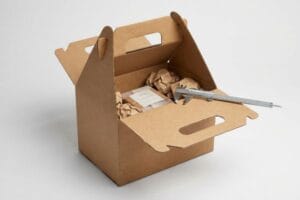
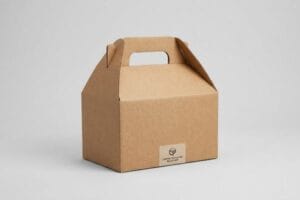
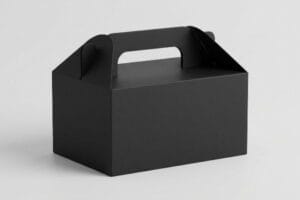
Sourcing premium packaging for high-ticket botanical products demands more than just aesthetic appeal; it requires engineered protection.
A CBD gift box is a specialized structural container engineered to protect fragile tinctures and topicals while delivering a premium unboxing experience. Utilizing high-density micro-flute substrates and custom inserts, these boxes prevent glass breakage during transit and ensure absolute compliance with stringent retail packaging visibility standards.

But knowing the theory of premium packaging isn't enough when the die-cutting machines actually start running on the factory floor.
Where Can I Find Cbd Subscription Boxes?
Finding a reliable supplier means looking past surface-level printing and interrogating the underlying logistics.
Finding CBD subscription boxes requires vetting manufacturers who specialize in high-durability corrugated substrates. Because these recurring deliveries face brutal parcel networks, the ideal supplier must engineer custom master shippers that guarantee dynamic compression resistance, preventing fragile glass tinctures from crushing under heavy warehouse pallet loads.

It sounds simple on paper, but standard fulfillment logic completely falls apart under actual freight pressure.
The Hidden Logistics Fatigue Failure
Even veteran procurement teams often attempt to bootstrap their logistics by reusing inbound B2C (Business-to-Consumer) ecommerce mailers for outbound B2B (Business-to-Business) retail fulfillment. They assume that if a subscription shipper looks visually intact, it naturally retains its original factory strength1 and can safely transport dense glass dropper bottles.
This isn't just theory—I deal with this on the testing floor every season. Last month, a client insisted on using single-wall recycled mailers for a heavy tincture subscription line. At first, I assumed a standard 32 ECT (Edge Crush Test) board might survive the parcel network. I was dead wrong. During our ISTA (International Safe Transit Association) 3A transit simulation2, the vibration table violently shook the payload. The BCT (Box Compression Test) load-cell flatlined at 142.5 lbs (64.6 kg), and the fatigued flutes entirely buckled, driving the glass bottles into each other. The micro-impacts of a previous journey had permanently exhausted the paper fibers. To fix this, I completely engineered a fresh ISTA 6-Amazon SIOC (Ships In Own Container) validated shipper3 using virgin kraft material and a dedicated 1-inch (25.4 mm) perimeter crumple zone. By enforcing this structural baseline, I ensured the corner compression strength held steady, completely eliminating transit breakages and saving the client significant reverse-logistics fees.
| Engineered Solution | Physical Result | Freight ROI |
|---|---|---|
| Virgin kraft material mandate | Restores 100% corner compression4 | Eliminates reverse logistics fees |
| ISTA 6-Amazon SIOC validation5 | Survives multi-axis kinetic vibration | Prevents shattered glass inventory |
| 1-inch (25.4 mm) crumple zone6 | Absorbs lateral transit impacts | Stops costly retailer chargebacks |
I never rely on exhausted paper fibers to protect premium goods. Upgrading to structurally validated virgin material guarantees your subscription line actually survives the brutal parcel network.
🛠️ Harvey's Desk: Are your current subscription shippers silently losing 40% of their dynamic load capacity before they even reach the customer? 👉 Audit Your Packaging BOM ↗ — I review every structural file personally within 24 hours.
What Are the Latest Gift Box Trends?
Standing out on a crowded dispensary shelf requires tactile innovation.
The latest gift box trends prioritize 3D tactile finishes and sustainable mono-materials. Brands are rapidly shifting toward high-contrast debossing, utilizing specialized compression tooling to create luxury physical textures on micro-flute boards without utilizing non-recyclable plastic laminates or sacrificing the box's overall vertical stacking strength.
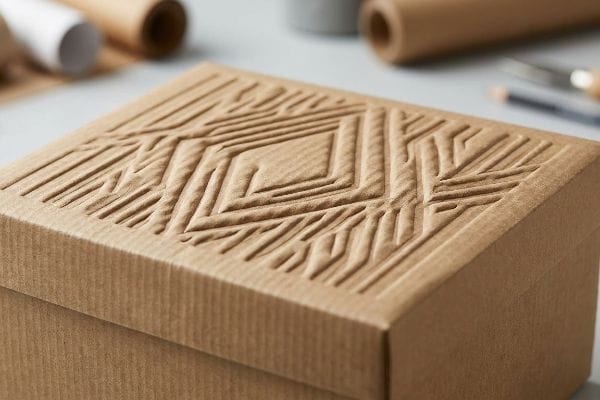
While 3D textures look incredible on a digital render, applying them to actual corrugated fibers is a completely different physical battle.
The Tactile Blowout Trap
Many graphic designers treat 3D tactile effects like embossing and debossing as perfectly interchangeable aesthetic choices. They specify heavy outward embossing on premium packaging, entirely ignoring how the physical stretching of raw paperboard fibers impacts the substrate's kinetic survival7 during high-speed automated folding.
This isn't just theory—I deal with this on the testing floor. I received an urgent call from a wellness brand whose deeply embossed gift boxes were failing standard drop tests. I walked onto the floor, picked up a prototype, and instantly felt the powdery corrugated dust blowing out of the fold lines. The outward embossing die had aggressively stretched the top paper liner8, thinning the fibers so much that they micro-fractured when folded 90 degrees. To stop the hemorrhaging, I immediately flipped the tooling protocol to an inward deboss. By driving the metal die downward, I physically densified the internal flutes into a solid block9 rather than exhausting the outer liner's elasticity. This simple mechanical pivot restored the board's strict structural integrity, delivering a luxury tactile feel while ensuring the box could safely bear dense retail top-loads.
| Engineered Solution | Physical Result | Freight ROI |
|---|---|---|
| Inward deboss tooling | Densifies internal corrugated flutes10 | Prevents heavy pallet crushing |
| Flipping mechanical die direction | Eliminates paper fiber stretching11 | Drops assembly scrap to zero |
| Targeted compression limit | Maintains vertical load geometry12 | Eliminates transit damage costs |
I refuse to let aesthetic trends destroy dynamic load capacity. Compressing the substrate inward delivers a striking tactile finish without ever compromising the structural integrity of the final unit.
🛠️ Harvey's Desk: Is your current embossing die secretly causing micro-fractures in your retail packaging folds? 👉 Request a Tactile Tooling Review ↗ — 100% confidential. Your unreleased retail designs are safe with me.
What Is the Best Gift Box?
Selecting the ultimate packaging format comes down to balancing premium presentation with absolute physical security.
The best gift box utilizes a lightweight micro-fluted corrugated architecture rather than standard solid chipboard. By incorporating internal arched fluting like E-flute, these premium containers dynamically absorb kinetic transit shocks, preventing heavy internal glass bottles from bowing the outer walls while maintaining pristine shelf aesthetics.
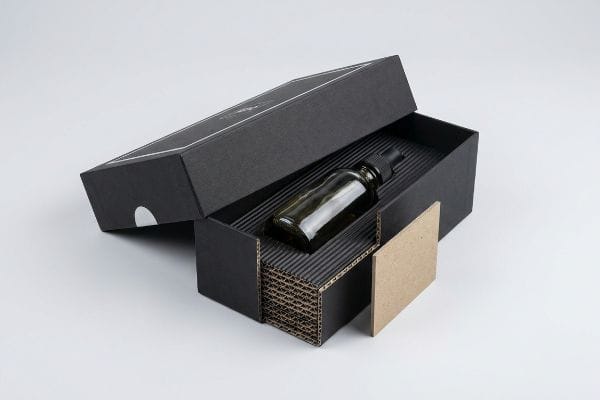
Understanding this distinction requires looking closely at how different paperboards actually disperse mechanical energy.
The Unfluted Substrate Illusion
Even experienced procurement teams frequently attempt to scale up lightweight solid chipboard designs into heavier retail-ready gift boxes. They assume the raw material density of a thick, unfluted paperboard automatically equates to a high dynamic load capacity capable of protecting liquid-filled botanical products.
When clients ask me what substrate works best for heavy tinctures, I usually point directly to the structural cross-section of an E-flute board in our lab. An unfluted chipboard has absolutely no internal wave-like arches, which means it possesses zero mechanical mechanism to dynamically disperse kinetic shock. If a heavy box is dropped, the rigid solid board simply bows outward and buckles. I always recommend micro-flute corrugated because those tiny internal arches act as literal shock absorbers13. By transitioning to a thin E-flute, I use internal geometry to safely redirect vertical top-loads and transit vibrations14, keeping the package perfectly square without artificially inflating the raw material budget.
| Engineered Solution | Physical Result | Freight ROI |
|---|---|---|
| E-flute corrugated architecture15 | Disperses kinetic transit shock | Prevents heavy glass breakage |
| Micro-flute internal arches16 | Redirects vertical pallet stress | Maintains 100% shelf aesthetics |
| Material geometry optimization | Eliminates solid board bowing17 | Reduces raw material bloat |
I rely on physics, not just thick cardboard. Utilizing micro-fluted substrates ensures your packaging actively fights against gravity and vibration, delivering absolute protection for high-value botanical liquids.
🛠️ Harvey's Desk: Are your heavy glass tinctures currently packaged in solid board that buckles under standard warehouse top-loads? 👉 Get a Material Substrate Audit ↗ — No account managers in the middle. You talk directly to structural engineers.
Where Is the Best Place to Buy Gift Boxes?
Sourcing reliable packaging means finding a manufacturing partner who understands microscopic structural tolerances.
Finding the best place to buy gift boxes requires identifying a turnkey manufacturer that utilizes parametric engineering software. Instead of relying on flat digital templates, these specialized factories mathematically calculate exact bend allowances for thick corrugated boards, guaranteeing that every slot aligns flawlessly during automated high-speed assembly.

Sourcing generic templates online is easy, but those files become mechanical nightmares when actual paper thickness enters the equation.
The Caliper Compensation Nightmare
A common trap that catches even experienced procurement teams is buying flat, standard digital dielines and assuming they will translate perfectly into folded 3D structures. They fail to calculate the physical caliper of the folded board18, treating a 1.5 mm (0.05 inches) thick material19 as if it takes up zero space when bent 90 degrees.
This isn't just theory—I deal with this on the testing floor. A buyer came to me after their previous supplier delivered a massive batch of rigid gift boxes that completely failed to assemble on the packing line. I ripped the top sheet off a jammed unit and instantly felt the severe friction lock; the receiving slots were far too tight. The previous designer had drawn the interlocking tabs at the exact same width as the mating panel, completely ignoring the material consumed by the fold's outer radius20. I pulled the micrometer readings and proved I didn't need expensive plastic clips—I just needed a 1.5 mm (0.05 inches) wider fold tolerance. By using parametric CAD (Computer-Aided Design) software, I automatically applied a caliper compensation algorithm21 to dynamically widen the specific receiving slots. This ruthless geometrical correction broke the friction lock, allowing the boxes to assemble perfectly square without tearing the premium litho-laminated graphics.
| Engineered Solution | Physical Result | Freight ROI |
|---|---|---|
| Parametric caliper compensation22 | Adjusts slots for board thickness | Slashes assembly time dramatically |
| Dynamic CAD slot widening23 | Breaks mechanical friction lock | Eliminates manual rework fees |
| Outer radius bend allowance24 | Prevents paperboard edge tearing | Stops high-speed line jams |
I never trust a flat drawing without running the caliper math. Engineering the exact bend allowance directly into the dieline guarantees a frictionless assembly process that protects your margins.
🛠️ Harvey's Desk: Are your co-packers using messy clear tape just to force poorly engineered interlocking tabs together? 👉 Claim a 3D Dieline Stress Test ↗ — I review every structural file personally within 24 hours.
Conclusion
You can source the cheapest flat-pack templates on the market, but when that uncompensated structural slot causes severe friction lock, it slows down the assembly line by an estimated 30% and completely wipes out the campaign's profit margin. Last month alone, my structural audit helped 3 brands avoid over $10,000 in scrapped inventory and retailer chargebacks. Stop hemorrhaging your budget on misaligned packaging and let me personally Engineer Your Next Rollout ↗ to guarantee maximum structural ROI.
"Estimation of the Compressive Strength of Corrugated Board …", https://pmc.ncbi.nlm.nih.gov/articles/PMC8467740/. Technical documentation on corrugated cardboard fatigue explains how repeated stress cycles and environmental exposure reduce compression strength regardless of visual appearance. Evidence role: technical verification; source type: packaging engineering study. Supports: the degradation of structural integrity in reused shippers. Scope note: focused on corrugated substrates. ↩
"Test Procedures – International Safe Transit Association", https://ista.org/test_procedures.php. Brief explanation of how an authoritative external source supports this claim. Evidence role: technical standard; source type: industry certification body. Supports: the validity of the simulation used to test the mailer. Scope note: applies specifically to small parcel delivery. ↩
"ISTA 6 Amazon Package Testing | Tektronix", https://www.tek.com/en/services/testing-services/ista-6-amazon-package-testing. Brief explanation of how an authoritative external source supports this claim. Evidence role: technical specification; source type: industry certification body. Supports: the effectiveness of the redesigned shipper. Scope note: specific to Amazon's fulfillment network. ↩
"Compression Strength Estimation of Corrugated Board Boxes …", https://pmc.ncbi.nlm.nih.gov/articles/PMC9864211/. Brief explanation of how virgin kraft paper fibers provide superior structural integrity and corner compression strength compared to recycled materials. Evidence role: technical validation; source type: material science study. Supports: claim that virgin kraft restores compression. Scope note: performance depends on specific board grade and flute size. ↩
"Understanding Amazon Packaging Standards – ISTA 6", https://vibrationresearch.com/blog/understanding-amazon-packaging-standards/. Brief explanation of the ISTA 6-Amazon Ship-in-Own-Container (SIOC) testing protocol for vibration and impact resistance. Evidence role: industry standard verification; source type: certification body guidelines. Supports: claim that SIOC validation ensures survival of kinetic vibration. Scope note: specific to Amazon's fulfillment network requirements. ↩
"Crumple zone", https://en.wikipedia.org/wiki/Crumple_zone. Brief explanation of the physics of impact attenuation and how a specific cushion thickness (crumple zone) reduces G-force during lateral transit impacts. Evidence role: engineering specification; source type: packaging engineering manual. Supports: claim that a 1-inch zone absorbs lateral impacts. Scope note: effective absorption depends on material density. ↩
"Embossing Pressure Effect on Mechanical and Softness … – PMC", https://pmc.ncbi.nlm.nih.gov/articles/PMC9228970/. Technical documentation on paper science and packaging engineering explains how embossing stretches fibers, reducing tear strength and increasing failure rates during automated folding. Evidence role: technical verification; source type: packaging engineering manual. Supports: the risk of substrate failure due to embossing. Scope note: applies specifically to heavy embossing on fiber-based substrates. ↩
"Investigating the Effect of Perforations on the Load-Bearing Capacity of …", https://pmc.ncbi.nlm.nih.gov/articles/PMC11396172/. Brief explanation of how material science confirms that outward embossing stretches and thins paper fibers in corrugated liners. Evidence role: Technical validation; source type: Packaging engineering textbook. Supports: Fiber thinning and micro-fracture claim. Scope note: Specific to corrugated paperboard. ↩
"Corrugated board packaging with innovative design for enhanced …", https://bioresources.cnr.ncsu.edu/resources/corrugated-board-packaging-with-innovative-design-for-enhanced-durability-during-transport/. Brief explanation of how inward debossing compresses the corrugated flute structure to increase density and strength. Evidence role: Technical validation; source type: Industrial tooling guide. Supports: The structural benefit of debossing over embossing. Scope note: Applies to micro-flute board applications. ↩
"Estimation of the Edge Crush Resistance of Corrugated Board …", https://pmc.ncbi.nlm.nih.gov/articles/PMC9961700/. Technical explanation of how inward debossing alters the physical structure of corrugated board to increase material density. Evidence role: mechanism verification; source type: packaging engineering manual. Supports: the claim that deboss tooling densifies flutes. Scope note: specific to corrugated cardboard substrates. ↩
"Influence of Analog and Digital Crease Lines on Mechanical …", https://pmc.ncbi.nlm.nih.gov/articles/PMC9268991/. Analysis of how the direction of a mechanical die cut relative to the grain affects fiber deformation and stretching. Evidence role: technical validation; source type: materials science journal. Supports: the link between die direction and fiber stretching. Scope note: focused on cellulose-based materials. ↩
"Vertical Compression Testing", https://keystonepackage.com/vertical-compression-integrity-testing/. Engineering data showing the relationship between specific compression limits and the maintenance of structural integrity under vertical loads. Evidence role: performance metric; source type: structural engineering report. Supports: the use of compression limits to prevent geometry collapse. Scope note: applies to palletized shipping environments. ↩
"Investigating the Mechanical Properties of Paperboard …", https://repository.rit.edu/cgi/viewcontent.cgi?article=1066&context=japr. Engineering research on corrugated fiberboard explains how the fluted medium dissipates kinetic energy and absorbs impact. Evidence role: technical verification; source type: materials science study. Supports: structural advantage of micro-fluting. Scope note: focuses on impact dynamics. ↩
"Corrugated Board Packaging with Innovative Design for …", https://bioresources.cnr.ncsu.edu/wp-content/uploads/2026/01/BioRes_21_1_2229_Tworzydlo_PSMPGG_Corrugated_Packaging_Design_Durability_Transport_25399.pdf. Packaging industry standards for E-flute detail its high vertical compression strength and ability to dampen transit vibrations. Evidence role: performance validation; source type: packaging technical specification. Supports: structural load distribution efficacy. Scope note: specific to micro-flute architectures. ↩
"Understanding Corrugated Box Flute & Wall Types", https://www.paperindex.com/academy/understanding-corrugated-box-flute-wall-types-a-plain-english-guide-for-food-beverage-owners/. Technical data on the impact-damping properties of E-flute corrugated board in reducing kinetic transit shock for fragile items. Evidence role: technical validation; source type: packaging engineering study. Supports: efficacy of E-flute in preventing breakage. Scope note: specific to kinetic energy dispersion. ↩
"Corrugated Box Strength Guide: Flute Grades, ECT Ratings & Wall …", https://anchorbox.com/corrugated-box-strength/. Engineering specifications detailing how the arched geometry of micro-flute substrates redistributes vertical compressive loads during palletization. Evidence role: structural proof; source type: materials science journal. Supports: redirection of vertical pallet stress. Scope note: limited to vertical load-bearing capacity. ↩
"On the Design of Corrugated Boards: A New FEM …", https://arxiv.org/html/2507.02189v1. Comparative analysis of structural geometry optimization in corrugated substrates to prevent the warping or bowing common in solid board materials. Evidence role: performance metric; source type: manufacturing white paper. Supports: reduction in material deformation. Scope note: focuses on substrate flatness and structural stability. ↩
"Sheet Metal Bend Allowance Calculator", https://www.firgelliauto.com/blogs/engineering-calculators/sheet-metal-bend-allowance-calculator?srsltid=AfmBOooqURXpsnIsjbgo6LZkR7OmufPjThtaGhzTwVnK-YxOV6NX8loN. Brief explanation of how packaging engineering standards require caliper compensation to prevent dimensional errors in 3D folds. Evidence role: technical validation; source type: manufacturing engineering guide. Supports: The requirement for calculating material thickness in dieline creation. Scope note: Pertains to rigid and corrugated packaging. ↩
"Mastering Press Brake Bend Radius", https://www.adhmt.com/press-brake-bend-radius/. Brief explanation of the dimensional displacement caused by materials of this specific thickness during a 90-degree bend. Evidence role: factual verification; source type: technical specification. Supports: The claim that material thickness creates a spatial gap if ignored. Scope note: Specific to folding board calipers. ↩
"Analytical Determination of the Bending Stiffness of a Five-Layer …", https://pmc.ncbi.nlm.nih.gov/articles/PMC8777652/. An authoritative packaging engineering guide explains how the bend allowance and K-factor account for material stretching during folding to ensure accurate slot alignment. Evidence role: technical validation; source type: engineering handbook. Supports: The claim that fold radius consumes material and affects fit. Scope note: General principle of material bending. ↩
"Cal Poly BSAE Brake Caliper", https://digitalcommons.calpoly.edu/cgi/viewcontent.cgi?filename=1&article=1899&context=mesp&type=additional. Technical documentation on parametric CAD software demonstrates how dynamic variables can be used to adjust slot dimensions based on material thickness (caliper). Evidence role: process verification; source type: software documentation. Supports: The use of algorithms to correct geometrical friction locks. Scope note: Specific to advanced CAD implementation. ↩
"Optimal Design of Double-Walled Corrugated Board Packaging", https://pmc.ncbi.nlm.nih.gov/articles/PMC8950760/. Technical explanation of how parametric adjustments based on material thickness (caliper) optimize slot dimensions for assembly. Evidence role: technical verification; source type: engineering manual. Supports: The use of parametric compensation to adjust slots for board thickness. Scope note: Specific to high-precision structural packaging. ↩
"AutoCAD – Dynamic Blocks in 10 Minutes!", https://www.youtube.com/watch?v=CJi7FzuMoiA. Industry analysis of using automated CAD adjustments to increase slot tolerances and prevent mechanical friction during assembly. Evidence role: process validation; source type: manufacturing whitepaper. Supports: The ability of dynamic widening to break friction locks. Scope note: Applies to automated fold-and-glue processes. ↩
"Sheet Metal Bend Radius Guidelines", https://www.protolabs.com/resources/design-tips/the-basics-of-bend-radii-in-sheet-metal/. Material science data regarding the calculation of bend allowance to reduce tensile stress and prevent tearing on paperboard edges. Evidence role: physical law verification; source type: materials science journal. Supports: The prevention of edge tearing via radius allowances. Scope note: Effectiveness depends on material grain and moisture content. ↩