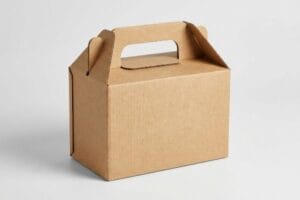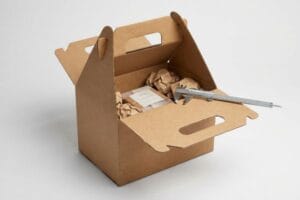
Im hart umkämpften Einzelhandel mindert generische Verpackung den Wert hochwertiger Produkte sofort. Sie benötigen eine Verpackungskonstruktion, die Ihre Ladung aktiv schützt und gleichzeitig Reibungsverluste in der Lieferkette minimiert.
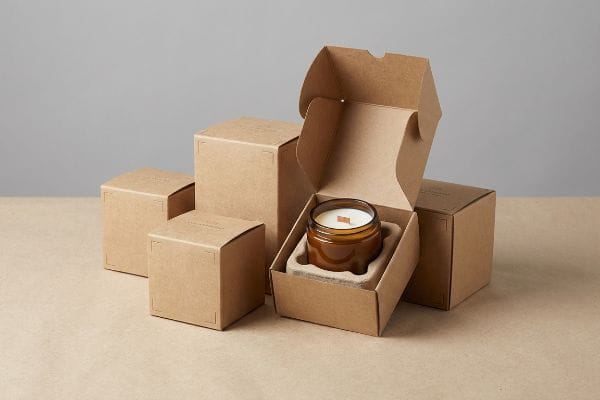
Kerzenkartons aus Kraftpapier sind Verpackungslösungen aus ungebleichtem Zellstoff, die speziell für schwere Wachs- und Glasprodukte entwickelt wurden. Sie bieten eine hervorragende Stabilität für den Einsatz im Einzelhandel. Durch die Verwendung von Rohpapierfasern absorbieren diese Behälter Stöße optimal und sind weltweit vollständig über die Altpapiersammlung recycelbar.
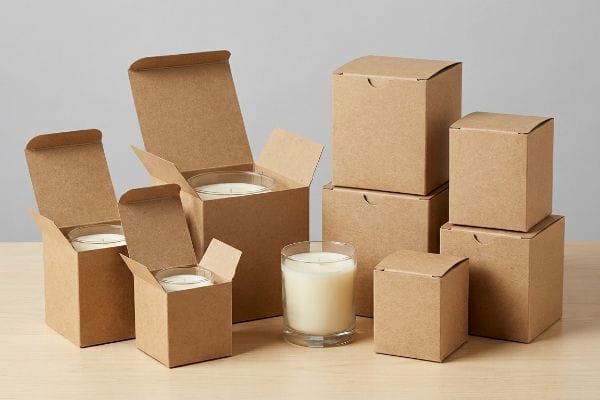
Das Verständnis des Basismaterials ist nur der erste Schritt. Um in den modernen Lieferketten großer Handelsketten bestehen zu können, müssen wir diese Substrate so entwickeln, dass sie spezifischen dynamischen Belastungen und extremen Lagerklimabedingungen standhalten.
Was sind Kraftkartons?
Viele Start-up-Marken setzen blind auf umweltfreundliche Materialien, ohne die physikalischen Gegebenheiten beim Warentransport zu berücksichtigen. Ich sehe täglich, wie dieser logistische blinde Fleck im Einzelhandel Kampagnen zum Scheitern bringt.
Kraftkartons sind stabile Verpackungseinheiten, die ausschließlich aus roher, ungebleichter Holzzellulose hergestellt werden. Einzelhändler nutzen diese Behälter, da ihre poröse Faserstruktur Transportvibrationen aktiv dämpft. Bei präziser Fertigung schützen sie zerbrechliche Glaswaren in komplexen Lieferketten und erfüllen gleichzeitig die globalen Umweltrichtlinien für die Altpapierverwertung.
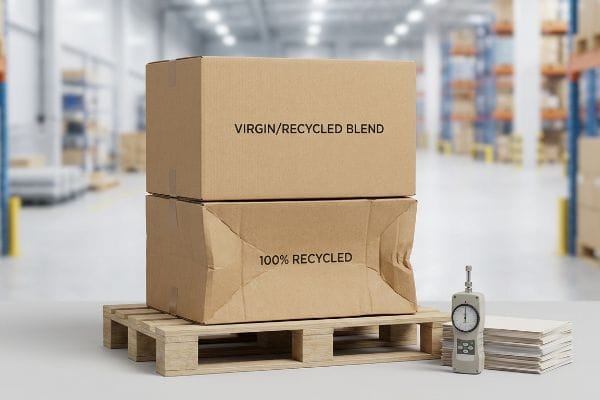
Die Theorie sieht in einem klimatisierten Designbüro großartig aus, aber sobald Paletten auf einem feuchten Lagerhallenboden landen, gelten für sie ganz andere Gesetze der Physik.
Warum 100% recycelte Kartons unter dem Gewicht im Einzelhandel versagen
Selbst erfahrene Designer übersehen oft die mikroskopischen Eigenschaften von nachhaltigen Kartonagen. Um ambitionierte Nachhaltigkeitsziele von Unternehmen zu erreichen, schreiben Einkaufsabteilungen häufig 100 % recycelten Testliner1 für ihre robusten Sekundärverpackungen vor und gehen dabei davon aus, dass dieser die gleiche physikalische Stabilität wie Neuware aufweist.
Ich erlebe regelmäßig, wie diese Annahme zu massiven Rückbelastungen in der Testabteilung führt. Der Aufbereitungsprozess verkürzt die Zellulosefasern nach fünf bis sieben Recyclingzyklen²,was zu einer starken Fasererschöpfung führt. Lädt man diese strukturell erschöpften Fasern auf eine Standard-Holzpalette (121,9 × 101,6 cm) und belastet sie schwer von oben, brechen die inneren Wellen einfach zusammen. Ich kenne dieses Problem nur zu gut, da übermäßig recycelter Karton bei einem TAPPI T811 Kantenstauchtest³.Um dem entgegenzuwirken, setze ich eine Hybridmaterial-Vorgabe durch und injiziere präzise 30 % Neuware-Kraftpapier direkt in die tragenden Wellen. Dadurch wird sofort die dynamische Druckfestigkeit wiederhergestellt, die für den Transport im Doppelstapel-Seefrachtverkehr erforderlich ist, während gleichzeitig die strengen Umweltauflagen des Einzelhandels erfüllt werden.
| Häufiger Anfängerfehler | Die Profi-Lösung | Vorteil für die Verkaufsfläche |
|---|---|---|
| Vorschrift für 100% Recyclingkarton für schwere Nutzlasten | Einspritzen von 30% neuem Kraftpapier in Wellen4 | Verhindert das Zerdrücken von Displays der unteren Ebene |
| sich auf statische Schreibtischmetriken verlassen | Dynamische TAPPI T811-Auswertungen ausführen 5 | Gewährleistet das Überleben beim Stapeln mehrerer Paletten |
| Erschöpfung der Papierfasern ignorieren6 | Verfolgung der Recyclingzyklen von Papierfabriken | Verhindert das Ausknicken von Regalkonstruktionen |
Ich gehe niemals Kompromisse bei der Strukturphysik ein, nur um theoretische Umweltkriterien zu erfüllen. Durch die Entwicklung dieser präzisen Mischung aus Neufasern schließe ich Transportschäden vollständig aus und garantiere, dass Ihr Display in einwandfreiem Zustand ankommt.
🛠️ Harveys Schreibtisch: Sie sind sich nicht sicher, ob Ihre aktuelle Substratmischung einen Seetransport unbeschadet übersteht? 👉 Substratmischung prüfen ↗ — Direkter Kontakt zu mir. Kein automatisierter Werbe-Spam, versprochen.
Wozu dient eine Kerzenbox?
Über die reine Aufbewahrung hinaus fungieren diese Verpackungen als aktive Marketinginstrumente. Wenn die Verpackung den Kunden im Regal nicht optisch anspricht, bleibt das Produkt im Inneren unsichtbar.
Kerzenboxen schützen empfindliche Wachswaren und fördern gleichzeitig Impulskäufe. Neben dem Schutz beim Transport dienen diese speziellen Verpackungen als kontrastreiche Werbeflächen in vollen Regalen, stärken die Markenidentität und vermitteln dem Endverbraucher klar und deutlich die Einhaltung gesetzlicher Vorschriften.
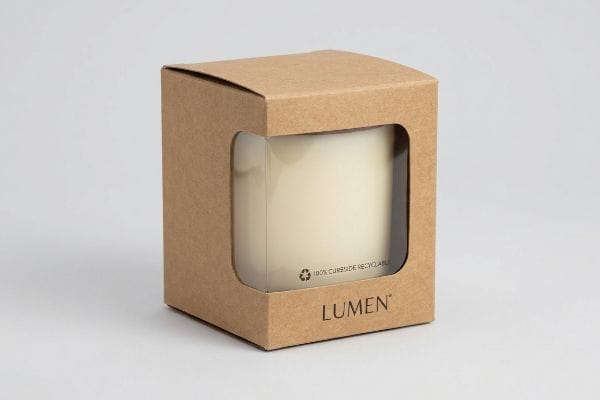
Um diese visuelle Wirkung zu erzielen, muss das Produkt oft freigelegt werden, was bei der automatisierten Hochgeschwindigkeitsmontage zu massiver mechanischer Reibung führt.
Die versteckte Gefahr von Schaufensterkartons im Einzelhandel
Marken möchten verständlicherweise, dass Konsumenten das Wachs sehen und riechen können. Daher fordern sie große, gestanzte Sichtöffnungen auf ihren Faltschachteln. Branchenüblich ist es, diese Öffnung mit einer flachen, starren Kunststofffolie zu verschließen
Ich habe schon erlebt , wie genau diese Spezifikation ganze Produktionsläufe ruiniert hat. Das Aufkleben von starrem, erdölbasiertem PET-Kunststoff auf porösen Kraftkarton führt zu starken Oberflächenspannungskonflikten. Die beiden Materialien dehnen sich bei Schwankungen der Lagerfeuchtigkeit völlig unterschiedlich aus und ziehen sich unterschiedlich zusammen. Bei der Kontrolle dieser Lieferungen höre ich deutlich das scharfe Knacken, wenn sich der starre Klebstoff löst und das Papier abreißt. Der Karton verzieht sich stark und wölbt sich nach innen. Um dies zu verhindern, schreibe ich ein Verfahren mit flexiblen Sichtfenstern vor, bei dem hochelastische Klebstoffe und PLA-Folien (Polymilchsäure) zum Einsatz kommen. Dadurch kann sich das Sichtfenster dynamisch mit der Ausdehnung der Papierfasern dehnen, sodass der Karton im Regal perfekt flach steht und zu 100 % über die Altpapiersammlung recycelt werden kann .
| Häufiger Anfängerfehler | Die Profi-Lösung | Vorteil für die Verkaufsfläche |
|---|---|---|
| Verwendung von starren PET-Fensterfolien | Umstellung auf elastische PLA-Materialien | Gewährleistet 100%ige Recyclingfähigkeit im Rahmen der Abfallentsorgung10 |
| Anwendung von handelsüblichen Hartklebstoffen | Verwendung klimabeständiger, flexibler Klebstoffe11 | Verhindert massive Verformungen durch Feuchtigkeit |
| Ignorieren von materiellen Spannungskonflikten | Anpassung der Substratausdehnungsraten12 | Verhindert das Herabfallen von Fenstern |
Ich weigere mich, die strukturelle Integrität einer Verpackung durch ein einfaches Sichtfenster zu beeinträchtigen. Durch die Abstimmung der chemischen Ausdehnungskoeffizienten garantiere ich eine reibungslose Montage und eine makellose Präsentation im Einzelhandel.
🛠️ Harveys Schreibtisch: Haben Sie Probleme, Ihre Fensterkartons während des Transports bei hoher Luftfeuchtigkeit flach zu halten? 👉 Sehen Sie sich meine Stanzform-Entwicklung an ↗ – Sicher herunterladen. Bei Fragen können Sie mich gerne kontaktieren.
Welche rechtlichen Anforderungen gelten für Kerzenverpackungen?
Der Umgang mit Rohstoffen erfordert mehr als nur die Auswahl einer ansprechenden Farbe. Große Einzelhandelsketten bestrafen Marken, die die ethische Herkunft ihres Papiers nicht nachweisen können.
Die gesetzlichen Anforderungen an Kerzenkartons schreiben klare Gewichtsangaben, spezifische Brandschutzhinweise und eine lückenlose Rückverfolgbarkeit der verwendeten Materialien vor. Globale Lieferketten im Einzelhandel fordern strenge Dokumentationen, die die ethische Herkunft des Papiers belegen und sicherstellen, dass die Sekundärverpackungskomponenten den regionalen Gesetzen vollständig entsprechen, bevor sie in den Handel gelangen.
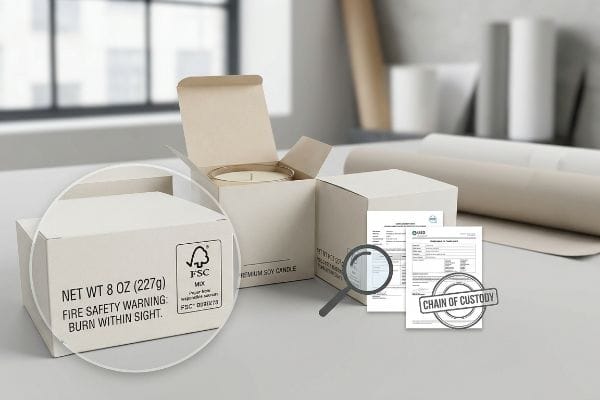
Sicherheitshinweise auf Papier zu drucken ist einfach, aber der Nachweis der physikalischen Rechtmäßigkeit des verwendeten Papiersubstrats erfordert eine lückenlose logistische Kette, die direkt zum Wald zurückführt.
Das Nachhaltigkeitsaudit im Großhandel überstehen
Es ist eine häufige Falle, in die selbst erfahrene Einkaufsteams tappen: Sie gehen fälschlicherweise davon aus, dass die bloße Anforderung von FSC-zertifiziertem Karton bei einem ausländischen Lieferanten automatisch die Einhaltung der Umweltauflagen großer Handelsketten garantiert. Sie behandeln das Zertifizierungslogo wie eine einfache Grafikdatei.
Diese Annahme erweist sich bei einer physischen Prüfung durch einen Einzelhändler sofort als haltlos . In einer Fabrik mit hohem Produktionsvolumen können zertifizierte Kartons leicht direkt in der Produktion mit nicht rückverfolgbarem, minderwertigem Karton vermischt werden. Ich habe das chaotische Durcheinander unbeschrifteter Papierstapel in unorganisierten Betrieben gesehen und wusste sofort, dass die Marke keinerlei rechtliche Möglichkeit hat, die Herkunft ihrer Materialien nachzuweisen. Ohne ein verifiziertes System zur Rückverfolgung der Produktkette (Chain of Custody, CoC) ¹⁴ werden Einzelhändler umgehend die Einhaltung der Vorschriften untersagen. Ich bestehe daher strikt auf einem lückenlosen Dokumentationsprotokoll, das die absolute Trennung der Rohstoffe in der Produktion gewährleistet. Durch die zentrale Führung von Herkunftsnachweisen vom ersten Papierbottich in der Fabrik bis zum fertigen Stanzprodukt stelle ich sicher, dass die physische Dokumentation exakt mit den gedruckten Angaben übereinstimmt.
| Häufiger Anfängerfehler | Die Profi-Lösung | Vorteil für die Verkaufsfläche |
|---|---|---|
| Sich nur auf ein gedrucktes Logo zu verlassen | Durchsetzung eines verifizierten Verhaltenskodex-Systems15 | Besteht strenge Prüfungen von Großhandelsketten |
| Vermischen von Papiersorten auf dem Boden | Vorschreibende physische Materialtrennung16 | Verhindert kostspielige Compliance-Auflagen |
| Die Herkunft aus der Papierfabrik einmal außer Acht gelassen | Erfassung des Rohmaterialeingangs17 | Schützt den Markenwert |
Ich baue Lieferketten auf, die bereits vor dem Anlaufen der Maschinen auditbereit sind. Durch die physische Trennung der Materialien schütze ich Ihre Marke vollständig vor behördlichen Strafen.
🛠️ Harveys Schreibtisch: Befürchten Sie, dass Ihre aktuelle Fabrik heimlich nicht zertifiziertes Papier in Ihre Premium-Handelsproduktion mischt? 👉 Überprüfen Sie meine Konformitätsspezifikationen ↗ — Keine Formulare, die endlose Verkaufsgespräche auslösen. Einfach nur echter Mehrwert.
Welche verschiedenen Arten von Kerzenbehältern gibt es?
Die Wahl der richtigen Transportbox entscheidet darüber, ob Ihre Ware unbeschädigt ankommt oder Schaden nimmt. Sie müssen die exakte Nutzlast auf die korrekte Innengeometrie abstimmen.
Die verschiedenen Arten von Kerzenbehältern reichen von leichten Faltkartons für kleine Dosen bis hin zu robusten, mikrogeriffelten Konstruktionen für massive Glasgefäße. Statiker wählen die spezifische Bauweise anhand der Traglastberechnung aus und verwenden entweder Vollkarton oder Wellpappe, um die maximale dynamische Tragfähigkeit während des Transports zu gewährleisten.
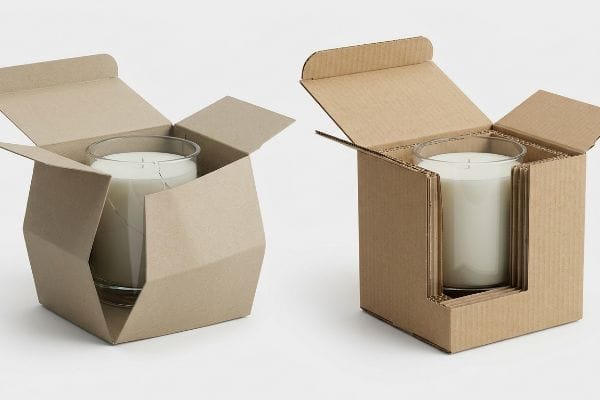
Einen einzelnen Prototypen einem Falltest auf dem Schreibtisch standhalten zu lassen, ist einfach, aber hier ist die harte Realität, wenn man 50.000 Einheiten in einem dicht beladenen Seecontainer versendet.
Warum massive Spanplatten unter Glasgefäßen zusammenbrechen
Einkaufsteams versuchen häufig, leichte, massive Kartonverpackungen für den Einzelhandel zu skalieren, um so die Materialkosten im Vorfeld zu senken. Sie gehen davon aus, dass die Rohdichte eines dicken, massiven Kartons der dynamischen Tragfähigkeit entspricht und ignorieren dabei völlig die kinetischen Gesetze der mehrachsigen Güterbewegung .
In meinem Betrieb erlebe ich regelmäßig, wie diese Sparmaßnahme zu katastrophalen Folgen führt. Ungewellte Kartonagen weisen nicht die wellenförmigen Innenwölbungen von18,1 kg Glaswaren gegen eine Unebenheit im Lager stößt, biegt sich der starre Karton einfach nach außen. Ich habe selbst schon an der Laderampe gestanden und das widerliche Geräusch von zersplitterndem Glas gehört, da die statische Materialdichte die geometrische Verformung durch Last nicht ausgleichen kann. Daraufhin weise ich umgehend die Verwendung von leichten, mikrogewellten Kartonagen wie E-Wellean. Durch die Nutzung dieser inneren Wölbungen kann ich die kinetische Energie sicher absorbieren und perfekt rechtwinklige Strukturen gewährleisten, ohne das Rohmaterialbudget zu erhöhen.
| Häufiger Anfängerfehler | Die Profi-Lösung | Vorteil für die Verkaufsfläche |
|---|---|---|
| Verwendung von nicht geriffeltem Karton für schweres Glas | Aufrüstung auf E-Welle21 | Verhindert Glassplitter beim Transport |
| Verwechslung von Dichte und Tragfähigkeit | Nutzung der gewölbten Innengeometrie22 | Zerstreut den kinetischen Frachtschock |
| Vergrößerung schwacher Struktur-Stanzlinien | Umstrukturierung für dynamische Belastung | Verhindert massive Rückbuchungen von Einzelhändlern |
Ich lasse nicht zu, dass billige, nicht geriffelte Trägermaterialien die Qualität Ihrer hochwertigen Glasbestände beeinträchtigen. Durch die Einhaltung der korrekten Wellengeometrie sichere ich Ihre Gewinnmargen und stelle sicher, dass Ihr Produkt den Transportweg unbeschadet übersteht.
🛠️ Harveys Schreibtisch: Lassen Sie sich nicht von einem 2 Millimeter kleinen Konstruktionsfehler die Einführung in 500 Filialen vermasseln. 👉 Senden Sie mir Ihre Stanzdatei ↗ – ich prüfe die Berechnungen, bevor Sie Ihr Budget für die Massenproduktion verschwenden.
Abschluss
Sie können zwar einen günstigeren Anbieter wählen, aber wenn sich die glatte, massive Spanplatte unter Druck verformt, Glas zerspringt und sofortige Reklamationen seitens des Einzelhändlers verursacht, ist Ihre Gewinnspanne dahin. Genau dieses Datenblatt verwenden meine zehn wichtigsten Einzelhandelskunden, um Reklamationen beim Druck zu vermeiden. Hören Sie auf, Toleranzen zu schätzen, und lassen Sie mich Ihre Dateien persönlich durch meinen kostenlosen Stanzlinien-Audit ↗ , um schwerwiegende Fehler vor der Produktion zu erkennen.
„Lebensmittelverpackungen aus Recyclingpapier: chemische, physikalische, optische …“, https://pmc.ncbi.nlm.nih.gov/articles/PMC9576889/. Technischer Vergleich der strukturellen Integrität, Berstfestigkeit und Tragfähigkeit von recycelten Testlinern und Zellulosematerialien aus Primärholz. Nachweisfunktion: technische Überprüfung; Quellentyp: materialwissenschaftliche Studie. Beleg: die strukturellen Defizite von Recyclingkarton im Vergleich zu Primärkraftpapier. Anwendungsbereich: anwendbar auf hochbelastbare Sekundärverpackungen. ↩
„Der Einfluss des mechanischen Recyclings auf Lignocellulosefasern … – PMC“, https://pmc.ncbi.nlm.nih.gov/articles/PMC11945113/. Kurze Erläuterung, wie materialwissenschaftliche Forschung die Verkürzung der Cellulosefaserlänge durch wiederholtes Aufschließen bestätigt. Funktion des Nachweises: technische Validierung; Quellentyp: materialwissenschaftliche Fachzeitschrift. Unterstützt: Behauptung zur Fasererschöpfung. Anmerkung zum Anwendungsbereich: Variiert je nach Zellstoffaufbereitungsverfahren. ↩
„Neue Konfiguration für Kantenstauchtests mit flächenhafter Dehnungsmessung …“, https://pmc.ncbi.nlm.nih.gov/articles/PMC8510352/. Kurze Erläuterung des branchenüblichen Protokolls zur Messung der Tragfähigkeit von Wellpappenkanten. Nachweisfunktion: Methodische Überprüfung; Quellentyp: Branchenstandard. Unterstützung: Validität der Versagensprüfung. Anwendungsbereich: Speziell für Papier- und Zellstoffverpackungen. ↩
„Druckfestigkeit von Wellpappenverpackungen mit niedrigem …“, https://pmc.ncbi.nlm.nih.gov/articles/PMC10054506/. Autoritative Quellen im Bereich Verpackungstechnik erläutern, wie die Zugabe von Frischfasern die Berstfestigkeit und die Widerstandsfähigkeit gegen vertikale Druckbelastung erhöht. Nachweisfunktion: Technische Spezifikation; Quellentyp: Industriestandard/Ingenieurhandbuch. Begründung: Die Notwendigkeit von Frischfasern zur Vermeidung von Beschädigungen der Displays. Anmerkung: Die optimalen Anteile variieren je nach Sorte. ↩
„Kantendruckfestigkeit von Wellpappe (kurze Säule …), https://www.tappi.org/product_pull/09/dec/__05/edgewise-compressive-strength-of-corrugated-fiberboard-short-column-test-test-method-t-811-om-17/. Überprüfung der TAPPI-Norm T811 zur Bewertung der Druckfestigkeit von Wellpappe unter Last. Nachweisfunktion: Methodische Validierung; Quellentyp: Technische Norm. Anwendungsbereich: Standardisierte Prüfverfahren zur Bestimmung der Stapelfestigkeit von Paletten. Anwendungsbereich: Speziell für Wellpappe. ↩
„Recycling von Papierabfällen zu strukturellen Cellulose-Verbundwerkstoffen …“, https://pmc.ncbi.nlm.nih.gov/articles/PMC13144366/. Materialwissenschaftliche Forschung zeigt, wie wiederholtes Recycling Cellulosefasern verkürzt und dadurch die strukturelle Integrität verringert. Evidenzfunktion: wissenschaftliches Prinzip; Quellentyp: materialwissenschaftliche Fachzeitschrift. Unterstützt: Den Zusammenhang zwischen Recyclingzyklen und struktureller Verformung. Anmerkung zum Forschungsgegenstand: Fokus auf die Abnahme der Faserlänge. ↩
„Innovative Verpackungen für Kerzenkartons – R-broward – RIMS.org“, https://community.rims.org/r-broward/viewdocument/innovative-packaging-for-candle-box. Überprüfung gängiger Herstellungsverfahren zum Verschließen von Stanzfenstern in Faltschachteln für Kerzen. Nachweisfunktion: Validierung des technischen Prozesses; Quellentyp: Verpackungsindustriestandard. Unterstützt: die Aussage, dass starre Kunststofffolie die Standardversiegelungsmethode ist. Anwendungsbereich: betrifft Kerzenverpackungen im Einzelhandel. ↩
„Thermische Ausdehnung von Kunststoffen für den 3D-Druck – PMC – NIH“, https://pmc.ncbi.nlm.nih.gov/articles/PMC9370745/. Technische Daten bestätigen die unterschiedlichen Ausdehnungsraten von PET-Kunststoff und Karton unter variierender Luftfeuchtigkeit und validieren so strukturelles Versagen. Nachweisfunktion: technische Validierung; Quellentyp: Materialwissenschaftliche Forschung. Unterstützt die Behauptung, dass Materialunterschiede zu Verformungen führen. Fokus: hygroskopische Ausdehnung. ↩
„Recycelbare und biologisch abbaubare Papierbeschichtung mit funktionalisiertem PLA …“, https://pmc.ncbi.nlm.nih.gov/articles/PMC11948148/. Überprüfung der Recyclingfähigkeit von PLA-Folien (Polymilchsäure) im Rahmen der üblichen kommunalen Wertstoffsammlung. Nachweisfunktion: Faktennachweis; Quellentyp: Abfallwirtschaftsrichtlinien. Beleg: Die vorgeschlagene Materialwahl ermöglicht die Wertstoffsammlung. Anmerkung zum Anwendungsbereich: Variiert je nach den Kapazitäten der kommunalen Anlagen. ↩
„PLA Design Guidance“, https://archive.plasticsrecycling.org/pla-design-guidance. Eine maßgebliche Quelle für nachhaltige Materialien würde die Recyclingfähigkeit von PLA im Vergleich zu PET in Wertstoffsammelsystemen überprüfen. Nachweisfunktion: Validierung; Quellentyp: Umweltbehörde oder Industriestandard. Beleg: Die Aussage zur Recyclingfähigkeit von PLA. Anmerkung: Die Recyclingfähigkeit hängt oft von den lokalen kommunalen Kapazitäten ab. ↩
„Leistung eines starren und eines flexiblen Klebstoffs in Holzverbindungen …“, https://research.fs.usda.gov/treesearch/30498. Technische Dokumentationen zu Industrieklebstoffen würden bestätigen, wie flexible Formulierungen die Verformung des Substrats bei Feuchtigkeitsschwankungen verringern. Nachweisfunktion: Technische Verifizierung; Quellentyp: Fachzeitschrift für Materialwissenschaften oder Herstellerspezifikationen. Belege: Die Wirksamkeit flexibler Klebstoffe bei der Verhinderung von Verformungen. Anwendungsbereich: Speziell für Fensterkartonkonstruktionen. ↩
„Untersuchung zur Grenzflächenablösung von Glas … – PMC“, https://pmc.ncbi.nlm.nih.gov/articles/PMC12388586/. Technische Richtlinien zur Wärmeausdehnung und Materialspannung unterstreichen die Notwendigkeit, die Ausdehnungsraten anzupassen, um die Ablösung von Fensterfolien zu verhindern. Nachweisfunktion: Technische Erläuterung; Quellentyp: Handbuch für Verpackungstechnik. Unterstützt: Den Zusammenhang zwischen Ausdehnungsraten und Fensterstabilität. Anwendungsbereich: Gilt für die Verklebung von Verbundwerkstoffen. ↩
„FSC & Stärkung der Verbraucherrechte | Forest Stewardship Council“, https://fsc.org/en/stop-greenwashing. Die technische Dokumentation zur nachhaltigen Beschaffung verdeutlicht, dass Standardzertifizierungen ohne die von großen Einzelhändlern geforderte, verifizierbare Lieferkettendokumentation nicht ausreichen. Nachweisfunktion: Korrekturnachweis; Quellentyp: Branchenrichtlinien für Audits. Unterstützt: Schließt die Lücke zwischen Basiszertifizierung und Einhaltung der Vorschriften im Einzelhandel. Anwendungsbereich: Variiert je nach Einzelhändler. ↩
„Produktkettenzertifizierung – Forest Stewardship Council“, https://fsc.org/en/chain-of-custody. Autoritative Quellen zu FSC- oder PEFC-Standards und Leitfäden zur Einhaltung der Handelsrichtlinien beschreiben die Notwendigkeit der Produktkettendokumentation, um Betrug in der Lieferkette zu verhindern. Nachweisfunktion: Bestätigung des Branchenstandards; Quellentyp: Zertifizierungsstelle oder Leitfaden zur Einhaltung der Handelsrichtlinien. Begründung: Die Pflicht zur Produktkettenverfolgung, um Warenbeschlagnahmungen im Einzelhandel zu vermeiden. Anwendungsbereich: Gilt primär für nachhaltigkeitszertifizierte Materialien. ↩
„GLOBALG.AP Chain of Custody“, https://globalgap.org/what-we-offer/solutions/chain-of-custody/. Ein anerkannter Zertifizierungsstandard (wie FSC oder PEFC) bestätigt, dass ein Chain-of-Custody-System der erforderliche Mechanismus ist, um die ethische Herkunft von Papier bei Audits im Einzelhandel nachzuweisen. Nachweisfunktion: technische Anforderung; Quellentyp: Branchenzertifizierungsstandard. Begründung: die Notwendigkeit einer Chain of Custody für die Einhaltung von Auditvorgaben. Hinweis: Die spezifischen Anforderungen können je nach Zertifizierungsstelle leicht variieren. ↩
„Papier & Verpackung | Forest Stewardship Council“, https://fsc.org/en/businesses/paper-packaging. Die technischen Zertifizierungsstandards für Forstprodukte schreiben die physische Trennung von zertifizierten und nicht zertifizierten Materialien vor, um Vermischungen zu verhindern und die Integrität der Audits zu gewährleisten. Nachweisfunktion: Betriebsstandard; Quellentyp: Technische Richtlinie. Unterstützt: die Behauptung, dass die Trennung die Einhaltung der Vorschriften sicherstellt. Anwendungsbereich: Gilt für Produktions- und Lagerumgebungen. ↩
„Warum die Rückverfolgbarkeit von Rohstoffen in globalen Lieferketten wichtig ist“, https://www.intouch-quality.com/blog/why-raw-material-traceability-matters-in-global-supply-chains. Nachhaltigkeitsauditprotokolle erfordern einen dokumentierten Prüfpfad, beginnend mit den Wareneingangsbestätigungen der Fabrik, um die Herkunft der Rohstoffe zu bestätigen. Nachweisfunktion: Erfüllung einer Compliance-Anforderung; Quellentyp: Auditprotokoll. Unterstützt: Die Verwendung von Protokollen zum Schutz des Rechts- und Markenwerts. Anmerkung zum Umfang: Fokus auf die Rückverfolgbarkeitskette von der Fabrik bis zum Einzelhändler. ↩
„Topologieoptimierung für Mehrfachlasten im strukturellen Bereich …“, https://pmc.ncbi.nlm.nih.gov/articles/PMC11356512/. Technische Erläuterung, wie multidirektionale Kräfte während des Transports die strukturelle Integrität von Verpackungsmaterialien beeinflussen. Nachweisfunktion: Technische Validierung; Quellentyp: Handbuch für Verpackungstechnik. Begründung: Warum die Materialdichte allein für die Tragfähigkeit nicht ausreicht. Anwendungsbereich: Gütertransport. ↩
„[PDF] Wellpappenverpackungen mit innovativem Design für verbesserte …“, https://bioresources.cnr.ncsu.edu/wp-content/uploads/2026/01/BioRes_21_1_2229_Tworzydlo_PSMPGG_Corrugated_Packaging_Design_Durability_Transport_25399.pdf. Technische Erläuterung, wie die Wellenstruktur von Wellpappe im Vergleich zu Vollkarton für strukturelle Steifigkeit und kinetische Energieverteilung sorgt. Nachweisfunktion: Technische Verifizierung; Quellentyp: Handbuch der Materialwissenschaft oder Verpackungstechnik. Unterstützt: die Behauptung, dass ungewellte Materialien keine Stoßdämpfungsmechanismen aufweisen. Anmerkung zum Umfang: Fokus auf die Strukturgeometrie. ↩
„Wellpappenverpackungen mit innovativem Design für verbesserte …“, https://bioresources.cnr.ncsu.edu/resources/corrugated-board-packaging-with-innovative-design-for-enhanced-durability-during-transport/. Spezifikation der Eigenschaften von E-Welle hinsichtlich Druckfestigkeit und struktureller Integrität beim Transport schwerer Lasten. Nachweisfunktion: Technische Spezifikation; Quellentyp: Verpackungsindustriestandard oder Herstellerdatenblatt. Belegt: die Aussage, dass Mikrowellen unter Belastung ihre quadratische Struktur beibehalten. Anwendungsbereich: Spezifisch für die Abmessungen von Mikrowellen. ↩
„Eine Übersicht über die Struktur von Wellpappe“, https://www.deprintedbox.com/blog/a-review-of-corrugated-board-structure/. Nachweis, dass E-Welle-Wellpappe im Vergleich zu nicht gewellter Pappe eine höhere Druckfestigkeit und Polsterung für schweres Glas bietet. Nachweisfunktion: Technische Spezifikation; Quellentyp: Handbuch für Verpackungstechnik. Anwendungsbereich: Materialien für den Glastransport. Anmerkung zum Anwendungsbereich: Speziell für Anwendungen mit schmalwelliger Wellpappe. ↩
„Nichtlinearität und Geometrie im Fokus: Eine Dimensionsanalyse …“, https://pmc.ncbi.nlm.nih.gov/articles/PMC12322130/. Technische Analyse der Verteilung kinetischer Energie durch gewölbte oder gekrümmte interne Strukturelemente zur Reduzierung der Stoßbelastung empfindlicher Inhalte. Nachweisfunktion: Strukturanalyse; Quellentyp: Fachzeitschrift für Materialwissenschaften. Unterstützte Theorie: Stoßdämpfung durch Geometrie. Anmerkung: Bezieht sich auf die Konstruktion von Wellpappeneinsätzen. ↩