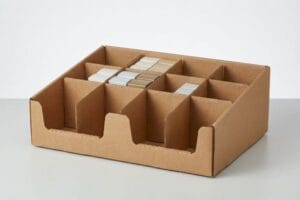
Mit einem einfachen Pappkarton in den Laden zu gehen, ist ein sicherer Weg, dass das eigene Produkt von einem frustrierten Filialleiter in eine dunkle Ecke verbannt wird.
Ja. Verkaufsständer lassen sich individuell an Ihre Ladengestaltung anpassen. Die Entwicklung kundenspezifischer Warenträger umfasst die Anpassung der Abmessungen, der verwendeten Materialien und der visuellen Gestaltung an die genauen Vorgaben Ihrer Verkaufsfläche. Dies gewährleistet eine nahtlose Integration, maximale Produktsichtbarkeit und optimale Abstimmung auf die vorgesehenen Kundenströme im Verkaufsraum.
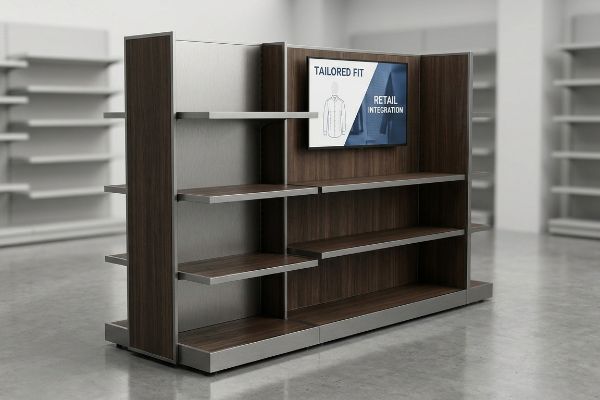
Bei der Individualisierung geht es nicht nur darum, die Pantone-Farben Ihrer Marke anzupassen; es geht darum, eine physische Struktur zu entwickeln, die den räumlichen Beschränkungen eines modernen Einzelhandelsumfelds rechtlich und logistisch standhält.
Wer entwirft Verkaufsdisplays für Einzelhandelsgeschäfte?
Die Annahme, Ihre Markenagentur könne eigenständig ein tragfähiges Bodenregal entwickeln, ist kostspielig.
Die Gestaltung von Verkaufsdisplays erfordert die enge Zusammenarbeit von Markenmarketing-Teams, Grafikern und spezialisierten Statikern. Während die Grafiker die visuelle Kommunikation entwickeln, kümmern sich die Verpackungsingenieure um die physikalischen Gegebenheiten und gewährleisten, dass die fertigen Wellpapp-Verkaufsdisplays schwere Produkte sicher tragen, ohne zusammenzubrechen oder umzukippen.
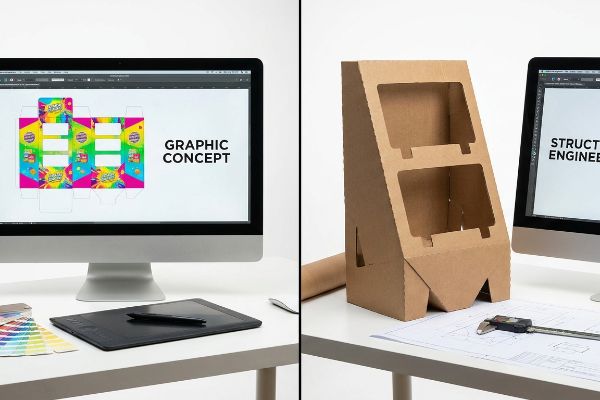
Die Kluft zwischen einer schönen Computergrafik und einer funktionalen physischen Struktur ist größer, als den meisten Markenmanagern bewusst ist.
Warum Grafikdesigner die Unterstützung von Statikern benötigen
Marketingteams übergeben häufig aufwendig gestaltete Grafiken, die auf flache Stanzlinien projiziert wurden, welche mit Grafikdesign-Software erstellt wurden.Sie gehen davon aus, dass, wenn die visuellen Linien auf einem Computerbildschirm sauber verbunden sind, sich das physische Kartondisplay in der schnelllebigen Produktionshalle perfekt zusammenfalten lässt.
Ich weiß, Sie starren vielleicht ratlos auf ein abgelehntes Strukturmuster, denn so viele meiner Kunden machen genau diesen Fehler beim ersten Versuch. Selbst erfahrene Designer übersehen oft die Dicke von Wellpappe, wie z. B. B-Welle mit 3 mm (0,12 Zoll) ² . Wenn ein dickes Blech um 90 Grad gefaltet wird, verbraucht es Rohmaterial. Wird der Aufnahmeschlitz an der Stanzform nicht mathematisch entsprechend verbreitert, misslingt das Display. Ich sehe immer wieder Mitarbeiter in Lohnverpackungen, die schwitzen und versuchen, viel zu enge Laschen zu verschließen. Das Geräusch von reißendem Karton, wenn ein frustrierter Mitarbeiter die Lasche abreißt und die gesamte Basis notdürftig mit unansehnlichem Klebeband umwickelt, schadet Ihrem Markenimage sofort. Wir wenden in unserer CAD-Software (Computer-Aided Design) automatisch eine parametrische Biegezugabe auf jeden Schlitz an, wodurch die Reibungsverriegelung aufgehoben und die automatisierte Montagezeit um schätzungsweise 20 % reduziert wird³ .
| Häufiger Anfängerfehler | Die Profi-Lösung | Vorteil für die Verkaufsfläche |
|---|---|---|
| Plattendicke außer Acht gelassen | Parametrische Biegezugaben anwenden4 | Verhindert das Einreißen von Karton |
| Enge Schlitzabstände | Empfangsschlitze digital erweitern | Beschleunigt die physische Montage |
| Verwendung rein grafischer Werkzeuge | Dateien in strukturellen CAD-Systemen neu erstellen5 | Gewährleistet eine Konstruktion ohne Klebeband |
Ich weigere mich, flache Grafikdateien ohne Überprüfung der statischen Berechnungen direkt an den Schneidetisch zu schicken, denn Präzisionstechnik ist das, was dafür sorgt, dass Ihr Display nicht im Müll landet.
🛠️ Harveys Schreibtisch: Sind Sie sich nicht sicher, ob Ihr Grafikdesigner die genaue Dicke Ihrer Wellpappe berücksichtigt hat? 👉 Fordern Sie Ihre kostenlose Dateiprüfung an ↗ — Direkter Zugang zu meinem Schreibtisch. Garantiert kein automatisierter Werbe-Spam.
Welche 4 Arten von Ladenlayouts gibt es?
Das Hineinschieben eines riesigen Großregallagers in ein kleines Ladenlokal führt garantiert zu einer sofortigen Ablehnung aus logistischer Sicht.
Ladenlayouts lassen sich im Allgemeinen in vier Hauptkonfigurationen einteilen: Raster, Freifluss, Schleife und Kernstruktur. Jede dieser individuellen Architekturen bestimmt spezifische Gangbreiten, Kundenflussmuster und Warenpräsentationsstrategien und beeinflusst somit direkt, wie die Ladeneinrichtung gestaltet werden muss, um die visuelle Wirkung zu maximieren, ohne räumliche Engpässe zu verursachen.
Das Verständnis dieser architektonischen Zonen bestimmt genau, wie groß Ihre Verkaufsfläche (Point of Purchase) rechtlich zulässig sein darf.
Anpassung von Kartondisplays an jeden Grundriss
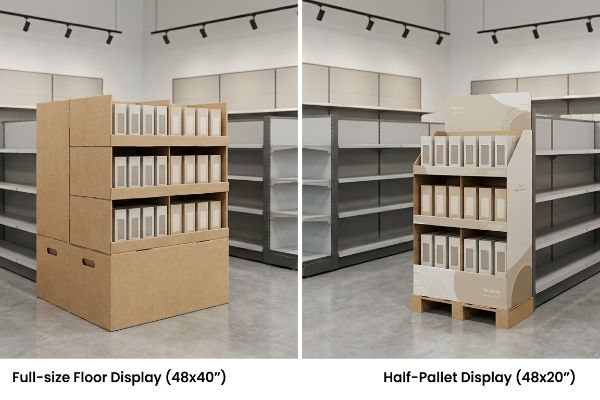
Marken bieten großen Einzelhändlern häufig standardisierte , großflächige Bodenaufsteller an, in der Annahme, ihre Werbekampagne müsse eine ganze Holzplattform belegen. Sie planen intensiv für weitläufige Rasterlayouts, ignorieren aber völlig die räumlichen Beschränkungen engerer Freifluss- oder Schleifenkonfigurationen⁶ .
Es ist eine häufige Falle, in die selbst erfahrene Einkaufsteams tappen, die ihre Regalpräsenz maximieren wollen. Wenn man eine riesige 1219 × 1016 mm7er- Einheit in einen Nebengang stellt, behindert sie den Kundenfluss erheblich. Ich habe schon erlebt, wie Filialleiter übergroße Einheiten mit Gewalt von stark frequentierten Aktionsflächen entfernt haben – das laute Quietschen einer Holzpalette auf poliertem Beton signalisiert eine völlig verschwendete Marketingplatzierung. Um eine optimale Platzierung in allen Layouts zu gewährleisten, konstruieren wir unsere Warenträger in standardisierten Teilgrößen, wie z. B. Halbpaletten mit 1219 × 508 mm. Diese mathematische Unterteilung garantiert, dass sich Ihre Einheit harmonisch in die Verkaufsfläche einfügt und gibt den Einkäufern die Sicherheit, Ihre kleinere Stellfläche zu akzeptieren, ohne dass die Warendichte darunter leidet.
| Häufiger Anfängerfehler | Die Profi-Lösung | Vorteil für die Verkaufsfläche |
|---|---|---|
| Vorschrift für volle Paletten | Nutzen Sie die Geometrien von Bruchteilen von Paletten8 | Sichert sich eine erstklassige Platzierung im Gang |
| Gangflussbegrenzungen ignorieren | Anpassung der Layout-Footprint-Grenzen | Verhindert Ablehnungen durch Vorgesetzte |
| Überdimensionierung des Displays | Skalieren Sie auf halbe Palettengrößen9 | Maximiert den lokalen Fußgängerverkehr |
Ich gestalte Warenauslagen so, dass sie sich nahtlos in den Verkaufsraum einfügen, anstatt ihn zu dominieren, denn Verkaufsfläche ist das am stärksten bewachte Gut im Geschäft.
🛠️ Harveys Schreibtisch: Sind Ihre aktuellen Verkaufsflächen zu groß für einen gezielten, offenen Boutique-Bereich? 👉 Holen Sie sich meinen Leitfaden zur fraktionierten Raumaufteilung ↗ – Sicher herunterladen. Bei Fragen können Sie mich gerne kontaktieren.
Wie ordnet man Supermarktregale an?
Wenn jeder verfügbare Zentimeter eines Regals mit Waren vollgestopft wird, entsteht visuelle Ermüdung und es kommt zu Problemen bei der mechanischen Nachbestückung.
Die effektive Anordnung von Supermarktregalen erfordert ein ausgewogenes Verhältnis zwischen Produktdichte und visueller Wirkung. Strategische Platzierung nutzt natürliche Kundenströme, die Nähe von Produkten zueinander und asymmetrische Artikelgruppen, um eine kognitive Überlastung zu vermeiden. Diese durchdachte räumliche Anordnung lenkt die Aufmerksamkeit der Kunden, fördert Spontankäufe und gewährleistet ein reibungsloses tägliches Auffüllen der Regale.

Die Organisation eines Regals ist eine präzise Wissenschaft, die die Konsumentenpsychologie mit den physikalischen Grenzen der Verpackungsmaterialien in Einklang bringen muss.
Die Psychologie der Warenpräsentation im Regal
Händler versuchen häufig, ein dichtes, perfekt symmetrisches Raster von Produkten flach auf einem einzigen Verkaufstablett zu verpacken , in der Annahme, dass maximale Dichte zu höheren Umsätzen führt 10. Sie ordnen die Artikel Schulter an Schulter an, um jeden einzelnen Millimeter Wellpappregalfläche auszunutzen.
Selbst erfahrene Designer übersehen diesen blinden Fleck oft bei der Planung von Warenträgern. Wenn perfekt gleichmäßige Produktblöcke in einem Regal angeordnet sind, entsteht keine visuelle Spannung, sodass eilige Kunden sie einfach übersehen. Noch wichtiger ist, dass diese symmetrische Überfüllung beim schnellen Nachfüllen massive Reibung verursacht. Ich habe schon erlebt, wie Verkäufer schwere Getränkeflaschen und sie blind in Fächer ohne Platz quetschten; das frustrierende Geräusch des rohen Kartons beim Einreißen der vorderen Haltekante zerstört sofort die Stabilität der gesamten Regalebene. Wir wenden die 3-5-7-Asymmetrieregel¹¹wodurchMaterialrisse beim schnellen Nachfüllen vollständig vermieden werden.
| Häufiger Anfängerfehler | Die Profi-Lösung | Vorteil für die Verkaufsfläche |
|---|---|---|
| Null-Abstand-Beladung | Ingenieur-schwimmende modulare Trennwände | Eliminiert Reibungsverluste beim Wiederauffüllen |
| Symmetrische Gitterpackung | Wende die 3-5-7-Asymmetrieregel12 | Löst visuelle Aufmerksamkeit beim Käufer aus |
| Das Tablett ist überfüllt | Bauen Sie physische Sicherheitspuffer ein | Verhindert das Einreißen der Lippen13 |
Ich baue Leerraum direkt in die Regalkonstruktion ein, denn Freiraum verkauft Produkte schneller als ein überfüllter Karton.
🛠️ Harveys Schreibtisch: Sie haben Schwierigkeiten, den exakten Abstand zu berechnen, der benötigt wird, um ein Einreißen der Wellenkanten zu verhindern? 👉 Strukturmodell anfordern ↗ — Keine Formulare, die endlose Verkaufsgespräche auslösen. Einfach nur echter Mehrwert.
Was ist die effizienteste Ladengestaltung?
Ein optimierter Rastergrundriss versagt in dem Moment, in dem eine schlecht konstruierte kinetische Anzeigetafel den Schnittpunkt blockiert.
Die effizienteste Ladengestaltung basiert in der Regel auf einem strukturierten Rasterlayout. Dieser vorhersehbare geometrische Grundriss maximiert die nutzbare Verkaufsfläche, vereinfacht die Warenführung und lenkt den Kundenstrom gezielt an optimierten Aktionsregalen vorbei. Dadurch wird eine kontinuierliche Produktpräsentation gewährleistet und Engpässe bei der Warenauffüllung deutlich reduziert.
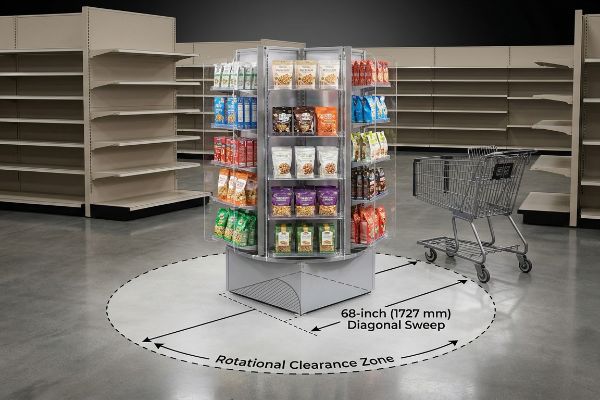
Doch die Kenntnis der Theorie des Kundenflusses reicht nicht aus, wenn kinetische Verkaufsstrukturen in den physischen Verkaufsraum Einzug halten.
Warum herkömmliche Drehteller in stark frequentierten Gängen versagen
Einkaufsteams entwerfen 360-Grad-Drehdisplays häufig ausschließlich anhand ihrer statischen, nach vorne gerichteten Abmessungen<sup>14</sup> und gehen dabei davon aus, dass ein Standarddisplay perfekt in eine Standard-Verkaufsfläche passt. Sie verlassen sich bei ihrer logistischen Platzierungsstrategie ausschließlich auf die flache Breite auf ihrem Bildschirm.
Ein einzelnes Display im Labor aufzustellen ist einfach, doch die Realität sieht anders aus, wenn man 500 Stück in einem starren Rasterlayout aufstellt. In meiner Einrichtung erlebe ich regelmäßig, dass Kunden die Geometrie des Drehradius ignorieren. Da die Diagonale einer rechteckigen Basis deutlich länger als ihre Breite ist, führen Drehungen des Geräts dazu, dass sich die starren Ecken nach außen bewegen. Bei der Messung der kinetischen Fläche auf dem Testboden entsteht mit einer Standardbasis plötzlich ein massiver Rotationsspielraum von 1727 mm (68 Zoll)<sup>15. Dieser kollidiert aggressiv mit vorbeifahrenden Einkaufswagen, und die starke Reibung der schweren Stahlkugellager, die sich unter dem seitlichen Aufprall<sup>16 , zerstört das Gerät vollständig. Ich ziehe die CAD-Koordinaten heran und berechne mathematisch die maximale Diagonale, wodurch die Grundfläche künstlich um 60 mm (2,4 Zoll) begrenzt wird. Durch die Einhaltung dieser strengen Toleranz stelle ich sicher, dass die drehbaren Ecken innerhalb der Sicherheitszonen der Einzelhändler bleiben, vermeide Kollisionen mit Einkaufswagen und bewahre Kunden vor hohen Rückbuchungen.
| Häufiger Anfängerfehler | Die Profi-Lösung | Vorteil für die Verkaufsfläche |
|---|---|---|
| Verwendung statischer Dimensionen | Berechnen Sie den diagonalen Rotationsdurchlauf17 | Verhindert Zusammenstöße mit Einkaufswagen |
| Ignorieren kinetischer Fußabdrücke | Beschränken Sie die Abmessungen des Kerns | Sorgt für einen reibungslosen Hardware-Betrieb |
| Blockierung von Fahrspuren | Ankern Sie in strengen Sicherheitsabständen | Vermeidet kostspielige Rückbuchungen von Einzelhändlern |
Ich weigere mich, zuzulassen, dass ein unbemerkter geometrischer Fehler ein hochwertiges Drehdisplay in ein physisches Hindernis verwandelt.
🛠️ Harveys Schreibtisch: Lassen Sie sich nicht von einem 2 Millimeter kleinen Konstruktionsfehler die Einführung in 500 Filialen vermasseln. 👉 Senden Sie mir Ihre Stanzdatei ↗ – ich prüfe die Berechnungen, bevor Sie Ihr Budget für die Massenproduktion verschwenden.
Abschluss
Sie können zwar einen günstigeren Anbieter wählen, aber wenn der drehbare Warenträger unerlaubt in einen Gang fährt und massive Zusammenstöße mit Einkaufswagen verursacht, führt das zu einer sofortigen Ablehnung durch den Händler und vernichtet Ihre gesamte Projektgewinnspanne. Über 500 Markenmanager nutzen meine Checkliste für die Druckvorstufe, um genau diese fatalen Fehler in der Anfangsphase zu vermeiden. Hören Sie auf, über die Abverkaufsgrenzen im Einzelhandel zu raten, und lassen Sie mich Ihre Strukturdateien persönlich durch meinen kostenlosen Stanzform-Audit ↗ , um diese potenziellen Schwachstellen vor der Massenproduktion aufzudecken.
„Stanzform für Displayboxen – BoxesGen“, https://boxesgen.com/dieline-of-display-box-dimensions-sizes-template/?srsltid=AfmBOorkpMwUZdbqNqHjkV-MuwxfwfWCIqdEvnF32zptaU0TJ72E7MSl. Technische Erläuterung des Prozesses zur Erstellung von 2D-Schablonen in Vektorsoftware und warum diese keine statischen Berechnungen für Materialstärke und Falttoleranzen enthalten. Nachweisfunktion: Technische Spezifikation; Quellentyp: Handbuch für Verpackungstechnik. Unterstützt: Beschreibung des Übergabeprozesses der Konstruktion und der damit verbundenen strukturellen Risiken. Anwendungsbereich: Speziell für die Herstellung von Wellpappe. ↩
„Wellpappe und Materialqualitäten – Verpackungsstrategien“, https://www.packagingstrategies.com/articles/96269-corrugated-board-and-material-grades. Überprüfung der branchenüblichen Standarddicke für B-Welle. Nachweisfunktion: Technische Spezifikation; Quellentyp: Handbuch für Verpackungstechnik. Belege: Spezifische Materialmessung. Anmerkung: Die Dicke kann je nach Hersteller geringfügig variieren. ↩
„Analytische Bestimmung der Biegesteifigkeit eines fünflagigen …“, https://pmc.ncbi.nlm.nih.gov/articles/PMC8777652/. Analyse, wie präzise CAD-Biegezugaben Montagefehler und Arbeitszeit reduzieren. Nachweisfunktion: Leistungskennzahl; Quellentyp: Fallstudie aus der Fertigungsindustrie. Unterstützt: die Behauptung der Effizienzsteigerung. Anmerkung: Der Prozentsatz entspricht einem durchschnittlichen Branchenwert. ↩
„Können Sie mir bei der Gestaltung meines Displays helfen? – PopDisplay“, https://popdisplay.me/can-you-help-with-the-design-of-my-display/. Technische Dokumentation zur Verpackungstechnik, die erklärt, wie die Berechnung von Biegezugaben Materialspannungen und Einreißen beim Falten verhindert. Nachweisfunktion: Technische Verifizierung; Quellentyp: Technisches Handbuch. Begründung: Die Notwendigkeit parametrischer Berechnungen im Konstruktionsprozess. Anwendungsbereich: Gilt speziell für Wellpappe und Karton. ↩
„Strukturelles Displaydesign für den interaktiven Einzelhandel …“, https://www.bcipkg.com/display-structural-design-for-interactive-retail-displays/. Branchenstandards für strukturelles Verpackungsdesign, die zeigen, wie CAD-Software präzise ineinandergreifende Laschen und Schlitze ermöglicht, um Klebstoff zu vermeiden. Nachweisfunktion: Prozessvalidierung; Quellentyp: Technischer Leitfaden. Unterstützt: Die Rolle von CAD bei der Erzielung klebstofffreier Strukturintegrität. Anwendungsbereich: Abhängig von Materialtoleranzen. ↩
„Welche 4 Haupttypen von Ladenlayouts gibt es? – FranConnect“, https://www.franconnect.com/en/store-layout-types/. Autoritative Standards für Einzelhandelsdesign bestätigen die unterschiedlichen räumlichen Anforderungen und Verkehrsflussbeschränkungen, die Schleifen- und Freiflusslayouts im Vergleich zu Rastersystemen mit sich bringen. Nachweisfunktion: Technische Überprüfung; Quellentyp: Leitfaden für Einzelhandelsdesign. Unterstützt: Die Aussage, dass bestimmte Layouttypen strengere räumliche Beschränkungen mit sich bringen. Anmerkung zum Anwendungsbereich: Beschränkt auf die Ergonomie von Grundrissen. ↩
„48×40 GMA-Paletten | Größter Palettenhersteller & -lieferant“, https://www.palletone.com/products/gma-pallets/. Kurze Erläuterung, wie eine maßgebliche externe Quelle diese Aussage stützt. Belegfunktion: Technische Spezifikation; Quellentyp: Branchenstandard für Logistik. Unterstützt: Standardpalettenabmessungen im nordamerikanischen Einzelhandel. Anmerkung: Bezieht sich speziell auf die GMA-Palettenstandards. ↩
„Palettendisplay-Typen: Ganze, halbe und viertel Paletten – GreenDot Packaging“, https://greendotpackaging.com/understanding-pallet-display-types-full-half-and-quarter-pallet-displays/. Überprüfung, wie nicht standardisierte Palettengrößen eine strategische Positionierung in stark frequentierten Einzelhandelsbereichen ermöglichen. Nachweisfunktion: Technische Spezifikation; Quellentyp: Leitfaden für das Einzelhandelsmanagement. Unterstützt: die Effektivität von Teilflächen für Premium-Platzierungen. Anwendungsbereich: Speziell für temporäre Kartondisplays. ↩
„Ein Leitfaden für Halbpaletten-Displays – PopDisplay“, https://popdisplay.me/a-guide-to-half-pallet-displays/. Belege dafür, wie die Reduzierung der Displayfläche auf Halbpalettengröße den Kundenfluss optimiert und Gangstaus verhindert. Funktion der Belege: Leistungskennzahl; Quellentyp: Studie zur Einzelhandelsergonomie. Unterstützt: den Zusammenhang zwischen reduzierter Displaygröße und lokaler Effizienz des Kundenverkehrs. Anmerkung zum Untersuchungsbereich: Fokus auf Einzelhandelsumgebungen mit hoher Kundendichte. ↩
„[PDF] Der Einfluss der Produktdichte auf die wahrgenommene Preis- und Qualitätswahrnehmung“, https://aquila.usm.edu/cgi/viewcontent.cgi?article=1258&context=honors_theses. Analyse der Konsumentenpsychologie hinsichtlich der Regaldichte und ihrer tatsächlichen Auswirkungen auf die Kaufkonversionsrate. Evidenzfunktion: Kritische Bewertung einer gängigen Annahme im Einzelhandel; Quellentyp: Akademische Marketingstudie. Unterstützt: Die Korrelation (oder deren Fehlen) zwischen maximaler Dichte und Umsatz. Anwendungsbereich: Gilt für FMCG- und Supermarktumgebungen. ↩
„Schlüsselprinzipien des Visual Merchandising – PopDisplay“, https://popdisplay.me/key-principles-of-visual-merchandising/. Kurze Erläuterung, wie eine maßgebliche externe Quelle diese Aussage stützt. Funktion des Belegs: Technische Validierung; Quellentyp: Richtlinie für Einzelhandelsdesign. Belege: Die Verwendung von Clustern mit ungerader Anzahl an Artikeln, um visuelle Spannung zu erzeugen und den Kundenverkehr zu lenken. Anmerkung zum Anwendungsbereich: Wahrscheinlich eine spezifische Anwendung der allgemeinen „Regel der ungeraden Anzahl“ im visuellen Design. ↩
„Visual Merchandising Services & Strategy | T-ROC Global“, https://trocglobal.com/visual-merchandising/. Kurze Erläuterung, wie eine maßgebliche externe Quelle die psychologische Wirkung von ungeraden Zahlengruppen in Verkaufsdisplays belegt. Funktion des Belegs: technische Validierung; Quellentyp: Leitfaden für visuelles Merchandising. Belegt: die These, dass Asymmetrie die Kundenbindung stärkt. Anmerkung zum Umfang: Fokus auf der Dreierregel/Theorie der ungeraden Zahlen. ↩
„Produktschäden reduzieren: Intelligente Strategien für den Erfolg im Einzelhandel“, https://bofcorp.com/reducing-product-damage-smart-strategies-for-retail-success/. Kurze Erläuterung der mechanischen Belastung und der Bruchstellen von Regalhalterungen bei Überbeladung. Nachweisfunktion: Technische Spezifikation; Quellentyp: Handbuch für Regalsystemtechnik. Begründung: Notwendigkeit physischer Sicherheitspuffer. Anwendungsbereich: Beschränkt auf die physische Regalhardware. ↩
„Drehbarer Displayständer vs. statisches Display | All4Displays“, https://all4displays.com/blogs/trade-show-blog/rotating-display-stand-vs-static-display?srsltid=AfmBOoqFHSJT6R_9XLzijzpq62jZgCDUJxfmyYnQ-jeK54uf3UfMOjd6. Branchenübliche Leitfäden für Ladeneinrichtungen oder Beschaffungshandbücher bestätigen den häufigen Fehler, statische Breitenmessungen anstelle des vollen Drehbereichs für kinetische Displays zu verwenden. Nachweisfunktion: Technische Validierung; Quellentyp: Branchenhandbuch. Unterstützt die Behauptung, dass statische Planung zu räumlichen Hindernissen in Ladenlayouts führt. Anwendungsbereich: Gilt speziell für 360-Grad-Drehdisplays. ↩
„Drehbare Verkaufsständer nach Maß – WOW Packaging Display“, https://www.wowpopdisplay.com/pop-displays/structure/rotating-display/. Industrienormen für Ladeneinrichtungen liefern Kennzahlen zur Berechnung des Drehwinkels rechteckiger Sockel, um die Gangbehinderung zu ermitteln. Nachweisfunktion: Technische Überprüfung; Quellentyp: Branchenspezifikation; Grundlage: Die spezifische Abstandsmessung für Standardsockel. Anwendungsbereich: Bezogen auf die Abmessungen eines standardmäßigen rechteckigen Verkaufsständers. ↩
„Wie verhindern Kugellager, dass sie unter einer auf eine … konzentrierten Last brechen?“, https://engineering.stackexchange.com/questions/48864/how-do-ball-bearings-not-crack-from-a-load-concentrated-on-an-infinitesimally-sm. Die Prinzipien des Maschinenbaus für Axiallager erklären, wie seitliche Kräfte zum Fressen oder strukturellen Versagen von Lagern führen, die nicht für Seitenbelastung ausgelegt sind. Belegfunktion: Kausalerklärung; Quellentyp: Maschinenbau-Handbuch; Unterstützung: der beschriebene Hardware-Versagensmechanismus. Anwendungsbereich: Gilt für nicht-axiale Kugellagerbaugruppen. ↩
„POP vs. POS? – Individuelle POP-Displays aus Karton und Wellpappe …“, https://popdisplay.me/pop-vs-pos/. Kurze Erläuterung, wie die Berücksichtigung des maximalen Radius eines Drehdisplays physische Behinderungen in Verkaufsregalen verhindert. Nachweisfunktion: Technische Spezifikation; Quellentyp: Handbuch für Industriedesign. Unterstützt: Geometrische Anforderungen an kinetische Displays. Anwendungsbereich: Gilt für rotierende Hardware. ↩